VBB 391 Rissa Miler: Healing Through Anger, Rage & Poetry!
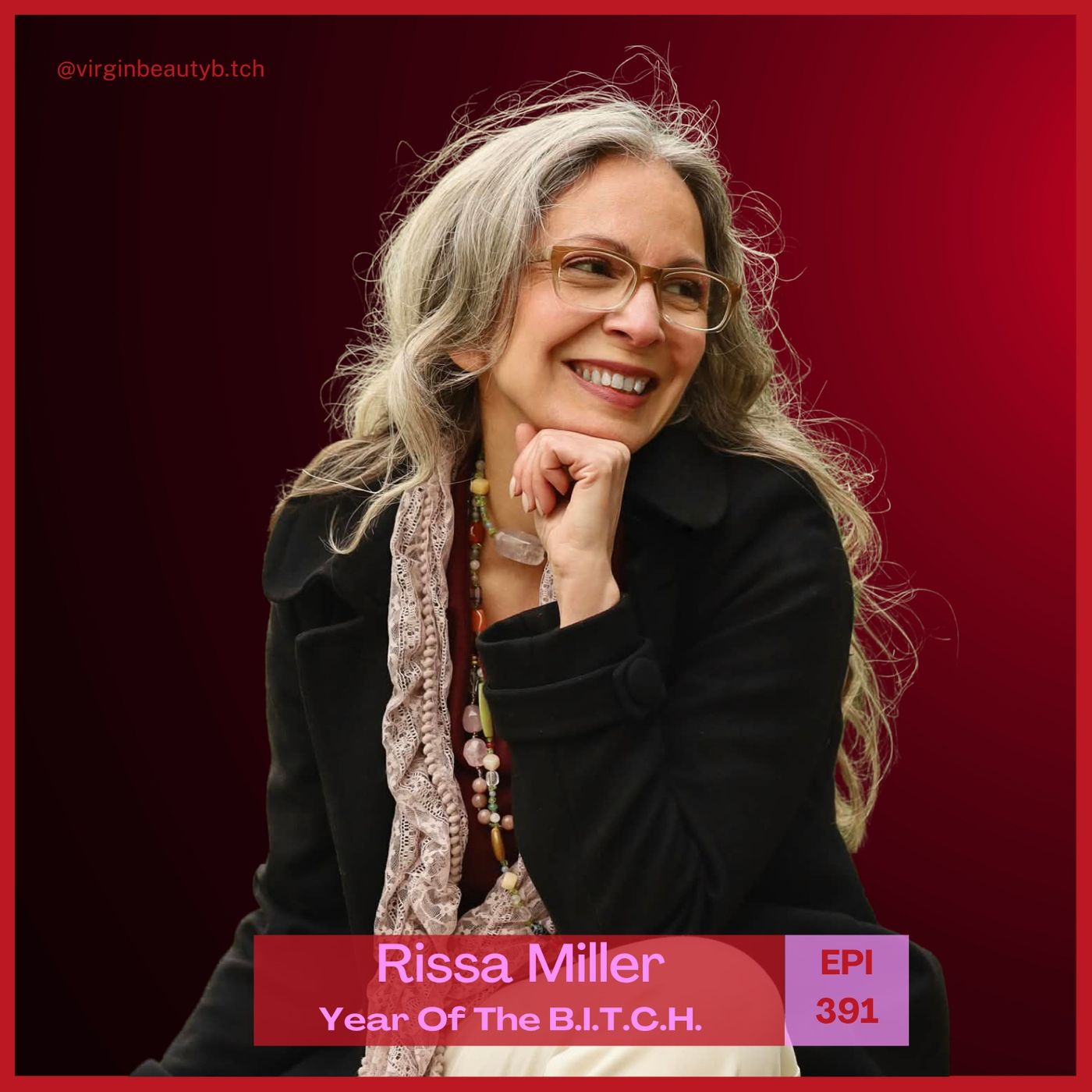
Rissa Miller speaks candidly about two emotions women aren’t encouraged to show, but does keeping them inside make them sick and hard to heal?


Rissa Miller is a true Renaissance woman. As a folklorist, author, herbalist, diviner, speaker, and poet whose work explores the intersection of history and ritual tradition, Rissa brings dark culture and regional legend into thoughtful contemporary conversation. Her research and storytelling draw on esoteric history, including ghost tales, witchcraft, cryptids, and folklore, and invite audiences to examine how stories of the past shape their present beliefs and experiences.
In this conversation, Rissa helps us explore societal expectations placed on women’s emotions—especially anger—and how suppressing those feelings can affect mental and physical health. Rissa shares personal stories and insights into female empowerment, and discusses the importance of rituals that help process difficult emotions. Tune in for honest reflections, myth-busting about women’s anger, and inspiration to embrace every part of your emotional journey, plus her reading of a poignant, heart-wrenching, soul-stirring poem from her new poetry book: Goodnight, Poet.
QUOTE: "Make peace with the idea that sometimes anger is big, and it fills up the room."
VBB 391 Rissa Miller
VIRGIN BEAUTY B!TCH Podcast
Date: September 20, 2026
Duration: 37:18
Speakers: 3
Segments: 123
Generated by Castmagic
Rissa Miller [00:00:01 - 00:00:14]
Virgin Beauty Bitch Podcast, inspiring women to overcome social stereotypes and share unique life experiences without fear of being defiantly different.
Christopher [00:00:15 - 00:00:48]
Your hosts, Christopher and Heather. Let's talk, shall we? Healing and hurt. Are they separate? Or are they inseparable from one another? And what if we could make healing hurt less, or at least make the hurt more effective in our growth? Let's talk about that with our friend, folklorist, speaker, historian, author, herbalist, and diviner, Rissa Miller. Welcome back, Rissa, to Virgin Beauty Bitch.
Rissa Miller [00:00:49 - 00:00:54]
Thank you so much, Christopher, Heather. It is absolutely a pleasure to be here again.
Christopher [00:00:54 - 00:01:15]
We love having you, Risa. Now, last time we talked, you teased us. It was with a concept that extended into our B.I.T.C.H. series, and specifically around H, which for us represents the process of healing. Now, before we get into the good stuff, I want to ask a personal question, if I may.
Rissa Miller [00:01:16 - 00:01:16]
Of course.
Christopher [00:01:17 - 00:01:25]
Do you remember the first time your heart was broken, and do you recall what that healing experience was like back then?
Rissa Miller [00:01:25 - 00:02:06]
Oh my gosh, the first time my heart was broken, you know, I remember a lot of little hurts along the way in childhood, but I think it was the death of a beloved pet that was the first time my heart was really broken. I absolutely love animals. I think they're wonderful companions, and they're so loving and accepting. And when you go through the experience of losing that sort of unconditional acceptance that an animal gives you, it's a special kind of heartbreak.
Rissa Miller [00:02:07 - 00:03:15]
If anybody listening has ever lost an animal companion, I know they know exactly what I mean, because it takes away that smiling face you come home to after work or school. It takes away that unconditional love that you really don't get from people because people are different than dogs or cats or horses or whatever kind of animal you love. And I would have to say that healing from that really just took time, dipping into the process of grief. And it was a dog in my case that went the first time I really experienced this. And man, coming home to that empty, quiet house, the silence just went on forever; it felt like. And I kept, I would still reach down for her and she wasn't there. And I think the process of letting go always takes time.
Rissa Miller [00:03:15 - 00:03:36]
And I know that you've— I'm sure you've covered this before. Grief isn't linear. You can't predict it. You can't give it a timetable. You can't say, like, oh, I'm going to grieve about this for X, Y, Z amount of days and then I'll be better. No, it just absolutely doesn't work like that. And a million little things can remind you of the thing you're grieving.
Rissa Miller [00:03:36 - 00:04:19]
In my case, the dog. And her name was Zeebo, which is a funny name. And I don't even remember the story of how she got her name because I was a really little girl. But she was a terrier and, you know, kind of had a wild terrier personality, which was fun to grow up with as a little girl because she had energy, and so did I. And so not having that companion who I grew up with, and then suddenly she's just gone. I, I wasn't alone, you know. I had my, I had my family. I had my parents, my brother, my grandparents were all still alive then, and my friends and all my interests in school. But it wasn't the same not having her.
Christopher [00:04:23 - 00:04:44]
My point is that the one thing about life that is fair to everyone is that we all will have our hearts broken. Doesn't matter how much money you have, how beautiful you are, or how popular you are. We all will have our hearts broken at some point, and we'll have to go through this process we call healing.
Heather [00:04:48 - 00:05:07]
You know, we were talking about this in one of our episodes where we were checking in with Christopher and me on the concept of healing, since it is what many women have said so far this year, that healing is interwoven into each one of the letters of betrayal, identity, trust, change.
Heather [00:05:09 - 00:06:11]
And that, you know, sometimes healing is, you know, the feeling of your aching heart, like with your dog, or with a loved one that, you know, that you lose, and loss in general. And I think, you know, there's a lot out there around what we can do in order to not mask the pain or bury it or just kind of leave it to bubble up and stay within us. And then there's, you know, I think there's a very different kind of healing that can happen when, you know, you notice something that's either happening to you in your life or an injustice or ways that you've self-abandoned yourself or something that someone's done to you that makes you furious, right? And so sometimes part of the healing process is allowing anger to reel its head and come forward in the ways that it needs to, to teach us something, right? To not let it be dimmed or dulled like it often is, especially for women.
Rissa Miller [00:06:12 - 00:06:35]
So I was just about to say, Heather, women aren't supposed to get mad. That's one of the hardest lessons I think to get past as a woman is that you're not supposed to get mad. You're supposed to be nice. You're supposed to stuff it down. And that just doesn't work. That literally can make you physically sick. Like, it's just not a good thing to do.
Christopher [00:06:35 - 00:07:01]
Yeah, it's, I mean, we talk about this, Heather and I talk about this, and we've talked about this with many of our guests, but I don't know, I don't know what the trigger is. Do you remember what your trigger was when you realized, hey, this emotion I'm not supposed to actually show the world is actually poison to me if I keep it inside? Do you remember when that happened for you and you said screw it?
Rissa Miller [00:07:02 - 00:07:43]
I think logically, in my brain, I knew it for a very long time. But I was extremely well trained not to express anger and definitely did not know what to do with rage. And I was in my 40s, I guess, when I first experienced rage in my personal life. I had no idea what to do with it. I had no tools to handle it. I remember talking to a therapist and thinking, this isn't enough. Journaling, but it wasn't enough. I just did not know what to do with all the energy of rage.
Rissa Miller [00:07:44 - 00:08:32]
And, you know, it's interesting because many years prior to that, I was with a group of girlfriends and we dressed up as the 7 Deadly Sins. And they chose me to be Wrath. And it's funny because I am not wrathful. I am extremely easygoing. And when I have something to say, I say it, but I usually say it in a quiet, intelligent way. And sometimes that's worse than people who are rageful, or so I'm told. But I actually got to embody Wrath at that point in my life later. And I remember reflecting on, like, the costume did not do it justice because the feeling of becoming Wrath was...
Rissa Miller [00:08:33 - 00:09:07]
It's so powerful. Almost like more than I knew how to process mentally. I did not know what to do with such big emotions. One of the ways I actually handled it was driving off, going deep into the woods, and screaming. Like screaming, and like throwing myself on the ground and screaming some more. And, um, I didn't— I couldn't think of any other way to release that much. Anger. I had, like I said, no experience and no tools and nobody to help me figure it out.
Rissa Miller [00:09:08 - 00:09:32]
As I said, the therapist was wonderful. My friends were great. They were all like, " Punch a pillow. And I was like, yeah, I've gone through like 3 pillows. I bought a piñata. I went through multiple piñatas. I tried to find all these constructive ways to release that much anger, but really, you just have to do something to get it out of your body. At least I did.
Heather [00:09:33 - 00:10:45]
That's absolutely fantastic. We've gone through 3 pillows here, people. We went out and we, we found ways to physically get it out of the body. But what I really want to zone in on is what you said around, I logically know that I have full faculty to, you know, go into my anger, go into my rage, maybe even my wrath, you know, if you're one of the 7, one of the 7 there. But I feel that even with that knowledge, so many women are so groomed that it— you have to be purposeful in how to get it out of you, or else the grooming and the societal conditioning, I feel, just takes over, and you either rationalize it or find other ways to kind of minimize what happened, kind of deal with it quietly internally, or do it in a way that's, you know, pretty and polite, if you will, whether or not you want to look at it that way. So, you know, I just, you know, implore women listening to this to, to, to make it purposeful, right? To make it purposeful. To find a space where you can really release your rage and not let it fester inside.
Rissa Miller [00:10:51 - 00:11:43]
Agreed. Absolutely agree. You know, I can't quote any scientific studies about this, but there is a growing body of thinking that unexpressed anger and sadness, um, helps create disease in the body. And that's becoming more and more common to hear in the medical community. And it starts with, like, you get more headaches or, you know, you get triggered, but your autoimmune disease gets triggered. And all of these things are beginning to become more and more common in conversation. And I look forward to the day that maybe there's data to back that up because in my own life, I've definitely found that to be true. Like the minute I get rid of the thing, the job, the person, whatever it is that is constantly upsetting me, upsetting me in one way or another, my health is good.
Rissa Miller [00:11:43 - 00:12:15]
Like, the physical ailment goes away when I get rid of the trigger. And I know that's not always possible, you know, some— and I completely respect that sometimes you have to go to work, or you— it's hard to find another job, or, you know, you're stuck in your living situation for now. And of course, in those situations, you do the best you can, but also keep looking. You know, I always would tell people, keep looking because your health is a priority, and you've got to take care of yourself in order to be able to take care of others.
Christopher [00:12:16 - 00:12:37]
It's interesting, as you're talking, I went to a presentation with Gabor Maté a couple of months ago, and he spoke specifically on that topic of how the emotions inside of us impact our outer world, our health.
Rissa Miller [00:12:37 - 00:12:40]
Yeah, like our literal physical healing.
Christopher [00:12:40 - 00:13:04]
Yeah, it makes complete absolute sense. I'm sorry, but find the data. If you need data, then find it, please, because it just makes sense. As you say, you lived it. And we had a guest last week who mentioned that holding this anger, this rage within you, it has to come out somewhere, and a lot of times it comes out in subtle ways in your relationship.
Rissa Miller [00:13:04 - 00:13:04]
Yeah.
Christopher [00:13:05 - 00:13:25]
So this rage you have bursting within you, you're now transferring it to the people that you love because that's the safest place for you to actually express yourself, right? So there's that damage being done as well with this thing that you, as you said, you've had no experience in how to actually let this out. That is healthy for you.
Rissa Miller [00:13:26 - 00:13:44]
Right, right. And I'm sure I'm not the only person who, you know, missed that day at school or whatever, that, you know, where they teach you what to do with anger or even rage. And especially girls, like, don't get mad, be nice, be nice, you know. And, hmm.
Christopher [00:13:45 - 00:14:09]
Yeah, well, that's, that's the image of when we speak of the feminine. That's the image that the world around us has fashioned into what women should fit into. This is the, this is the profile we have for feminine, and you're supposed to, because you're female, supposed to fit into that in order to be accepted and acceptable. And part of that is you never get angry, ever.
Rissa Miller [00:14:10 - 00:15:08]
Well, you know, I think one of the ways I learned to handle that, um, a million years ago in college— I went to NYU, and I joined the debate team. I was the only non-law student on the debate team. I was there to learn screenwriting, but I loved the back-and-forth of the debate team because at no other point in my life did I get to do that. And, um, it was also really cool to be around people who were so quick-witted and could think that fast. And I learned so much from debate team about listening and responding, but also it was a place to get out any feelings like that in a healthy way. I didn't know it at the time. I didn't know that that's what I was doing, but it was, it was wordplay really, but it was also a fantastic system for releasing any aggression.
Heather [00:15:08 - 00:15:14]
Yeah, I've also had some fun on a debate team, so I, uh, I appreciate that for sure. But when I think about why women's anger makes so many people uncomfortable, I think about the other spectrums of emotions that are, you know, socially sanctioned for us. Like we're allowed to be hurt, we're allowed to cry, we're allowed to show disappointment, we're allowed to be sad. Of course we're allowed to show, you know, joy and wanting to be communicative, that women are, you know, kind of community-focused. But it changes with anger, which is of course sanctioned more fully for men to be able to say that. But suddenly for a woman, it means she's difficult, she's bitter, she's aggressive, she's emotional, she's—
Rissa Miller [00:15:57 - 00:15:58]
She's a bitch. Yeah.
Christopher [00:15:59 - 00:15:59]
Yeah.
Heather [00:16:01 - 00:16:19]
And I think that ties so nicely to some of your other work in folklore, Rissa, in that that bitch or that angry woman or that difficult woman is a strong woman. A villain. Is a vengeful woman. Exactly. The crazy ex, the bitter old woman.
Rissa Miller [00:16:20 - 00:16:20]
The witch.
Heather [00:16:22 - 00:16:55]
The witch, absolutely. The kissing cousin to our bitch. And so, you know, to me, there are so many very parallel ties in our work in understanding the bitch archetype more fully in her full power and her full self. When you see that, like, one of the elements that is so, I feel, true to her and her vision of knowing herself is being able to easily access and harness and explore anger and rage. Without it becoming all of her.
Rissa Miller [00:16:55 - 00:17:36]
Right. And I feel like in a more healthy model, we would be able to understand how to handle anger. We would be able to understand how to express it in a healthy way, kind of like on a debate team where you get so many minutes to make your point and then it's the other person's turn, and then you take another turn. But we don't do that in our society. We just, women suppress it for the most part, and if you don't, you have hysteria or some other problem. That's a whole can of worms. But, you know, they blame your monthly cycle, which is also fun. It's like, no, you're actually a bad person, and you did something horrible.
Rissa Miller [00:17:37 - 00:18:12] It's nothing to do with where I am in my monthly cycle. You're like literally a piece of crap, you know.
Heather [00:17:39 - 00:17:42] Yeah, I would be saying this to you no matter where I am on my cycle.
Rissa Miller [00:17:42 - 00:18:13] Exactly. Yes, exactly. So yeah, I, I really do love how you brought in that even historically women weren't allowed to have these big feelings, these big emotions that are negative but real. Everybody has these real feelings. If you look at a cat, you can even see that sometimes a cat gets mad at you. You know, you know exactly what I mean because you're both smiling. So you've been, you've been at the, uh, you've been the target of anger from an animal, I'm sure, especially a cat. But all of that said, it is a normal part of the human experience to have anger. And what's not normal is that women aren't allowed to express it. And we are somehow lesser feminine if we do?
Christopher [00:18:42 - 00:19:28]
Well, your anger, for the most part, from a male perspective, challenges our authority, our role, our ex— what is expected of us. It challenges those things. And not all men are at a place where they can absorb that and respond to it as equals. So if I'm not capable, I'm going to make sure that you never challenge me. So let's have a blanket ideal that women don't get angry. That way I don't have to worry about it.
Rissa Miller [00:19:30 - 00:20:24]
That's a fair assessment, I think, Christopher. And, you know, if you look back not even that far into history, the role of women has changed significantly. It used to be that you, as a woman, you had to marry because otherwise you wouldn't have a home and you wouldn't be able to live in society unless you were the crone in the woods, probably. And then somebody would probably come and kill you anyway. All of that said, there was so much cooperation that had to go on just to survive, you know, just to have food, just to have shelter. Um, I mean, we're not that many years away from the kind of world where it was a struggle to survive. I mean, we have totally different struggles today, but typically we, you know, there is shelter and food available for the most part, for most people. And it's not like people are having to build a cottage. You know, or chop firewood for the most part.
Rissa Miller [00:20:25 - 00:20:50]
I'm sure some people do, and I'm not trying to discount that. But all that said, it changes the conversation for women. You know, it's no longer like, I have to raise the food and take care of these kids while my husband is hunting and cutting wood. You know, suddenly it's quite different.
Christopher [00:20:51 - 00:20:57]
Yes, roles have changed. However, the rules haven't changed.
Rissa Miller [00:20:57 - 00:20:57]
Correct.
Heather [00:20:58 - 00:21:34]
Yeah, until women say, I'm not playing by the rules no more, which many have, thankfully. But even for those who do and continue and are challenging it, like, I do feel very similarly to the goalposts of healing never kind of being like a finish line. I do feel that some of these deeper-seated, almost ancestral or generational underpinnings are very much still alive and need nurturing to not just fall into autopilot.
Rissa Miller [00:21:34 - 00:21:58]
That's a great way to say that, actually. It is an autopilot type situation. And I think that you really hit it perfectly there. It is up to us to make different decisions. It is up to us to choose another path. And I don't just mean women; I mean us as human beings. It is up to us all to choose a different path.
Christopher [00:22:00 - 00:22:25]
There's the thing that I would use as a hurdle is, for women specifically, how do you deal with that concept that women live with of needing or feeling they need to warrant permission to do whatever it is they want to do?
Rissa Miller [00:22:26 - 00:23:06]
Well, at my age, I've outgrown that, but I did used to feel that for sure, and it is a hurdle. That's, that's another eloquent way to put this. How do you clear that hurdle as a woman? I think that you have to reach a spot where you're just done with it. I think that sooner or later you see clearly enough that the hurdle is something that you're allowing. You're allowing it to be there. You can literally pick it up and move it aside. You don't have to continue to jump over it.
Christopher [00:23:06 - 00:23:12]
Rissa, that sounds so easy. It sounds so easy.
Rissa Miller [00:23:13 - 00:23:29]
I think once you arrive at it, it is. But I don't think it— it's kind of one of those optical illusions that you see, you see, you see, and you're convinced that it's quite a big thing. And then maybe you get a side view of it, and you're like, oh wait, It's a house of cards.
Christopher [00:23:30 - 00:24:02]
But the thing is, as a little girl, you were brought up to see that obstacle as a big thing. It's absolutely, you know, it's the metaphor of the elephant. As a baby elephant, you tie it to a rope and a stake in the ground, right? And it grows up to this big, massive, powerful animal, and it won't move. Because it remembers the stake and the rope around its neck. It couldn't move it as a child, as a small elephant. Same thing, is it not?
Rissa Miller [00:24:02 - 00:24:04]
It's exactly the same thing.
Rissa Miller [00:24:05 - 00:24:09]
Wow, what if that elephant realizes how much stronger it is than the people?
Christopher [00:24:10 - 00:24:19]
That's the point of the bitch, and that's the point of the show: turning that light onto that obstacle, and it- it's not even there.
Rissa Miller [00:24:21 - 00:24:35]
Exactly. Yeah, it— and it's kind of like one of those things that once you see it, you can't unsee it. Once you see that it's just a house of cards and all you have to do is flick it and it comes down, you can't be in that place.
Christopher [00:24:36 - 00:24:37]
Oh, I love this conversation.
Heather [00:24:44 - 00:25:08]
I was hoping to swing back to kind of where we started in that, you know, not kind of harbouring or staying stuck in anger, but to really explore what it's trying to teach you. But I want to kind of also just, you know, brainstorm a little here that I, I feel like often we hear that kind of rhetoric, right? There's this idea that once you're healed, you won't be angry anymore.
Christopher [00:25:09 - 00:25:09]
That's right.
Heather [00:25:09 - 00:25:43]
Like, the sting will be gone because you will have processed the emotions and et cetera, et cetera; like, you'll forgive or you'll release it, you'll be at peace, and everything will be back to kumbaya. So, you know, not that I want people to stay stuck in a very intense emotion, 'cause I think that that's a lot for anyone to carry for a long time. But, you know, perhaps if something is a pattern of yours or a repeated offence in one of your relationships, if you will, a boundary that's not getting respected, your own self-respect or a sense of justice.
Heather [00:25:45 - 00:25:59]
Or, you know, you've spent years and years and years of society and people blaming you, and you're blaming yourself, feeling like you're constantly the one in the wrong, despite that perhaps not being the full story.
Heather [00:26:00 - 00:26:49]
Or the case. It's like, I feel like a bit of the wake-up call is, you know, wait a second, maybe it's not all my fault, right? And these things that I've been advised are personal failings are actually things that almost every other woman is experiencing. So noticing that it isn't just you and saying that standing up for yourself or being in that anger is actually saying to yourself that what happened to you wasn't okay. So I'm just kind of, I don't know, toying with the idea right now of, like, how much is kind of a good balance of exploring our anger on a certain thing? Because I think I'm even, like, guilty of not running away from that emotion, but certainly not wanting to stay.
Rissa Miller [00:26:49 - 00:27:21]
Well, I definitely get that. So I'm going to rewind for a second, and what you said about, you know, you'll deal with it, suddenly everything is lovely and peaches and roses. I don't think that's true because life goes on. And I think anytime life goes on, there's going to be something that tests you. Um, and, you know, anger can be something like a person who's driving badly in front of you. You know, it doesn't have to be an ongoing relationship with an abuser. It can literally be bad traffic, and everybody sees that too.
Rissa Miller [00:27:21 - 00:28:27]
I think that's just part of being alive, right? We experience moments where we're impatient and angry, and people simply try us. And so I don't think you ever reach a place where it's completely over. I think that part of the lesson is learning to handle it when it comes up or when you're in it. And I think that anybody who tells you that once you process it, you're good forever is selling you a real bill of goods. They're probably trying to sell you a program that isn't going to work, or it's only going to work temporarily at best. But if they can give you tools in a way to manage anger in an ongoing and productive way, to communicate anger in an ongoing and productive way, that's worth having. And I think that what you're talking about with patterns is something we all go through, and it's really a process of creating self-awareness. Because once you— again, once you see things, you can't unsee them.
Rissa Miller [00:28:28 - 00:29:27]
And well, for the most part, I guess, unless you're really good at denial. But, um, I think that the idea of being able to see your own patterns helps create that discomfort that leads you into healing. Something— you, you don't just decide one day like, oh, you know, I'm gonna heal. Something leads you into the moment. Usually a rock-bottom moment leads you into trying to figure out a way to upswing. And because otherwise we keep telling ourselves everything is fine, everything is fine, everything is fine, and I'm busy, and I've got to do this, I've gotta do that. And you're never gonna say, "Stop everything, I need a moment, until you have the tools to do that. Whether it comes from a therapist or it comes from, you know, a process or a program or experience that you have, you probably aren't going to arrive at that place miraculously. You're going to have to really scrape the bottom first.
Christopher [00:29:32 - 00:29:47]
And there lies the rub. My belief is these challenges that we have, things that get us angry or hurt, are necessary for us to actually grow as human beings.
Rissa Miller [00:29:48 - 00:29:48]
I agree.
Christopher [00:29:49 - 00:29:52]
So why do we spend so much time trying to avoid them?
Rissa Miller [00:29:55 - 00:29:56]
Because it's uncomfortable.
Christopher [00:29:57 - 00:29:57]
Yes.
Rissa Miller [00:29:57 - 00:30:06]
It's kind of like what Heather was saying, you know. Healing, staying in a place where you can actually walk through the dark, is uncomfortable.
Christopher [00:30:08 - 00:30:36]
But if you change your mindset to, " This is necessary for my growth as a human being, for me to get to the greater self, my greater self, I have to walk this path. It has thorns, and it's uncomfortable, and I have no shoes, and there are sharp rocks. But I have to do this in order for me to actually be all that I can be. Like, that is what's out there for you, going through what you're going through.
Rissa Miller [00:30:36 - 00:30:52]
Yes, absolutely. That is absolutely what— but you know, once you get to the other side, it— you're not healed forever. But you're so much further along that you've, you've reached a spot where maybe the brambles aren't quite as close to the path. And the thorns are extremely—
Christopher [00:30:52 - 00:30:57]
You've got calluses on your feet now.
Rissa Miller [00:30:57 - 00:30:58]
That too.
Rissa Miller [00:30:59 - 00:31:17]
You know, when I was in school as an herbalist, I had to learn to like certain kinds of pain, like harvesting nettles. There's a little bit of pain involved, but also the nettles are an amazing healing plant that makes great teas and tonics and tinctures. And you have to deal with the pain in order to get the medicine.
Christopher [00:31:20 - 00:31:22]
Absolutely. What a metaphor for life, huh?
Heather [00:31:25 - 00:31:57]
I feel like that's a beautiful note to end on. And I just want to go back to some of your work, um, again with rituals, because I think that, you know, throughout human life, we have rituals for grief, for death, for loss, for celebration, for Reunions. And, you know, I'm taking a little piece away with me today around what I can introduce as a ritual in my life around anger and to give it the space that it deserves.
Rissa Miller [00:31:57 - 00:32:29]
Yes. I think that one of the things you can do is, first of all, make peace with it. Make peace with the idea that sometimes anger is big, and it fills up the room. And let it, let it fill up the room. Let it run over and be okay with the idea that for that moment, the space is full. Like, you don't try to do something else. Don't be like, I can also fold laundry right now. Just be in it.
Rissa Miller [00:32:29 - 00:32:51]
And it will be uncomfortable, I promise. But also, it's a much faster way through the bramble than trying to push it aside. Just, it's like, what's that, ripping off the Band-Aid? Same with anger. Be with it, rip it off, rip into it, and allow it its space to breathe, and then it will settle.
Christopher [00:32:53 - 00:33:03]
Find yourself a good forest where you can go and just scream at the top of your lungs and fling yourself about.
Rissa Miller [00:33:04 - 00:33:05]
Yeah. Yeah.
Christopher [00:33:06 - 00:33:15]
So this is, this is phenomenal. Okay. We had an, we had an agenda to talk to you about a specific thing. We didn't even get close to that.
Rissa Miller [00:33:15 - 00:33:18]
It's okay. I actually love what we talked about.
Christopher [00:33:18 - 00:33:29]
So we're gonna have to have you back because I really want to talk about that process of healing that you shared with us in our previous conversation. But this has been amazing.
Rissa Miller [00:33:31 - 00:33:47]
We, you know, I had prepared all this other stuff for our other topic, but there's actually something I'd still like to read to the two of you, um, and it's something I actually wrote, um, about the things that we hold in. Would that be okay?
Christopher [00:33:49 - 00:33:50]
Absolutely. The floor is yours.
Rissa Miller [00:33:53 - 00:34:50]
Another woman stands behind me, close enough that I feel her inhaling moments I stepped back from. The lover I didn't kiss, his name wrapped warm across my tongue. The ideas I folded to keep small, tiny triangles of paper tucked into the back pocket of my mind. I buried these myself, pressed 6 feet deep into maybe later. She is everything I rehearsed and never lived, Hands shaking at the almost yes; she was blanketed in sensible choices and steady now. But things buried alive do not stay underground. They push into the soft places in your life and split them open, knocking loose every shallow lie about what I did not want. Fierce and wild, she wants everything. She is loud with it. I feel her pushing my bones in ache for a life I cannot quite name. And sometimes I am sure she will yet break loose, break branches, break through like roots forcing from my open mouth.
Christopher [00:35:08 - 00:35:26]
Oh my God, Rissa, Rissa, Rissa, you are a miraculous human being. That is heart-wrenching and inspiring at the same time.
Rissa Miller [00:35:27 - 00:35:27]
Thank you.
Christopher [00:35:28 - 00:35:44]
Thank you. Thank you. Wow. Speechless.
Rissa Miller [00:35:44 - 00:35:50]
It felt like that's a sort of perfect expression of what we just talked about, actually.
Christopher [00:35:50 - 00:35:54]
Yes, yes. Oh, can we have you every week?
Rissa Miller [00:36:01 - 00:36:04]
I'm always glad to come back and see the two of you.
Christopher [00:36:06 - 00:36:10]
We'll have you back soon after— I know Halloween is your busiest, craziest, most productive time.
Rissa Miller [00:36:10 - 00:36:11]
It is.
Christopher [00:36:12 - 00:36:22]
So we'll definitely have you back, uh, once that calms down, and maybe we'll talk about what we were supposed to talk about this time, but who knows, right?
Rissa Miller [00:36:22 - 00:36:25]
Hey, I'm happy to go with the flow.
Christopher [00:36:25 - 00:36:35]
Absolutely. Rissa, we adore you, we really do, and, uh, it's always a joy to connect and just have shared time with you.
Rissa Miller [00:36:35 - 00:36:38]
Agree. I love talking to the two of you.
Christopher [00:36:39 - 00:36:41]
So thank you so much. Thank you so much.
Heather [00:36:41 - 00:36:51]
Always a pleasure, Rissa. Every time we've had you on the show, I get so much out of it. So thank you for bringing your wisdom and your spice.
Rissa Miller [00:36:51 - 00:36:57]
And thank you both for repeatedly having me back. I am so very grateful to share time with you both.
Christopher [00:36:57 - 00:37:03]
It's beautiful, really beautiful. And you have been listening to
Heather
The Virgin.
Christopher
The Beauty
Heather [00:37:04 - 00:37:07]
And the B-I-T-C-H, the Bitch in Her Year.
Christopher [00:37:07 - 00:37:09]
2026. Find us, like us, share us. Let us know how this has made an impact on you. We'd love to hear from you. Thanks for listening.

Folklorist | Speaker | Public Historian | Herbalist | Diviner | Author
Who is Rissa Miller?
I am a folklorist, author, herbalist, and public speaker specializing in esoteric history—the things people either fear or are fascinated by, like the paranormal and regional legends. I conduct research and give presentation-based talks on monsters, ghosts, witchcraft, divination, death culture, superstition, and lore for libraries, museums, conferences, and media audiences.
My work provides clarity and cultural context to subjects that are often misunderstood or sensationalized. My approach is practical and accessible to both skeptical and spiritually curious audiences. I explore why these traditions have lasted for centuries and what they reveal about our beliefs, fears, identity, and the human quest for meaning.
And on the topic at hand, the B.I.T.C.H, I won’t deny, I’ve been called a bitch many times. It'll happen again. And I'm totally fine with it. In fact, there are times that I've actually said thank you.


