VBB 392 Nikki: The Connection Coach On Sex, Intimacy & AI.
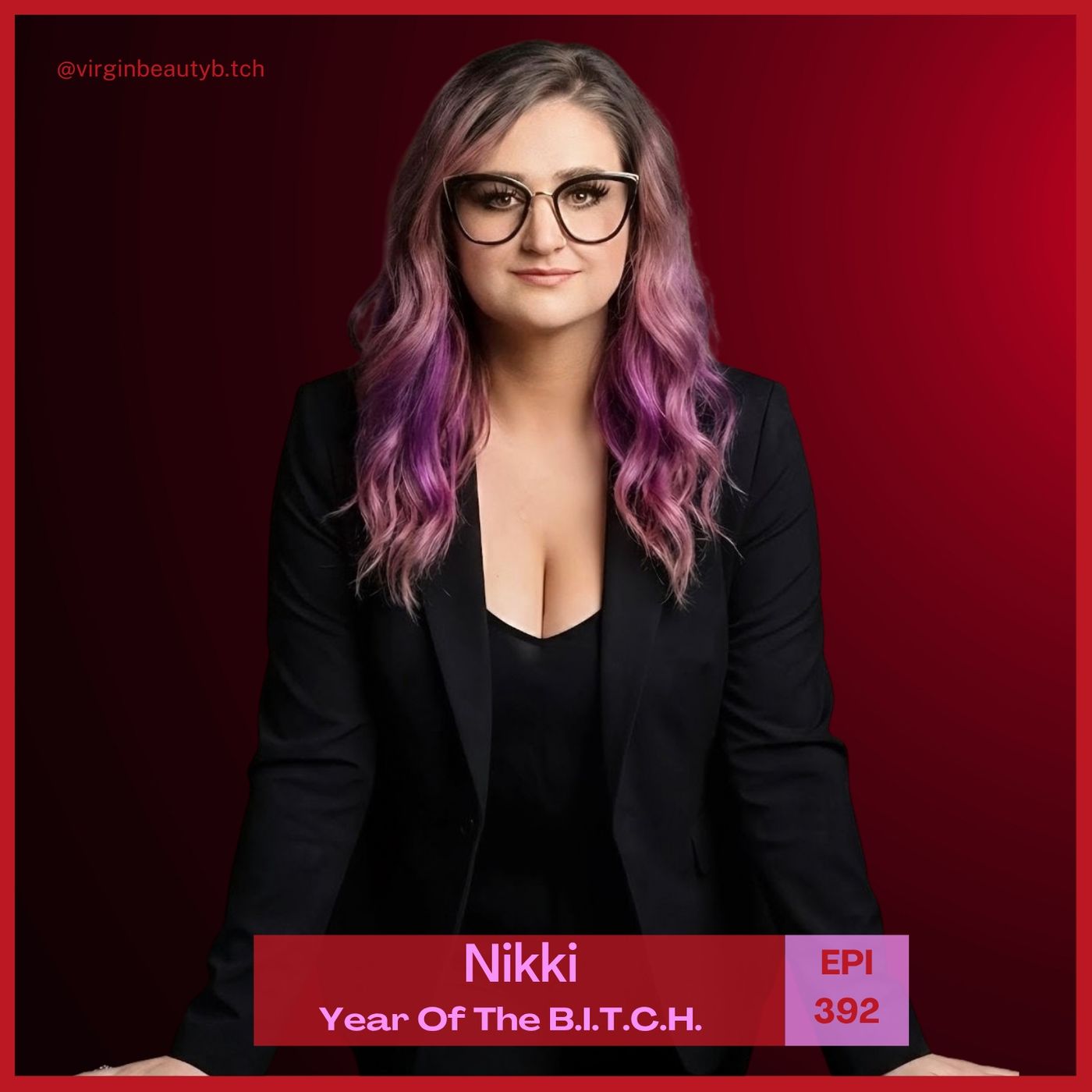
Nikki is a Life Coach specializing in Sex, Intimacy, Relationship, and Confidence Coaching. She shares the psychology of connecting without shame or judgment and how AI can help humans build deeper, more fulfilling relationships.


Key Takeaways
- Nikki explains that self-awareness must mature into self-acceptance before we can truly build healthy relationships, establish stronger intimacy, or develop real confidence.
- True personal identity is often discovered by stripping away performative societal masks, sometimes through navigating deep personal pain or challenging experiences.
- Many professionally successful individuals experience an achievement gap where they excel in their careers but struggle deeply with intimacy and emotional communication.
- Nikki utilizes innovative approaches like artificial intelligence through her connection coach platform to help people safely access vulnerability and bridge the gap toward human connection.
- Reclaiming words like "bitch" can transform a traditional put-down into an empowering symbol of authenticity, boundary-setting, and self-advocacy for women.
Nilki is a Certified Life Coach specializing in sex, intimacy, and confidence coaching. With a background in massage therapy, her experience also draws on modern Western chiropractic theories and her extensive work in wellness and holistic Eastern practices. This background has shaped her coaching approach and helps clients live happy, healthy, connected lives.
One foundational idea in her coaching is that meaningful change begins with self-awareness, which can mature into self-acceptance. Before we can build healthier relationships, stronger intimacy, or more confidence, we first have to be willing to understand what is actually true about us, including our desires, patterns, needs, shame, attachment tendencies, fears, and the parts of ourselves we may have learned to judge, hide, or suppress.
Nikki is also the author of The Intimacy Archives, a library of thoughtful, straight-talking articles about sex, relationships, confidence, desire, communication, and the psychology behind how we connect, free from shame or judgement. Get ready to get intimate.
QUOTE: "Usually, when someone says to their long-term partner, 'You know, all you care about is sex,' that's pretty inaccurate most of the time."
Frequently Asked Questions
Who is Nikki on Virgin Beauty Bitch?
Nikki is a certified life coach and massage therapist specializing in sex, intimacy, and confidence coaching who draws on philosophy and holistic wellness practices.
What are The Intimacy Archives?
The Intimacy Archives is a library of thoughtful, straight-talking articles created by Nikki that explores sex, relationships, confidence, and connection free from shame or judgment.
How does AI relate to intimacy and coaching?
Nikki developed AI-based tools like the connection coach to provide a comfortable, judgment-free access point for individuals struggling to communicate their vulnerabilities before transitioning to human relationships.
Why is identity important for intimacy according to Nikki?
Nikki emphasizes that the first intimate partner must be the person you see in the mirror because you cannot genuinely connect with someone else until you understand and connect with yourself.
VBB 392 Nikki
VIRGIN BEAUTY B!TCH Podcast
Intro [00:00:01 - 00:00:37]
Virgin Beauty Bitch Podcast. Inspiring women to overcome social stereotypes and share unique life experiences without fear of being defiantly different. Your hosts, Christopher and Heather. Let's talk, shall we?
Christopher [00:00:38 - 00:00:54]
Intimacy. I believe it is critical to living a happy, healthy life. Intimacy, it creates a sense of safety through mutual trust. It reduces loneliness, which supports our mental health, of course. It encourages deeper communication and discovery. But let's not forget, and let's not overlook, that sometimes intimacy just feels good. We're going to get into all of it with certified life coach Nikki, also known as the Connection Coach. Welcome, Nikki, to Virgin Beauty Bitch.
Nikki [00:00:54 - 00:00:54]
Thank you. Thank you.
Christopher [00:00:55 - 00:01:56]
Now, Nikki, I have to apologize: my partner, Heather, who's always at my side, is under the weather today, but as they say in Hollywood, the show must go on, right? So throughout the year, we've been exploring themes based on our acronym B.I.T.C.H.: Betrayal, Identity, Trust, Change, and Healing. We discovered that through hundreds of conversations with women over the years, it revealed itself as a path to women's self-empowerment and growth. Interestingly enough, intimacy is key to all 5 steps in our process. But I would like to focus most on identity, which is a skill I believe we learn ass-backwards. I once thought intimacy was based solely on our ability to connect with other human beings. But life reminded me, and reminds us, often with very hard lessons, that our first intimate partner must be the person we see in the mirror, our identity. Is that an accurate observation, or is that just me?
Nikki [00:02:00 - 00:02:26]
I think that is absolutely accurate. One of the foundational aspects of my coaching program is the idea that you have to gain self-awareness, and from that, self-acceptance, before you can be intimate with someone else. You can't connect with someone else until you know yourself and are connected to yourself. So absolutely, I agree with that. Yeah.
Christopher [00:02:27 - 00:02:33]
Why don't we know that at the beginning? Why do we have to learn that the hard way?
Nikki [00:02:35 - 00:03:12]
I think a lot of it has to do with sort of how our society functions, and it seems really backwards, right? Because we're a very individualistic society, you'd think that the focus would be on ourselves, but I think a lot of it is really focused on how we appear to others. It's not focused on learning ourselves and truly understanding who we are and how we are. It's about presentation. And so I think that leads to a lot of the kind of confusion or backwardness there.
Christopher [00:03:13 - 00:03:23]
So your own personal story, how did you come to this discovery? How did you come to this awareness that you had to go inside before you can actually live outside?
Nikki [00:03:23 - 00:04:34]
Absolutely. So when I was a kid, I was a big people pleaser. I was very anxious, and my main focus was keeping everyone else around me happy because that was the only way I had to regulate myself. Don't upset other people, and things will be okay. And it didn't work very well, and I got very angry. It went from being painful to have to always suppress myself and my wants and needs to being very angry, and for a long time, I was angry and numb, I would say. And when I was—it's probably close to a decade now—when I was about 24, 25, I came to the realization while I was in a very abusive relationship that no matter what I did, particularly with this other person, I couldn't. control other people or make them happy.
Nikki [00:04:35 - 00:04:48]
And so I had to focus on myself because I could— there was so much unpredictability in that relationship that I had no control, no matter how much people-pleasing I did.
Christopher [00:04:49 - 00:05:13]
It's interesting that the first letter in our acronym, B, is for Betrayal. And I think a lot of people think of betrayal as someone betraying them or letting them down or whatever. However, reading into what I think I just heard you say is that you ended up betraying yourself in the things that you would do that weren't necessarily congruent with what you wanted.
Nikki [00:05:14 - 00:05:45]
Yes, 100%. It was- my identity disappeared, which I think is a huge form of betrayal. When we lose ourselves, we don't even recognize ourselves. And everything that I was became just trying to appease this other person. And so yeah, I 100% betrayed myself. I didn't even know who I wanted to be anymore, I would say.
Christopher [00:05:45 - 00:06:06]
Tell me about that, because I find identity a very fascinating word. It is so layered. It's like an onion. Like there's an outer thing that we know is an onion, but once you go inside, it seems to go on forever. What is your perspective on what identity is, just without, you know, becoming a philosopher of identity?
Nikki [00:06:08 - 00:06:38]
Yeah, you know, I originally was going to school for philosophy, so I definitely have to try to stay away from philosophizing too much. I would say that identity basically is who we are, how we see ourselves, and how we then interact with the world, founded in that - grounded in who, and how we believe that we are and how we see ourselves.
Christopher [00:06:39 - 00:06:50]
How much of who we are is actually us as opposed to our upbringing, our culture, uh, things that we have been instilled as beliefs?
Nikki [00:06:51 - 00:07:28]
How do we differentiate that from actually, I would say that often pain is something that can bring about that sort of understanding or realization when everything else is sort of torn away, and you get down to that really core. Like, when everything else is kind of taken, or you're sort of laid bare, like, what is the core of who you are? Who you are, what's left. And so I think pain can be part of the journey to identifying that.
Christopher [00:07:29 - 00:07:40]
So people that you work with, I presume they probably come to you in that state of, I have nowhere else to go. How do you lead them back out of that dark space?
Nikki [00:07:40 - 00:08:11]
I think that even before getting to self-awareness, it's coming to the ability to want to look at yourself in the mirror without a mask. You have to— that's, I guess I would say, part of the sort of pain aspect of it is it has to hurt so much to be in disguise that you want to take off that mask and look at yourself face on.
Christopher [00:08:11 - 00:08:12]
That sounds very scary.
Nikki [00:08:13 - 00:08:33]
Oh yeah, yeah, no, I think it's terrifying, but necessary? I think to have a fulfilling, joyful life, yes. I do think that taking away all of that disguise that we put on is necessary. Yeah.
Christopher [00:08:33 - 00:08:50]
Are people who you work with, before they come to you, before they come to you in that state of pain, are they even aware of their situation, their status, or are they like sleepwalking through life?
Nikki [00:08:50 - 00:09:14]
You know, some are aware. I think that, you know, it really depends kind of on how far they are into that pain. In the beginning, I think a lot of times people think it's something wrong with the world, and then as that progresses, you start to realize, I need to change how I interact with myself and with the world. The world can't fix this for me.
Christopher [00:09:14 - 00:09:32]
So, like, I think a lot of people think that happiness comes from the vacation by the pool with, you know, a drink in hand and beautiful sunsets. But I think we're discovering here and now that it typically comes when you're in the darkest place in your life.
Nikki [00:09:32 - 00:09:40]
Yeah, I would say that, like, it's almost like the phoenix analogy, you know, from the ashes, something better.
Christopher [00:09:41 - 00:09:57]
Now, one of the things that fascinated me about you was that you play with identity. Just seeing your images on your webpage, how did that come about? And who are these identities that you bring forward? Not just one.
Nikki [00:09:58 - 00:10:35]
Yeah, I would say that in different sort of aspects of my life, I've been different people. And I think that all of those can be valid when they're really a part of yourself, but when they're only performed, that's when it becomes a problem. So I would say, you know, I have a lot of different people inside me, you know, someone that's interested in philosophy and someone that can be very assertive and someone that likes to feel safe and, you know, very feminine. They're all sort of different aspects of my character.
Christopher [00:10:35 - 00:11:10]
That's very fascinating to me. In that, I think, unfortunately, the way the world has positioned women and the things that they are presumed to make important to themselves, as you say, the performative part of what “feminine” is in the world, that becomes the identity they focus on or the identity they want to connect with and become. And forgetting all the different aspects of themselves that are so interesting.
Nikki [00:11:10 - 00:11:16]
Absolutely. Speaking of which, I'm going to take those off because they're driving me crazy.
Christopher [00:11:16 - 00:11:18]
She's taking off her eyelashes for those who are only listening.
Nikki [00:11:19 - 00:11:19]
Yes, I did. The mask is coming off. I'm stripping it away.
Christopher [00:11:24 - 00:11:29]
So is that a ritual?
Nikki [00:11:29 - 00:11:33]
Yes. Yep. Yep. Right. Right on screen, we're just stripping away the mask here.
Christopher [00:11:34 - 00:11:38]
But the ritual for you is putting on that persona?
Nikki [00:11:38 - 00:12:18]
You know, I wouldn't say it's so much a persona with that as when I look in the mirror, and I feel like I look good, I approach the world very differently. You know, like if I go to the grocery store and I feel like I look good that day, and people are looking at me, I think, oh, it's because they think I look nice. And if I'm not feeling confident that day, I think, " Oh, do I have something on my face? You know, why are they looking at me? So it's more of, I would say, a confidence thing for me and being able to go out into the world and interpret things in a more positive way versus, um, you know, when you're feeling self-conscious or uncomfortable.
Christopher [00:12:19 - 00:12:36]
That opens up so many avenues to explore. If you go outside your door and you're not feeling confident in the way you look, does that change your perspective on how you see others making judgments about you?
Nikki [00:12:36 - 00:12:40]
How I see them seeing me, I would say, yeah.
Christopher [00:12:40 - 00:12:45]
How does that affect you when you believe they're not seeing you in the greatest light?
Nikki [00:12:46 - 00:13:19]
I think it's not so much that it's like the individual, like, oh, this person is like looking at me maybe because like I have a stain on my shirt or whatever, um, as it's just I approach everything feeling less comfortable and less confident. So my whole experience throughout the day when I'm not feeling good in my own skin is very different, distinctly different from when I'm feeling comfortable and at home in my body.
Christopher [00:13:19 - 00:13:44]
I guess my point is that I think, unfortunately, a lot of people judge themselves through that lens as opposed to accepting where they are and just being where they're at. Like, they judge themselves, and they, you know, criticize themselves. It becomes a self-critical cycle.
Nikki [00:13:44 - 00:14:08]
Oh, absolutely. Because, you know, it's really not that people are probably even noticing me at all. I think it's very much in my head, you know. I don't think that it's a reflection of the outside world so much as it's a reflection of my internal world and my feelings about myself, um, that are being reflected out onto the world.
Christopher [00:14:09 - 00:14:11]
But inevitably, you're okay with who you are?
Nikki [00:14:12 - 00:14:15]
For the most part, yeah. Most days, I am.
Christopher [00:14:15 - 00:14:16]
Like, you don't run home?
Nikki [00:14:16 - 00:14:28]
Which I couldn't say for a long time, so. Yeah, yeah, definitely. For, for many years, I was, I was not happy, um, with, with myself or who I was. I wasn't comfortable.
Christopher [00:14:29 - 00:14:36]
What was it— what was that journey like for you coming out of that space and finding who Nikki actually is?
Nikki [00:14:36 - 00:15:35]
I think when you've been sort of programmed to people-please, and then you stop people-pleasing and almost go the other direction where it's like, well, I'm gonna do whatever I can to piss you off because I can't keep you happy anyway. You don't necessarily even— how do I say this the right way? Like, you don't really feel so much from yourself as you're reactive, you know? And so even before, like, getting to the place of feeling comfortable, I had to be able to just, like, identify what I'm even feeling and try to figure out why. When I wasn't reacting to other people's expectations, whether, you know, trying to please them or trying to piss them off, I had to figure out, you know, what's going on with me before I could actually get to a place of even, like, living that, if that makes sense.
Christopher [00:15:35 - 00:16:00]
So we play with the word bitch, and we see it not as the traditional way that the world has used it to denigrate women, but as an authenticity within each woman to be authentically herself. And that is going to piss people off when they stop people-pleasing. Have you run into that yourself?
Nikki [00:16:01 - 00:16:45]
Oh yeah, absolutely. I think that when you don't conform to that- if you don't conform to that people-pleasing, I guess- if you are assertive and stand up for yourself and set boundaries and know yourself and, you know, advocate for yourself, then when you do that, people will call you a bitch a lot of times. As you said, a way to sort of put down or, like, repress that. Like, if you know yourself and live authentically, you are cruel, or all of those, all of those things that go along with the word bitch.
Christopher [00:16:46 - 00:16:48]
How do you look at that word from where you are today?
Nikki [00:16:49 - 00:17:30]
I would say like one of my favourite things is the female rappers who have sort of reclaimed that word with like the whole bad bitch thing, you know, like it's— it can be an empowering identity. And I would say when I hear that word, it sort of makes me smile inside. And, you know, like you ruffled someone's feathers a little bit. So I would see it almost as probably a positive thing, you know, when someone uses that word, it's like, well, like, I've got you thinking, or, you know, it goes against the grain. And I think that that can be a really good, healthy thing.
Christopher [00:17:31 - 00:17:40]
So it's a power for you and a power when others, they kind of use it to try and bring you back to where they think you should be, right?
Nikki [00:17:40 - 00:17:43]
Yes, like put you in your place. Yep, absolutely.
Christopher [00:17:43 - 00:17:57]
So you have, you've created, uh, quite A bit, like you're a writer. You've, you've done a lot of things. Can you talk us through some of the things that you're working on and what you've been creating?
Nikki [00:17:57 - 00:18:52]
Yeah, absolutely. So I mostly focus on relationship and intimacy coaching. I was a massage therapist for many years, and as I mentioned originally, my background was in philosophy. So what I do is very grounded in awareness of the body, and that we hold stress and trauma, and then bringing in sort of my philosophy on life. And then during COVID, the place where I was working doing massage shut down, and I was going to see people in their homes. And I realized that a lot of these people really just needed a place to talk. And vent, and they wanted that. They wanted to be seen, and heard, and accepted for that far more than they even needed the physical relief.
Nikki [00:18:52 - 00:20:26]
And so I saw, especially with men that were professionally successful, there was sort of this really painful achievement gap for them where they did really well at work, and then they came home, and they just lost. And I always say, like, men are coached on everything, like business, fitness, finances, sports, but most men aren't taught the skills to develop intimacy. And I think that there's a need, a huge need for that. And so I wanted to address that and help those people who were having to just white-knuckle it. Every day, and weren't allowed to say, like, I'm hurting and, like, I need some help; they were just out there doing what they were supposed to do, and they couldn't ever get a break from that. They didn't even know how to communicate that they might need a break from that, maybe even with themselves a lot of the time. So I do one-on-one coaching, but I wanted to scale that so that more people could have access and with the whole AI thing that's going on, I think a lot of people are more comfortable even talking with AI than with a real human. And so for a lot of these people, that is an access point that reduces the difficulty of going in and talking to someone one-on-one, face-to-face.
Nikki [00:20:26 - 00:20:57]
So I built the intimacy or the connection coach, which is— based on my intimacy coaching and my workbook. So that's the main thing I've been doing recently. And then I also have been working on something called the Intimacy Archives, which is hopefully just an encyclopedia of knowledge where people can go on their own and privately research, learn the things that they have questions about that they maybe aren't comfortable bringing to a real person.
Christopher [00:20:57 - 00:21:05]
It sounds almost counterintuitive to build intimacy through artificial intelligence.
Nikki [00:21:06 - 00:22:07]
Absolutely. I think that it definitely does feel that way. I think that it's really interesting that so many people are going to AI for actual relationships, not even just for help with them. I think that says something about where we are. As a society, a lot of people feel very alone to the point that they can connect more easily with a computer than with a human. And so the goal with this is to use something that people are comfortable with to facilitate them being able to get that real connection with other humans instead of just retreating and shutting down or even going to AI to get it. So AI becomes then the intermediary between where they are and hopefully developing the skill set to actually connect to another human being. Right, exactly. Yep.
Christopher [00:22:08 - 00:22:15]
That's fascinating. Is there an intimacy gap between women and men that you have found?
Nikki [00:22:15 - 00:22:58]
Not, of course, with every individual. You know, people are all different. But overall, generally speaking, I would say that yes, it's like, just like we were talking about, with the bitch being a put-down for women, you know, um, you're a hard woman, or you're cold or whatever. For men, you know, it's almost the opposite where, like, if you are emotionally intelligent and kind, you're looked at sort of as weak or not manly. Um, so I think right from the start, men are at a little bit of a disadvantage with how society approaches them with regards to all that stuff.
Christopher [00:22:58 - 00:23:26]
Yeah, I agree with you 100% on that. I wonder what has, in your mind, in your philosophy, made the shift where men are now, or you're finding probably more men open to that side of who they actually are, the breadth of what they can actually be. What's changed in— from John Wayne?
Nikki [00:23:27 - 00:24:13]
Right, yes. Um, you know, I would say that technology has played a huge role in that. Just the ability to connect with other people and realize you're not the only one. You're not the only one who's hurting. You're not weird, and you don't have to hide it; it's okay and normal. I think so many people have sort of found their family or, you know, their tribe through the internet, and I think that that's one of the greatest things about technology is just the ability to facilitate that for people wherever they go. It's okay, like, it's okay to feel this way, and there are other people that do too.
Christopher [00:24:13 - 00:24:19]
When did you find that you had this universal compassion for humanity?
Nikki [00:24:19 - 00:24:57]
Um, you know, it was probably at really one of my lowest points towards the very end of the relationship I mentioned earlier. And it came hand in hand with empathy and compassion for myself that I had not had before. It was— it sort of encompassed the world and myself. And for a long time, I had tried to shut other people out, and I had been very cold to myself as well, I think. So, they sort of— empathy and self-love came at the same time, I would say.
Christopher [00:24:58 - 00:25:26]
Because for a lot of people, that can spin out of control into a lot of anger and hatred and just not connecting to anything around them. That's— it's when you get to that fork in the road; you can go either way. Uh, was there— what, what tipped you to actually find empathy for yourself and love for yourself and not go the other way?
Nikki [00:25:26 - 00:26:21]
Um, you know, so I, I never really talk about this. Because it sounds a little crazy, but I had an experience where I just felt this sort of all-encompassing love that there is something- I don't know what it is- but bigger than us, but also that we're a part of, that wishes some kind of good on everyone. And it was the connection to that that made me feel— Like, I don't want to say the pain of all people, but feel empathy and compassion for all of the suffering that has been and is and will be, but also a strong desire for everyone to be able to experience joy and fulfillment in their life as well.
Christopher [00:26:22 - 00:26:32]
Do you ever sit in a still space and let that wash over you? How powerful. T
Nikki [00:26:33 - 00:26:46]
Not as much as I would like to. It's a very overwhelming feeling, but I always feel grounded after I do connect with that. Um, it's a very powerful thing, I would say. Yeah.
Christopher [00:26:47 - 00:27:03]
Thank you for sharing that. I can just— in your voice, I can hear how important and meaningful that is to you. And it's interesting that you almost want to apologize for it, but why?
Nikki [00:27:04 - 00:28:04]
I think it's not something that I talk about a lot, and I sort of am never sure, like, what is the place for this? Like, I don't want to spout my personal beliefs at other people, especially because I do feel really strongly. And so, like, especially in my coaching, I don't want to be trying to, like, convert people to my personal spiritual, you know, beliefs. Um, so I'm always very cautious about talking about those kinds of things because I want to respect everyone's personal beliefs. And just because I feel strongly about this doesn't mean that anyone else is wrong, or, you know, um, so I just, I don't want to make anyone feel uncomfortable or like disconnected with someone before we even get a chance to really get connected because we have different beliefs on something like that.
Christopher [00:28:05 - 00:28:20]
Thank you for sharing that. We've just met; we just know each other through this conversation. I feel Truly honored that you would share that with— on this platform. I appreciate you doing that.
Nikki [00:28:20 - 00:28:23]
So thank you for giving me the opportunity to.
Christopher [00:28:24 - 00:28:32]
So if, uh, I'm hearing Nikki and I'm falling in love with Nikki, and I'd like to connect with Nikki and work with Nikki, how do I go about doing that?
Nikki [00:28:32 - 00:29:09]
Yeah, so the best way would be to check out Nikki the Sex, and you can find links to all of my other stuff there, to the Intimacy Archives, which is the sort of encyclopedia of articles that I mentioned earlier, and also to the Connection Coach as well. And if you're interested in connecting and doing one-on-one coaching, you can also schedule that there. And I do in-person and virtual as well. So anywhere in the world, we can connect. Awesome.
Christopher [00:29:09 - 00:29:15]
Fabulous. Um, the one word that you've used that we didn't talk about was sex.
Nikki [00:29:16 - 00:29:19]
And it's once at the very end.
Christopher [00:29:19 - 00:29:33]
It's one of those taboo topics. How does— I just want to ask you this as an ending. How do you see those 2 words connecting together, intimacy and sex? What— how does that work in your world?
Nikki [00:29:33 - 00:30:29]
I think that Intimacy does absolutely not require sex. But for some people, especially for couples, sex can be a very important part of intimacy. And I find, especially for men, when the partner is saying all you care about is sex, that is usually not the case. So much has happened before the loss of sex. There's so much intimacy and connection that has been stripped away before the sex ends. And I think it's usually that they're reaching out and trying to connect some way, and maybe sex is the only route that they feel is left available to them. But I think usually when someone says to their long-term partner, you know, all you care about is sex, um, that's probably pretty inaccurate most of the time.
Christopher [00:30:30 - 00:30:43]
It sounds like a starting point to go deeper. Nikki, thank you so much. This has been a very, very engaged and intimate conversation. I really appreciate you, uh, taking the time to do this.
Nikki [00:30:43 - 00:30:44]
Thank you so much for having me.
Christopher [00:30:45 - 00:31:05]
It has been my pleasure. Again, I apologize that my partner's away, uh, for this conversation. I'm sure she would have totally loved diving into this topic with you. You'll have to have me back sometime. There you go. I like that. I like that idea a lot. Thank you. Thank you so much.
Christopher [00:31:05 - 00:31:41]
You've been listening to The Virgin, The Beauty, and The Bitch. Find us, like us, share us, and let us know what came from this conversation, from listening to this conversation, and how it might have impacted you. We'd love to hear from you.
To become a partner in the VBB community, we invite you to find us at virginbeautybitch.com. Like us on Facebook, Instagram, and LinkedIn, and share us with people who are defiantly different like you. Until next time, thanks for listening.

Certified Life Coach
My path to intimacy coaching didn't begin with coaching—it began with a lifelong fascination with human connection. I first studied philosophy to better understand the questions that shape our lives: Why do we love? Why do relationships thrive or fail? What gives life meaning? Those questions continue to shape how I approach coaching today.
Before becoming a coach, I built a career as a licensed massage therapist, working in chiropractic clinics, wellness centres, and luxury spas. That experience taught me that confidence, intimacy, stress, and emotional well-being aren't just psychological—they're deeply connected to the body. I witnessed firsthand how anxiety, shame, chronic stress, and disconnection can affect every aspect of a person's life and relationships.
As my passion for helping people grew, I became a Certified Life Coach, which allowed me to expand beyond physical wellness into personal growth, relationships, communication, confidence, and intimacy. I believe intimacy, confidence, and communication are skills. Like any meaningful skill, they can be learned, practised, and strengthened with the right guidance.
Whether you're navigating dating, rebuilding a relationship, overcoming performance anxiety, exploring intimacy, or simply seeking to become a more confident version of yourself, my goal is to provide a space that is insightful, compassionate, direct, and completely free of judgment.


