VBB 390 Rhiannon Thoreson: How You Forgive the Unforgivable!
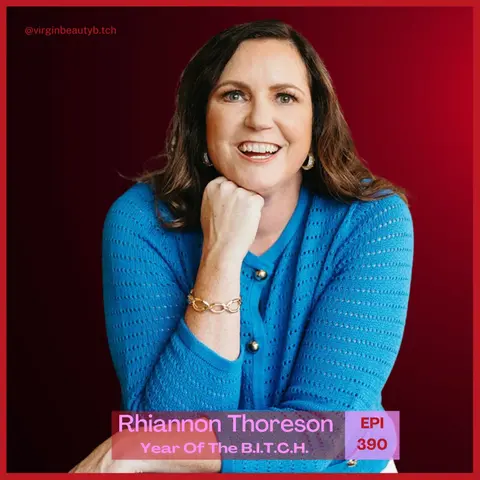

At 19 years old, Rhiannon survived a kidnapping and assault that would shape her life’s purpose and teach her the meaning of forgiving even the unforgivable.


At 19 years old, Rhiannon survived a kidnapping and assault that would shape her life’s purpose. Now an attorney and public speaker, she uses her voice to empower others—especially survivors of trauma.
Rhiannon is the author of the upcoming memoir My Beauty From Ashes, a deeply personal account of healing, identity and reclaiming one’s story. Her writing journey has evolved into a powerful path toward forgiveness as a force for healing.
In 2023, Rhiannon delivered a TEDx talk titled Forgiving the Unforgivable, where she shared her perspective on trauma, recovery, and forgiveness. Through her work as a writer and in the courtroom, she continues to advocate for mental health awareness, victims’ rights and survivor empowerment. Hear the uncanny power of forgiving the unforgivable.
Rhiannon Thoreson [00:00:01 - 00:00:18]
Virgin Beauty Bitch Podcast, inspiring women to overcome social stereotypes and share unique life experiences without fear of being defiantly different. Your hosts, Christopher and Heather.
Christopher [00:00:18 - 00:01:07]
Let's talk, shall we? Globally, and this is according to the World Health Association, okay, on average, 1 in 3, that's 31.6%, or roughly 840 million women and girls, will be subjected to physical and/or sexual violence in their lifetime. Statistics aside, I think any human being would agree that such acts of violence against women on any scale are unforgivable. However, we would like to introduce you to a woman with a different take. She's an author, speaker, attorney, survivor, and victim advocate. Help us welcome Rhiannon Thorntzen to Virgin Beauty Bitch.
Rhiannon Thoreson [00:01:08 - 00:01:10]
Hello, thank you so much.
Christopher [00:01:11 - 00:01:14]
Pleasure to have you here with us. This is fantastic.
Rhiannon Thoreson [00:01:15 - 00:01:15]
It's an honour.
Christopher [00:01:16 - 00:02:14]
Now, Rhiannon, in 2026, Heather and I are focused on one word in our podcast title, a word that women are taught to either fear, hate or avoid altogether, but we've turned it into a force multiplier for women's self-empowerment and personal growth. That word, of course, is bitch, which Heather and I have broken into 5 steps, starting with B as betrayal, I as identity, T as trust, C as change, and H as healing. Now, Rhiannon, in your TEDx, you share how you are one of the 3 girls mentioned in the statistics I quoted. And in your talk, I listened as you touched on each of the 5 points in B-I-T-C-H. Beginning with the day someone betrayed your innocence, your agency, your freedom, your decency, and of course, your very humanity. Maybe you can start your story with that profound betrayal.
Rhiannon Thoreson [00:02:15 - 00:03:23]
Of course. So I was 19 at the time, a young college student. It was the middle of a miserably hot summer here in Oklahoma, and I was washing my car in the broad daylight on a busy street when life suddenly changed. And — someone came up from behind, put his hand over my mouth, and in the other hand held a knife to my throat and basically just drug me over to another car wash stall where he had been parked and proceeded to shove me in the back of his car, handcuff me, and blindfold me. And then we drove off. And as you might imagine, what happened next was several hours of horror before I was able to escape. I was repeatedly raped and sexually and physically assaulted.
Rhiannon Thoreson [00:03:27 - 00:03:30]
I say it's by the grace of God I was able to finally get out of there.
Heather [00:03:31 - 00:04:21]
That truly just, it absolutely hits your heart. I mean, I think for so many women, this idea of a person kind of like lurking in the shadows or being somewhere that is not a public space, you know, is something that we're often very fearful of. And then in more recent years, you know, there's been a lot around. Often, a woman's perpetrator or a person's perpetrator of sexual or physical violence is somebody that they know. So I feel like your story is— I mean, my heart just pours out to hear that story. And I mean, I'm not sure if you're willing to share what it was like to try to escape out of that, but I would— yeah, just if you're willing to share, that would be— That would be really something to hear.
Rhiannon Thoreson [00:04:21 - 00:05:39]
Absolutely. And I do definitely want to emphasize that, you know, what happened to me is kind of like that stereotypical stranger danger, which is not the majority of sexual assault or rape experiences. It is most typically by somebody that the victim is already acquainted with. But that being said, it just highlights how vulnerable we all are at any given time, unknowingly. And when I was with him during the attack, it was very— it was kind of like an out-of-body experience for a lot of it. There were parts that I completely disassociated from, just because that was, in my mind, the safest thing to do, because paying attention to what was going on was so horrific. I didn't want to be there. But there were also moments that I had enough of my wits about me that I was able to, um, basically like come up with different potential plans of how to get out of there.
Rhiannon Thoreson [00:05:41 - 00:06:54]
Because he, he did keep telling me that he was going to kill me, and I believed him. I mean, he had a knife to my throat. What else? And he was doing horrific things to me. I had no doubt in my mind that I was not going to survive if I didn't get out of there. But I also didn't— we were in the— he had driven me out to the middle of nowhere, and so it wasn't like there was somewhere I could quickly escape to. And so, you know, various things were playing through my mind at different points, and I finally had the opportunity when we had gotten back in his car, and we were back on the road, and we were starting to slow down, and I just flung the back door open and just basically fell out of the car into the ditch and immediately popped up and took off running down the middle of the street. And not caring if the car— at that point it had gotten dark and so, you know, I could see headlights coming my way, and I didn't care if that car was gonna hit me. It was gonna stop one way or another.
Rhiannon Thoreson [00:06:55 - 00:07:09]
And it did. And thankfully, the driver, you know, I didn't really ask if I could get in the car. I just flung the door open, jumped in the car and yelled at him to go, and he went. So that's how I managed to get away.
Christopher [00:07:10 - 00:07:42]
I think what really, I don't know, breaks my soul, not just my heart, it breaks my entire soul, is to imagine that 1 in 3 women have something like this happen to them in their lifetime. I, as a man, am beyond ashamed. That this is happening to women so often. And I also think, are you, are you a person of faith?
Rhiannon Thoreson [00:07:42 - 00:07:43]
I am.
Christopher [00:07:44 - 00:07:48]
Do you believe in a greater divine plan? Because—
Rhiannon Thoreson [00:07:48 - 00:07:49]
Yes, yes.
Christopher [00:07:49 - 00:08:05]
The way that you have taken what has happened to you, you could have buried that so easily with utter shame. You've decided to share that openly. What made you make that decision to share so openly that event in your life?
Rhiannon Thoreson [00:08:06 - 00:09:02]
It took me a long time to get to that point. I did stuff it down, and I didn't speak about it unless I had to. It was something I- even though, you know, I mean, looking back at it, you know, I was not somewhere I shouldn't have been. I wasn't wearing the wrong clothes. All those victim-blaming excuses that society often places- none of those applied to me- but I still felt so much shame about what had happened. And so my heart just goes out to other survivors who do get those targeted attacks about what they supposedly did wrong. Because from an outside perspective, it would be hard for anyone to look at what I had done and say, oh, you, you did A, B, and C wrong. But I still felt that I did.
Rhiannon Thoreson [00:09:03 - 00:10:13]
I still felt that. And so that shame and that part of it was also, I think, denial of what had happened to me, not wanting to face what had happened to me and the impact that it had on me. Um, I didn't speak about it, like I said, unless I had to. Um, it was not something I shared openly. Very few people knew about it. Um, and it wasn't until— and it actually does tie into my faith, um, kind of like this revelation that I had that, you know, I'm doing both myself and others a disservice because my faith, um, actually grew because of what happened to me. Um, and by not sharing that piece of my faith journey, I was doing God a disservice as well. And, and not— I know not everybody has the same faith beliefs, and— but what I found once I did start sharing, that was, that was initially what started me opening up a little bit more.
Rhiannon Thoreson [00:10:14 - 00:10:44]
But what I found is the more I shared, the more community I found, the more women were coming to me and saying, " Me too. And I've never told anybody, not even my husband, this, but me too. And that's just like— So by sharing and speaking, I was helping myself, but I was also helping others who had not yet been able to give it voice.
Heather [00:10:45 - 00:11:06]
I mean, wow. I mean, first of all, and, you know, when I hear and know and feel what you've expressed around shame, it reminds me of what Gisèle Pellicot said, um, the one from France whose husband had been assaulting her and drugging her, all of the things that we already know. And she said, it's time for shame to switch sides.
Heather [00:11:07 - 00:13:15]
And, you know, I just, in so many conversations I've had with women, that 1 in 3 that have had something happen to them, it is, it is, it is to the bone how much shame there is about something that happened to you, rather than the one who perpetrates these sort of atrocities. And, um, you know, something that I've been percolating on lately, especially with Gloria Steinem's passing recently, is around exactly this: that Ms. Magazine at the time took things that women were ashamed about personally, crying in their own bathroom, and put them on the front cover of newsstands for the first time. And it allowed women to see that these things that were happening to them and the things that they were feeling- everything from domestic violence, sexual violence, to what's happening in the boardroom- were not individual experiences and not something to be ashamed of, but truly that when we weave together the tapestry of what was happening to all women in different ways, it helps to relieve some of that shame. And I just thought how many women still continue to feel this way, that the things that have happened to us drive us into this deep, deep despair and shame of ourselves. And the work is, in my view, unfortunately, like evergreen to show the connection between individual experiences for women to continue to almost like nurture ourselves and each other out of shame. So when you talk about how much sharing was important to this journey of yours, I think it is something that we hear but is extremely profound in how we heal and how we address how we view what's happened.
Rhiannon Thoreson [00:13:16 - 00:14:16]
Yeah, it's, uh, I think a lot of times we feel like, even though statistically we know we're not alone, we still feel very alone. And like the shame magnifies the loneliness, the loneliness magnifies the shame. It's this vicious cycle. And, I believe, based on my own personal experience, the more I stuffed it down and didn't talk about it, the more the shame grew. Like, it had become this big, deep, dark secret that nobody knew about me. And then it just— the control it had over me just got bigger and bigger instead of less over time. And it wasn't until I did start to talk and share, and initially it was just, you know, small circles, but the more I released it, the less shame I felt about it.
Christopher [00:14:17 - 00:14:33]
I hear you talking, I'm thinking the second word in our acronym is the I for identity, and it sounds to me like shame became a prominent identity of you in that time. Would I be— am I off-kilter?
Rhiannon Thoreson [00:14:34 - 00:15:11]
No, you are right on. It was absolutely a part of my identity, and the identity that, I mean, that one event I had allowed to define who I was, and not in a good way. To a great extent, it still does define, not necessarily who I am, but what I do now, but I don't, I don't get the negative identity association with it that I used to. That I have now been able to derive from it.
Christopher [00:15:12 - 00:15:23]
That's, that's profound in that bitch is the same way. It's an identity that's been placed onto a gender, and it becomes this big scary thing.
Rhiannon Thoreson [00:15:24 - 00:15:24]
Yes.
Christopher [00:15:24 - 00:15:25]
That you have to avoid.
Rhiannon Thoreson [00:15:26 - 00:15:27]
Right, right.
Christopher [00:15:28 - 00:15:32]
However, when you lean into it, there's power in it for you.
Rhiannon Thoreson [00:15:33 - 00:15:33]
Exactly.
Christopher [00:15:34 - 00:15:41]
Right. Have you— okay, so you have that identity. Have you ever had to face that identity of the bitch?
Rhiannon Thoreson [00:15:42 - 00:16:18]
Oh yeah. And in my— I will say in my work in particular as an attorney, and a lot of what I do is in litigation, and so I have had opposing counsel not use that word to describe me, but clearly get that point across that that's what they thought of me. Um, I know other attorneys have been called that to their face. I thankfully have not yet had that experience, but I definitely have, uh, picked up those bitch vibes.
Christopher [00:16:19 - 00:16:27]
What is your— what is your perspective on the word? Has it changed, or is it the same? Have you tinkered with that word in your brain?
Rhiannon Thoreson [00:16:28 - 00:17:08]
It has changed for me. I think part of it, I don't know if it's because of age or experience or a combination of both. I definitely lean into it more. If you take men and women with identical behaviour, a woman is more likely to be called names or viewed negatively for acting the exact same way a man might. And I'm like, no, I'm not, I'm not gonna accept that. Like, you can say that, you can think that, you can whatever, but I'm not gonna own that. That's your opinion. That's on you.
Rhiannon Thoreson [00:17:08 - 00:17:23]
I'm gonna do my absolute best to advocate for my client. For women, for survivors. And if that makes people unhappy with me, so be it.
Heather [00:17:24 - 00:18:16]
I mean, I— we love that for sure, because that is definitely what we're on with the bitch in her many, many forms. And exactly as you're saying, if others are going to think that of me, you know, it's not going to let me allow them to define, you know, who I am or what I think that word means. And because we're talking about identity and how you, um, I feel like you transformed your feelings around shame through your sharing, through the work that you were doing. Um, and, you know, so that transformation in identity, like, although shame plays a role, can you just kind of describe for me, like, when you hear about identity and kind of where you are now, what comes to mind? Mind for you?
Rhiannon Thoreson [00:18:17 - 00:20:13]
The first word that comes to mind for me is advocate. Absolutely. Whether that is through being an attorney or whether that's through just a conversation like what we're having right now, the identity that I most identify with is that of an advocate. I have spoken at different conferences and trainings to other attorneys, law enforcement, and victim advocates. And my message is always advocating on behalf of the victims, on behalf of those who don't feel heard or don't feel recognized or don't have anybody else speaking up for them and making their viewpoint heard. And the interesting thing with that too, and I, every time I do a training or a speaking event, is one survivor's experience is not going to be the same as another's. And I think so often, like a lot of things in this society and world, we tend to think of, you know, categories of people as X. Well, that In generalities, that might be okay, but you can take 2 sexual assault survivors side by side, have their perpetrator charged with the same crime, which actually would be amazing if they were charged with a crime, but we'll say for the purposes of this, charged with the exact same crime, but have completely different experiences, both with the legal system, with their own emotional experience, with the experience of people around them. Like, there is no one way that someone is going to process and heal.
Rhiannon Thoreson [00:20:13 - 00:20:25]
It's going to vary person by person. And so I, I always, always try to communicate that there is no one way or one experience. It's very individualized.
Christopher [00:20:26 - 00:20:43]
That's something that I think that you have— I wouldn't say perfected; however, you have shone a light on a different path to how you, how you dealt with your— the person who assaulted you, who, who took away so much from you.
Rhiannon Thoreson [00:20:44 - 00:20:45]
Uh-huh.
Christopher [00:20:46 - 00:20:59]
You talk about forgiveness, which is not a word I would think a lot of women would think of after what they have gone through and what you went through. Talk about how— what that word means to you now.
Rhiannon Thoreson [00:21:00 - 00:21:33]
To me, it provided freedom. I didn't forgive because it was for him. It had nothing to do with him. It was 100% for me. He didn't ask for forgiveness. Objectively, you could look at what he did and say he doesn't deserve forgiveness. But it wasn't about any of those things. It was what I needed to do for me.
Rhiannon Thoreson [00:21:35 - 00:22:08]
And again, like, that experience is not going to be the same for everybody. Some people want to hold on to that grudge, hold on to that revenge, and that's okay. But you have to decide for yourself. Is not forgiving hurting me, or is it helping me heal? And for me, it was hurting me. It was like a poison. And by forgiving him, I gave myself the room to continue to grow.
Christopher [00:22:09 - 00:22:11]
Is there healing in revenge?
Rhiannon Thoreson [00:22:11 - 00:23:00]
I think for some people there can be. Yeah, I think for some people. I, I don't— well, I mean, then I guess it might depend on how you would define revenge. But because that's one of those concepts like, well, what does revenge mean to you? Because what it might mean to you, it might be something different to me. There were certain people in my life who told me, they're like, you're— he's lucky he got arrested because we would have killed him. To them, that would— that revenge, that, that would have been the appropriate justice. That's, you know, I don't think that would have been the answer. Obviously, it wouldn't have helped anything.
Rhiannon Thoreson [00:23:00 - 00:23:07]
It wouldn't have healed me. None of those things would have happened. Um, and then there would have been obvious other consequences.
Heather [00:23:08 - 00:23:58]
But, you know, what revenge looks like, I think, is I'm curious to know, with your journey, you know, was there like a— was there a path of like different phases, like to get to the point of where you felt that like forgiveness was the next step in your healing journey? Because this is a conversation Christopher and I have had a lot, it's just around the anger not being as sanctioned. Society doesn't want that. They want a woman who's sympathetic, graceful, maybe even tragic in a way that we feel for her. I'm curious about your journey, like your emotional journey through this.
Rhiannon Thoreson [00:23:59 - 00:25:07]
I definitely cycled through lots of emotions. In my book, I talk about, you know, the stages of grief, and basically, that is what I was going through; it was a grief process. And, you know, there's the anger, the denial, the depression; all of those emotions are normal. And you're absolutely right, the anger piece of it, you know, is not something that is necessarily deemed or considered as appropriate or acceptable. And it wasn't something I felt comfortable with; even, like, I didn't know what to do with that anger, how to release that anger in a healthy way. And so instead, I did what a lot of people do, and you stuff it down, and you don't address it, you don't let it out. And then it erupts at your spouse for some silly, trivial, you know, thing because you direct it where it is safe instead of where it's actually deserving.
Rhiannon Thoreson [00:25:08 - 00:25:55]
And so I absolutely did that, and I— and, and it's still, um, there's not, you know, they talk about the stages of grief, but it's not like a linear process. It's circular, and it's back and forth and jumps around. And, um, and, and that is still my experience with it. I still go through different periods where I'm angry at what happened to me. I'm angry about the way it was handled. I'm angry at a lot of different things about other people's reactions after it had happened. Like all those things I think are normal.
Rhiannon Thoreson [00:25:56 - 00:26:33]
And once you accept for yourself that those feelings are normal, and if they're normal, then they should be acceptable. And you can talk about them, and you can share them, and you can move past them. You know, there were, gosh, I would say there were probably times where I would, like, live in a particular, you know, depressed mood for months, years at a time before it would cycle, and then it would shift to something else, and those emotions and those visceral reactions still pop up for me, but I know what to do with them better now, and they don't last as long because I do know what to do with them.
Christopher [00:26:34 - 00:26:52]
So the last letter in our B.I.T.C.H. is healing, and I think you just, you just described a process of healing, right? Yeah, I think you call it a thumbprint, like a fingerprint. It's individual to each person. It's definitely not, you start here, you end here.
Rhiannon Thoreson [00:26:52 - 00:26:55]
Right, right, right.
Christopher [00:26:55 - 00:27:02]
And I think, unfortunately, I think we get a lot of different, um, perspectives on that healing is the end.
Rhiannon Thoreson [00:27:03 - 00:27:04]
Yes, yes.
Christopher [00:27:05 - 00:27:10]
Apparently, as you've just expressed, it doesn't have an end.
Rhiannon Thoreson [00:27:11 - 00:28:05]
No, no. In my opinion, there's no Destination point. There's no, I'm gonna wake up one day, and I'm gonna be, quote, healed. I'm gonna be working on that process until the day I leave this earth, and then on the other side of heaven, I will be healed. But I'm— it's gonna be a journey, a lifelong journey for— I mean, honestly, I think it is for all of us because we all have different things that we— It may not be the big T trauma like what I experienced, but we all have different things that we have some kind of healing or some kind of something that we need to deal with. And there's no, quote, closure. There's no endpoint in healing. Those are false expectations that others place on us, but we also place on ourselves.
Rhiannon Thoreson [00:28:06 - 00:28:45]
And for the longest time, I would beat myself up because I wasn't doing this healing thing right. You know, and, and looking back now, knowing what I know now, I'm just like, good Lord, I should have been nicer to that 25-year-old girl who was doing her dangdest to survive. But I wasn't doing it right in my head. And so I must— so not only did I feel shame from what I had experienced, but I felt shame for how I was dealing with what I experienced. It was like layer upon layer, and that's so unfair to all of us.
Christopher [00:28:46 - 00:29:11]
You know what, Rhiannon, as you're speaking, I'm thinking about what we're raised on. We're raised on stories. Stories have a beginning, and they have an end. They usually have a happy ending. We go to movies, we watch shows on TV; they go through this linear curve, right? So why shouldn't we expect that our life would be the same thing, right? When the credits roll, we have a smile on our face, we're skipping down the street, it's all good, right?
Rhiannon Thoreson [00:29:11 - 00:29:16]
Yeah, yeah. I wish that were true.
Heather [00:29:17 - 00:30:12]
I feel like, for me, the bitch really interrupts that, you know? She has so many layers and, like, types of how she shows up, in my opinion. But to me, hearing and really asking women to think about anger and how it can fuel us and how important it is as a— sometimes it's like an emotion that helps protect us. It's an emotion that, if we allow ourselves to feel it, can really help us to feel injustice and to feel strongly about how we're going to continue to move through what happened to us, or where we are right now, or where we're heading next. So, you know, I just, I can appreciate when people say, like, you don't want to be stuck in anger. I don't think anybody deserves to be stuck in any emotion. That's not the point. But I do think that it's an important teacher.
Heather [00:30:12 - 00:30:45]
And the bitch, I think, knows that teacher really well. So to hear you talk about what it's been like for you and the ways that I, I know Women still— it's, it's almost like even though we know it's an important emotion, it's still something that's been so almost dimmed in us, dimmed right down and seen as a negative. So I appreciate your thoughts on it because I really encourage women to lean into it as an important teacher.
Rhiannon Thoreson [00:30:46 - 00:30:52]
Absolutely. I agree. I think it can be a great catalyst for change.
Christopher [00:30:53 - 00:30:54]
Ooh, another—
Rhiannon Thoreson [00:30:54 - 00:30:55]
And that's what I use it for.
Christopher [00:30:56 - 00:31:27]
The C in our bitch. Well done, well done. Um, I think that— I think for women, the issue often with anger is if you express it in the wrong place, it can mean— it can bring some very, very devastating consequences. So you have to be enraged and contained.
Rhiannon Thoreson [00:31:28 - 00:31:29]
Correct. Yes.
Christopher [00:31:29 - 00:31:44]
Right. Which, I mean, men get to just have a fight, right? So I think that's part of the— unfortunately, part of the negative part of expressing that emotion for women.
Rhiannon Thoreson [00:31:45 - 00:31:53]
Yes, there's definitely what is perceived to be a right way and a wrong way to express that anger.
Christopher [00:31:53 - 00:31:59]
Exactly. Now you've put all this into text.
Rhiannon Thoreson [00:31:59 - 00:32:00]
You've written a book.
Christopher [00:32:01 - 00:32:05]
What was that process like to put that into words?
Rhiannon Thoreson [00:32:06 - 00:33:02]
It was a long process. I, um, did— when I first started and sat down in front of the computer, I was thinking, I'm gonna have this thing done in a year. 6 years later, it's finally being released. Um, but I'm actually glad that it took that long because even in those 6 years from when I first started writing to today, it would have been a different book. And I found a lot of healing in the process of writing it. I found a lot of meaning-making that I wasn't really looking for when I first started writing it. And it gave me direction that I wasn't really expecting as well. And so I'm glad that it was a long process.
Rhiannon Thoreson [00:33:03 - 00:33:40]
I also think it's going to be a better book because it took me so long. It was one of those things: I started it, and then I would work really, really hard, and then I'd walk away from it completely for months at a time because there were a lot of emotions, memories, all of those things tied to it. Plus, it's also, I don't, I mean, just writing a book in general is very overwhelming and not an easy thing to do. And so I had to take breaks from it.
Rhiannon Thoreson [00:33:43 - 00:33:58]
There are authors who can sit down and knock one out a lot faster than I did, but that's just not the way my brain works. That's not the way my schedule works. That's not the way my emotions work. And so it was overall, it's been a great experience.
Christopher [00:33:59 - 00:34:00]
So give us the title.
Rhiannon Thoreson [00:34:01 - 00:34:06]
The title is My Beauty from Ashes: Enduring the Fire, Becoming the Light.
Christopher [00:34:07 - 00:34:13]
Uh, very, very, very profound. Congratulations on that.
Rhiannon Thoreson [00:34:13 - 00:34:14]
Thank you. Thank you.
Christopher [00:34:14 - 00:34:19]
When are we rushing to our Amazon? Where are we going to get it?
Rhiannon Thoreson [00:34:20 - 00:34:47]
So, October 15th is when it officially launches. I did, just last weekend, it soft-launched to my book launch team. They all got the PDF in an email, and I've already gotten fantastic reviews. And so I'm very excited about the hard copy of it being out in the world.
Christopher [00:34:47 - 00:34:48]
Congratulations.
Heather [00:34:48 - 00:35:01]
I'd love to ask you, with everything we've chatted on here, a huge journey, if you could say something to your 19-year-old self now, if she was beside you, and she's definitely in you, what would you like her to hear?
Rhiannon Thoreson [00:35:03 - 00:35:55]
That's a tough one. A lot of what I would want to say to her, I don't know if she would believe. Because it was such a dark time in my life, um, telling her that there is hope and that it is going to be okay probably wouldn't have landed the way that I would intend it to land, because nothing in my life was okay anymore. And so I think more than anything that I would say to her, I would just sit with her. Sit with her in the horrible, everything that she was feeling, and just hold her. That's what I needed more than any words: just someone to be there with me.
Heather [00:35:58 - 00:36:06]
That is beautiful, and I feel that honestly very deeply. It is a beautiful message.
Rhiannon Thoreson [00:36:07 - 00:36:10]
Thank you. Yeah, I teared up saying it.
Christopher [00:36:12 - 00:36:12]
And she is listening.
Rhiannon Thoreson [00:36:13 - 00:36:13]
Yeah.
Christopher [00:36:13 - 00:36:18]
She's listening. Rhiannon, this has been spiritual.
Rhiannon Thoreson [00:36:19 - 00:36:19]
Oh.
Christopher [00:36:20 - 00:36:20]
It really has.
Rhiannon Thoreson [00:36:21 - 00:36:21]
Thank you.
Christopher [00:36:22 - 00:36:52]
We cannot thank you enough for being as vulnerable as you are. The world and the women that you will touch and have touched will— vulnerability is your strength. It's your power. And we look at that word, we look at that action as something weak. We see power when you express that. So thank you for sharing your power.
Rhiannon Thoreson [00:36:53 - 00:36:55]
Thank you. Thank you for recognizing it as such.
Christopher [00:36:58 - 00:36:59]
Thank you so much.
Rhiannon Thoreson [00:37:00 - 00:37:01]
Thank you for having me.
Heather [00:37:01 - 00:37:03]
It's been tremendous to have you here.
Rhiannon Thoreson [00:37:04 - 00:37:04]
Thank you.
Heather [00:37:05 - 00:37:12]
And you have been listening to Virgin, the Beauty, the B-I-T-C-H, in her year, 2026.
Christopher [00:37:12 - 00:37:27]
Find us, like us, share us. I hope that you feel what we feel. In these conversations, because you are the one we do them for. Thank you for being here.
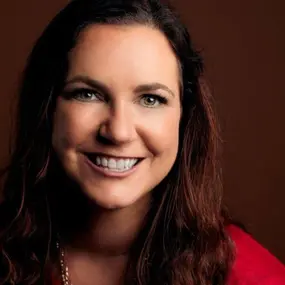
Author | Speaker | Attorney | Survivor | Victim Advocate
At 19 years old, Rhiannon survived a kidnapping and assault that would shape her life’s purpose. Now an attorney and public speaker, she uses her voice to empower others—especially survivors of trauma.
Rhiannon is the author of the upcoming memoir My Beauty From Ashes, a deeply personal account of healing, identity and reclaiming one’s story. Her writing journey has evolved into a powerful path toward forgiveness as a force for healing.
In 2023, Rhiannon delivered a TEDx talk titled Forgiving the Unforgivable, where she shared her perspective on trauma, recovery, and forgiveness. Through her work as a writer and in the courtroom, she continues to advocate for mental health awareness, victims’ rights and survivor empowerment. Hear the uncanny power of forgiving the unforgivable.


