VBB 387 Cassandra Pickett: Confessions of a Recovering People- Pleaser!
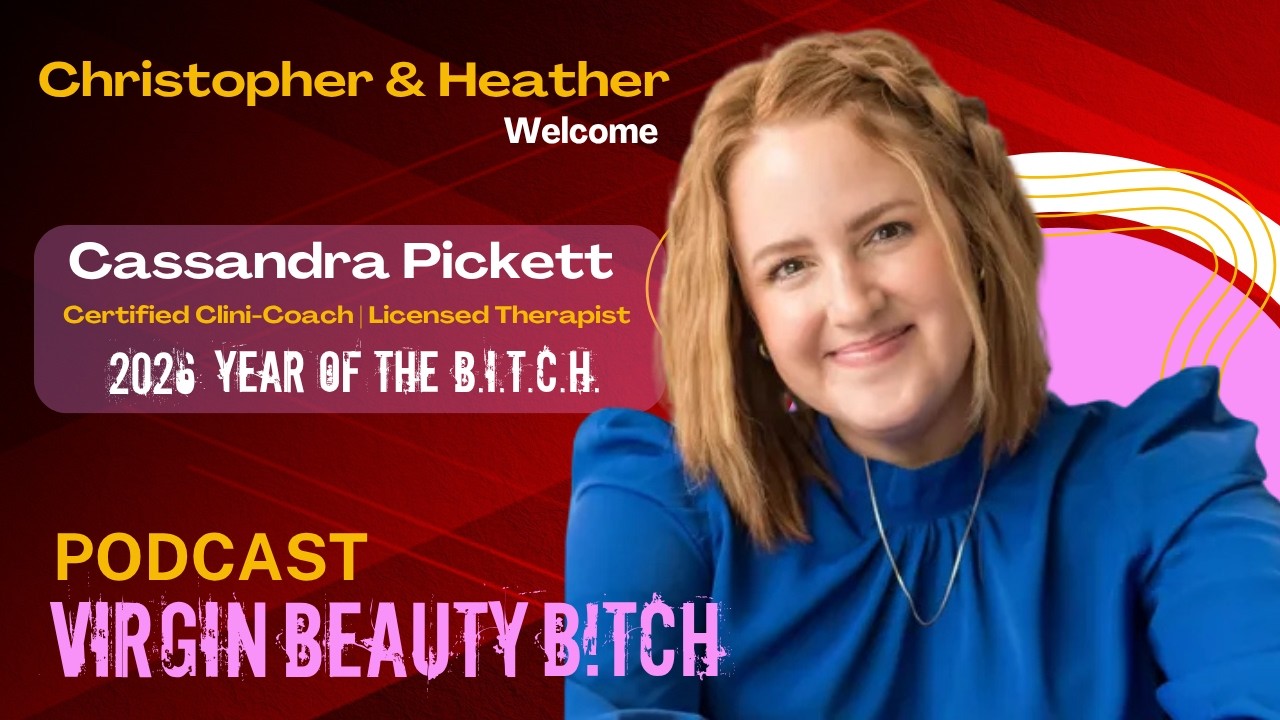
Certified CliniCoach, licensed therapist, and podcast host Cassandra Pickett explains why people-pleasing isn’t a superpower. Hint: no one is that helpless, and you’re not that powerful.


This lively and enlightening conversation features Cassandra Pickett, a certified CliniCoach, licensed therapist, and host of the "Girl, You Good?" podcast. Cassandra joins us to discuss the complexities of identity that hinder ambitious women.
Cassandra shares her own transformative journey and the challenges of living authentically in a world that often demands people-pleasing and perfection. Together, we explore why so many high-achieving women struggle with self-alignment, how to redefine self-compassion, and why reclaiming an identity like “bitch” can be a revolutionary act of empowerment. Are you ready for candid truths, actionable insights, and a celebration of coming home to yourself?
QUOTE: "People pleasing; as a loving person, it sounds really cute, but it's actually a very inward-focused judgment."
Intro [00:00:01 - 00:00:19]
Virgin Beauty Bitch Podcast, inspiring women to overcome social stereotypes and share unique life experiences without fear of being defiantly different. Your hosts, Christopher and Heather. Let's talk, shall we?
Christopher [00:00:20 - 00:00:59]
Every year, more and more ambitious, capable women around the world are rising from the shadows into the spotlight. But behind their public success, how many are creating a life that's true to who they are at heart? It's a question, or a dilemma, many women face that more often than not requires outside intervention or counsel from someone exactly like certified CliniCoach, licensed therapist, and host of Girl, You Good? podcast, Cassandra Pickett. Cassandra, welcome to Virgin Beauty Bitch.
Cassandra Pickett [00:00:59 - 00:01:02]
Hello, thank you for having me. I'm excited to be here.
Christopher [00:01:03 - 00:01:39]
This is great. Now, Cassandra, when I shared our Year of the Bitch theme and explained our women's self-empowerment practice based around a sequence of 5 powerful words—betrayal, identity, trust, change, and healing: B.I.T.C.H., you responded strongly to 2 particular words, identity and healing. Now, I assume identity represents a challenge you see in the women that you work with, but if my assumption is correct, why is identity—why is identity such an obstacle for so many women?
Cassandra Pickett [00:01:39 - 00:02:50]
You know, I work with ambitious women every single day of the week, and I have the same question because I'm like, how could you be striving for identity when you are this incredible Powerhouse of a human being, right? Like, it seems like you know exactly who you are, but the way sometimes the hierarchy is set up for women to get into ambitious roles and feel like they're high functioning, they've had to stifle away part of themselves, which is when you said the introduction and you said women coming out of the shadows, I like beamed because I was like, that's exactly right. Sometimes we cut ourselves in two, and we're like, I have this high-functioning, palatable version of myself that's going to be successful, and then I have my authentic self I keep tucked away somewhere so it doesn't upset anyone or piss somebody off or cause problems. And that is not alignment, right? That's not living into authenticity. It's not living into alignment. So a lot of women will feel like they have an identity crisis; they don't know who they are, when really they just haven't created an environment that allows them to be their full self. And that is a tricky spot that really needs healing to reverse, right?
Christopher [00:02:50 - 00:03:08]
Are they in a double bind? I mean, here we are, they're—you're in a, you're in a patriarchal system that dictates for the most part when, as a little girl, from the little girl, how you should be. How do you find your true identity in such an environment?
Cassandra Pickett [00:03:08 - 00:03:59]
Well, I think you really have to be open to pissing people off. So when you're people-pleasing, and you're overthinking, and you're over-functioning, someone is benefiting from that. And when you stop doing those things, people start complaining because it's very convenient to have someone on your team or in your household that's willing to twist themselves into a pretzel to make sure everything's functioning well. So a lot of times women also are people-pleasers. So they go to set these boundaries and be themselves and get out of this double bind, and they get harsh feedback or people saying, you know, you're not— you're a problem. What's wrong? What's going on? What's going on? And that uncomfortable space is usually where the best healing happens. But you have to be willing to cause a couple of ruptures or see what can be shaken up in certain relationships. And it's just scary.
Cassandra Pickett [00:04:00 - 00:04:17]
It's such a scary thing for people to do, but it's so exciting to see the before and after of when women do that in their life and what they build. It's healing. It's healing for me to watch, to be part of. I get so excited. I love it so much. But yeah, a double bind's a really good way to phrase that.
Heather [00:04:17 - 00:04:27]
I saw a quote the other day that I think really— it spoke to me, and I think it speaks to what you're saying, you know. And it's simple, just that it's never too late to come home to yourself.
Cassandra Pickett [00:04:28 - 00:04:30]
Yes, that's so beautiful.
Heather [00:04:31 - 00:04:52]
Right? You know, like, I feel that with these high-functioning personas, or what we feel you need to be in order to fit the mold of, like you said, keeping everything functioning— yeah, I just— it's, it's a very refreshing thought to just feel that even if you feel that you've strayed, or you may not know your way back to yourself, that you can find— you can find it.
Cassandra Pickett [00:04:54 - 00:05:07]
Yes. And I love that, identifying it as home, not some place you've never seen before, right? Like, it's familiar. You can tell when you've clicked with it. It's like coming home to yourself, exactly like that. Beautiful, beautiful, beautiful.
Christopher [00:05:07 - 00:05:12]
What is your story? How did you come to this enlightenment? How did you come to this wisdom?
Cassandra Pickett [00:05:13 - 00:06:10]
Girl, I had to build what I needed. It was not happening. And as I would uncover it, I've been a marriage and family therapist for 16 years. And so I would learn stuff, and I would try stuff, and I would learn from people, and I'd see what, I mean, textbooks versus what happens in real life and what people really need in a counselling room don't always line up, right? So it's a whole discovery. So I'm learning as I go; I'm researching, being like, okay, where are all the smart people that teach us this and help us heal through it? I'm not finding it. So I'm building a little bit here, kind of healing myself, sharing it a little here, a little there, and just kind of created— I wouldn't say a program, but a system that healed a lot for me and has happened by happenstance, helped a lot of women in exchange. So I am an Enneagram 3. I don't know if y'all do the Enneagram, but it's like the success junkie.
Christopher [00:06:11 - 00:06:12]
Hmm.
Cassandra Pickett [00:06:12 - 00:06:49]
Enneagram number. And so I have my whole life operated as my— what I produce is my self-worth. So as long as I am functioning in a really productive way on a team or in a family, whatever it is, nothing can just be relaxed. It always has to be producing something. I felt like I had high self-esteem, but it's very easy to become a people-pleaser and a chameleon doing that. And I started to feel like, where are all the pleased people? If I'm people pleasing so hard, where are all the pleased people? Because everybody's just asking for more. No one's pleased. I'm not happy.
Cassandra Pickett [00:06:49 - 00:07:14]
You're not happy. Where are the pleased people? Where are they? And I just started uncovering my true self. And it was upsetting. It was disruptive. But once it settled down, I felt so much more at peace and at home. My nervous system is more regulated. My success is greater, even though that had to stop being the goal. It did wrap back around to that.
Cassandra Pickett [00:07:15 - 00:07:21]
And literally, coming home is perfect. Heather said it perfectly in the podcast. She did the quote. It's perfect.
Heather [00:07:21 - 00:07:55]
Your process, it just sounds phenomenal, Cassandra. Like, I mean, could you share with some of our guests? Because I think that those steps that women take to realize what you just said are so important, that we feel like the people pleasing is actually getting something beneficial for 2 people, but really at the end of the day, it's creating one person who consistently demands and believes that they deserve more and another who feels diminished and oversaturated, if you will.
Heather [00:07:56 - 00:08:11]
So like, I think that there's an awareness that you're speaking about, but what were some of the initial steps that you took to say like, no, I'm gonna, I'm gonna come at this from a different, a different, a different angle?
Cassandra Pickett [00:08:12 - 00:09:13]
I feel like for me and a lot of women I speak with, if you feel like you're a self-help junkie and you're consuming all the podcasts, all the books, all the material, but your life's not changing, there’s a disconnect. So I would consume all the education and not feel better. And I was like, what, what's going on here? This, this doesn't make any sense. So I think a big first step is realizing that learning the stuff is a good— obviously you have to have an introduction, self-reflection, some self-awareness. But if you're not doing something to change your process and your pattern, nothing's going to change. You can have every book on Audible, every podcast in your brain, but if you don't take an action step, it's going to be the same thing, different day. And a big kind of red flag that you're experiencing this is, one, you're a self-help junkie, and two, you're filled with resentment, budding, brimming in every relationship you're in. You just can taste it, that you're like, this is no good.
Cassandra Pickett [00:09:13 - 00:09:27]
If that's the situation you're in, this content is a good, I don't know, offshoot space to start exploring. And you said, I think Heather said over something, over-functioning.
Christopher [00:09:27 - 00:09:27]
Saturated.
Cassandra Pickett [00:09:27 - 00:09:46]
Those are kind of like, yes, oversaturated. Anything that starts with over feels like a yellow flag for me. So if you're overgiving, you're overthinking, you're over-functioning, we want to stop and take a look at the situation. And be like, what? Why is that how I'm living? What is wrong here?
Christopher [00:09:46 - 00:10:18]
How did you come to that awareness though? Because I think that for a lot of women, unfortunately, the way they're conditioned and raised, giving is what they are— that giving is their life purpose. That's how it's sold to them. So how do you come to the awareness of, wait a second, where am I in this process? Where is myself in this process? How do you make that? How did you make that connection?
Cassandra Pickett [00:10:10 - 00:10:46]
You know women well because that's facts. That's facts. I think for me it was hearing selfish over and over. I would say, I don't want to be selfish and take up that space. I don't want to be selfish and do this, and I would hear my friends say that too, like, well, I don't want to be selfish and tell my mother-in-law she can't be here that weekend. I don't want to be selfish and do this. And I thought, it's not selfish, right? That doesn't feel right. What is it? What would it be, right? I like words.
Cassandra Pickett [00:10:47 - 00:11:02]
I like things to make sense and be palatable. Or maybe that's not the right word. I want them to go into my brain and make sense. And I was like, that's self-fulfilling. Like I'm being full to the brim of myself. And if I'm not filling myself up, who is?
Heather [00:11:02 - 00:11:02]
Yeah.
Cassandra Pickett [00:11:03 - 00:11:40]
And the opposite of self-full would be self-empty, right? So really the trigger for me was the selfish, the guilt. Guilt is an emotion meant for repair. So it shakes something up inside of us to say, I need to apologize, I need to make amends. And I, and a lot of women I know, I was feeling guilt over everything. I'd say, I feel so guilty that they're sad. I feel so guilty that when I set this boundary, it messed up her weekend. I feel so guilty, but it was never anything I could repair. So I started to recognize that selfishness and guilt were misplaced emotions.
Cassandra Pickett [00:11:41 - 00:12:06]
They weren't accurate to the situation. And when I started addressing that in my life and shifting that, I would say that's honestly probably the intro point to where everything started falling into place. And I was like, what? I'm not selfish? Or a bad person? I'm just existing. Oh my God, I'm allowed to do that? It's okay if you don't like it? Oh my God, right?
Heather [00:12:07 - 00:12:13]
It's a euphoric moment, honestly. It's really so life-giving to yourself.
Cassandra Pickett [00:12:15 - 00:12:43]
Yes. And you know what? Selfish people don't call themselves selfish. So if somebody's saying I'm selfish, they're not. Get in there, let's figure out what's going on. Selfish people don't have that kind of self-awareness. They don't say that. So if you notice that I'm so selfish, I shouldn't take it—people will say that over naps, water breaks, childcare. Girl, we gotta, we gotta— I'm like, I like that your podcast is like taking back bitch.
Cassandra Pickett [00:12:44 - 00:12:48]
I'm like, we gotta take back self-fulfillment, guilt. We have a lot to reclaim.
Christopher [00:12:50 - 00:13:09]
So talking about that word bitch, we have a lot projected onto that word from the past that we want to project a new light in the future. But for you personally, okay, how have you— how has your relationship been with that word?
Cassandra Pickett [00:13:09 - 00:13:23]
Um, I called my mom that word as a little girl. I was vacuuming, and I was like, such a bitch and the cord popped out as I said bitch and I learned what that word meant. I learned the power of that word.
Christopher [00:13:23 - 00:13:24]
What happened?
Cassandra Pickett [00:13:24 - 00:14:03]
And was like, oh no, it's this— the shoe was a bitch about me calling her a bitch, quote unquote. She got mad, she had feelings about it, she expressed herself in a big way, right? But now, I see the irony of that as we're having this conversation, but at that moment, I just was like, I don't know, you can't— it upsets people. It's mean. And then as I got older, even when I had little kids, I would talk to my boys and say, well, bitch is a word people use to make sisters and moms and women and friends feel bad. So it's not a word we say, right?
Heather [00:14:04 - 00:14:04]
Right.
Cassandra Pickett [00:14:04 - 00:14:44]
But then cut to me on the phone with somebody I love being like, bitch, hear this, right? So just, I would say I have not solved my disconnect with that word. And I'm like, that would be fun. Heather said euphoric a few minutes ago. I'm like, that'll probably be euphoric one day when I can just fully understand. But I'm like, it's just, um, a word I feel like I grew into feeling wasn’t safe. But I don't make any better sense of it than anybody else. So that's honestly what intrigued me about y'all's podcast. I saw that and was like, do I need to do that? Do I need to go learn that and be doing that? The answer is yes, I do.
Christopher [00:14:45 - 00:15:00]
That's fascinating. Thank you for sharing that. It's like, it's like you're born a woman and you, you have a stain on you, right? And no one tells you that actually that stain that you think is a stain is actually a strength, right?
Cassandra Pickett [00:15:00 - 00:15:00]
Right.
Christopher [00:15:01 - 00:15:05]
No one tells you the formula of how to actually shift that mindset.
Cassandra Pickett [00:15:08 - 00:15:34]
Right? Or like when stains don't come out, maybe they're permanent, you know? Like you don't need to change the skin you come in, the hair you come in, the gender you come in. But yeah, like I always wanted blonde hair, and I wanted it to be really straight, but I had curly red hair. You know, that’s it; it just resonates with me what you said, like with stain. Like the things I always felt like were stains about me were the things I came with, like the default settings.
Heather [00:15:34 - 00:15:34]
That's it.
Christopher [00:15:35 - 00:15:38]
It's not a stain, it's a pattern. That's your pattern. That's a thing.
Cassandra Pickett [00:15:39 - 00:15:41]
Yes, there's no stain removal for identity.
Christopher [00:15:42 - 00:15:44]
It's a pattern. Like, hello.
Cassandra Pickett [00:15:45 - 00:16:09]
Right, right. I'm not the best at that still. I do so much better than the younger version of me did, God bless her. But I still find work in this area, and I assume I just always will. I always just say I was born a woman in this century in Western civilization, so I'll never be free of it. But I don't know, maybe we will. You got me all excited.
Christopher [00:16:09 - 00:16:18]
The thing is, there's nothing really in you to be free from. It's your environment, the circumstances that have, yes, you know, caged you.
Cassandra Pickett [00:16:18 - 00:16:19]
That messes up your home.
Christopher [00:16:20 - 00:16:21]
Exactly, but there's nothing wrong.
Heather [00:16:22 - 00:16:25]
Yeah, they clutter, they clutter your home.
Cassandra Pickett [00:16:25 - 00:16:25]
Yes.
Heather [00:16:25 - 00:16:36]
They're bringing their own stinky garbage into your home, and you're like, “ I don't want this garbage here. I'm actually feeling pretty good about my home. I like myself, and you're just bringing your own trash about me in.”
Cassandra Pickett [00:16:36 - 00:16:38]
Yeah, it is.
Heather [00:16:38 - 00:16:42]
And it's now just living in me, which is not fun, and I don't want it here.
Cassandra Pickett [00:16:42 - 00:16:46]
I'm packing it around, spraying it with Febreze like it's my problem.
Heather [00:16:46 - 00:16:47]
Yeah. Take it out.
Cassandra Pickett [00:16:50 - 00:16:51]
Take it out. Right?
Heather [00:16:52 - 00:16:59]
Yeah, a whole new meaning to spring cleaning. We're in summer now, so we're really purging things. Yeah, before fall.
Cassandra Pickett [00:16:59 - 00:17:56]
Really, though, spring-cleaning relationships is fair. It's fair. Well, and when I work with clients, I really like to share the difference between boundary crossers and boundary violators, because there are people in your life who are going to cross a boundary because they're learning. And the way they respond and cooperate with the boundary might take some work, right? But when people know the boundary, and they're purposely crossing it to cause harm, that's a boundary violator, right? Like, take out the trash. But just because somebody messes up and is learning doesn't mean you want to cut off that relationship. So it can be— it just takes a lot of healing. It takes all the words in bitch, right? Was this a betrayal? What's my identity? Do I trust myself? Do I trust them? How do we heal through this to see if it's actually something that needs to be taken out or if it just needed modification? Because that's another thing that comes up.
Cassandra Pickett [00:17:56 - 00:18:13]
People are like, I'm not going to get burned anymore. I'm cutting everyone out, everyone out, spring cleaning, everyone's gone. But people are learners, and we're not good at everything the first time we try it. So it's really important to be able to tell the difference between malicious harm and somebody who's learning and open to it.
Christopher [00:18:13 - 00:18:32]
And the key there is you need to know yourself first before you can make those distinctions. You have to know who you are, what your values are, what's important to you. And I don't know, once we've been conditioned as children, how we identify that unless we put in the work.
Cassandra Pickett [00:18:32 - 00:18:52]
Agreed. I think the biggest bummer about that is self-trust has to come before other people trust, and I don't love that. I have never wanted that to be true, but it really is. I always— I used to think if I can trust this person and have this safe relationship, I'll trust myself. And it doesn't work that way. It's so annoying.
Christopher [00:18:52 - 00:19:05]
It starts off that way because you're a child. You need to trust the adults in your life. That’s your conditioning. That's the sequence. Yeah. So it's only obvious we'll take that into adult life as well, right?
Cassandra Pickett [00:19:05 - 00:19:30]
Yeah, that's a really good point. It's fair. And if you do your childhood ideally- which not everything's ideal, and that's okay- but when it comes in some package of idealness, you're set up then to go out in the world and learn to trust yourself, right? Lean on yourself. And when that doesn't happen, things get wonky. But that doesn't mean it's not worth fixing. It just means not everything's always set up ideally, and that's fine.
Christopher [00:19:31 - 00:19:32]
That's how we learn.
Cassandra Pickett [00:19:32 - 00:19:35]
Just gotta work. Exactly, exactly.
Heather [00:19:35 - 00:20:45]
I think that self-trust aspect is so challenging, right? Because I think that people, whether it's through- I love how you framed it, Cassandra- with a violation versus crossing a line, and really being able to understand that distinction. Because also, like, do we do that to ourselves, right? Like, are there times when I am learning to trust myself, and you know, I fall back into an old pattern or do things that are self-sabotaging? So, you know, when you ask that question, I think about how I may be able to apply it to the relationship with myself. Because I think, you know, what you're both saying is that you go out there, you want to be able to trust in yourself to bring things forward, but you betray yourself, right? You say you're going to do one thing and you don't do it. You try to set a new pattern, and it doesn't happen, right? And I think over time people's trust in themselves can be so eroded, right? And so fraught with, I don't actually know if I can follow through on this, that I think it is, it can be so easy to lose that sense of what deep trust means even when I've betrayed myself.
Cassandra Pickett [00:20:46 - 00:21:06]
And the amount of self-compassion it takes to do that, right? When you said that, I was like, oh, and then the self-compassion it requires to be like, I betrayed myself, and I can learn from it instead of, I sucked. I messed this up all the time. There's nothing good about me, right? Like, they all just blend together into like an ecosystem, right?
Christopher [00:21:06 - 00:21:07]
Absolutely.
Cassandra Pickett [00:21:07 - 00:21:16]
They flow so nicely, the positive components. Absolutely. The negative components create a big mess, but the positive components are so beautifully, poetically put together.
Heather [00:21:16 - 00:21:32]
That reparation, just even in your words, right? Like the ability to repair, it’s— that is a lovely note to end on, like that thought rather than the despair puddle that I left behind.
Cassandra Pickett [00:21:32 - 00:21:57]
I'm like, they go together perfectly. I worked for so many years on improving my self-compassion score, and it actually was at like the dishwasher. I noticed it one day. I had loaded the dishes wrong, and so it didn't spin, whatever. It needed rewashing, and I was like, oh, you're so stupid. And I was like, that's a lot. Like, it's dishes. That's a whole lot.
Cassandra Pickett [00:21:57 - 00:22:13]
Like, how about we not? And it was like a blip on the radar of, how about self-compassion? Why are we— what is— it is not a betrayal to my existence that I messed up the dishwasher? But that's how I was living. Most of us are at some point or another.
Heather [00:22:13 - 00:22:14]
Especially women.
Cassandra Pickett [00:22:14 - 00:22:16]
Just so cruel, right?
Heather [00:22:16 - 00:22:17]
And hard on yourself.
Cassandra Pickett [00:22:17 - 00:22:17]
So self-critical.
Heather [00:22:18 - 00:22:32]
So self-critical about sometimes very just everyday tasks. What have you found around, like, um, changing your, um, your, your, uh, sorry, I don't— I forgot what you just called it, but your compassion.
Cassandra Pickett [00:22:32 - 00:22:33]
Self-compassion.
Heather [00:22:33 - 00:22:41]
Yes, yes. What did you do to help work on that? Like, I know people use affirmations, people meditate, people have different modalities, but what works for you?
Cassandra Pickett [00:22:41 - 00:23:19]
Y'all need to Google Kristen N-E-F-F. She has a self-compassion quiz online. It takes like 5 minutes. I never speak to a human being for more than 5 minutes without being like, “What’s your self-compassion score? Have you taken the self-compassion quiz?” Never a client. I'm like, “We need to know.” But what's beautiful about it is it gives you a score, but more importantly, it gives you a subscore. And she has it broken up into 3 components with positive attributes, negative attributes of self-kindness, common humanity, and mindfulness. You have literally a score you can see, like, “Oh, here's where it breaks down for me, here's where my strengths are.”
Cassandra Pickett [00:23:19 - 00:23:39]
And then that gives you clear action steps, and then you can literally retake the quiz and watch your score go up. But the reason I love it is because you need to be nice to yourself. I don't—it's the emptiest, most hollow thing in the world to just tell someone, “Oh, just be nice to yourself.” Like, when I would say something crazy, that's what people would say, like, “You should be nice to yourself.”
Christopher [00:23:39 - 00:23:39]
No.
Cassandra Pickett [00:23:39 - 00:24:05]
Never once did it help. Never once. I usually would then feel bad that somebody had to say, “Be nice to yourself.” And I was like, “ I'm a monster.” Like, it just makes it worse. So when I— I think that is— Kristen Neff is a self-compassion guru because I've never found a better, clearer pathway to be like, “Here’s where I'm not living into self-compassion and here's the pathway to self-compassion.” It's amazing.
Christopher [00:24:05 - 00:24:05]
Amazing.
Cassandra Pickett [00:24:06 - 00:24:07]
Everyone, go do it if you're listening.
Christopher [00:24:07 - 00:24:08]
Go do it.
Cassandra Pickett [00:24:08 - 00:24:08]
I love it.
Heather [00:24:08 - 00:24:10]
Let's do it. I'm definitely doing it after this.
Cassandra Pickett [00:24:10 - 00:24:12]
Yeah, yeah, get obsessed.
Christopher [00:24:12 - 00:24:28]
I think that falls into— that's the, that's the giant drop of water that falls into the ocean of healing, which is something that you identified with. What, what draws you to this thing we call healing?
Cassandra Pickett [00:24:28 - 00:25:34]
Oh, I love it so much. I think as a marriage and family therapist, I'm very, very drawn to systems. So I'm always looking not necessarily at the individual, but the environment, the pattern, because you can go to a session, but if you go right back home to the exact same environment, it's very hard to make meaningful change. So I think as a systems thinker, systems person, it's just really opened up all the different aspects of healing and what it looks like and what you need to do and what they need to do and what the environment needs to look like so healing can be cyclical, right? And it spreads. We want it to spread like a beautiful fire, right? A gorgeous fire, not a damaging fire. So that also has brought me to polyvagal theory and nervous system regulation work. And I don't know, it's just like the spark of healing and what it creates in you and then what it creates in others is the most beautiful thing in the world. I'm sad that we need to heal because that means something has happened that's unfortunate.
Cassandra Pickett [00:25:34 - 00:25:57]
But at the same time, I really do feel like we're here to learn. And I have never had better experiences and growth than when I've had something unfortunate happen. So I don't know, just the pendulum swing that life's really, really hard, but life also has this beautiful healing, and it swings as far as you let it swing. I— it's just, I don't know, I might be obsessed with it.
Christopher [00:25:57 - 00:25:58]
It's a beautiful contradiction.
Cassandra Pickett [00:25:58 - 00:25:59]
I might be obsessed with healing.
Christopher [00:25:59 - 00:26:01]
It's a beautiful contradiction though, right?
Cassandra Pickett [00:26:02 - 00:26:05]
Because yes, we all love to heal, but we don't like to get hurt.
Christopher [00:26:05 - 00:26:08]
But we need to get hurt in order to heal and grow.
Cassandra Pickett [00:26:09 - 00:26:19]
Yes. And we also, if we're healed, we're not going to cause damage in other people, right? Like, I don't know, it just feels like the ecosystem does its thing when healing is in place.
Christopher [00:26:20 - 00:26:48]
I think that— and Heather and I talk about this all the time— is that we look at healing as this big, um, correction and end process when it is happening every day in every moment. If you're aware, if you are aware of your situation, right? If you're aware of your relationships, if you're aware of anything that you're going through in a day, healing is happening all the time. We just don't acknowledge it.
Cassandra Pickett [00:26:48 - 00:27:06]
1,000%. Oh yeah, perspective is a pain in the ass, you know, like, but it's true. Like, anytime you're willing to have— do perspective taking, you'll be like, I'm healing; this is going to work out. But it's hard. But you're right, you're right.
Heather [00:27:07 - 00:27:29]
I enjoyed how you said it earlier though, Cassandra, that with the dishwasher it was like a blip on the radar, right? So throughout our day, when you take that moment to, to recognize, okay, where, where is that negative talk coming from? And can I, can I say something different? Is there a different way that I can reframe this for myself to not have, you know, that constantly build up throughout the day?
Cassandra Pickett [00:27:29 - 00:27:30]
Yes.
Heather [00:27:30 - 00:27:51]
'Cause I agree that when you are so self-critical and not bringing the practice of healing into your day, like, I just find that you're so more critical of others as well. Like, it's just, you know, it's like you were both alluding to that when you're doing that inner work with healing, it creates a much different environment with the people in your life.
Cassandra Pickett [00:27:51 - 00:27:56]
That's a really, really solid point. I would agree with that fully. Fully.
Heather [00:27:57 - 00:27:57]
Ready?
Cassandra Pickett [00:27:57 - 00:28:46]
It's hard too. I'm like, it's not fun necessarily to have that mirror shined in your face to be like, where do I project? What don't I like? What's my biggest pet peeve? Because it's probably the thing I like least about myself. Or like that big shiny mirror can be very hard to look at, but you're right, you're right. Same thing with people pleasing; it sounds really cute, and I'm like a recovering peopl- pleaser. It takes one to know one, right? It sounds like, oh, you're just such a loving person, but it's actually a very inward-focused judgmental spot to be in if you're always assuming that people like, um, I say this in one of the Girl You Good episodes, you're not that helpless and I'm not that powerful, and it's not helpful for either of us to pretend that's how it is.
Cassandra Pickett [00:28:46 - 00:29:44]
So if you're stuck in people-pleasing, you're really living into this idea that people are pretty helpless or impacted by you, that you have a lot of control in the world, which is usually a branch of anxiety, right? Which we want to address. Uh, but it's just, not to be— I mean, I feel like I just took what Heather said and made it mean instead of self-compassion. I'm not saying if you're a people pleaser, be like, you're a piece of shit. You're doing a terrible job, right? But just, just being willing to say, like, what is that doing for me? Like, what is this pattern, like Christopher was saying, giving me? It's looking in that mirror and having that self-awareness and that self-reflection to be like, ugh. It's making it to where I don't have to deal with uncomfortable conversations, or I can avoid discomfort here. So anytime we're not looking at the pattern back on ourselves, we're doing ourselves a disservice. And that's a bummer. I tried to do it the other way, but unfortunately, it doesn't work.
Cassandra Pickett [00:29:44 - 00:29:52]
You have to, you have to look inward. I've tried. I promise. I tried to make it other people's fault. I tried really hard.
Heather [00:29:54 - 00:29:55]
The commitment was there.
Cassandra Pickett [00:29:55 - 00:30:08]
I committed so hard. But really, it's crazy. The more I judged other people, the less my self-compassion was high. I would just— wild, wild, uh, wild comparison there.
Christopher [00:30:08 - 00:30:25]
The truth always arises eventually. Yeah, no matter what we try to do to manipulate it, there it is. There it is. Tell us about your work. If someone wants to connect with you and your work, like, how would they go about doing that?
Cassandra Pickett [00:30:26 - 00:31:01]
I think the best way to see if I'm your cup of tea is to listen to the Girl You Good podcast. And if any of that resonates with you, I have tons of calls to action in there on how to work with me. So I do one-to-one coaching and group coaching. I've got an Instagram page that has tons of content on it. But for me, my call to action, so to speak, is search Girl You Good anywhere. They're about 5 to 8 minutes long, and you really can get a taste of my style, my personality, how I live into my purpose, and if I'm a good fit - your cup of tea. You'll know right away if you like me or don't, and it'll be great.
Christopher [00:31:02 - 00:31:06]
If you like holding on to a live wire, she's your cup of tea.
Heather [00:31:11 - 00:31:12]
Full of life.
Cassandra Pickett [00:31:12 - 00:31:37]
If you want to go fast and furious. I get called a truth teller a lot. I tell the truth, but I do it in a really loving way. But I just think, just get to the truth. I like to work myself out of a job as quickly as possible. Things shouldn't take forever to heal. Yeah, I just really like feeling it, finding it, aligning yourself, and moving on. Livewire, if you will.
Christopher [00:31:38 - 00:31:45]
Definitely, definitely. That's Cassandra Pickett, and the podcast is Girl, You Good?
Cassandra Pickett [00:31:46 - 00:31:47]
Girl, You Good?
Christopher [00:31:47 - 00:32:11]
So check that out for sure. The moment that I saw you and then looking at your images online, like I told you when I saw you for the first time here on this, uh, this episode, that you— your smile could light up an entire continent. It is so bright and authentic and beautiful. Thanks for sharing that with us.
Cassandra Pickett [00:32:11 - 00:32:19]
Thank you so much. I wrote it down. I wrote down that he said, um, my— I had a lighthouse smile. I said, I'm going to remember that forever. It made me feel so good.
Heather [00:32:20 - 00:32:22]
Oh, that is lovely.
Cassandra Pickett [00:32:22 - 00:32:25]
Right? Dumping into my self-compassion bucket.
Heather [00:32:26 - 00:32:30]
Yes, yes, yes. Fill that bucket up.
Cassandra Pickett [00:32:31 - 00:32:31]
Yep, yep, yep.
Christopher [00:32:31 - 00:32:32]
So thank you.
Cassandra Pickett [00:32:33 - 00:32:34]
Thank you all so much. This was a thank you.
Christopher [00:32:34 - 00:32:55]
Thank you so much. It was fun. It truly was genuine fun for sure. But hopefully you learned something as well from listening to this conversation. And these conversations we will continue to, uh, bring forward, and personalities like Cassandra that have so much to share, and we really appreciate that.
Cassandra Pickett [00:32:55 - 00:32:55]
Thank you, guys.
Heather [00:32:55 - 00:33:09]
Absolutely. Honestly, I got so much out of what you had to share. I can't wait to, uh, tap into some of the things you highlighted from this episode. So thank you for your wisdom and the joy, the joy that you bring into a space.
Cassandra Pickett [00:33:10 - 00:33:17]
Thank you. And same, I wrote, I took notes. Christopher and Heather have stuff to say. I'm gonna work on stuff. I'm in.
Heather [00:33:18 - 00:33:20]
Yay, us too, right?
Christopher [00:33:20 - 00:33:21]
Fabulous.
Heather [00:33:21 - 00:33:29]
And you have been listening to The Virgin, The Beauty, and The In Her Year, Year of the bitch.
Christopher [00:33:29 - 00:33:36]
2026. Find us, like us, share us, gather your friends, come on back.
Christopher [00:33:37 - 00:33:58]
To become a partner in the VBB community, we invite you to find us at virginbeautybitch.com. Like us on Facebook, Instagram, and LinkedIn, and share us with people who are definitely different, like you. Until next time, thanks for listening.

Certified Clini Coach | Licensed Marriage & Family Therapist | Podcast Host
Hi, I’m Cassandra—therapist, Clini-Coach, and your biggest cheerleader. I help ambitious women stop spinning their wheels, set boundaries that actually stick, and finally feel more in control of their lives. Why? Because doing it all, keeping everyone happy, while still trying to have a life is exhausting. I’ve been there, and I’ll show you a better way to juggle it all. Yes, you can handle a lot… but that doesn’t mean you’re supposed to do it all alone. You are allowed to set boundaries. You are allowed to get support. You are allowed to build a life that actually feels good.


