VBB 388 Melinda Love: Discovering The Hot Conscious Bitch!
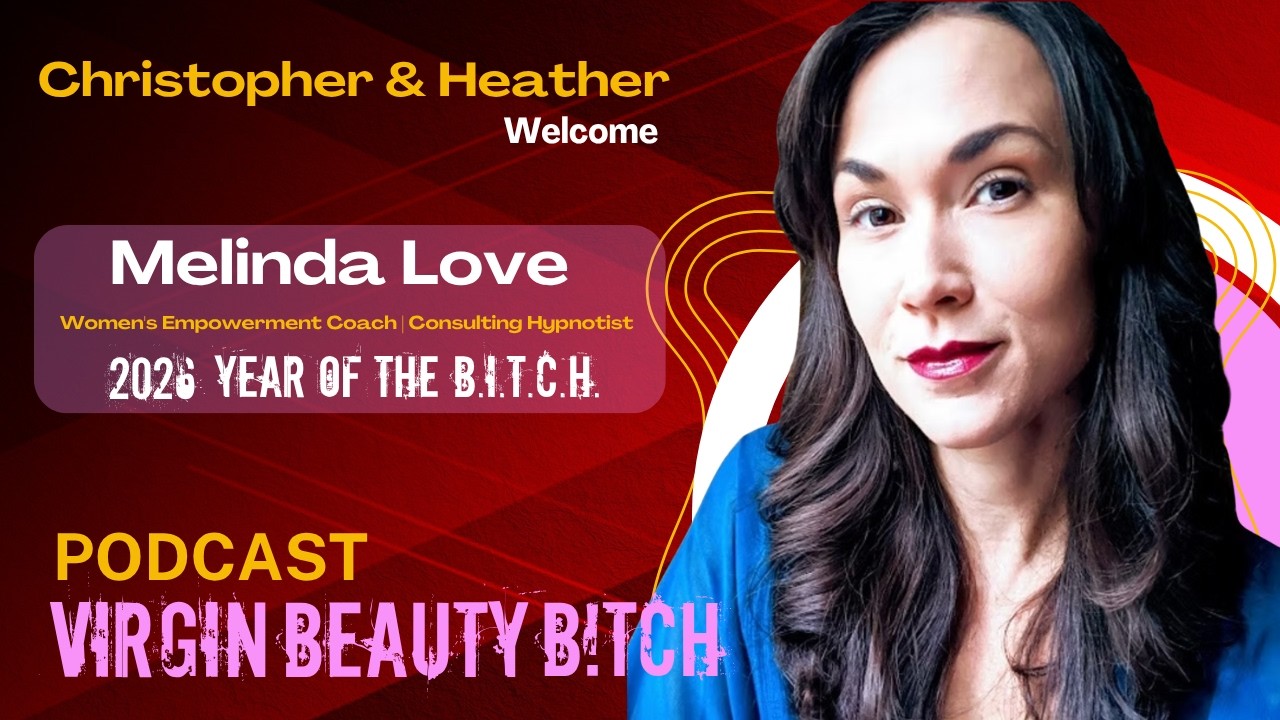
Melinda Love is a women's empowerment and sexuality coach, consulting hypnotist, and educator helping sensitive, deep-thinking women trust themselves, find their creative edge, and consciously reconnect with their inner bitch.


Melinda Love is a women's empowerment and sexuality coach, consulting hypnotist, artist, and educator with 19 years in the healing arts and personal growth. Melinda has also worked consciously with the Bitch Archetype since 2018 and unconsciously, long before that. Her work offers an opportunity to hold space for other women as they embrace the unconscious parts of their psyche that manifest as habits and patterns they believe others won’t appreciate.
In this conversation, Melinda talks us through women embracing the Bitch within themselves, the Bad Girl, as an antidote to Good Girl conditioning that keeps women not only small and powerless but also, in many cases, calculating or vengeful in ways that are harmful to others and to themselves.
The inner Bitch knows what she wants for herself and what is good for the world. When hidden away or stuffed down, she can be the stereotype few people appreciate. When respected and nurtured, she’s a visionary, a woman the world is hungry for, because of what she has to offer in conscious collaboration.
QUOTE: "I didn't fully embrace the bitch until I became a mom."
Intro [00:00:01 - 00:00:19]
Virgin Beauty Bitch Podcast, inspiring women to overcome social stereotypes and share unique life experiences without fear of being defiantly different. Your hosts, Christopher and Heather. Let's talk, shall we?
Christopher [00:00:20 - 00:01:14]
100 men for their definition of a bitch, you would hear 100 different colourful descriptions, but only one common theme: bitch being a woman who is unserviceable to the needs or desires of men. Harsh as that might sound, it's not the problem. It's when women learn to believe in men's definition and adjust their lives to become serviceable to be loved. That is why bitch is so pivotal to women's self-empowerment. And that is at the heart of our conversation today with women's empowerment and sexuality coach, consulting hypnotist, artist, and educator with 19 years in the field of healing arts and personal growth, Melinda Love. Welcome to Virgin Beauty Bitch.
Melinda Love [00:01:14 - 00:01:27]
Thank you, Christopher and Heather, for having me here. I'm so excited about this conversation and the work y'all are doing. Thank you for getting it out there, getting the voices and the stories heard- so important.
Christopher [00:01:27 - 00:02:25]
Now, Melinda, the word bitch, it's baked into our name, it's baked into our brand, and that's on purpose. And after 9 years of asking women to talk about their personal experiences with that word, it only reinforces our vision for why bitch is so critical to women's wholeness. We've learned over time that the word itself is a modality: Betrayal, Identity, Trust, Change, and Healing — B.I.T.C.H, as a path to women's self-empowerment. Today, we want to make the connection transparently clear. So, Melinda, you recently recorded your very own podcast where you spoke on the importance of bitch as an identity women need to embrace and not shun. The question I can already hear women asking themselves is, why embrace this hateful word?
Melinda Love [00:02:28 - 00:03:46]
Oh yeah, it's so multilayered because there is the bitch and lots of different words women have been called that have been weaponized against us. It's not just women. All folks have words that are really triggering, and I think it's so important when we hear a word coming at us that causes a little bit of abrasive type feeling, or it causes a big reaction, that that is an opportunity for us to look inside and see what is that bringing up for me? What is the opportunity in this for me? Because that is pointing to something really important that your inner self is protecting. So specifically with bitch, you know, that's just such a classic shadow part of ourselves. And I do have— the work I do is shadow work. That is using the mechanism of hypnosis as the tool to access the subconscious mind. So, you know, from a very early age, even before we are born sometimes, we can get these words placed on us. And I think, Bitch in particular is the one that holds the power. She's the one that is vocal.
Melinda Love [00:03:46 - 00:04:27]
So even, I'm not saying we would use that word ever to address a child, but even in those early years, we're told to be quiet. We're told to dim down that expression. And over time, as we grow up, you know, the layers just keep adding on and adding on. So to me, I love your definition of unserviceable to the needs and desires of men and this larger structure, not just men. But yeah, it's, to me, it's really accessing that voice. And that is one of the most important parts that we have to advocate for ourselves is getting what's inside on the outside.
Christopher [00:04:28 - 00:04:45]
I had this vision this morning. It's like you are in a family, and it has a big mansion on a beautiful hill, beautiful vista. It's perfect. And you inherit that someday. But you're told one thing, one caveat: you're never allowed to go in the basement because it's haunted.
Melinda Love [00:04:46 - 00:04:46]
Yeah.
Christopher [00:04:46 - 00:05:14]
There are things that happened down there. You never go in the basement, but live in the house, enjoy the house. But the guts of the house, the heater, the electronics, everything is in the basement that you never go into to look at. So you're living in a house that is not comfortable because you never go in the basement. That's your bitch. Your basement is your bitch, and you're not allowed to go there. I just came up with that this morning.
Melinda Love [00:05:14 - 00:06:09]
Yes, that is so often the, um, the analogy that we use when we talk about shadow work and hypnosis, is you're going into the basement. Sometimes you might be going into the attic or some other part of the house or the property where you just go there. We just don't go there. We pretend it's not there. And when that happens, mould starts to grow, there are black widow spiders, and you create this resistance to the basement that becomes bigger than what is in the basement itself. And we've become so afraid of these natural parts of ourselves, such as the voice, such as our creativity, our sexuality, our desire as women, and as people in general. And that resistance is where— that's the hurdle we have to jump over. It's the bouncer that keeps us out of the fun stuff.
Melinda Love [00:06:09 - 00:06:30]
Like, I think it's fun now to go down there, but it's not— it doesn't seem fun until you can bring in that element of no matter what, I got this. I got myself. I'm taking care of myself, and I'm dedicated to unconditionally loving whatever shows up in the basement. I don't know.
Heather [00:06:30 - 00:07:20]
Yeah, when I think of like areas of ourselves, like the basement or the attic, that we don't want to look at, or we kind of store things up or, or down there that, okay, I'm gonna deal with that later. That's like a storage area where I don't actually want to look at all of the things that I've had to keep up there. Yeah, I think that those pieces of self are the places where we feel shame, right? Whether it's the, like you said, Melinda, the structures that we're meant to serve. And if you don't kind of like meet that expectation, I think there's shame that those power structures put on you as a woman. And yeah, I think that like, that's a lot of the work that I'm into right now is really like deeply understanding shame and what brings me shame and why.
Heather [00:07:21 - 00:08:15]
Because to me, like tapping into my inner bitch, she's trying to feel like, what are the things that I wanna work on for myself that are truly for me? And what are the things that I'm trying to work on just for perception or performance? And kind of peeling back those layers or looking at them is, I feel, getting me closer to my authentic self. But you know, I really like what you and Christopher both said in that, you know, part of the bitch is the piece of you that doesn't and will not subjugate to women. But Melinda, you know, you added not just— sorry, sorry, to men. And you said not just to men, but to the systems that have kind of kept women in the position that they are, which I think is a broader picture because sometimes it is other women that are keeping Yes.
Melinda Love [00:08:16 - 00:08:38]
That is so important to, yeah, just remember, like when we internalize that, and we're not conscious of the bitch and all these different things that we have put somewhere else, that we're, we're not only minimizing ourselves, we can't see that we are minimizing ourselves. We're minimizing other women. We are feeling that competition with other women. We're feeling, yeah, that jealousy, resentful when women begin to get bigger and succeed, or they start to speak out about bitch and other things that make us uncomfortable.
Melinda Love [00:08:38 - 00:09:36]
Because yeah, it's not comfortable challenging this stuff outside of us, and it's— our insides are a reflection of that outer culture we grow up in. So it's inherently not going to feel super wonderful to bring this up. But yeah, I loved what you were saying about, is it performing? What am I performing here? And I was just thinking about, for me, when I deconstruct the bitch, the good girl archetype is so the opposite of her. It's what I feel like I really identified with because I was told that repeatedly as a child. Like, you know, be a good girl, behave, and things like that. And really wanting to cling to that as this sense of comfort and feeling of acceptance.
Melinda Love [00:09:37 - 00:10:01]
So yeah, as we do our bitch work now, we're like trying to bring her into it as well and letting go of those good girl habits. And that's all they are: just habits that we learn to keep us safe. And we as women kind of band together in our way to keep each other safe by saying, oh, maybe you shouldn't say that, you know? I don't know. It's just a big group hug.
Christopher [00:10:01 - 00:10:03]
The culture has given you boundaries to live within. And there are consequences should you stray outside of those boundaries. What I'm really interested in, Melinda, is that a lot of women go through an entire life and never face that part of themselves because it’s too frightening. It is almost forbidden to do so. What happened in your life that you not only looked at it, you embraced it, you journey— you are journeying through it. You're living your life through that identity. What happened? What brought you into this dark basement?
Melinda Love [00:10:43 - 00:11:57]
Well, I think, yeah, it's a story that goes back to the beginning. And I'll try not to dive too deeply into every detail. But I think this is such a generational thing that gets handed down to us. Each generation before hands down this set of rules that, this is what kept me safe, this is what I know will keep you safe, and whether or not we speak that explicitly or it's implied, we're just handing down this set of rules, and it's really more like a straitjacket in this case. And it's so confining that it suppresses all of the goodness, the joy, the ability to feel love completely, and to express ourselves creatively, and live out our mission. So what happened is really just that I adopted and really became dedicated to the path of the good girl and perfectionism. And I ended up, because of that, sacrificing my inner truth, my inner knowing of what was right and wrong for me and my body and my spirit and my emotions. And, you know, just growing up having experienced different types of abuse, I internalized that as in some way my fault. But there was always this part of me that rebelled, that she was like, nope, something is not right.
Melinda Love [00:11:58 - 00:13:32]
And so, you know, I became a teenager, and I saw that I was still playing into the good girl, but I saw that really coming up and having an issue fighting back a little bit more, being more verbally defensive. And I graduated high school in 2002 and then went off to college and everything. And so that was an era where women were like coming into their voice in certain ways, but the sexuality aspect was so— it's like everything is about being sexy and looking a certain way and perfecting your image and all that. And so I think I felt in touch with my bitch in that phase of my life in a way that played on some of the wounds that I had experienced as a child. And so that actually did more damage to me because I was unconsciously working with this bitch energy and, in turn, you know, hurting myself but unknowingly, unconsciously hurting others as well. And just a series of relationship things that happened that eventually, I, you know, in my 30s, I became a mother, and that was the precipice to really diving into how has bitch harmed me.
Melinda Love [00:13:32 - 00:14:46]
Because it's easy to see, like, oh, I don't want to be a bitch because I don't want to hurt people on the outside. I don't want to cause harm in any way. And that's how I identified as a good girl. But until I really got into, how did this hurt me, how will it hurt my child? To have separation from this part of ourselves because I already knew like every part is sacred, but I didn't fully embrace the bitch until I became a mom, and I started seeing people addressing my child in highly gendered ways that were very assuming of what they would end up being like or how they should behave even as a baby. And I was just like, no, this is, this is not how this goes in my house. Because I was not able as a child to speak up for myself because I was cut off from my voice. I was like, this is the most important thing: me protecting their voice so that they can grow up, know what they want, know what they need, know what their body signals are telling them, and be able to bring it out, up and out through the voice, through creation, through movement, through whatever means necessary. You know, we don't begrudge men usually for voicing what it is that they think or feel on the inside, so why should that be any different for any other gender? I don't know if that answers your question. I didn't want to go too deep into anyone. It could come from so many different things, but it's more of like a cultural inheritance, I think.
Heather [00:15:01 - 00:16:29]
I appreciate that you've said, like, you know, that you do a lot of shadow work and that, you know, you've done some of this work with your inner bitch in your shadow work. And I think what you just shared there was like a little glimmer in that, even, you know, in this word itself has a shadow side, like this side of not wanting to hurt other people, not wanting to be so aggressive that you're actually being hurtful. But then there's this other part of bitch that is not about being aggressive, but finding your voice, being able to vocalize how you feel, vocalize your needs, vocalize what is in your body and needs to come out. And like, to me, like, that is a piece, or the pieces of this conundrum that Christopher and I are working at unpacking, is that for so long, it's been a woman who is aggressive or mean-spirited or difficult for no reason, difficult against who is up for debate, but then in our journey on this podcast, for so many women that we've talked to, the bitch has been like the mama bear that protected their kid and what they knew their kid needed that they didn't get when they were younger, or just protecting them in a different kind of way. Sometimes not even about their child, just knowing deep down in themselves that they had hit a breaking point and they weren't gonna allow people to just, you know, step all over them, right? Like, to just really be true that what you contribute into a space truly matters.
Heather [00:16:30 - 00:16:42]
So in your work with, with the bitch, like, how do you see all these kind of different sides of her? Like, what have you explored with these different pieces of her, if you could dive a little deeper from where you were just at?
Melinda Love [00:16:42 - 00:17:54]
Yeah. And so with shadow work and parts work, it's so interesting to think about the light shadow and the dark shadow. And this comes— this concept comes from Debbie Ford's book, The Dark Side of the Light Chasers, which is very inspiring to me. Highly recommend it. She talks about how— and I'm kind of going on a bit of a tangent, and I'll try to come back to the bitch and the different sides of it, but we can partition off different parts of ourselves. Usually we think of what's in the shadow as the bad stuff, the bitch and— I don't know what other things— disgust and shame and anger, things that we consider destructive. There are also things like joy and exuberant expression that we partition off and put in the shadow. We might not think of ourselves as like a bubbly, you know, excitable person, but sometimes when we do shadow work, we end up unearthing these parts of ourselves like, oh, I didn't know I was so lighthearted.
Melinda Love [00:17:54 - 00:18:49]
I didn't know I had this specific style of humour. So that's super interesting that those are called the light shadow. And so you can take any one archetype within us or part within us and find the light and the dark side of them. So with the bitch, there is— oh, I made a whole chart of it that I kind of go through in my— that podcast episode you were referencing. But if you take like big bitch and little bitch, so there's all different types of bitches, right? There's like a cold bitch and a hot bitch. So these are going to 2 different ends of a spectrum. What do those really represent? Like, a little bitch would describe, well, I'm being childlike. I'm being in my— in a youthful, more maybe innocent or even naive version of myself.
Melinda Love [00:18:50 - 00:19:25]
If I'm being a big bitch, I'm being bold and abrasive and— perhaps like in your face a little bit. Well, she's also a queen. She's a leader, you know. She's got the boundary setting, and she might be an advocate, very purpose-driven. And then, so like a cold bitch, for example, we think about someone who's cold-hearted. But what is on the light side of that? What is the gift that cold bitch brings? She, no matter what, I am sticking to my boundaries. And it might feel cold to you. Well, that's your opinion.
Melinda Love [00:19:25 - 00:20:28]
Because it's like, what I need is what I need now. And it's also, you know, you have to balance. There's the conscious cold bitch, and there is the unconscious cold bitch. You know, if you're not conscious of how you are wielding that power that she has, then you may end up unknowingly hurting people or hurting yourself and not really meaning to do that. So that's where we bring the conscious awareness to it, and then ideally we bring a sense of loving kindness as well. So we can like acknowledge all of our parts, we can acknowledge all the things that are going on in the outside world and with the other folks that may be involved, and we can kind of make more informed decisions about how am I using this cold bitch energy if that's who I have to tap into. So the shadow work and the parts integration really just gives us more access to more of who we are and more freedom of choice in how we behave in that situation and moving forward.
Heather [00:20:28 - 00:20:33]
I'd love to hear, just while you're on this tangent, which I'm absolutely like adoring, by the way.
Melinda Love [00:20:34 - 00:20:34]
Did I come back?
Christopher [00:20:35 - 00:20:35]
I'm like—
Melinda Love [00:20:35 - 00:20:36]
Oh, wisdom.
Heather [00:20:37 - 00:20:44]
Like, chef's kiss. So good. I just would love to hear, you know, your thoughts on, on your hot bitch.
Melinda Love [00:20:44 - 00:21:54]
Oh yeah, the hot bitch. Oh yeah, I like that because I do inevitably in shadow work and in hypnosis, when we start to bring up all these different parts of ourselves, I rarely have women come to me wanting to work on sexuality. It's usually, you know, I want to work on emotional eating or some kind of pattern in my life that is preventing me from being able to be fully in my job the way I want to be, or parenting the way I want to parent. It's usually in service of other people or like a health goal. But inevitably, what almost 100% of the time comes out is it's a disconnection with her sexuality or her pleasure. And so we find that— I find that, you know, the hot bitch is just— she is passionate, she's luxuriating in life, she just loves everything. When she's drinking a cup of tea, she is experiencing that in every sense of her body, and she just is radiating with her own aliveness, her own pleasure and desire.
Melinda Love [00:21:54 - 00:22:39]
So that's really who I see that as. She can also be maybe seen as the Lover, the Lover archetype, the Empress, even the Siren in some situations if she is calling something or someone to her. And there was a thread that I was following, and it kind of shot out of my mind. But yeah, so I feel like when women can get to the point where they're realizing, oh, what I really am wanting is that desire to come back online, that's when we're really getting to the heart of it. Sexuality and desire are how we are created. It's how life is created. It's how we create anything that we want to create in our lives.
Melinda Love [00:22:39 - 00:22:53]
It starts with that seed of desire. And so reconnecting with that inner hot bitch, she's got the passion, she's got the, I know what I want, and I might not know how to get it, but I know how to use my resources.
Christopher [00:22:55 - 00:23:21]
I have to add from a male perspective that she is the most dangerous bitch of them all because she is all we— it's all we live for. But we need to control it as men because she is the femme fatale, inevitably, if she wants to be. She has all that power. We need to control that. So she is the most dangerous bitch of them all.
Melinda Love [00:23:21 - 00:23:29]
Is that I'm curious about the word control. I saw Heather was curious about something too.
Christopher [00:23:31 - 00:23:48]
Yes. We want our women packaged in a certain way with only certain powers. Yeah. We don't want you to be using all of your powers because we are susceptible to those powers and we need to control.
Heather [00:23:49 - 00:23:57]
We need the control of that, of that. Yeah, I think that control means that you get access whenever you want.
Christopher [00:23:58 - 00:24:06]
And yeah, but you don't get to exercise all of the power that is within that part of yourself.
Heather [00:24:07 - 00:24:12]
And when Christopher says this, he doesn't mean him as a man. He means like the patriarchy.
Melinda Love [00:24:12 - 00:24:56]
I get that. Yeah, totally. And yeah, I'm just— I'm not challenging you or anything. I just think that is so interesting to think, like, how can the larger man, whatever we want to call it, the patriarchy, um, the entity that is this thing that is causing suppression both outside and inside of us, how can that part, um, expand? So we think, all right, right now he is controlling; he's wanting the hot bitch to contain herself because if she doesn't, then he will not be able to control himself. And then what will happen? Oh my gosh, it will be chaos and anarchy. And she will—
Christopher [00:24:56 - 00:24:57]
She will have power over him.
Melinda Love [00:24:58 - 00:24:59]
Oh, okay. Yeah, that's—
Christopher [00:24:59 - 00:25:13]
It's the power balance. To keep the power balance the way it is, he needs to control her power. Because he knows that her power is so much more— something he cannot actually resist.
Melinda Love [00:25:13 - 00:25:13]
Yeah.
Christopher [00:25:13 - 00:25:17]
Because it is, like you say, that it is the spark of life.
Melinda Love [00:25:18 - 00:25:18]
Yeah.
Christopher [00:25:18 - 00:25:27]
It is something we both need. But inevitably, she has the ultimate power that he desires, that he wants, that he needs.
Melinda Love [00:25:28 - 00:25:33]
And that's the whole reason why we get into this in the first place, is he must suppress the, the feminine—
Christopher [00:25:34 - 00:25:34]
Yes.
Melinda Love [00:25:34 - 00:25:35]
Sexual expression.
Christopher [00:25:35 - 00:25:36]
Yes.
Christopher [00:25:36 - 00:25:36]
Yeah.
Christopher [00:25:36 - 00:25:43]
Yes. And, and, and by extension, control the whole woman, not just her sexuality, all of her.
Heather [00:25:43 - 00:26:34]
Yeah, I think that speaks to exactly what you were saying, Melinda, that, you know, a woman's sexual desire and her sexuality for herself is such a— it's a portal, it's the key, it's the foundation, it's the source to herself as a whole. So when it's been stifled for so many millennia, or, you know, thousands of years, But I love what you said when you think about the conscious and unconscious hot bitch, because to me, the unconscious hot bitch was where you started, feeling like we need to be sexy, feeling like we need to be XYZ, youthful, the way we, you know, all of the things, rather than, and again, that performance of, rather than really exuberating your own like inner light, inner desire, you know, that it isn't for someone else.
Christopher [00:26:34 - 00:26:34]
Yes.
Heather [00:26:34 - 00:26:36]
It is genuinely yours to wield.
Melinda Love [00:26:37 - 00:27:30]
Yes, yes. I love that track that you're going down. It's so true that, yeah, when she's unconscious and she can't feel, can't see what is happening, there becomes this performance and this— she's acting out this impulse. And there's almost like you're looking on the outside through a window, but then you're also looking at yourself from the outside. And it's this very weird juxtaposition. And I think when we are consciously channelling that hot bitch, it doesn't always look pretty, you know? It doesn't look like something that we would conventionally consider beautiful. It can be animalistic, it can be playful, it can be even childlike. And that's not something to be afraid of.
Melinda Love [00:27:30 - 00:27:45]
That's the spark of desire that is alive in all of us. And from the moment that we are born, from before we are born. And so it just funnels through every part of our life— it looks a little bit different in each phase.
Christopher [00:27:47 - 00:27:51]
You can't really unleash that dominatrix because that's not the good girl.
Melinda Love [00:27:53 - 00:27:53]
Totally.
Christopher [00:27:55 - 00:27:55]
Yeah.
Melinda Love [00:27:56 - 00:27:57]
Yeah, it's interesting.
Heather [00:27:57 - 00:27:58]
You want her to.
Melinda Love [00:28:01 - 00:28:48]
Yeah, the, like, the dominance and submission is a whole nother, um, polarity aspect of it too. And thinking about how that plays out internally, like, we're thinking about the masculine and feminine playing out internally and how we work with these parts. And then there's dominance and submission. It's not necessarily, you know, people think of dominance as being masculine, and submission is feminine. That is not at all the case. And I've seen a lot of arguments recently where People are arguing that the masculine side is actually a lot more submissive than the feminine side. I don't like to put labels on any of those things because I think they're fluid for a lot of people and for myself. And, yeah, it's, it's so interesting to think about which parts of myself are dominating.
Melinda Love [00:28:49 - 00:29:12]
So for me, most of my life, the good girl was dominating, and the bitch was not. She was submissive in her own way, but she was coming out because no parts just go away. They come out in other sideways fashions and either cause trouble, or they work to do the thing that they're driven to do secretly to you. And then you're like, oh, how did that happen? Either good or bad.
Heather [00:29:13 - 00:29:49]
And I think of how little women are actually encouraged to be dominant. I mean, we've— I think we've really stepped into that in different roles, whether that's in our careers, stepping into, um, I just think it's often a word that, like, and an expression of ourselves that is not within that good girl box for sure, and not easily digested by society. Not to say that we shouldn't play with it. And I love the word playful because to me it's like the bitch allows me to want to play with words. Especially a word like dominant. And what does that mean? Because to me, dominant means like, it feels like power over. And that's something that I don't resonate with. I want to have power with, power beside, like, like equality, you know. But I feel like the bitch helps me to want to play with these expressions.
Melinda Love [00:30:13 - 00:31:22]
I was just, it kind of made me think when we were talking about dominance and submission and like, what does that actually mean? What does submission actually mean? And the fact is, when it's in the presence of a dominant entity or dominant person or a dominant force, when there is consensual understanding and agreement and an energetic flow, the submissive position is, if you want to put it in terms of control, who's in control here? A good Dom/sub relationship is one in which the sub has the say. The sub gets to say, " This is too much, This is where the line is, Back off, you know, and the dominant entity is so plugged into that they almost know that the line is there before they cross it. So, um, yeah, when we're talking about conscious and unconscious, there's the conscious and unconscious dominance and submission, and then there's the unconscious version of that. So yeah, it's so interesting to just kind of pop on both sides of the spectrum of all these different words and things we're talking about.
Christopher [00:31:23 - 00:31:29]
I think we limit ourselves because we need to label everything. And everything needs to have a definition that we must follow, like masculine or feminine. They are universally in the universe; according to the universe, they are equal forces. No, we have to define one as this and the other as that, and then we put values to them. And that's where we get into trouble. We lose our perspective on the flow of the universe, and we put it into man-made boxes. That's where we lose our freedom and our relationship with each other.
Heather [00:32:09 - 00:32:16]
Brains are certainly attuned to wanting to label something to feel like they're understanding it, rather than just appreciating its vastness.
Melinda Love [00:32:18 - 00:32:48]
Yeah, and that's part of that aspect of control that you were talking about. When, if I can label it, if I can name it, name it to tame it. Yeah, that really gives you a, you know, you are being good in this situation, you are being bad. You know, if we’re, if a person who presents as female is presenting as overbearing or dominant or masculine, that is bad. Um, yeah, yeah. It goes back to that good-and-evil dichotomy that everything has been built on.
Christopher [00:32:58 - 00:33:37]
I started off with a man having a definition of what this word bitch means to him. Unfortunately, it has been transferred to women to think on those terms. And now bitch becomes something they don't want to investigate, or invite, or become. Right? Because— the man's version of that word is something that makes me unlovable. Why would I want to even entertain that word? But you lose half of yourself because you don't ever entertain it. You just don't. You're not aware of it because you think it's bad.
Melinda Love [00:33:38 - 00:34:42]
Yeah, and you, you're not willing to look at it because it's triggering, ultimately, the fear of death that was installed in us from the very beginning when we started understanding. The message is, if I am behaving like this, speaking like this, I'm going to get cast out. I'm going to get shunned from my tribe, and no one is going to take care of me. As a child, that's just a death sentence. And, you know, surviving on our own in, you know, prehistoric times or in a culture where we really depended on the community to survive. Our brains are still hardwired like that. We still believe if we embrace the bitch, we embrace our sexuality and our true full expression, we are not going to be loved, and we're not going to be taken care of. And that is definitely starting to turn, I think, and from what I observe. But there are still these old patterns because our brains were structurally laid out to believe that, to keep us surviving.
Melinda Love [00:34:43 - 00:35:20]
So yeah, it's definitely understandable, and that's why I have so much compassion for why people are so resistant to it. And, um, but if you're on the path and you're ready to receive that, you're ready to start peeking in, you know, it can be really helpful to see other people living an example of, oh, she's doing it too, and she's surviving. And she's being seen and not always loved in it, but perhaps I can start to access parts of myself that can unconditionally love these parts that other people are really triggered by.
Heather [00:35:20 - 00:35:52]
I do think that we see in today's world like a reclamation of the word, if you want to call it that, you know, with being a bad bitch or yes bitch yes, like very pop culture, very, you know, surface level in some ways, but in other ways, I feel that pop culture has taken something that has degraded women for so long, and women have taken it and made it into something else. Like, I would— I'd be curious about your thoughts about what you're seeing in the pop culture version of the word right now.
Melinda Love [00:35:53 - 00:37:02]
Yeah, I, I think you can see that with examples of lots of different types of words and how, when the person or the group that has been subjected to having heard this word as an insult. Taking it back, this is my word now. Yeah, there's so much power in our words. Those are the things that we have to point to, like this is what's inside of me. My word is my arrow that points to the direction of meaning. And that's how we communicate our insides with the world on the outside. And so words are so very important; choose them carefully. And when there are words like— so pussy is another word that I have reclaimed, and another book recommendation, Pussy by Mama Gina, Regina Thomasauer. She talks a lot about that and how pussy, like bitch, has been used to describe a negative attribute to a person, being weak or being dirty.
Melinda Love [00:37:03 - 00:38:04]
Lots of different negative connotations for it. So when we are reclaiming these words, words are, in a magical sense, they're like our altar. We create our life as we speak it into existence. And so we have to use those words really mindfully. So when we take back a word that had a negative connotation and apply a positive connotation to it. Like, if my best friend is saying, yeah, bitch, you got this, you know, that is empowering. Behind it, there's a sense of like feeling held by my sisters, and that just completely turns it around. Um, from a hypnosis perspective, from a, you know, reworking how we have connotations with certain things in our lives perspective, um, yeah, we're taking an emotionally charged moment, being called the word bitch, and turning it around and creating an opposing force that is equally as strong.
Melinda Love [00:38:05 - 00:38:39]
So that feeling of camaraderie and commitment to self, if we can elicit that super strong emotion and then use that word bitch to reclaim what it means to us. Then it takes the sting out of it if I were to go out, really express myself, and I'm like, I'm being such an expressive bitch today. Then if somebody comes at me and they're like, hey, bitch, I don't like what you said, then it doesn't hurt as much. It doesn't give them the power over me. I'm taking back the power of the word.
Christopher [00:38:40 - 00:39:17]
I want to take that beyond the word, though. For us, to me, yes, the word can be manipulated and used in many different ways, and women can reclaim it. The word, but there's that particular word; there is an archetype behind that word, there's an identity behind that word, there is a universe behind that word that just reclaiming the word does not really address. And that's where we want to go. That's why we turned it into an acronym. That's why we've used it as a pathway to becoming whole as a woman. Because it's not just a word.
Christopher [00:39:17 - 00:39:37]
It's not just a word you hear, and you translate differently. There's a whole you, a whole embodiment behind that word that we're trying to get to. That's where we're trying to reach with these conversations and with what Heather and I are bringing on board in a few months. And what you do. That's what you do.
Melinda Love [00:39:37 - 00:40:17]
Yeah. And I'm so interested. I love listening to the different interviews y'all are doing because you see how personal it is, how it's— they're all similar, but everyone has their own different flavour of what reclaiming bitch means to them. Like, to me, bitch is the wild woman. She's the queen. She's a visionary. The most important thing that comes to me is that I am purpose-driven, and I move my message out into the world. I am not straying from my mission for any reason unless I, at some point in the future, deem that I need to adjust course and that feels aligned.
Melinda Love [00:40:17 - 00:40:38]
But like the bitch is really— she's an artist, and she's a visionary, and she has this vision of the future that she sees as totally necessary, and that's what she's plugged into. So I don't know. It's like now when I think of the word bitch, when I'm saying it, it feels so good. It feels like, yes, let's go.
Christopher [00:40:39 - 00:41:11]
That's where we want to get to. Yeah, that is, that it's in the embodiment of yourself. It's not just a word. The word can be anything and translated any way, but it has to mean something to you. And like you say, if it's your vision, right, if that is the lens now you're looking at the world, that's a completely different person. And that's what we're wanting to get to. That's what these conversations are, and that's the message we want to get across. It's not just a word that you have to deal with. It's about looking at yourself and becoming something spectacular.
Heather [00:41:17 - 00:42:03]
I mean, I think that, uh, just the way you both framed that was exquisite for sure. And, you know, I am, I am obviously very grateful for this conversation. And I am, I'm excited that in today's era, even though it isn't like the depth that we're hoping to achieve, I really appreciate what you said, Melinda, because there is something that's happening right now in how people use the word, the connotations behind it that are helping women to not have it be the sting that it once was and maybe creating a more fertile soil for these kind of conversations to take hold and people to not feel immediately triggered by it, but to want to explore it deeper.
Christopher [00:42:03 - 00:42:32]
No, I, I totally agree with that. You know what came to mind? It's like a window, but it's been covered up with dust and dirt for a long time, and you can't see through it. So what the hell is the purpose of the window, right? So what you speak about, Heather, is cleaning that window. Now you can see beyond where you could have seen before. And yes, the word is the dust and dirt on the window that you need to remove before you can see beyond.
Melinda Love [00:42:34 - 00:43:52]
Yeah, and there is such a cultural— as we've talked about this whole conversation is the cultural aspect of this. And when y'all were talking, it just made me think of how I am seeing— I don't know, maybe it's my algorithm is now feeding me the things I want to see, but I'm seeing so many men stepping up and truly speaking this, speaking for the feminine, calling each other out for misogynistic phraseology and attitudes. And I'm seeing a turning that is allowing the opening for the woman to come forth and own the bitch and to reclaim that word in this way. And it feels like, yeah, our moving forward in this way, bringing these parts of ourselves out, are not going to feel safe until men are. And that culture, there is a little bit of a buffer. There's a little bit of like, okay, it's safe enough for me to expand, to start pushing a little bit. And, you know, as we get stronger and we get more confident, we can start bringing those things out. Unfortunately, because we've been pushed to one side of the extreme for so long, you know, the pendulum swings back on the other side before we come to center.
Melinda Love [00:43:52 - 00:44:26]
But I think the masculine and the feminine are becoming more integrated, or we're at least having room to push the definition of what all these things mean. Who have I really been hiding on the inside and having more of an open stage for us to play these parts out and trying to be playing them out in a more conscious way. So yeah, I appreciate this platform and this container here. It feels really safe to talk about all this stuff.
Christopher [00:44:28 - 00:44:40]
You have no idea how great it feels. When Heather and I started doing this podcast, 9 years ago, we had these 3 words. It's like, okay, this is, this is fun, this is provocative and cool.
Melinda Love [00:44:40 - 00:44:40]
Yeah.
Christopher [00:44:40 - 00:45:32]
We had no idea the well we were jumping into was so deep and so rich with life. We had no idea. But as we discover more and more, we realize we had the right idea. And now we're getting the education from speaking with women like you. To go further, deeper, and open up this conversation even wider to include more and more people. And we couldn't do it without conversations like this. And people like you who have experienced so much in this field and are able to share that in a way that is conversational and easy to digest without feeling someone is pouncing on you or preaching at you. So we appreciate that. We appreciate that so much.
Heather [00:45:34 - 00:46:12]
I'm sure you would have a lot to contribute in your work, just in the deep dives that we've done for Virgin, right? So tied to women's sexuality, or as Christopher had said earlier, the control thereof. And really, that word has evolved so much for us over time. And same with beauty. Like, each one of these 3 words has such immense impact in the lives of women historically, currently, into the future. So, you know, we would love to have you back because this has been such, such a joy.
Melinda Love [00:46:13 - 00:46:27]
Yes, I love what y'all are doing, and yeah, you mentioning the Virgin and the Beauty, it just makes me want to dive right in again. But yeah, we'll save that for another conversation. So thank you so much.
Christopher [00:46:28 - 00:46:34]
Okay, I'm listening to— I'm listening to— I love you. I want to get to know and learn more about you. How do I do that?
Melinda Love [00:46:36 - 00:47:27]
Yeah, so my website is melindalovecoach.com, and if you head on over to my Podcast, you will find I've got a free offering there, the Inner Magic Method. That's just my short way of meeting the moment and accessing what part is alive for me right now. What, what part is showing up to make me feel shut down or make me feel really angry? And just slowing things down and getting into contact with these parts that we're talking about. So I got that. Free offering for you over there. I've got digital courses diving into this stuff, and of course I work one-on-one doing transformational hypnosis and coaching. So yeah. Oh yeah, and I just started a podcast, Embodied Magic with Melinda, so you can listen to me over there.
Christopher [00:47:28 - 00:47:50]
Thank you so much. I listened to the episode on Bitch, and it is truly engaging and educational. It is a very, very, very powerful message that you put out there. So thank you for doing that. Thank you for sharing that with us and coming on this platform to expand what it is we're doing as well.
Melinda Love [00:47:50 - 00:47:55]
Absolutely. Thank you so much for your wisdom and the open space.
Christopher [00:47:56 - 00:47:56]
Love it.
Melinda Love [00:47:56 - 00:47:57]
It was so fun.
Christopher [00:47:57 - 00:48:00]
And you have been listening to The Virgin.
Heather [00:48:01 - 00:48:04]
The Beauty.
Christopher [00:48:04 - 00:48:15]
And the B-I-T-C-H in her year.
Christopher [00:48:04 - 00:48:17]
2026. You want to find us, you want to like us, you want to share us. If there's someone out there you love, you know you want to share this with them, right?
Christopher [00:48:15 - 00:48:37]
To become a partner in the VBB community, we invite you to find us at virginbeautybitch.com. Like us on Facebook, Instagram, and LinkedIn, and share us with people who are defiantly different like you. Until next time, thanks for listening.
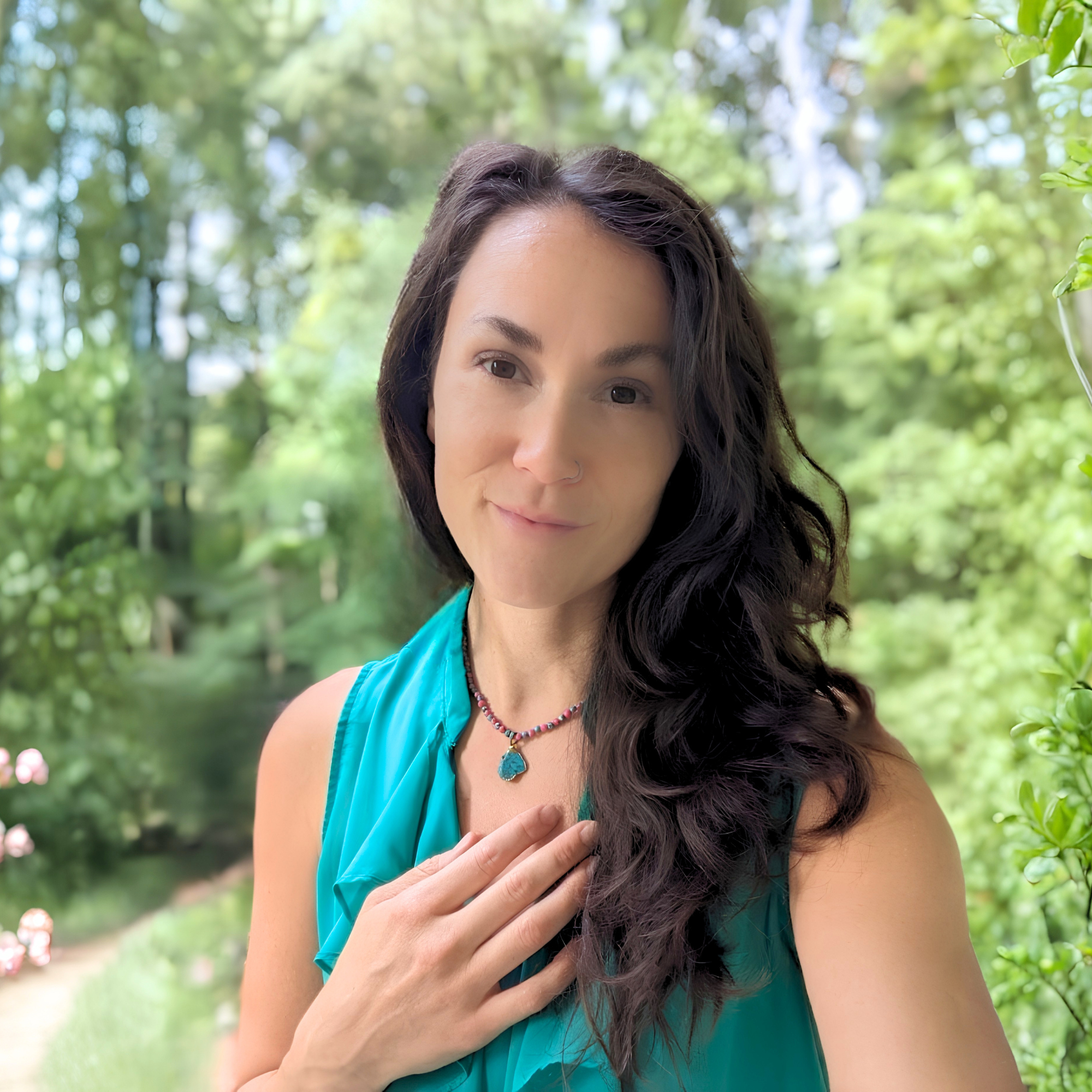
Women's Empowerment & Sexuality Coach | Consulting Hypnotist | Artist & Educator
I'm a consulting hypnotist, women's empowerment and sexuality coach, artist, and educator based in Asheville, North Carolina. After recognizing my ADHD and Autism at 39, I became even more passionate about helping sensitive, deep-thinking women regulate their nervous systems, rebuild self-trust, and reconnect with desire through hypnosis, somatic practices, ritual, and nervous system regulation tools. I work virtually with clients worldwide and create digital courses focused on anxiety, intimacy, self-trust, and embodied personal growth.
You'll find me exploring the intersections of neuroscience, psychology, sexuality, spirituality, creativity, and everyday life. I'm just as happy unpacking the mysteries of the subconscious mind as I am laughing at the wonderfully awkward realities of being human. I don't shy away from difficult topics like anxiety, shame, trauma, or intimacy, but I also believe healing is about discovering who you are with playful curiosity and replacing the narrative that healing must be hard with one that healing can be full of adventure and pleasure.
I’ve been consciously working with the Bitch Archetype since 2018. My work as a Women's Empowerment Coach and Consulting Hypnotist gives me the opportunity to hold space for other women as they embrace the unconscious parts of their psyche that manifest as habits and patterns they've been conditioned to believe make them unlovable Bitches.


