VBB 394 Sasha Cagen: The Art of Living Somatically!
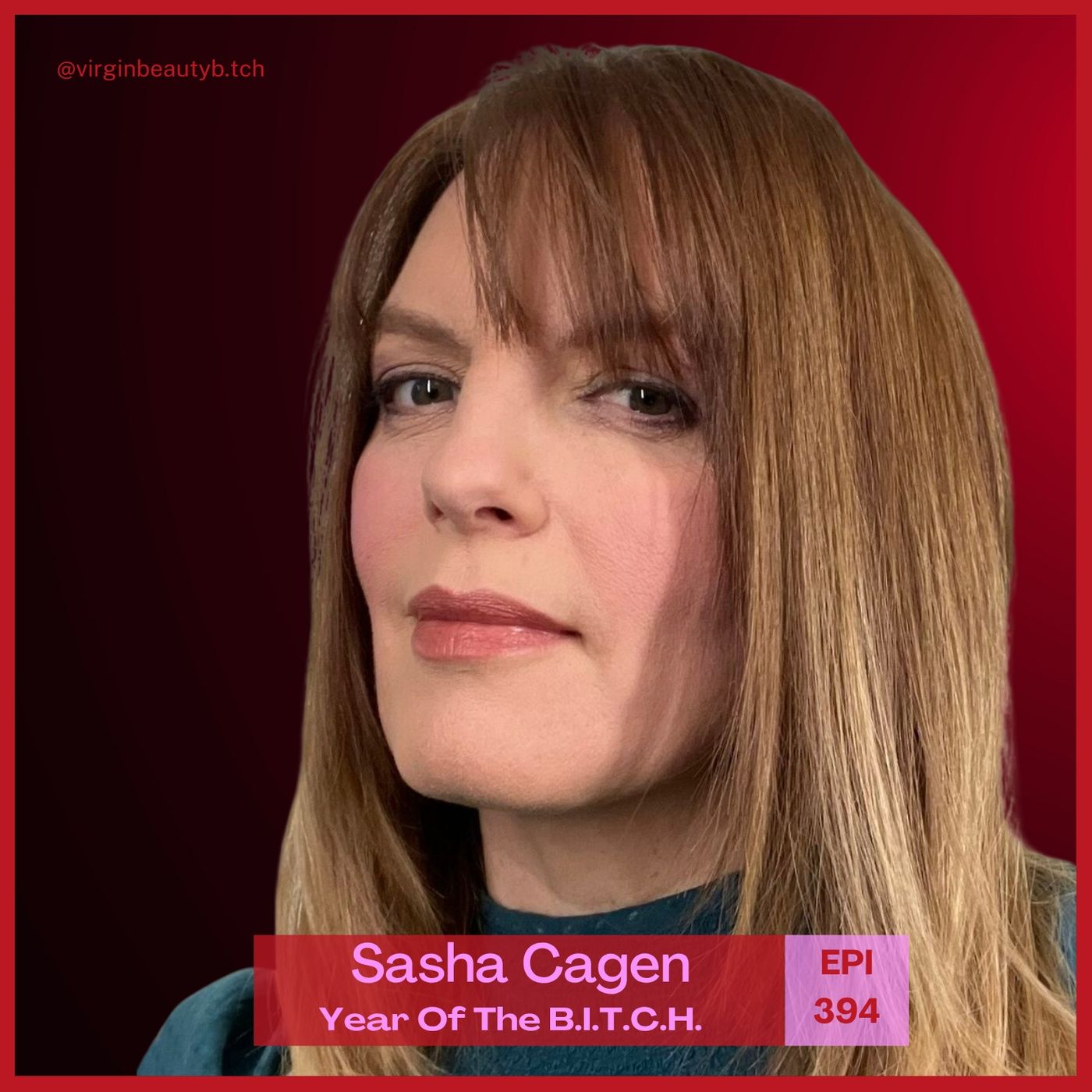


Key Takeaways
- Sasha Cagen emphasizes that embracing anger is a crucial part of emotional wholeness and healing for women who have been conditioned to prioritize people-pleasing.
- Unexpressed rage and chronic tension often manifest as physical pain or self-attack, making it vital to find healthy outlets like journaling or conscious expression.
- The concept of 'pussy walking' involves tapping into internal somatic pleasure as a powerful, everyday source of feminine confidence and energetic sovereignty.
- Reclaiming the words 'bitch' and 'pussy' serves as an act of defiance against patriarchal expectations and a way to establish unyielding personal boundaries.
Sasha Cagen is a leadership and self-leadership coach with over 15 years of experience supporting women in business and politics. She believes in holding space for women who are making change in the world and in helping them do so from their most centered, empowered selves. Sasha helps her clients work through imposter syndrome, perfectionism, burnout, and people-pleasing. Her signature coaching method integrates body-based strategies and creative expression to help clients step into their personal power and make inspired choices that reflect their true desires rather than feeling obligated to societal expectations.
A self-proclaimed Tango addict, Sasha has danced in exotic locations worldwide, including Bali, Paris, Montreal, and Montenegro. She asks, which environment would you prefer for emotional healing: the doctor’s couch or the tango floor?
As an author, she penned the cult-hit book Quirkyalone: A Manifesto for Uncompromising Romantics and To-Do List: From Buying Milk to Finding A Soul Mate, What Our Lists Reveal About Us.
Frequently Asked Questions
Who is Sasha Cagen?
Sasha Cagen is a leadership and self-leadership coach, author, and somatic expert with over 15 years of experience helping women work through imposter syndrome, perfectionism, and people-pleasing.
What is pussy walking?
Pussy walking is a somatic practice developed by Sasha Cagen that involves tuning into internal pelvic awareness and subtle 'purring pleasure energy' to fuel confidence and personal boundaries outside the bedroom.
Why is expressing anger important for women?
Expressing anger breaks the cycle of forced people-pleasing and manicured identity, allowing women to recognize injustice, access their authentic power, and move toward true emotional healing.
0:00 Virgin. Beauty. Bitch. Podcast. Inspiring women to overcome social stereotypes and share unique life experiences without fear of being defiantly different. Your hosts. Christopher and Heather. Let's talk, shall we? This podcast is built around three simple words. Virgin. Beauty. Bitch. Words so normalized, we've developed a tolerance around the trauma and damage they can cause. But we also maintain blind spots for the potential these words represent.
0:41 Bitch, in particular, has been turned into every woman's curse when the five letters in that word literally spell out a woman's path to growth and empowerment. If you choose to see it that way, and that's the purpose of the conversations we're having in year of the bitch. And today, we welcome life and executive coach, author and lover of a juicy life. Sasha Kagan. Welcome back to Virgin Beauty. Bitch. Thank you, Christopher and Heather. Your mission could not be more on point for 2026. Thank you. I actually looked back in the archives to see when we last spoke.
1:26 It was episode 215 or on our way to 400 at the moment. And that was in 2022. In that conversation, you shared this about the bitch. I think that's the one that I had the easiest access to reclaim is bitch. Even though I have a very complicated relationship with it. And I guess that's because I'm really interested in the power of our anger and how to use it in the best way. And I'm also very conscious. Lots of my clients are working with me to get over their people pleasing. Lots, that's very, very common that a lot of my clients feel like they don't stand up for themselves and think about others before themselves in many situations.
2:09 And the reason they don't is they're afraid of being called the bitch. So I know the power of that word. It's like that's the thing that's blocking them. The fear of being perceived as a bitch. After eight years of Heather and I listening to closely to women like you speak about the bitch in that way, a formula finally resolved into a truth, B-I-T-C-H. Detrayal, identity, trust, change, and healing are five step process to women's growth and self-empowerment. When I first shared these five principles with you, Sasha, what was your immediate reaction to that? The five principles of B-I-T-C-H, identity, which was T?
2:51 Trust. Trust, change. I mean, healing. Healing out. What's my first reaction to it? Well, I love how you're unpacking it and making it a journey to reclaim one's power. I suppose. Women's wholeness, I feel really present to how what I said earlier, a few years ago about women's anger speaks to the wholeness of who we are and that there are so many forces that tell us to be nice and pleasing and don't allow us to express the wholeness of who we are, how so often, and I hear that from my women clients about how they don't feel seen by people.
3:36 And that creates a great sadness of feeling very alone. But that anger is such an interesting topic. I continue to be fascinated with it four years later and I feel there's a vitality when we express our anger or realness that needs to be part of our journey of healing, your last H. I mean, I think that the last word is maybe the most important one, the healing piece because I work in the realm of the individual and the collective and I think that we're all working, the people who are in my camp and tribe are working to heal themselves as individuals and with other people.
4:21 So yeah, I like that healing is the last piece of it. What came to mind to me when you were saying that is, you know, the first letter there being betrayal, you know, and what you just said, I feel that something a lot of women identify with is that betrayal of not feeling the agency to go to anger, the agency to feel the anger, to express it without a lot of very real societal or relational consequences. So, you know, if you think about it within the context of betrayal, how do you think that women have been instructed to not go into anger and how have you helped your clients kind of move past that or through that?
5:06 Well, I mean, I'm going to speak about myself personally with anger and then about my clients. So, for me, anger has been a huge journey because I received feedback from people, let's say, about 15 years ago that I needed to learn how to express my anger. And personally, I found that very strange. I didn't really know what that was for because I thought, I was taught by my mother that you're supposed to call yourself down and think through what you have to say and then come back to the person to express yourself and that everything will go better in that case. And I think that there's real wisdom in that, but it's not the whole story because we get to be whole and being whole includes anger.
5:56 And I'm not really like a big fan of wisdom on Instagram. I actually see a lot of my clients get messed up by the personal growth and psychology stuff. They're consuming on Instagram, but I saw some little snippets somewhere in social media that fascism will continue to exist if we don't get to express our anger. And I think that this is just true, that injustice, whether it's personal in the way that someone is treating us or societal, will continue unless we allow ourselves to be authentic. And there's a live wire of energy that it runs through us in anger.
6:36 And I have another kind of personal story in this that will be in my memoir Wet. You said that I'm a fan of juicy living and I think you said that because I still have this book that I'm completing called Wet. And there's a scene in that book where when I was traveling in Brazil, I saw a woman go off on a man in a bar and she was just screaming at him and screaming at him and it looked like a betrayal. Like it looked like something like she'd been cheated on or something like this, very common stories in Rio de Janeiro where there's a lot of cheating. And I was just completely riveted by her because yeah, there you have a woman who is expressing herself, which is more common, I would say, in Brazil and Argentina countries where I've spent a lot of time versus the US or Canada where we're taught to be more put together or pleasing or like there's just a quality of expressiveness in those cultures that I admire.
7:35 And there's a vitality in that. And so to be honest and to be whole, I think we have to learn how to express our anger. It doesn't mean that anger can also hurt us if we stay in it. I don't think that anger is something that you want to stew in for a long time or forever, but it's something that needs to be moved through. So when I'm working with clients around this, I literally suggest ways they can express their anger, which could be angry journaling. you could write a few, if you have, if you have you on the page many, many times. You could shout out box. I mean we have to find ways to express it. And maybe it's with another person president or maybe it's totally on your own. But there is a realness to that that has to be felt. And if it's just ignored, I think it's sours and it turns into chronic pain. I mean there's a ton of work that has come out in the last 40 years starting with John Sarno and his work around this that's many other people have understood that basically unexpressed rage turns into self attack, turns into chronic tension in the body, turns into pain. So it's multi-dimensional that I think we need to express our anger.
8:59 I really appreciate that you said put together, you know, because I think that that is really like this, this deeper seated piece that women feel that we're more put together if we don't express our anger, if we don't allow our emotions to get the best of us, then you're more put together. And I think that that deep seated, you know, probably comes from women being seen as too emotional and you know, easily swayed because their emotions can get the best of them, ties into our menstruation, ties into our cycles, all of the different things that we've seen over the different eras. And so, you know, to talk about how each emotion is an expression of your wholeness and not something that as you've already articulated to stay stuck in, but you know, to really find those means to express it because you know that it's not only necessary, but a healthy way in order to understand injustice or what isn't working for you, understand your authentic self a bit better. So I appreciate that exactly what you said there, because I think that that's a key piece of what we need to shed if we're going to be able to step into our anger in a way that's like meaningful for our development.
10:18 Yeah, and I think that the distinction about you don't stay stuck in this forever is important and a lot of the strategies I share with my clients are about how to express your emotions even with yourself and journaling and then move through them because I can say for myself too, as a person who experiences anger, one of the benefits that I experience because of making personal growth and healing a big focus of my life is I can move through things faster and feel more empowered because I carve out the time and space to be in my rage. And I also go to Buddhist meditation centers where they teach that anger only hurts you and I get that and I get that teaching, but I think they're skipping over something and in that teaching there's a part that's about acceptance and I hold that expression as part of the acceptance that and that we get to be angry. And for sure men get to be angry, like that is often valorized and like a lot of women politicians I think are seen as inauthentic and not liked because they don't get to be their authentic selves. So when we get to be ourselves, people like us more.
11:31 We want you, we want women to be the manicured garden. The male garden can be wild and crazy and out of control, but we have conditioned women because of a word that we Heather and I revere right feminine. And when you talk about cultures in some cultures that wildness is revered as feminine in our culture, it is suppressed. It is completely trimmed and hedged and cut so so you have to be exactly this way in order to be feminine and to sway outside of that gets you a bad reputation. Yeah, even something to like painting your nails, like I had a client talking with me recently about the cost of going to many weddings when she herself is not getting married and is tired of being a bride to me basically.
12:26 So she says to me, well, you know how it is as a woman, you have to pay for your nails. Like, I don't pay for my nails, like actually, like I would consider what you said manicured, like all these expectations that have actually grown a lot in the last 30 years about what women are supposed to do to maintain themselves to be attractive. Like come on, like it's a choice if you want to paint your nails great, but it's not an obligation. That just a very simple thing that I think that we're kind of sleepwalking and that a lot of like with the rise of pornography, with this backlash that we're living now, there are so many standards that women are being held to and spending money on and you really don't have to do it.
13:10 And it won't stop. It, I mean, it stops because we question it. Mm-hmm. I think that that's a good piece to think on when it comes to the eye that really, you know, there's been a lot of instruction for a manicured identity for women. You know, whether it's the painting of the nails, whether it's this is the box of what feminine is and this is how the patriarchy enjoys the feminins. So this is the box that you need to stay in. I mean, obviously so happy that so many women and gender diverse people have just taken that and thrown it in the trash and said, you know, very much like what you're saying, Sasha, right? That I, I'm going to question it. I'm going to do something different. I'm really going to start to tune out the noise and tune into my own internal rhythm and what it's saying. But I, I so love like the work that you've done in talking about confidence and pussy walking. And so, you know, for this show in case people haven't heard, you know, you before, can you talk to us a little bit about pussy walking and because I think that there's something in that for every person, especially women, when it comes to trying to tune out the noise and understand their own actual authentic self.
14:20 Mm-hmm. I love the question and the setup and I really want to talk about pussy walking a lot right now with what we're seeing in the world is sexual exploitation of women, children, men and boys. I'm going to be inclusive that I think a lot of people sexuality is being exploited in the world right now and my work is about opening the door to how everyone, regardless of their gender, can tap into the power they have inside of them to feel more vital and confident. So pussy walking, I'm aiming at it women first, but men can sort of adapt what I'm saying for themselves and I'm going to explain why the word pussy and what it is that I'm talking about.
15:03 So I'm using the word pussy as an act of reclamation and I totally understand that it's a provoking word for people in the U.S. I don't know how it is in Canada. When I share, I'm in Argentina right now when I share pussy walking with people in Buenos Aires, they're like pussy walking like they have no resistance to it whatsoever. But in our culture, it's like I was just listening to an interview from like the mainstream media where they were like, can we use the P word that was described in the Epstein emails? Like they're afraid to use it. So boom whether you like it or not, I'm using the word pussy and I'm doing it intentionally to reclaim women's bodies from the inside out. I happen to like that word more than the C word and I think it can be a fun word.
15:46 And so basically for the last 15 years, I've been on this study about female sexual energy outside of sex with the knowledge that the clitoris is not just a little button but is an internal organ with an enormous amount of nerve endings that can be awakened for pleasure. And I'm not talking about the kind of pleasure that's like big O when Harry met Sally at the table for eating or guess some kind of thing. I'm talking about something like a subtle, pre-pring pleasure energy. And now I've had the experience of teaching this to hundreds of women over the last 12 years. So I've been on a panel with an OBGYN who teaches Harvard Medical School and she looks at me and tells me I'm teaching her things that she didn't learn in medical school because I have the experience of sharing this with women. So you know, if this was 12 years ago, I wouldn't be so confident in telling you all of this but now I have a lot of experience.
16:44 It's for everyone, no matter what your age, postmenopausal, paramanopausal, premenopausal. There is this internal organ that we have that when we become aware of it inside of us and I teach it through breath and visualization, simply bring awareness to the pelvic zone and the internal clitoris can awaken this energy of pleasure. And my philosophy is that pleasure fuels confidence. And it's really super common sense that like when you feel bad and when you have more pain, you don't feel good, you're less vocal and you're just likely to stand up for yourself. But what happens when women learn to pussy walk is they activate this pussy energy and then I teach them how to distribute that energy throughout their bodies. So basically it affects your pelvic zone, but it affects your whole body, it affects how you walk, it affects how people perceive you.
17:45 But mostly it's about how you feel yourself. And what's been really cool in my coaching practice lately is that I'm attracting a lot of women leaders who are in politics and business like literally and very important conversations that are happening in the world around democracy, around AI, around the media. And women, even though they are at very high levels of power, often lack confidence, like this is something really astonishing, like you might be surprised that women who have achieved so much, they talk about imposter complex, they talk about not wanting to talk in the media, you know, all of these things. And so literally with these women, I'm talking to them about their pussy energy and how to activate it before they speak, you know, give a talk, talk in the media, talk in legal settings. So I'm just loving it. Like I just feel and a lot of those young women are they're open to the pussy energy. I have European clients who send me like pussy beer from Austria where they I've carved out a really good niche for myself. I have to say because and I like the word is provoking, but also I have received compliments from women who have been happy that I've been able to say that word in a tech conference, for example, to a room full of men. And I guess the reason I really want to talk about this now is because of what we're seeing in the Epstein files that we're seeing
19:17 this world that's being revealed, we're kind of living another me to movement moment. When we're seeing that these people who are at very high levels of decision making and our culture do not think twice about networking with someone who's already been convicted of child sex trafficking. And what happens to that zone of our body when we don't feel like we own it and like it's for other people, it goes dead because of shame because it's like, I mean women there's a lot of layers to this. Many women are in relationships and it feels like they're there to have sex with their partners and it's not for them that they don't own their bodies. And so my work is really about owning your body for yourself, owning your pleasure for yourself and all the ways that can serve you in the world outside of the bedroom. I think for us the word bitch is that reclaiming of one's own power is about this associating this narrative that you're here to please others and yourself last. So I believe these two things are synchronous. They work together reclaiming that strength of who you are, whether the world wants to call you a bitch or not, it's you, it's yours. And what you are alluding to also is focusing on your own power, another power that can bring you further into who you are into this big world of
20:50 ours. 100 a million percent and I'll share a little personal story that's really fresh from my own life that I just went out with someone for a few weeks that I don't like the way he acted. And in my history because I'm a life coach and I'm a really good listener, I tend to listen to people and their problems in a way that can be kind of suffocating for me. And so basically while I've been going through this process of cutting him out of my life, I've been activating my pussy energy and the pleasure in my body. I'm like I just don't even see you. I don't care. And like am I being a bitch because I'm caring about my own emotional well-being more than yours. Well yeah maybe, but it's my priority and that has been feeling really good for me and I've been so present how creating pleasure in my body helps me to set limits and say me, not you. I think that's such a beautiful way to tie those two things together because you know when I think about confidence and how it's tied to sexuality and even going as deep as the word pussy and how activating it can be for people or it can be used in a derogatory way when we're talking about somebody being weak or a pushover or etc etc.
22:05 Like it's again like the word bitch been so demonized in some ways or undermined or undervalued or just made to be a context that serves a certain gender let's say. But I think about how freely, you know, male sexuality is explored, expressed, expected. And the confidence that comes along with knowing like that they deserve, like feeling and internalizing that they deserve to have that kind of gratification. And to how many women do not feel that same thing because of sometimes culture, sometimes religion, sometimes just how our society treats women and our bodies that it's for someone else rather than ourselves. And so you know even while you were speaking and you were talking about the pussy energy and zoning in on that internal organ like I went there, you know TMI for our talk right now maybe. And there is something you know for you to say it's like a purring pleasure energy.
23:10 I think that again is something that's so powerful because there's so much focus on the big O or like you know my body's wrong because I can't get there as fast as my male partner if you are dating a male partner, etc. So to allow yourself just the pleasure of it being a light purr and really just feeling that energy source that's in you, it is like I feel like one of our biggest energy confidence sources that has been untapped by women. So to hear you talk about it and then tie it to I'm feeling strong in my boundaries. I'm feeling strong in what I will or will not accept. And maybe that makes me a bitch but the pussy is guiding the way. That's just so cool. The pussy may guide you to say yes to someone but the pussy may also give you the energy to be okay in yourself to shut something out that is not serving you and keep your attention on yourself and other people who are good for you. And I do. I absolutely love what you just said and I would be remiss if I didn't also note the word cocky means confident. And this always is a point that opens people's eyes of like huh how come cocky is strong and confident and swagger and we don't really hear anything like that for women and pussy is supposed to mean weeks. So this is one of the points that I always like to throw out there just does something to sit with. I do want to do a shout out also for the book
24:41 called pussy a reclamation. New York Times bestseller. That book changed my life and you know that Regina that is the creator of the school for womanly arts in New York City you know explores a lot of what you said but I love your own passion and your own direction with it. I mean there's really a huge wide world of people to be doing this amazing work but you know if people haven't read that book I I highly recommend it that one was a true game changer for me. Yeah she and I have some similar teachers and you know I risked I've been to one of her live events and I respect her my passion. I have my own pussy walking past. Yes absolutely that is so cool. So you started this conversation off with the last of the words in our process which is healing and for us healing has no beginning has no end it goes through every one of those steps.
25:46 You're always healing every experience you have is an opportunity to heal so it's not an end. How do you how do you present healing in your work? I would say that I agree that there's no end point because in the end every experience that we have is one of my clients who's making a joke out of it says "F growth opportunity" you know so you can you could feel that way about it but I think that ultimately yeah where we're on this planet and life is a gift and everything that we experience is a chance to learn from. I think one of the messages that I'm on this planet to share and is a strong message in my memoir what is that healing happens in many different ways along many different paths so there's a an inflection point and a story that I'm telling where I could have chosen to stay in California working with a therapist who is helping me look at a secret of childhood sexual abuse that I hadn't talked about and with really anyone and I was about 38 at that time and that was a very important moment but at the same time I felt called to return to one of his ideas to re-immersed myself in a culture of tango and I think that once you're on the healing path sometimes you have these intuitions and callings and someone will ask you like why are you doing that and you might not really know because there's just something that's calling you forward I think it's a completely
27:18 valid answer to not know but if you feel something is good for you and then it's going to help you heal it will and one of the things I really liked about that therapist and she sort of informed who I am as a coach like a lot of my clients sort of see me kind of like a therapist more than a coach because it's not just check check check get things done it's more like the whole being of a person one thing I really liked about her was a sentence she said to me there are many ways to heal and this I think is just very very important that we respect the many ways that there are to heal I have a big focus on the body tango for me has this been an incredible path of healing because it's a relational dance it's how to show up with someone else and be connected and yet autonomous and in your power and I don't think I would have gotten there alone just by talking to someone and sitting on a couch I think I would have remained like really like not in a good place and I needed to move I needed glamor I needed sexiness I needed a different culture I needed community and you know kudos to me that I listened to myself and did that and and was scary you know but I think that healing yeah healing can call us forward on adventures and it's all valid and a lot of people will say like oh don't leave your problems don't try to leave your problems behind by going traveling and you need to do therapy well who are you to say what that person needs you know that healing happens
28:52 in all kinds of different ways therapy obviously is great too but I I think that's just I just want to value that and even like I help people marry themselves you can do ritual to heal yourself there's like healing can be fun it's not just uh sitting in the corner dirty dancing gave me just dude I don't just have to sit in the corner in therapy I can also go do whatever I want and I think that's why we are having these conversations inevitably it is about healing it's about hearing experiences from women like you that resonate and spur on healing and someone else so we are really appreciative of someone like you having the courage to share and open your life and your experiences up so this can hear and hopefully connect themselves to hopefully moving forward in their life absolutely and the other thing I would say about healing is when it's possible like that's a thing I think we all have to remember it is possible you can change it that's just a basic point and it's good to get support and having spent a court maybe like a really high percentage of my life in Argentina now where therapy is totally normalized I have a completely different perspective than the US that we're all human we all need help there's nothing shameful about reaching out for help get it in all the different ways you can and you know
30:24 use it no I don't think people heal alone like we need other people to heal I just to kind of bring home what you had said earlier and how it ties to healing for me at least is is you know through movement through the somatic work through that visualization and and feeling your body and ultimately you know learning how to trust your body as well as your gut and your instincts like that is such that's been a huge piece of my individual healing journey but I totally agree that there is not just one way to do it I had somebody that I really love and appreciate and respect to said to me and it's funny how one line can really stick with you for so long that there's many arts to healing and and I feel like dance sometimes talk therapy sometimes it's rituals like you said learning how to love or marry yourself that there are really so many ways to go through it and that was that was releasing to to to hear and to feel it I totally agree it's very important and also the point I think you made it Christopher that it's an ongoing journey never ends and that's great actually it is that's the magic right it's not like like a bus stop or train stop or an airport okay here it's done I mean sometimes I feel like that would be nice if like some of the trauma could just like go away what you could stay and just like be healed you can stay at the airport overnight okay
32:00 but as soon as later they're gonna move you along I do think sometimes you kind of like reach a new understanding of yourself and it's almost like cyclical but you've like reached that and maybe there is a step back and a step forward again but with deeper understanding you kind of I feel like I have released certain things that I wasn't able to in a past and and sometimes that makes me feel like I don't know even though it's an ongoing journey that continues to change that there were certain goalposts that I feel like I I did get through and there's something looking back at that that actually is important I think that it's I don't feel like I'm stuck in the same parts of my healing journey I would say the same too and I'm I'm living a really interesting moment in my life right now because I'm in Buenos Aires right now and I've been coming here for 15 years and I don't know if it's healing or confidence but I feel more confident than I ever have like even just interacting with Argentines like I can participate in their culture introduce myself very easily it's almost like people always thought I was confident but I didn't feel it myself and now I'm like oh now I'm really confident and like my dancing is better than ever I've found the best tango teacher ever and and it's joyous and so but I think there's also something important about recognizing I can still spiral like in tango we go to dance in mielanga I can still spiral in feeling rejected if nobody wants to dance with me that's okay like I it still can happen but overall my confidence level has increased
33:34 as I think is a little similar to what you're saying like the forward progress there's backward progress but overall the direction is quite good so you are I just saying you have a niche do you want to express what that is and who it is you want to attract to the work you're doing so I wind up working with all kinds of people because people are attracted to me and if I feel a human connection and I think I can help them I'll work with them but right now what I'm really loving is these women leaders whether they're individual contributors or their founders of a company or their politicians who are coming to me wanting to work out personal and professional issues and I just love working with them because we interject this pussy energy and this body focus and then they become more empowered and clear in their mission and it has this kind of multiplier effect and so I just love it because there's an entrepreneur in me too so I love to be kind of on the back end like I'm I'm going to be giving a pussy walking workshop to the wait staff at a restaurant owners restaurants in Rhode Island where I'm from and it's through working with a business owner that we can see how learning pussy walking would benefit her staff and then be able to have a conversation about confidence and how to deal with sexual harassment and it's it's just fun so I think like women business owners women business owners and political leaders is a real sweet spot for me right now because
35:08 I care about the collective and through working with those women we get to have a great impact how do people get in touch with you if they are intrigued so they should go to my website Sasha Kagan S.A.S.H.A C.A.G.E.N. if you want to reach out you know there's multiple ways of doing that there and they should get on my newsletter because I prefer the newsletter to social media because I feel more empowered through that than playing to an algorithm that really disempowers us and then also you should definitely go to the pussy walking page on the website and sign up for that so you can get instructional videos on how to activate your pussy energy.
35:54 I love it I love it. So, it's been really really fun. Having you back it's been a long time but it seems like no time has passed in the kind of growth and conversations that we are able to share with one another so thank you for participating and being so yourself with us we appreciate that. Thank you for being interested in also being so yourselves. I feel like it's been sensual and sexy and healing to be here with you so it's so cool to see you again after a little bit of time has passed and to reconnect because it really is juicy and wet with you. It was really not at all but you tell me that while I'm talking about the purring pleasure of pussy energy that you feel that that is exactly what I hope for every listener that they begin to feel it themselves. All right so listeners out there if you're feeling it let us know because we want to hear it. Thank you so much, and all this brought to you by The Virgin, The Beauty and the bitch in the BITCH year of the bitch. Find us like us. Share us. Come on back. To become a partner in the VBB community we invite you to find us at virginbeautybitch.com like us on facebook, instagram and linkedin and share us with people who are defiantly different
37:28 like you. Until next time thanks for listening.

Life + Executive Coaching for Women in Business
I am a life and executive coach for women 40+ on all things personal, professional, political, and intimate.
I grew up as a conscientious overachiever, working hard in high school to come out on top as the valedictorian. By age 33, I had done a ton of cool things, including publishing my first book and co-founding a Silicon Valley social media startup. I didn’t like that male-dominated environment, or what I perceived as a lack of ethics in the industry, so I decided to “get out of my head and into my body” in South America.
In my mid-thirties, I spent a year traveling solo through Brazil, Colombia, and Argentina, which sparked a passion for Tango and a new way of thinking about living somatically, connected to my body. When I returned to the US, I retrained as a life and executive coach, using body-based insights and a somatic approach that became the foundation of my work.
Right now, many people's sexuality is being exploited around the world. My work focuses on opening the door for everyone, regardless of gender, to access the inner power that helps them feel more vital and confident. Pussy-walking is a practice I created and teach, using the word 'pussy' as a form of reclamation. I teach “pussy-walking” through breath and visualization. My belief is that pleasure fuels confidence. It's common sense that when you're feeling bad or in pain, you're less vocal and less likely to stand up for yourself. But when women learn to pussy-walk, they activate an inner energy and learn how to move that energy throughout th… Read More


