VBB 381Jennifer Sack: Why Self-Negotiation Is A Painful Trap!

Jennifer Sack is a Speaker, Writer, and Educator whose three-year struggle with sobriety taught her how to escape what she calls the “self-negotiation trap,” which can make any change feel emotionally threatening, even when it’s necessary.


Jennifer Sack is known for her bold approach to self-love, which began with sobriety and evolved into a holistic healing and well-being practice. Jennifer unpacks the hidden traps of self-negotiation and challenges women to embrace change in their journey to rebuilding self-trust.
This conversation also explores the kind of addiction that goes beyond just substances; it’s about the importance of listening to our inner GPS, rethinking self-care as “selfish," and finding practical techniques to help women ground themselves while moving through stress and discomfort anywhere and at any time. If possessing powerful tools to create a Focus - Driven life is your priority, consider this your gift.
Virgin Beauty Podcast, inspiring women to overcome social stereotypes and share unique life experiences without fear of being defiantly different. Your hosts, Christopher and Heather. Let's talk, shall we?
Christopher [00:00:20 - 00:00:59]
It might seem like a subtle difference, but it can make all the difference in the world when we separate genders by who's encouraged or forgiven for being self-centered, versus who's cursed when they defer from being eternally selfless as a result. For women, initiating self- love can be fraught with guilt, shame, and fear of being labeled as a selfish Bitch But that doesn't need to be your fate. Not according to speaker, writer, educator, and wellness expert Jennifer Sack. Jennifer, welcome to Virgin Beauty Bitch.
Jennifer Sack [00:00:59 - 00:01:02]
Thank you so much for having me. I'm looking forward to our conversation today.
Christopher [00:01:02 - 00:01:45]
This is going to be fun. Now, Jennifer, I mentioned that Heather and I have committed to evolving bitch from a pejorative word to an empowering act. And to anyone new to our Year of the Bitch series, we've separated each letter to reveal an acronym. B is Betrayal, I is Identity, T is Trust, C is Change, and H is Healing. B. I .T .C .H, which represents a path to women's self-empowerment and personal growth. Now, Jennifer, when I shared our unique construct, you immediately identified betrayal as a self-negotiation trap, which is a powerful perspective. Can you elaborate on that for us?
Jennifer Sack [00:01:46 - 00:02:30]
Yeah, absolutely. It was something I found in my own story and throughout my life in a couple of different ways. But what I found is that we tend to get stuck in self-negotiation anytime we know there's a little change, or a big change that needs to happen. And sometimes there's a quiet knowing, sometimes there's a rock bottom, but it doesn't always have to be, and I think that's one of the things that hangs us up, is we feel like it has to be this big grandiose moment. But truly, inside of us, we are getting nudges all the time. We are getting notions that maybe something's not aligned with us anymore. But rather than just moving through change because our nervous system freaks out anytime something unfamiliar comes around, we tend to stay in the self-negotiation loop or trap.
Jennifer Sack [00:02:30 - 00:03:06]
And it really just is exhausting. It's a way of procrastinating and it is not helpful. And once I had gone through, we can get into my own story when that comes up or when you want to. But once I had realized that I was expending so so much more energy just stuck in the loop of self negotiation going back and forth between reset and backslide than I would if I just moved through the actual change and got to the other side. That's when it was my eureka moment. And I thought, what is going on here? I've had enough time to move through this instead of beating myself up over and over again over here in this camp.
Christopher [00:03:06 - 00:03:25]
Well, let's hear that self-story because, yeah, Heather and I, we've had this conversation with other guests, as in what is it with human beings? Why do we have to crash and burn before we learn? Like, what is up with that? But I mean, that's something that happened to you that I appreciate.
Jennifer Sack [00:03:25 - 00:04:08]
Well, to answer that bluntly, I just think that because we avoid change. Sometimes it has to be a crash and burn that catapults us into an undeniable, non-negotiable, has to happen type of moment. But before that, there's all those, like I mentioned, all those notions that you do crave some sort of change, whether it's in your health or lifestyle, your diet, a relationship, your career. It could be like, for me, it was sobriety. So that was my biggest hurdle to get over. After decades of substance abuse. I tried for years to be sober, and I would backslide every time.
Jennifer Sack [00:04:08 - 00:04:40]
Sometimes I would be sober for three months, sometimes for three days, sometimes three hours, like it, depending. This happened for three years. And this was after years of knowing and having that inner nudging that this needed to change. I put it off as long as I could, and then I went through the cycles of the backsliding, the negotiating, the maybe I can moderate, or when this happens, then it'll be the right time. All those fears would come up, which is a very, very natural thing. And that's typically where we'll put on the brakes. We see fear as a red flag. This is not right.
Jennifer Sack [00:04:41 - 00:05:26]
And we try a negotiation tactic in our back pocket to pretty much keep us in the same place, so that our nervous system doesn't freak out and have to move through something that is uncomfortable. Because, as we know, the nervous system loves familiarity. Even if we know something's not the best for us. It's like this is known territory. So let's hang out here and just tolerate. We can set a standard where this is okay, or any sort of reasoning. We're all really good at reasoning our way into why it's just not that bad yet, you know, or comparing once I'm as bad as that, then I'll know. Or when this happens or when they do this, then it'll be the perfect moment that is a mirage that that perfect moment is never going to arrive.
Jennifer Sack [00:05:26 - 00:06:14]
So, for me, I had just had it with the years of going back and forth, and there were many legitimate fears that came up. I'm not saying these fears aren't legitimate fears, like what will happen to my marriage, what will happen to my social life, how will I even cope with my anxiety if I'm not using substances? I've been using substances for so long, I wouldn't even know what that life looked like. All these very, very legitimate fears. So I never want to sort of squash your fears. I want you to call them out, name them, be present with them. But the fact of the matter is, they will hold you back until you just make the decision to change.
Jennifer Sack [00:06:14 - 00:06:44]
And the loop itself looks just like that. You have an awareness that something needs to change, and all the fears inevitably crop up. Your nervous system goes, whoa, high alert. And so that's when the negotiation kicks in. And then you start setting all these like rules and parameters that make it tolerable or okay. And you may even, for some time, do okay moving through change. But inevitably, you have a setback, you go through regret, and then you go, okay, let's start over. I'm going to do it. The diet starts Monday. You know, the thing we've all done before, and then it loops over and over again.
Jennifer Sack [00:06:44 - 00:07:17]
You just keep going in and out of this. So what the idea is, is that you want to head yourself off in that loop. You know, when the awareness comes up, something needs to change, the fear comes in, you acknowledge it, you call it out, you ask it what it wants from you, you validate those. But instead of going through this whole negotiation cycle, you just make a decision. You decide, nope, I'm done. We're changing. “No Mass." And then from there, it's about taking aligned action that will help you start to rebuild your self-trust.
Jennifer Sack [00:07:17 - 00:07:50]
Because every time you backslide, or go back on the thing you said you weren't going to do anymore, whether or not you announced it to a group or kept it to yourself, every time you do, you’re nipping away at your own self-trust. And that happened to me. I got to the point where I wouldn't tell anybody. They'd heard a million times I was getting sober. And so it became very embarrassing every time I would backslide. So then it became a secret every time, just a secret promise. Because then it could be less embarrassing. But finally, the day hit where I just realized, you know what? I am suffering here.
Jennifer Sack [00:07:51 - 00:08:09]
Yes, I might suffer over here moving through this change, but let's weigh out the two. Like, pick your poison, literally. Which one would you rather be suffering in this boat of going around and around when you know something's not aligned with you, or just having some discomfort as you move through some change?
Heather [00:08:09 - 00:09:08]
I so appreciate your work because addiction, I feel, is something that is really. We're opening up our definition of what addiction can mean. And on your website and in your work, I've noticed you talk about the dopamine trap, which definitely piqued my interest, because your work speaks openly about how attention, focus, motivation, and emotional regulation are tied to our brain chemistry. And I think that we live in a culture that's very addicted to stimulation. So when you talk about the loop that, and this internal negotiation that people, especially since we're talking about women in the forefront of this podcast, that internal tension between awareness of what I need to do, the fear of what that change could actually look like, what does that life actually mean for me, and sometimes coping with my insecurities through not making that change.
Heather [00:09:08 - 00:09:32]
And there's an addiction to what the feeling is when we continue on the pattern that feels comfortable to us. So in your work, when it comes to women's nervous systems, how do you think that they can help to, I don't want to say override, but kind of move through, like the dopamine crash when they're not going to their usual stimulus.
Jennifer Sack [00:09:32 - 00:10:16]
Oh, my gosh. I totally understand that. Just to expand on what you said there about the dopamine trap, it's just truly like, we are really more inclined to go for the quickest hit, right? The easiest access to feeling good. I think at the base of everything, anything anybody ever really wants is peace. And whether you're struggling with some sort of trauma or whether it's just true addiction and you're craving that dopamine hit, you're really, really reaching for something to make you feel better. So substances are a quick release of that. It's a really fast pathway from A to Z.
Jennifer Sack [00:10:16 - 00:11:06]
So it's super natural, I think, for us to fall into the trap in the first place. So give yourself grace. If you're someone who struggles with addiction, like the substances are wired themselves to keep you coming back to them because they are that quick relief that we go for. And the nervous system plays into this entirely because we want to regulate ourselves. And when we find a quick way of doing it, we lose touch with the innate ways that we can do that on our own. We are built to self-regulate, but we lose kind of the muscle memory of how to do that. And so I feel like the best thing I could say is get very, very familiar with one to two, maybe three tops, grounding techniques or any sort of nervous system regulation tools that work for you.
Jennifer Sack [00:11:06 - 00:12:04]
It's different for everybody. What works for you might not do so much for me, but you need to find something that's efficient, that's effective, that you can remember to do. That you can do anywhere, that you can pull out of your back pocket anytime you do need to regulate. And the more you learn to do this on your own, even before making any change, the more you learn to do that and regulate yourself, and come to this place of sort of neutrality, you will be more empowered to know that you've got yourself when you do move through the change, and when those real spikes hit, when the real, when the going really gets tough, you know, and it's harder because you don't get as heightened a response from doing it yourself. Like, substances really ramp up that piece, that relief. You've got to get almost like a new baseline of what good feels like for you. It's not as exciting to regulate on your own as it is to use some substances, right? It's like more of a natural calm. It feels much different than what you feel when you use substances.
Jennifer Sack [00:12:05 - 00:12:39]
So you have to kind of get used to what that's like and set that as a new baseline so that it's easier to move through. And I also think that we need to stop avoiding discomfort. Like you have to get a little okay with being uncomfortable because really that's the only way to dissipate what you're going through, to get to the other side. You have to understand that you're still safe. You're still going to be okay. It just might feel a little edgy.
Jennifer Sack [00:12:39 - 00:13:23]
It might feel like you don't want people right now. Like you need to be on your own without people around. You might need some naps. You might need different ways to regulate and to really just come back to your own homeostasis for a while. You have to know that this can be a process, especially when it comes to addiction. Because if you were like me, and you had done it for such a lengthy period of time, you're not just like a one-and-done, okay, I'm better now. The decision is great. The decision to get sober or make the change that you're making is going to provide you a tremendous amount to learn just in itself really, because you're no longer in that mental warfare all day, of the back and forth and the negotiation. So energy frees up.
Jennifer Sack [00:13:24 - 00:13:38]
But then you have the real-life situation where you have to move through that, and you have to be able to sit, what I call “sit in the mud”, and just sort of be with discomfort while learning how to set that new baseline for yourself.
Christopher [00:13:38 - 00:14:09]
I'm always fascinated with the concept of a baseline. And in our world, we call that identity. As children, we are groomed out of our identity in order to fit into society. How do we reconnect with our true self, the thing that nobody wanted to listen to or deal with when we were young? How do we reconnect with that entity, that identity?
Jennifer Sack [00:14:10 - 00:14:37]
Yeah, that's like what I call your inner GPS system. That's your inner guidance system. It's always there. Unfortunately, our society doesn't really support this connection. They don't really nurture it. Now there are pockets of society that are built around wellness and healing. Absolutely. But generally speaking, look around. The amount of distractions we are bombarded with, from notifications to social media to having a really heavy schedule, that go-getter mentality.
Jennifer Sack [00:14:38 - 00:15:46]
There's so much masculine energy running around that is dragging our attention outward that it's no longer this natural inclination for us to turn inward, to sit with quietness, to listen to what's coming up from within. We're really great at pushing it down, moving on to the next thing, and ticking the boxes, distracting ourselves, constantly getting dopamine hits out there instead of sitting with ourselves. So I always, because I'm a meditation guide, my background is in teaching yoga and meditation for over a decade. I always will advocate for meditation. Some people hear that word and run for the hills because they're like, I can't sit still, I can't. My mind, there's no way. But I think that the idea is not so much to obliterate every thought in your head, it's really to just allow yourself to be with whatever is, whatever that looks like, without judgment. The more you can be in that space, you'll start to filter and notice what is you, what is not you, what is outside influence, what is truth from within.
Jennifer Sack [00:15:46 - 00:16:33]
And it's actually quite a visceral feeling. If you tune into your body, you can feel what feels true for you. It's going to be expansive, it's going to feel light, it might feel warm, it might give you that hit of dopamine. If it's something that's not of truth, that is somehow conditioned, it might be more contraction in your body, you might feel all sorts of tension. Anything different for everybody, and where you feel this is unique as well. But that's why you have to spend the time. You have to nurture that time to get to know yourself again. Just be quiet with yourself and get more acquainted with what that inner voice feels like and sounds like in your body, because that is the highest, most aligned version of you that you can ever follow, if you're willing to do that.
Heather [00:16:33 - 00:17:28]
When you speak about kind of all moving through this very masculine world in masculine energy, with a lot of output as an indicator of worth or stance in the world, or even part of the identity, as Christopher was just saying. And so to be still and to look inward is. It can be very daunting. And I feel that, you know, for women, it's particularly interesting when it feels like there's constant noise around us, but a calling to want to go inward, or a kind of deep knowing of when things aren't sitting right. Or a woman's intuition. I'm wondering if you can share with us, you had spoken a little bit previously around some grounding techniques, and I totally agree that it's different for. For every single person.
Heather [00:17:28 - 00:17:39]
But are there ones that you feel are really powerful that are a starting point for some of our listeners that they could try out?
Jennifer Sack [00:17:39 - 00:18:01]
Yeah. So it'll come as no surprise because I'm sure we hear it all the time, but your breath is a really great place to start. One, because we all breathe always. So it's there for you. It’s going to be effective. It's effective because it's intrinsically linked to your parasympathetic nervous system. So if you work with your breath, your body cannot help but respond.
Jennifer Sack [00:18:01 - 00:18:44]
If you ever notice, if your breath is either being held or is at a rapid pace, there's tension in your body, there's hyperactivity. If you slow down your breath, if you elongate even your exhales, if you even just balance your breath, maybe you can't elongate them, you're in too much of a heightened state of anxiousness that just finding a balanced breath between the count of the inhale, the count of the exhalation, there is no way for that not to affect your body, and your nervous system positively. So if that is the lowest-hanging fruit you ever work with, it is still the rock star of all the grounding techniques. Pay attention to your breath. And if it's too much to, like, count and control your breath. Just watch what you're doing.
Jennifer Sack [00:18:44 - 00:19:32]
Are you even breathing? Are you breathing up here in your chest? Or is it making its way down to what would feel like it could flood your belly? That's where you should be relaxing, the solar plexus, really getting that full breadth of air to help you relax. So that would be like always, the number one to go to. But I do remember one more subtle trick of the trade that I always employed at work. Even so, you can do this out and about. You don't have to tuck yourself away for a private moment. But I'd be helping customers at work, and I'd have tension and things going on, and I would do what I call nose and toes. So I would try to sense the tip of my nose as well as sense the tips of my toes or even just wiggle my toes. And that will bring you so closely into your body, get you out of the head.
Jennifer Sack [00:19:32 - 00:20:09]
Whatever spiral you're having up there, it's going to get you grounded inside your body. Because it's really about feeling your body, being present with the energy that's there. And when you do that, your mind will naturally start to slow down. A lot of times, we want to enter through the mind because we hear about meditation. We're like, okay, I'll start with that as my entry point. That might be hard for a lot of people. It's much more accessible for most of us to have grounding to get into your body to feel sensation and allow the mind to follow that calm train than to try to calm the monkey mind and hope that your body's going to respond and relax.
Christopher [00:20:10 - 00:20:13]
Here's what I want to know. Are there any bitches on the calm train?
Jennifer Sack [00:20:13 - 00:20:15]
Are there any? What'd you say?
Christopher [00:20:15 - 00:20:18]
Are there any bitches on the calm train?
Jennifer Sack [00:20:18 - 00:20:38]
Yeah, they're your inner roommate. We all have the inner roommates, and it's all the voices and the judgments and the things going on in your mind that you secretly fear about yourself or feel about yourself. And they are there, too, along for the ride. So name those bitches. Tell them to take a seat.
Heather [00:20:39 - 00:21:49]
Very cool. You talked about this, and it's one of the letters in Bitch for us. The inner trust that, you know, when you make an agreement with yourself or a commitment, whether it's with yourself or with other people, to not honor that, or fulfill it, starts to erode our sense of being able to trust ourselves and have other people trust us and believe our word. And so for so many women who know some of the work I'm exploring right now is radical honesty that for so long we've been, I don't know whether it's for survival mechanisms, or people pleasing mechanisms, or just really kind of scratching the surface of knowing ourselves in a deeper way, of what we truly want. Radical honesty is very challenging in many areas of life, at least for me in my life. And the more women that I talk to, they're really trying to step into what radical honesty means for them. And I think that's intrinsically tied to this building of self-trust.
Heather [00:21:49 - 00:22:21]
So in some of your work, I've read that you talk about living in a state of flow, and sometimes that's tied to what feels to me a very feminine energy. And I think that is when you're connected to that radical honesty of yourself, and you're able to kind of feel into what is right for you. But can you describe for our listeners what a state of flow means for you, especially with women who feel disconnected from their own presence?
Jennifer Sack [00:22:22 - 00:23:10]
Right. Well, I think the easiest way I can say state of flow is one: when you're in a state of flow, time ceases to sort of exist. You don't actually know it until it's over. Have you ever, ever had those moments where you're like, wow, like a half hour just passed and it was a blink of an eye? Like you were in flow, you were in a state of flow in that moment. It's when you're present and focused on what you're doing, and you're not either rehearsing the future or replaying the past, which is honestly what women are constantly doing. We're worried about what we said to someone, how we handled something. We're worried about all sorts of things. And so we're constantly replaying how we could have done something differently or worried about the outcome or the way that might have felt for somebody else.
Jennifer Sack [00:23:10 - 00:23:53]
We're incredibly empathic or empathetic. I mean, empathic, yes, too, but empathetic more so. And so we're worried about how our words or actions affected other people. So we're very outwardly concerned with everything that we do and the implications of that. And then we're also always, let's be honest, as women, we're typically the ones that are taking care of business, if you will, whether it be the household or with the kids or managing a lot of things. And so we are constantly planning ahead. Now, I understand this because the more you can plan ahead, the more you come to maybe make things come together easier. You won't forget things, you're making the lists, you're doing the things.
Jennifer Sack [00:23:54 - 00:24:45]
So I think it's natural for women to be out of the state of flow because of those two propensities that we have. However, to be in flow is to set aside what's about to happen, what already happened, and truly be with what you are doing. So using intention, like what is your intention in this moment with what you're doing? Whether it's something as simple as dropping your kid off at school. Are you with your child? Are you having a conversation? Are you guys taking in the scenery together? Or are you already at work in your head, planning the day? Are you interacting? What's your intention in that moment? Do you want to be interacting, no matter what it is that you're doing? Being very aware of your energy in the moment, what your intention is, and where your mind is currently living. Is it here or is it in the future or in the past?
Christopher [00:24:46 - 00:25:08]
I talked off the top about being either self-centered and being forgiven for it or selfless and not being given any grace whatsoever. And that women are held to the selfless, as you said, measure. So how do you get into the flow without the guilt?
Jennifer Sack [00:25:08 - 00:25:50]
Oh my gosh. Well, I struggled with this for years, so I totally understand how that feels. That if we're taking care of ourselves, someone is getting slighted somewhere, and that makes us a bad person. So I understand how it feels that to take care of yourself or focus on yourself is a selfish thing to do. However, there are so many different ways to reframe this one. If you're not in a good state yourself, you're really not of service to others as much as you could be. So you're not as present with your children, with your spouse, with those that you work with. If you are not able to regulate yourself, you're not being present, you're not taking care of yourself enough. You're not really showing up in the way that is most advantageous for everybody around you.
Jennifer Sack [00:25:50 - 00:26:41]
So if you, if you reframe it a little bit that way, like to be of service to others in the greatest capacity, I have to make myself a priority and my well-being a priority. So it's really important. And not only that, everybody is selfish, everybody is concerned with themselves. Everybody is. So why shouldn't you put yourself as a priority? There's only one you. This is the one life that you have; you really should be making sure that you are taking care of yourself. And I'm not saying that you do it in a way that's like truly slights other people, because we would, we just wouldn't do that naturally anyway, but to make sure that this one life that you've been gifted is about taking care of you. Because at the end of the day, who else is going to do that if you do not do that?
Jennifer Sack [00:26:41 - 00:27:16]
So I completely understand the need to take care of everyone else first. And then again, that's one of those mirages. Well, when everything else is taken care of, then I can take that bubble bath, then I can go for a massage, or just have that cup of coffee alone on the porch by myself. But I'm telling you, nothing will ever always be done and perfect. That perfect moment will never arrive if you don't just grab it, carve out a little time for yourself. You're never going to get the time to do it if you're always waiting for everything to be just right.
Christopher [00:27:16 - 00:27:42]
That's our bitch. That's our bitch moment. It's when you are selfish for your own health and well-being that you put a stop to everything else going on that you feel responsible for. That's being the bitch. Not about you making other people's lives miserable because you want to. It's about taking care of yourself first.
Jennifer Sack [00:27:43 - 00:27:44]
Yeah, yeah.
Heather [00:27:44 - 00:28:19]
I feel this conversation goes like, it feels like one of those regulating inhale exhales, because I think there are so many women out there right now that secretly believe if they could just get more disciplined, more organized, more productive, they'd finally feel okay with themselves. And I think everything that you've brought to our attention today, Jennifer, just says that to feel good with yourself is actually none of those things. It really is reconnecting with your own rhythm. With your own beat. With your own self. So thank you for that.
Jennifer Sack [00:28:20 - 00:29:11]
Absolutely. I think that it's really about doing less than doing more. And as a type A recovering overdoer, I can totally understand why you are trying to self-soothe by action. And let's be honest, everything sells us the next action, the next course, the next method. So we get very used to that idea that we have to have that in order to move through this. But it's really about doing less and paring it down to the essentials, which is you, your nervous system, your ability to listen to what's in alignment with you, and to follow that guidance. And yeah, I just think that that's the highest thing that you can do. And it doesn't take a lot of outside, it takes a lot of inside to accomplish that.
Jennifer Sack [00:29:11 - 00:29:16]
And the greatest thing is you always have that at your disposal for free.
Christopher [00:29:17 - 00:29:30]
Unfortunately. Just so counterintuitive to the way we have conditioned women to live in our world. You're supposed to compete, you're supposed to be perfect all the time.
Jennifer Sack [00:29:31 - 00:30:29]
Yeah. And I do believe that the comparison itself is what keeps us in a self-negotiation trap as well. Because we will set a sort of a barometer as to what is good, what is bad, where do I fall in line with that? So that tends to keep us stuck in a state as well because maybe we're not as bad as that person, so we're okay, but then we're not as good as this person. So then we feel some sort of friction in ourselves, and the whole comparison trap is a really nasty, nasty little bit that we are exposed to, I think, daily, unfortunately, through conditioning. But I think it's very important to call out whatever it is that causes you to procrastinate your own little techniques, and tactics, and stories, and narratives that you very much like what you were saying about radical, I call it radical accountability. You call it radical honesty. Get really freaking honest about how you're holding yourself back.
Jennifer Sack [00:30:29 - 00:31:09]
Because when you can do that, you're taking your power back and saying, this isn't outside of me. This is something I'm self-perpetuating. How am I hanging myself up? What am I tolerating that I'm no longer willing to tolerate? Set a new standard for yourself, set a new baseline. And you get extra brownie points if you throw in some core values or your why, if you can anchor that in what your big why is, you're going to be able to. To really slide into those changes a lot easier because it will feel boosted by. But what's important to you, not the comparison of everything around you.
Christopher [00:31:09 - 00:31:28]
So I listen to your demeanor, I look at your background. It is so calm and glowing. Have you ever been confronted and had to work through the word bitch?
Jennifer Sack [00:31:29 - 00:31:55]
Oh gosh. Well, it's very nice what you say, but I have been known to have a resting bitch face. So I think I inherited it from my mom. Thanks, mom. So some people immediately just perceive me as a, to be honest. And I sometimes have to recognize that when I feel that they're coming at me a certain way. But can I be a bitch? And have I been a bitch? 100%.
Jennifer Sack [00:31:56 - 00:32:21]
And there are times I've had to apologize for that behavior and there are times where I simply will not because I think it was warranted. Because maybe a standard that I have, a boundary that I have, was crossed. And I'm not going to apologize for my boundaries. However, I think it's very important that you let other people know what those boundaries are. So if they do cross them, then you have full dominion to be a
Christopher [00:32:23 - 00:32:23]
Thank you.
Jennifer Sack [00:32:23 - 00:32:32]
If they don't know what they are, you've got to give them some grace. So you know, voice, what your standards are, what you will and will not tolerate from others as well as from yourself.
Christopher [00:32:32 - 00:33:01]
Thank you for that, because I think that the world is turned and stuck on the former. The woman who is just not pleasant. And the part where you internalize that as your values, your boundaries, things that you will not compromise, that's the bitch we are looking to project forward. So thanks for covering both ends of that. We appreciate that.
Jennifer Sack [00:33:02 - 00:33:19]
Just get clear, get clear on what you will and will not tolerate, so you can make that clear to others. I'd say that's the best thing. And even like I said, your own stuff, what you will and will not tolerate from yourself. So that if you need to be radically accountable or honest, you can do that. Sometimes you gotta pull out your card on your own self.
Christopher [00:33:25 - 00:33:31]
Tell us about yourself and your work. If people want to connect with you and work with you, please. The floor is yours.
Jennifer Sack [00:33:32 - 00:34:14]
Absolutely. So I change my offerings all the time. So I don't like to pitch anyone in particular. But I will just say if you head to my website at any given point, which is just jennifersack.com, my name, two N’s, jennifersack.com. Then you'll see whatever I'm offering at that point. I just love to give whatever I feel is needed in the moment. And I do offer one-on-one coaching. I have a myriad of things, and I just say follow me on YouTube if you want to. There's a lot of stuff I put out there that also just talks around these topics to help you feel as though you can have something to relate to. I think that's one of the funniest things, that we often feel isolated.
Jennifer Sack [00:34:15 - 00:34:36]
Even though we're so exposed to so many people, we often feel isolated. And the more we can connect and realize that we are all really going through some very common things, it helps to feel like it's doable. It helps to feel like we're normal and that we really can move through these things. If someone else has done it, then you know that you can do it too.
Christopher [00:34:37 - 00:34:59]
Well, upon meeting you, which is our pleasure, I can announce to the world that you have outgrown your resting bitch face. You are absolutely lovely, lovely to talk to, and we can't thank you enough for taking your time to share your experience, your knowledge, and soul with us. We really appreciate you.
Jennifer Sack [00:35:00 - 00:35:05]
Thank you so much. I'm honored to have been able to share my story, and hopefully it helps somebody who listens.
Heather [00:35:05 - 00:35:09]
Thank you so much for joining us today, Jennifer. It really has been a true joy.
Jennifer Sack [00:35:10 - 00:35:12]
Thank you so much. I appreciate all of it.
Christopher [00:35:12 - 00:35:14]
And you have been listening to the
Heather [00:35:14 - 00:35:22]
The Virgin,
Christopher
the Beauty
Heather
and the Bitch in her year, Year of the bitch 2026.
Christopher [00:35:23 - 00:35:51]
Thank you for listening. Find us. Like us. Share us. You have friends who count on you to share stuff like this with. So do it. Do it now. To become a partner in the VBB community, we invite you to find us@virginbeauty.com. Like us on Facebook, Instagram, and LinkedIn, and share us with people who are defiantly different like you.
Christopher [00:35:52 - 00:35:56]
Until next time, thanks for listening.
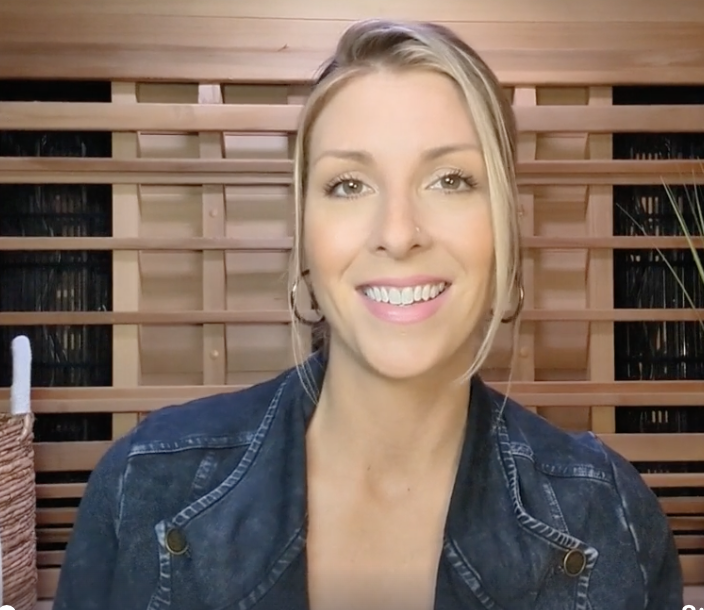
Speaker | Writer | Educator | Wellness Expert
I am a PNW Native with over 10 years of experience and study in the wellness industry. I have always been passionate about the power of connecting with our Inner Self, recalibrating our energy, channeling our power, and embracing self-love & self-reliance.
As an entrepreneur owning 2 businesses, raising kids & always working to maintain some resemblance of work/life balance, being focused and present are at the top of my priority list.
However, for many who struggle with concentration and are easily distracted, I know how focus can feel like herding cats at a laser party! Time management is a struggle, and stressful feelings + overwhelm are no strangers to me.
For most of my life, I was someone who buffered life with substance abuse to simultaneously calm my mind & numb the anxious feelings. When I finally chose full sobriety, I discovered that nurturing a clear connection to my inner guidance, utilizing helpful techniques, and introducing supplements are a much healthier, cost-efficient, and effective solution for well-being.
MY GOALS: Clarity, Focus, Connection, Success, and Fulfillment.
MY PASSION: Empowering women to 'show up' despite their challenges, acknowledge their worth, and thrive in life.
MY MESSAGE: Focusing, being present & living in a state of flow, although sometimes elusive, CAN BE ATTAINED and is POWERFUL.


