VBB 382 Dr. Kerry Kerr McAvoy: Is Any Woman Safe From The Narcissist?
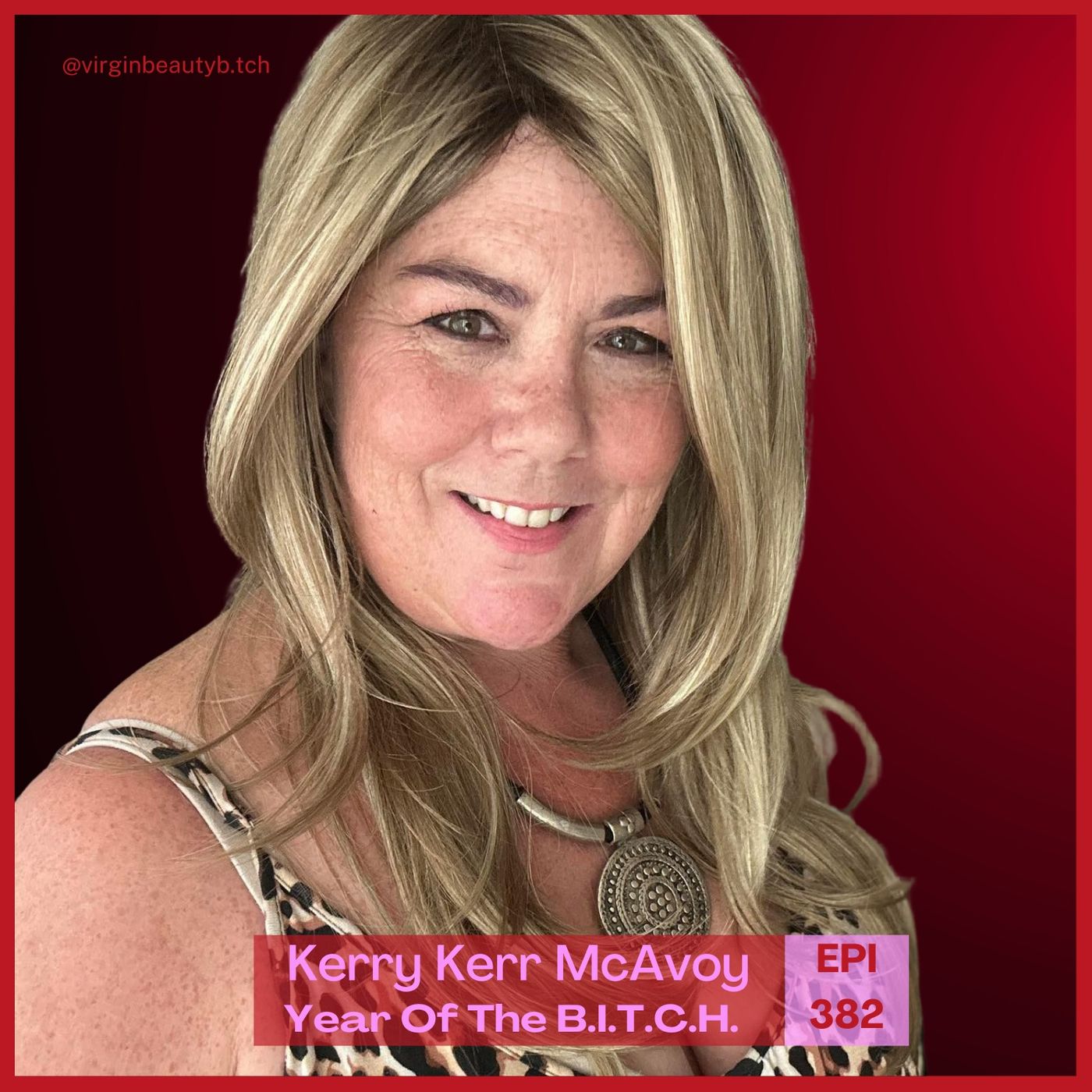
Dr. Kerry Kerr McAvoy was once married to a narcissist, and the painful lessons learned, the hard way, now inform her relentless desire to help women break free from predatory partners.


Dr. Kerry Kerr McAvoy is a retired psychologist and renowned expert on narcissistic abuse. In this intensely candid conversation, Kerry shares not only her professional expertise but also her hard-earned personal experiences on breaking free from the grip of a toxic, narcissistic relationship.
How is it that intelligent, self-aware women end up partnered with deceitful, sometimes dangerous, narcissistic men? And why does it often take so much time and emotional energy to break these bonds, even after the truth about these men is revealed? Well, it’s complicated.
Kerry explains the psychology and subtle social pressures that leave even the strongest, self-aware women vulnerable to the dynamics of betrayal, manipulation, and gaslighting. She unpacks the evolutionary and cultural roots of our need for connection and for being "chosen," which challenge women to reckon with self-betrayal as the deepest cut of all.
This episode confronts the real-life erosion of self and the powerful journey to reclaim identity, agency, and healing. It will engage, challenge, inform, and empower.
QUOTE: "They're not looking for relational connection or intimacy. They're looking for assets, extraction, or exploitation."
Intro [00:00:01 - 00:01:07]
Virgin Beauty Podcast, inspiring women to overcome social stereotypes and share unique life experiences without fear of being defiantly different. Your hosts, Christopher and Heather. Let's talk, shall we?
Christopher [00:01:07 - 00:01:12]
BITCH, is an identity women have struggled with for centuries. But some women have shared with us how they have engaged the word to make it an archetype that is a source of their self-confidence and strength. We've listened to those women and mapped out steps to their process using an acronym: B. I. T. C. H, where B stands for Betrayal, I is Identity, T is Trust, C is Change, and H is Healing. And in conversations, we've sought out experts from different disciplines to go through all of these five steps. Today, our expert is a retired psychologist and Narcissistic Abuse Expert, Dr. Carrie Kerr McAvoy. Kerry, welcome back to Virgin Beauty Bitch!
Kerry Kerr McAvoy [00:01:12 - 00:01:15]
Yeah, thank you so much for having me back. I'm touched.
Christopher [00:01:16 - 00:01:52]
Oh, you touch us with your knowledge and experience. You really do. Now, Kerry, last time we sat down, we spoke at length about your expertise in helping women break out of narcissistic relationships, which is a journey you personally learned from. I assume in your conversations with women, the word betrayal comes up a lot, and often in relation to their abusive partner. But as the saying goes, it takes two to tango, and not to victim-blame here, but when does self-betrayal, maybe in the form of enabling, come into these very sensitive conversations with women?
Kerry Kerr McAvoy [00:01:53 - 00:02:22]
It comes right at the start. And I don't even think we're recognizing when self-betrayal is occurring. I had this fascinating conversation with Dr. Robin Stern, who's an expert on gaslighting. In order for gaslighting to be effective, there are two components that have to happen. One is the person who's doing the gaslighting wants to convert you to their reality and to set the tone and set the kind of control of the relationship. They're basically saying, if you don't accept my reality and my interpretation of how I see things, I won't have a relationship with you. It's my way or the highway.
Kerry Kerr McAvoy [00:02:22 - 00:02:59]
And in that moment, you're faced with a choice. The choice is, do you lose the connection to the relationship or the connection to yourself? And that's the only way gaslighting can work. You have to relinquish the connection to yourself in order to preserve the relationship, I think. And it's not. It's interesting. You said it takes two to tango. It does, but I want to push back a little bit on saying, in the sense that our biology requires our involvement, because from the moment we're born, even pre-birth, we are connected to other people. Our survival depends on connection.
Kerry Kerr McAvoy [00:02:59 - 00:03:31]
We're wired for belonging. So the idea of being disconnected feels like an existential abandonment or death, a form of death. And so that's why self-betrayal is so easy, and it’s because we've learned that if we don't lean in the direction of the relationship, it might cost us our very existence. But what we don't realize in these toxic relationships is that going with the betrayal will also cost you your existence.
Christopher [00:03:31 - 00:03:35]
Yeah, it seems nature and nurture pile on top of one another.
Heather [00:03:35 - 00:04:33]
Yeah, I think that's why this episode, you know, I think this one is really going to hit women right, right in our gut in a good way. Because we're talking about narcissistic abuse, and it's not the watered-down version, it's not a buzzword version. You go very deep, Kerry, in the work that you do to understand the types of psychological erosion that slowly disconnect women from themselves. And you know, I've seen it time and time again where it's the kind that makes brilliant women question their sanity with the gaslighting that we were just talking about, or powerful women abandon their instincts, or any woman, regardless of how you self-identify, who doesn't feel like they can trust themselves. And that's why, like, the trust word is so key to the work that Christopher and I have been doing. So for someone like you, Carrie, who's dedicated some of your life to helping women understand these dynamics and heal from them, I am so excited to have you back on the show today.
Kerry Kerr McAvoy [00:04:33 - 00:05:13]
Oh, thank you so much. Yeah, it's powerful because what we don't realize when we enter into these relationships is that everybody does not come in healthy. We assume that if you're a good-natured person who believes the best about yourself and other people, you're going to project that onto the world around you and assume that they are the same about you. What we don't realize is that there are other types of worldviews. And one of them is the predatory, exploitative worldview. And they're coming in from that. The angle of what can I extract from you? They're not looking for relational connection or intimacy. They're looking for assets, extraction, or exploitation.
Kerry Kerr McAvoy [00:05:13 - 00:05:35]
And they're so good at this that we miss the essential cues. That's why I even find talking about red flags not very useful. First of all, what new relationship doesn't have a few red flags? But the other problem is that they're so subtle and they overwhelm us with good green flags too, that we can't, we can't parse out the signal from the noise.
Heather [00:05:36 - 00:06:15]
Can you share with us from your work? Because you already touched on. My initial question was how do women, you know, find themselves, you know, women who perhaps have worked on themselves, you know, they are finding their own identity, but still end up in this, you know, narcissistic, abusive relationship, like so many of us have. And I love that you've already answered some of those questions, what you just said. But can you dive into me, with me, like around trauma bonding, and what role do you think that plays in how women, I don't want to say ignore the red flags because I agree with you that like, the bigger picture is that you're, you're getting a lot of different signals, especially at the beginning about what a person's really made of.
Kerry Kerr McAvoy [00:06:15 - 00:07:08]
Yeah. And it gets even trickier because, you know, I'm mentioning to you off-air about the fact that there's an evolutionary psychology that women want to be picked and that women have been socialized in being compliant and appreciating and kind of subordinating ourselves. I don't know if that's a word, but to the privilege of men in general and particularly white men in specific. And so I don't even think we realize that subtle pressure that's happening to us. And the older you are, the worse the pressure is. I look at the millennials and Gen Z's, those are the kids that I've raised. And I look at the women who are coming up, and I love their strength and voice, and they're definitely different than myself, and their experiences are different than mine. And yet we still live in a world where people and authorities can call women journalists piggy, you know, where they're, where there's still a ceiling that happens.
Kerry Kerr McAvoy [00:07:08 - 00:07:42]
And if you push forward, you're going to get a lot of pushback. So I think that's the first thing we have to recognize is that despite the gains, and there are gains, and I love that there are also things that have not changed, we're still at risk. Women still are being — the biggest risk for a woman is when they're trying to leave a relationship. There are still women— there are recent studies coming out showing the number of men who willingly self-report being abusive to women. I think in Kara Mitchell's work, there's also a self-report of being abusive to children.
Kerry Kerr McAvoy [00:07:43 - 00:08:16]
And then there's this big thing that, you know, the discovery of these men who are teaching each other how to hurt women who are sleeping. So, women, we live in a culture where there's still a lot of disempowerment. So when you take, I think we have to start that as the bedrock because we have to understand where we're coming from. So when you're living in a world where there's that kind of power, inequity, and danger, what does it mean to be chosen? And when we get into a relationship, we want safety, and we want to be known and loved. And that primes us, unfortunately, to miss some of the early signs of danger.
Heather [00:08:17 - 00:09:11]
I think it's so fascinating what you just said, you know, because it, it is forever true with so many of the like millennials and Gen Z. I know that this concept of wanting to be chosen and wanting to be picked is, it feels like evergreen from what I've seen in previous generations, despite some advancements that have been made especially because, you know, we're earning our own money, different sense of self identity beyond a relationship to a man, et cetera, et cetera. But there still is something very deep-rooted in us that I think goes far beyond the Disney princesses with a prince in shining armor. Although that is definitely a little piece of the story. And before we got online, we were talking a bit about the psychology that comes with a woman wanting to be picked, and some experts are working on this, and how that connects to how women betray each other. Would you explore some of that with us?
Kerry Kerr McAvoy [00:09:11 - 00:09:35]
Yeah, I'm still trying to learn more about it. So I haven't. There's a researcher, and I'm gonna blow her name. I can't pronounce her last name, but she's in evolutionary psychology, and I'm going to be interviewing her this Friday. So you're pre-interview. She has a fantastic interview right now on Brad Carr's channel. So if you can tune in and listen to it, there's about women competing with each other. But here are some of the ideas that she's putting forth, and I'm seeing it play out on TikTok right now.
Kerry Kerr McAvoy [00:09:35 - 00:10:31]
I don't know if you follow Tick Tock or the drama happening there, but there's a feminist, I don't know the whole story, but her name is Wizard Liz, and she thought she met her soul mate, and he was a hot guy and is an amazing person, and now they're in deep trouble, and it's gone bad. And I, I hear she's already ended up in court for misbehaving in the relationship, and there's a child involved already. So you see, this is supposedly a feminist woman who's strong, has a voice, and yet we're seeing the same thing that's happened to how many of us, myself included, is being played out in her life. So the idea is that for two women to enter into a relationship has a lot of cost. I mean, think about it. How many children can we have at the same time? Men are able to create many children within even the same day, depending on how many women they're with. Women can only create one child at a time, and it takes nine months.
Kerry Kerr McAvoy [00:10:31 - 00:11:03]
And then there’s, of course, the cost of recovery from that. And some of that is a permanent cost of recovery. One of the things, for example, is that I wear a wig, and one of my children having a child for me cost me massive hair loss. So our bodies undergo massive changes. It is even a risk unto death for some of us. And as a result of that, we're very selective about who we want as a mate. That also puts pressure on us to select well, which we hear back from the manosphere that we're looking for, you know, the top-tier, high-quality guys.
Kerry Kerr McAvoy [00:11:03 - 00:11:41]
What they don't realize is that we're doing that because we need to select well, because it's going to cost us a lot, and it's going to be a few children. We're not going to have a lot of children. We're going to have a few children. But that plays as unconscious pressure on us. And one of the ways in which it gets played out is not only do we want to get selected and who we choose to select, but it also means how we play it out with each other. I then view all the women around me as possible competitors towards that best candidate, whether or not this person really is the good candidate or not. But it's interesting how we select, and then we work against each other. And you can see that just open up the comment section to women being vulnerable.
Kerry Kerr McAvoy [00:11:42 - 00:12:39]
I think like, you know, wizard Liz, how many people are now commenting on what she's done and crucifying her for her behavior is evidence that we don't see the fact that what happened, and I did, I actually left a comment. What happened was that she met a sophisticated enough predator. And it's interesting because when I talk to people who are the leading experts in this, and I'm thinking of Dr. Daniel Jones, who's looking at the dark personality, like the dark tetrad and dark triad personality types, as well as Don Hennessy, who spent his whole life trying to understand the male predatory grooming process. Both of them have said in recent interviews with me that you cannot escape this. If you meet a sophisticated enough predator, you will succumb to them because they've practiced and they get better and better. That's why people like Bernie Madoff did so well, or even Jeff, you know, Jeffrey Epstein has done. Did so well because they've spent a lifetime with a particular type of mindset.
Kerry Kerr McAvoy [00:12:39 - 00:13:19]
In fact, I just recently asked Claude, and I'd be happy to share this for your audience because Claude created this, so it's actually in the public domain. But he. The AI pulled together all the teachings of everybody that I looked at and created an A-to-Z playbook. Literally A, B, C, D, all the way to X. How you get trapped in a relationship. It's wild, and it's accurate, but it's using everybody that we respect. Hair, Hennessy, Brown, and Stern, all of these experts have written on this. It pulled it together and synthesized in an A-to-Z playbook what betrayal looks like.
Christopher [00:13:19 - 00:13:24]
Oh, man, that is a rabbit hole that I don't know if there's an end to.
Kerry Kerr McAvoy [00:13:25 - 00:13:39]
Yeah, yeah. Are you guys aware of Dina McMillan's work? She's really kind of radical and outspoken. So I know people who look her up may, like, I don't agree with her. Her. Her viewpoint, a political viewpoint, but. But here's what she did. She took the. She went on the back of.
Kerry Kerr McAvoy [00:13:39 - 00:14:05]
Of. I think it was Gottman and somebody else who worked on looking at two types of abuse. There's the cobra and the pit bull, type A, type B. And so they identified, essentially, the difference between aggressive, I'm sorry, overt aggression versus covert aggression. So the pit bull would be the overt, aggressive person. It's the person who's fighting in the bars. Alpha male, you know, kind of the gym bro kind of looking person who loses their cool.
Kerry Kerr McAvoy [00:14:05 - 00:14:35]
The cobra is more of the Machiavellian type, the type that we don't see coming. They're. They're strategically planning ahead and thinking about it. She then took on the back of that work and then looked at it. That tactic, those tactics across age, gender, race, and all. All possible metrics that you could think of as disparities. She found that it was universal. It didn't matter age, gender, where you grew up, or what your race was.
Kerry Kerr McAvoy [00:14:35 - 00:15:00]
The playbook was exactly the same. So I think what we need to realize is that because this is the hard part, we keep thinking, what can we do to do better so that we're better protected. The dismal part is we may not be able to perfectly foolproof protect ourselves, but what we can do better is learn how to trust ourselves and work out of it when we start to suspect something's going wrong.
Christopher [00:15:01 - 00:15:13]
And that's the point of “T” in our acronym. It's how you build, how you make that trust so solid that you can say no, that you can walk away?
Kerry Kerr McAvoy [00:15:14 - 00:16:06]
Yeah, I can tell what it was for me. And, and I, and for me, the pandemic was really a, a accident of mercy because what it did is it isolated me. I was working for myself, fresh out of that relationship, isolated from family, isolated from my social network. And I was writing, working for myself. So I was alone, I was alone in the pandemic in a one-room apartment that I couldn't essentially leave. And what it did was it forced me to meet myself in a profoundly new way and to realize that I liked myself. But because before that, and I don't know, I'd be curious as to how women identify with this, but before that, I felt like my definition essentially rode on the back of how connected I was to other people. And if I wasn't well-connected and I couldn't rely on those relationships and didn't get that reflection back of what they thought about me, I wasn't for sure how I felt about me.
Kerry Kerr McAvoy [00:16:06 - 00:16:38]
But in that isolation, I had to get to know me. I think that's the first step. It's not even whether or not we're feminist identifying or not. It's really, do you know you, can you survive on your own? Do you like yourself? Do you listen to yourself and really get to know yourself at a very physical level? What are your yeses to life? What are your no’s to life? When do you feel free to speak up, and when do you don’t, and why do you not speak up? To get really curious about those things and start to develop the safety to know the answers to those things.
Christopher [00:16:38 - 00:17:00]
And that is the I in our pitch. It is identity. It seems such an obvious thing. Well, I'm this, I'm that, I believe this and that. But do you really, have you really stepped back on your own, like you say, on an island, to understand what's around you, what is you, and what is influenced that makes you you?
Kerry Kerr McAvoy [00:17:01 - 00:17:20]
Yeah. And I think for me, that gave me so much freedom because then I can say, oh, I don't, I'm okay if this person doesn't like me. I mean, I actually had a Conversation. I have a lot of conversations with myself, in my head, and one of them was, okay, so you make a decision, and everybody's angry with you. Is anybody going to die over that?
Christopher [00:17:20 - 00:17:20]
No.
Kerry Kerr McAvoy [00:17:20 - 00:17:47]
I mean, you may lose some relationships, but you won't die if that happens. And I think for me to kind of have that realization was freeing. It was like, this is survivable. But I don't think we. But it's at an un. Go back to what I just said. I laid out the hard wiring of our biology. When you're born, if your parent walks away and leaves you alone, I'm thinking there's an example, a tragic example of a mom who basically ignored her child until it was four years old and finally passed away from malnutrition.
Kerry Kerr McAvoy [00:17:47 - 00:18:12]
Or another mom I heard of who left on vacation and left a toddler home alone on vacation, and the toddler passed away. If that happens, you will die. You know that. You know, the connection with the relationship is essential to life. That is. That is like in our marrow. It's not going to be something we're going to get out of our marrow. So we're never going to be able to divorce ourselves and say, just need people less, just choose not to be in a relationship.
Kerry Kerr McAvoy [00:18:12 - 00:18:50]
I'm sorry, you're at. The theory of love says that you're hardwired for belonging, but. But recognizing that and at the same time, recognizing your worth and what makes you feel comfortable, and valuing yourself. Having a really firm self is the way to navigate these tricky waters. Because these people, I remember in an interview with Sandra Brown, she says, the moment they open their mouths, they have mesmerized you. That's the problem. That is, they're so good at being able to tap into your basic insecurities and your greatest needs that they're going to quickly mesmerize you. But if you.
Kerry Kerr McAvoy [00:18:50 - 00:19:07]
If you can feel the confusion, that's what's going to rise up in you. Like, I don't know. Is that what I really want? I didn't use to do that, so why am I doing that? We can recognize the confusion. Then we can start to. Then break free from the spell that they're casting and start to wake up to ourselves again.
Heather [00:19:07 - 00:19:31]
Wow. What excellent words. Because, you know, I think that when we hear things, like, when they're so sophisticated in their ways of being able to manipulate, it can feel very daunting and overwhelming, and powerless. Right. Which is, of course, not how we want any woman to feel. So I think those cue points are so important, and even bigger than red flags.
Heather [00:19:31 - 00:20:17]
Like listening to if you're feeling confused about what the next step is, and that wasn't me before, this doesn't really, it doesn't feel right now. I think that, like that alone, is beautiful. And also when you said that in isolation, you know, you, you met yourself, you know, you, you had the time to really get to know you again within the context of, you know, completely shutting yourself off from society is not what we're trying to get at. But there is a really powerful step to take when you meet yourself again and realize that other people's perceptions are not going to be the end of the day. It's really just the tip of the iceberg of what they see in you, only, you know, the full you.
Kerry Kerr McAvoy [00:20:17 - 00:21:37]
Yeah, I'm old enough that Jerry Maguire was a big movie. I don't know how big it was in your generation, Heather, or not, but this idea of being completed, I think a lot of us still fall into the idea that the relationship will make me happy, it will complete me. I've heard a lot of feminist thinkers on social media talk about the degree that they fall prey to the fairy tale that when my life is complete, when I have a relationship, no, it's always been complete, and it's complete because you're here and you're existing. But to ask you to really like plunge, not to just outright reject and say, no, I don't think that way. Do you know that you don't think that way? Have you actually looked at your behavior to see whether or not it plays out? Because when you're going from date, you know, failed relationship to failed relationship, that's not giving me the message that you're really comfortable in your skin. That to me feels like there's some panic there or anxiety about what gives you meaning in life. And I do, I also think that we do need more models, and I know that my generation and maybe those coming after me are starting to offer more options, you know, options because I'm not married. You know, I actually live with my adult son, like roommates, we all don't co, own a house, I don't have grandkids, you know, I'm, I'm working in my 60s, and you know, I'm doing things that kind of like my mom didn't do, my, my grandmother didn't do.
Kerry Kerr McAvoy [00:21:38 - 00:22:15]
So I'm kind of trying to find new ways to, to, I find role models for myself or define myself in new roles. And hopefully we're going to offer. In fact, I think we should bring back the. The crone and the hag. I think they should be, you know, archetypes that we embrace better. So I'm hoping that there's those of us who right now who are floundering, saying, what does give me meaning if I don't have grandkids and I'm not baking cookies on Christmas and I don't want to open my Facebook and just be overwhelmed with how everybody else is doing that. I hope we get to the place where you say, no. These are other reasonable alternate paths for women that are really good paths that offer fulfillment for us.
Kerry Kerr McAvoy [00:22:15 - 00:22:43]
I want to jump back to something else that you mentioned about how to recognize this. I want to add another thing, I think it is a clear flag if you feel. You feel it, pay attention. It's not just confusion, but if you feel rushed, if you start to feel rushed, slow it down. You do not need to make any fast decisions. You know, if they want to see you tomorrow and they just saw you today, they don't need to see you tomorrow. You know, if they. If the relationship can't sustain you, waiting a few days, there's something wrong. This is a person who's putting you on their timeline, not on your timeline.
Kerry Kerr McAvoy [00:22:43 - 00:23:03]
So just kind of pay attention to how things feel, you know, just if you can be mindful about what you're wanting, and where you are, and whether, or how much you're giving up of what's good for you, I think we can start to spend. Spot these predatory behaviors faster.
Christopher [00:23:04 - 00:23:25]
I see how difficult it is because, as you say, you've never done this before this way. And now someone is making you feel not only important, but essential. That is, how do you turn away from that when it's something you really, actually crave?
Kerry Kerr McAvoy [00:23:26 - 00:24:13]
Yes, and we do crave it. We crave it from toddlerhood. Again, that's back to our developmental process in psychology, roughly around the stages from 18 months to 3 years of age, there are some critical questions that we're trying to sort out psychologically. And the questions are, am I special to at least one person? We need to know that we matter, that we're uniquely different than other people, and that someone sees that and adores us and loves us. The second question we have during that period of time is, can people empathically understand me? Can I be known? You know, if I skin my knee, can my parents recognize that it hurt me, and learn to comfort me? So we're looking for what's called emotional mirroring. I know we use mirroring a lot around love bombing, but where it's not the same thing, that's a different type of mirroring.
Kerry Kerr McAvoy [00:24:13 - 00:24:45]
This is a sense of being understood and reflected back so that we have a sense of being able to grow. Our sense of internal representation of what love and compassion and care look like, that's all those templates are being laid down at those times. Now, here's the hard part. Nobody walks out of that stage perfect. We don't get it perfectly. We come out of there with wounded spots that make us hunger and seek some form of it in some place, in some ways. Coming to know where your woundedness is, that's back to your talking about our work. This is our work.
Kerry Kerr McAvoy [00:24:45 - 00:25:22]
Is to say, hey, you know what? I don't know if I felt very special. In fact, my sister and I had a conversation today where we both were sharing that we were kind of neglected and overlooked a lot. And so, you know, that wasn't really laid down very well. So when someone comes into my life and says, I have never met anyone like you, I feel this really fast connection with you. I'm vulnerable because I want to hear that. Because there's a greater hunger than maybe there might be for either one of you. But maybe for one of you, you just didn't have somebody who knew how to reflect back who you are and what you needed. And when someone sees you and makes you feel like they get you, that may be your kryptonite.
Kerry Kerr McAvoy [00:25:22 - 00:25:45]
So we have to know that about ourselves. And that way we can say. We can then stop and say what I do after. Now I'm not dating. I'm not even trying to date. But if I were, I would. I would walk away. Or even in a relationship, I would say, is this because I need that? Is that why this feels really, really attractive? Or is it because this person actually is doing a really good job and showing this consistently? Again, watch what they say versus how they treat you.
Kerry Kerr McAvoy [00:25:45 - 00:26:17]
Does it. Does what they're doing align with what they're saying? Because one of the things that happened in my relationship with this, the toxic individual that I got into, that I write about, love you more, is that he would tell me how much he loved me, but his behavior was discounting. He was kind of pressuring me. He wasn't being sensitive to my needs. He'd wake me up early in the morning, keep me up late at night. If you look at that, like, that's not loving behavior, that's careless behavior. So it should be consistent. It should, you should say, yeah, I see it everywhere.
Heather [00:26:18 - 00:26:29]
I'm wondering, just to flip the script a little bit, do you think that there's something I have an initial gut reaction to this, but are there things that you think narcissists fear?
Kerry Kerr McAvoy [00:26:29 - 00:27:11]
Yeah, they fear well, so if you take the dark tetrad personality types, which make up four big categories. The narcissism, and then there's the psychopathy, and the Machiavellian piece, and then there's the sadistic piece. Each of those characteristics is looking for different things. So, if we just know that most people are hybrids of some combination of the four of them. There is rarely a pure one of these. They usually sort of coalesce and come together in some form. But if you look just the narcissist, it's about, it's about ego management. It's about fear of being seen for who they really are.
Kerry Kerr McAvoy [00:27:11 - 00:27:36]
And they're not good people, so they really don't want to be seen. So it's about preservation of ego and reputation. And it's there, it's the mat. It's the pre. The facade that they've built. Is the good person, you know, the helper or the martyr, whatever it is, that's what they're trying to preserve. The psychopath is looking for immediate gratification. They're seeking novelty, and they usually are pretty impulsive people.
Kerry Kerr McAvoy [00:27:36 - 00:28:06]
So they're looking for a good time. And the Machiavellian is looking for something about you as an asset. They're playing a long game, and they're trying to extract something from you. So they're charming you and showing up in a way to sort of get whatever that is and over very long without risks. They're not willing to take many risks. So you're going to stay hidden and stay under the wire. And then the sadist is looking to get pleasure from hurting you.
Kerry Kerr McAvoy [00:28:06 - 00:28:39]
So a psychopath may cut you, and then, whatever the reason they cut you, they will move on because it was about what they wanted out of it, and they got it. But the sadist will sit and watch you hurt for being cut because they like the pleasure of that. So the trick is then to sort of, I think, here's the thing, I think a lot of us spend a tremendous amount of time understanding them as a way of thinking that creates more, greater safety. I do think back to the idea of the A to Z. Playbook. It helps to know because you can ask yourself, " Am I being run through this playbook? I need to know that.
Kerry Kerr McAvoy [00:28:39 - 00:29:02]
But I also think we spend so much time thinking we can identify them, isolate them, figure them out, as if somehow that will change the outcome for us. No, it doesn't break us free from these relationships, understanding who we are while in the relationship. I knew I was married to a narcissist. I didn't really recognize the psychopathy so much. And I missed, I couldn't believe the sadism that was there because my guy was pretty sadistic in very subtle ways. That part, I was like, I wasn't willing to sort of understand his capacity for that because it would disturb me so greatly.
Kerry Kerr McAvoy [00:29:02 - 00:29:33]
But even if I knew that, it wouldn't have gotten me out of the relationship. What got me out of the relationship was waking up and realizing that I, essentially, was worthy as much as everybody else, and deserved as much as everybody else did. That my grandiosity in thinking that somehow I'm above it all and should suffer this because there is a level of arrogance when you think, I need to do this. This is my job, and I'm really. Who else will put up with this? And, you know, my kids need me. There's a level of grandiosity. And that’s when I realized, no, I'm like everybody else, and I need the same thing as everybody else, and I wouldn't want this for my best friend, that's what woke me up and got me out.
Heather [00:29:45 - 00:30:23]
For me, when I hear you say that, and what Christopher and I are working on is like, that is my bitch, right? Like, that's my inner bitch, is the one who says, I'm not gonna put up with this, or I deserve the same things as everyone else, which is, you know, love and care and not being manipulated out of myself. And just to try to bring it all full circle. I'm so glad that you landed there, because I think we spend a tremendous amount of time, just as you said, to try to understand people that hurt us so that we can work our way around them or find a way out or try to fix them, which is, you know, an impossible endeavor for the most part, because…
Kerry Kerr McAvoy [00:30:23 - 00:30:44]
If I can I interrupt you because here's the, there's the flaw in that. And this is what we don't see as the flaw. Understanding them in order to maintain the relationship with them. We never talk about that part. We always talk about, I'm just trying to make sense of what happened to me. No, you're trying to make sense of what happens so you don't have to make any changes. Because we get so scared about the leaving part. We get so scared of being out. I was terrified to be on my own. It was my worst nightmare. I'm autistic, I'm socially inept. I don't make relationships easy. I mean, it scared me to be out on my own. It did.
Kerry Kerr McAvoy [00:30:57 - 00:31:07]
I was a very lonely teenager. I imagine I was going to be a lonely, you know, middle-aged older woman. I didn't want that, but what I found out was no, that wasn't true. There's a much bigger possibility than that.
Christopher [00:31:08 - 00:31:13]
That's fascinating. The thing you feared the most is the thing that saved you.
Kerry Kerr McAvoy [00:31:13 - 00:31:33]
Yes, yes, it was. Absolutely. And I had that picture of what it was going to be like in my teen years, and somehow I thought it was going to replicate it because that was dark. Where I was back there was really, really dark, and I somehow thought I would. Now, do I get lonely? Yeah, sometimes. Not too bad. Am I alone a lot? Yeah, absolutely.
Kerry Kerr McAvoy [00:31:33 - 00:31:44]
But I've learned that I'm not alone if I'm with myself. But back there, I didn't have myself. I was really, I mean, I was quite in a dysfunctional system, and I was really very much a shell of myself.
Christopher [00:31:44 - 00:32:02]
You mentioned the crone and you women who have gone through what you've gone through and have the experience and the knowledge you do look upon the crone with such reverence. Why don't we do that for the bitch?
Kerry Kerr McAvoy [00:32:03 - 00:32:25]
Yeah, that's a good question. I don't know. I almost wonder. I mean, this is just me topping off the talk, talking off the top of my head. I wonder if we get so afraid of it, because we're usually Bitch is applied to somebody younger. The crone, or the hag, by that time, she knows she's the Bitch, so she doesn't really care if she's walking outside of the edge of society now as an outcast. Usually, she has a lot of power, but that power frightens people. But she really doesn't actually. She's not engaged in all of that. She's not afraid of it.
Kerry Kerr McAvoy [00:32:25 - 00:32:49]
But I think it’s for a younger period of time when we're still actively trying to make our way in society, and that to us signals being ostracized. It's like Hester Prim, you know, wearing the A on her chest. I think we get very fearful of that. So, that's my guess.
Kerry Kerr McAvoy [00:32:49 - 00:33:22]
My guess is it's age-related and stage-related, and maybe if we can help rely, maybe if we can carry down because the older you get, you know. I found my 40s was helpful. 50s was even better, 60 is even more freeing. You know, every decade I hit, I feel like, oh, I'm getting, you know, I'm about to be 64 in one more month, and I'm, I'm finding a greater freedom. I just frankly don't care. And as I get there, it gives me more freedom to be myself and to do things that really are authentic to myself. But I'd love to be able to give that to myself. Back when I was in my 20s and 30s, man, I was not there at all.
Christopher [00:33:26 - 00:33:44]
Those are the threads we want to tie together. Is what you've now experienced and know for certain as you've gained experience in the world. What if we could get that self-trust into women earlier?
Kerry Kerr McAvoy [00:33:45 - 00:34:13]
Yeah, that would be wonderful. You know, here's a painful conversation I had with my sons because I've raised my sons to be emotionally sensitive men. And I, they are now men, they're in their 30s, and they're doing really, really well. I'm very proud of them. They're different, they're just a different kind of men. And one of them is very vulnerable in his relationship, and I've been a little nervous about that, and don't want him hurt. And my other son said, but yes, but you got hurt.
Kerry Kerr McAvoy [00:34:14 - 00:34:37]
And in a way, we’re kind of doomed to that because we tend to repeat patterns. I would love to see us break that. But I think it takes us really doing a lot of hard work ourselves to help set our children, our daughters, our sisters, our friends free. But it has to start with ourselves first. Then we can maybe give back to those around us and help them to see it in a different way.
Heather [00:34:38 - 00:34:49]
So I just want to do a shout-out to the women listening that if this episode resonated with you, please do send it to another woman to see how that may hit her in her life.
Kerry Kerr McAvoy [00:34:50 - 00:34:52]
Yeah, thank you for that. I appreciate that.
Christopher [00:34:53 - 00:34:57]
Tell us about your work and how people might connect with you if.
Kerry Kerr McAvoy [00:34:57 - 00:35:26]
Yeah, my biggest. I have two biggest loves that I'm working on right now, and one is the podcast Breaking Free from Narcissistic Abuse. And we're going into season five with a co-host model back. So I'm being joined by a UK clinician, Lynn Strathy. So, her and I, are going to have start having this. In fact, next week's our first episode is Conversations around the mundane things that go really strange when you're in a toxic relationship. Like, why is road rage, why is the car such an issue? Or buying groceries or pet names.
Kerry Kerr McAvoy [00:35:26 - 00:35:59]
We're going to get into the theoretical background of what happens around these types of dynamics. And then my other massive love is that I have a toxic-free relationship club where I do online coaching and support. So it's all the way from just a massive amount of education, helping with kind of retraining, becoming comfortable in your body, and meeting other people who are really working on the same thing. We're doing a lot of deep psychological dives into personality disorders right now. So that's. That's another big kind of big two forks in my. My life right now.
Christopher [00:35:59 - 00:36:01]
And just give us a reminder of your book.
Kerry Kerr McAvoy [00:36:01 - 00:36:25]
Yeah, it's Love You More. In fact, did I ever tell you what I almost named it? It was going to have another name, but the reason I named it Love You More is because that's what he said. Whatever I said, I love you, he turned it into a competition and said, said I love you more. Love you more. No, I realized it was all like, you know, never loved me at all. But the other name that I ran with for a long time was called, The Betrayal of Me: Confessions of a sex Addict's Wife.
Christopher [00:36:26 - 00:36:26]
Ooh.
Kerry Kerr McAvoy [00:36:27 - 00:36:39]
Yeah. But I realized this was. Even I didn't want to, I think it was bigger than that. Plus, this was a real thing that happened in the relationship. But yeah, it really was centered on the betrayal that I had. It wasn't that he betrayed… Yes, he betrayed me severely. For those who may not be aware of it, he was likely poisoning me. But I betrayed myself. You know, I was. So it was really about my betrayal of myself in this relationship.
Christopher [00:36:56 - 00:37:21]
For Heather and me, that's the core of betrayal. I mean, there are countless external betrayals that befall us in our lives by people, by circumstance, by whatever. But it's the self-betrayal that we need to look at and to work on in order to get past betrayals outside of us.
Kerry Kerr McAvoy [00:37:21 - 00:37:38]
Yeah, we do. It's amazing how early betrayals, we end up thinking there's something essentially wrong with us. And then we think we're deserving of continued betrayals over time without even realizing that we're continuing the frame without actually challenging it. A lot of hard work has to go into our healing.
Heather [00:37:39 - 00:38:43]
And I want to just give a moment to, first of all, say to you, and what you had mentioned earlier, you know, when it comes to poisoning and drugging women and then sexually assaulting them, you know, more and more and more and more of this coming out into our world, like, just sending you. Like, I know that sending love and positivity and strength to you are just words, but to any person that that's happened to or that you know of, like, just truly my heart is with you. And, you know, I. I've seen a lot of people online, especially guys, but we need more of them who are actually saying that this is fundamentally so wrong, and we will no longer stand idly by. We will speak up if we ever hear someone saying it, even if it's a joke. And so kudos to anyone who's doing it. Kudos to people who are putting that on their social media to say, " This is not the world that we want, and we're going to be part of the solution to make it better. Because I think the prevalence is perhaps not shocking, but it is more prevalent than what I think most people want to admit.
Kerry Kerr McAvoy [00:38:52 - 00:39:23]
It's staggering. In my club, I asked in one of our meetings how many of us, how many of us? And it was men and women who had been jested or had been given something that they shouldn't have. And overwhelmingly, nearly universally, the club's hands went up. It's a common practice now. Mine was actually for my death. He was poisoning to kill me, not to, you know, to assault me, but it was an assault, but it was, you know, for gain.
Kerry Kerr McAvoy [00:39:23 - 00:39:42]
He was very Machiavellian. My individual was. But I think the numbers are staggering. I think it's become acceptable even if you think back to plying somebody with alcohol to get them to do what you want to say. Yes, I mean, we've socialized that. Acceptable in Hollywood.
Kerry Kerr McAvoy [00:39:43 - 00:40:01]
Oh, yeah. We'll just get her a few drinks in her, and then she'll loosen up. We have not realized the degree to which we have normalized that kind of incredible coercion and horrible assault on people. Yeah, I. I didn't. I never thought of it that way. You're right. I guess I do belong to that category, just in a different way.
Kerry Kerr McAvoy [00:40:02 - 00:40:20]
And there's a part of me, and I still struggle with it today in my mind, and I wonder if I was to speak to any other woman or. Or man. I know men who've experienced this too, if there's a part of them that can't quite believe that that happened. I still struggle to really believe that that happened. I had all the symptoms of heavy metal poisoning. All of them.
Kerry Kerr McAvoy [00:40:20 - 00:40:32]
I was very ill. My son was sick with leukemia, so I was in the hospital every day. Staff saw me every day, and they said, there is something wrong with you. You're going to collapse. We're gravely concerned. You need to get care. I. I couldn't see it myself, except that I knew that I was physically in trouble. I knew something was very strange going on with me.
Christopher [00:40:42 - 00:40:50]
How can you see that? How can you see that? I mean, you. This is someone you love. This is someone you trust. This is someone you've given your heart and your soul.
Kerry Kerr McAvoy [00:40:50 - 00:41:00]
They sleep next to you exactly how. And they watch you suffer with the consequences of their actions. I don't get it. I don't. But for me, the final nail or the straw is that when I was writing it, people reading my story were like, Kerry, I think he was doctoring you. I think he was poisoning you, because I even thought it in the marriage. I was researching one night, I mean, my toenails were falling off. I had white linens across all my nails. I was researching what causes white lines across the nails. I've never had that before or since in my life.
Kerry Kerr McAvoy [00:41:17 - 00:41:42]
I had other weird symptoms that are very graphic that I guess I won't get into, but I had a lot going wrong that suggested I was gravely ill, that my kidneys were in trouble, my liver was in trouble. And I remember sitting next to him while he was watching YouTube, researching what causes white lines across the nails. I remember there was a poison that did that, and I couldn't find that it was called “measelines,” and it was arsenic.
Kerry Kerr McAvoy [00:41:42 - 00:41:55]
I couldn't find that, but I interviewed his other wives. I wasn't his first. And one of them said, you know, I was really sick, and I believe he was poisoning me. And I'd never even told her my history. She just told me that. And I wanted to drop the phone. I was stunned. And I thought he'd practiced. He had practiced. I don't know.
Kerry Kerr McAvoy [00:42:04 - 00:42:34]
Back to your question, Christopher. I don't know. It takes, there’s a degree. It's like this is back to trying to understand the mind of a person who does this, which I do spend a lot of time doing. They have to, when you think about thoughts and actions, okay, you think about something that's really taboo. You can think about it. That doesn't mean you're going to do it. There's a wall in us between thoughts and actions, especially bad actions. You have to find the courage that there's something in you, the determination, the callousness to cross that wall.
Kerry Kerr McAvoy [00:42:34 - 00:43:19]
And at first, you're going to be filled with a lot of guilt and shame because it's bad and there's probably a lot of fear. What if I get found out? What's going to happen? You know, waiting for the shoe to drop is kind of a moment. But when you start to cross it repeatedly, and you see other people crossing it successfully, you become callous to it, and it stops being meaningful. And there's a degree in which you have to feel entitled enough that I deserve what it was, what it is that I want, whether it is access to someone's body or access to, in my case, to someone's money. You have to believe that you're, that it’s owed that and entitled to that. And with this continued practice, you develop a loss, a profound loss of integrity in yourself and with our culture. And certainly you've destroyed the relationship.
Kerry Kerr McAvoy [00:43:20 - 00:43:47]
But I think it's, I think there's the bigger question, to me it’s what are we doing that makes that line cross that crossing that line so easy for too many people? That to me, that's the part that I find disturbing. That the number of people who are engaging in this, as self-reported, is so high. What are we doing as a culture that is making that acceptable? I don't know. I'm not raised as a man. I don't really know.
Christopher [00:43:48 - 00:44:07]
Well, from my perspective, my mind doesn't work that way. It can't calculate that. But if you are in an environment where you are entitled to power, I think a lot of people will do anything to enhance that power or keep that power.
Kerry Kerr McAvoy [00:44:08 - 00:44:43]
Yeah, Don Hennessy, he himself admitted he was a victim of a priest, so he's experienced assault as well. And then he spent his life looking at domestic violence. And for a long time, they focused on women, the female part of it. And then he realized they couldn't find any consistent pattern. He shares about this in his book, How He Gets Into Your Head. Then they realized that when they turned their eyes onto the groomer, the man, suddenly, the picture fell in place. That's where it was. There was a consistency across the men, and they were running, they were running two groups at the time. This is, I thought this was fascinating.
Kerry Kerr McAvoy [00:44:43 - 00:45:03]
The women's group, the victim's Group, and then the predator group. Those are abusers. What he found was that the men didn't get better. They just got more sophisticated at what they're doing. They learned from each other and got better at it. But he says, and I kind of agree, and I also think it's more than this. But he said that it's sexual access men are striving to protect. Sexual access.
Kerry Kerr McAvoy [00:45:05 - 00:45:23]
To me, that feels awful. I don't quite get that, but I hear him. I mean, he's a man, and he's been, you know, around male predators. So I, yeah, but, yeah, but I. Back to this dosing thing. It. There are a lot of us who it's happened to. I think it's a staggering number.
Kerry Kerr McAvoy [00:45:23 - 00:45:42]
And most of us, I know for myself, I have come out to talk about it, but with great reluctance, because it feels so unbelievable to me. I'm sure that you end up thinking I'm crazy for saying it. And I feel like I have to then over-explain, like give you my whole, you know, list of symptoms so that you somehow believe that it really happened to me.
Heather [00:45:43 - 00:45:53]
And that's so true for so many. There are so many women who feel crazy for saying the things that we're saying, and that's all part of the scheme. Yes, that is part of it.
Kerry Kerr McAvoy [00:45:54 - 00:45:54]
Yeah.
Heather [00:45:54 - 00:46:03]
To make women doubt themselves, or when people hear it, they think of XYZ things that, well, it was this, it was that, it was everything else but what it really was.
Christopher [00:46:03 - 00:46:17]
Yes. Added to that, women are often. You are molested. What did you do to make this happen to you? Yeah. How often can you hear that story?
Kerry Kerr McAvoy [00:46:18 - 00:46:47]
Oh, yeah.. I survived sexual assault as a toddler, and I remembered having a conversation with an adult in my life, and they said, well, you have to figure out whether or not you want to share that with another man. And I'm thinking, it happened to me. I was a toddler. I think this is actually the adults’ failures in my life. It had nothing to do with me. I just happened to be there. But we have such a profound stigma that we're willing to pathologize even toddlers for something that’s completely outside their control.
Christopher [00:46:47 - 00:47:11]
Absolutely. Kerry, this has been fascinating, and I don't know, revealing in light and dark waves that we cannot thank you enough for engaging with us and bringing this forward. Thank you so much for sharing.
Kerry Kerr McAvoy [00:47:11 - 00:47:12]
You're very welcome. Thank you.
Heather [00:47:13 - 00:47:32]
It's been absolutely wonderful to have you on the show, and thank you for sharing your insights and your life's work, but also your lived experience. Because I feel that when other women hear it, they can find pieces that speak to them to feel more confident in that self-trust. So it's really been a pleasure.
Kerry Kerr McAvoy [00:47:33 - 00:47:34]
Oh, thank you so much for having me on.
Christopher [00:47:35 - 00:47:38]
And this you have been listening to
Heather [00:47:39 - 00:47:45]
the Virgin,
Christopher
the Beauty
Heather
and the Bitch. The Bitch in her year, 2026.
Christopher [00:47:46 - 00:48:13]
Find us. Like us. Share us. Your friends need to hear this. To become a partner in the VBB community, we invite you to find us@virginbeautybitch.com. Like us on Facebook, Instagram, and LinkedIn, and share us with people who are Defiantly Different like you. Until next time, thanks for listening.
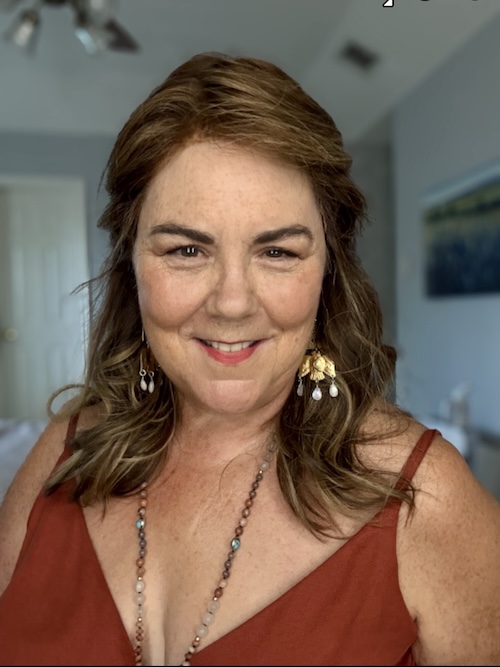
Author | Psychologist | Narcissistic Abuse Expert
I’m Dr. Kerry McAvoy—a retired psychologist and narcissistic abuse survivor. I know what it’s like to doubt your own reality, to walk on eggshells in your own home, and to feel like no one on the outside understands what’s really happening.
Following my own harrowing journey through lies, betrayal, and rebuilding, I was inspired to write my memoir, Love You More, chronicling the shocking reality of my marriage to a sex addict and pathological liar. It’s raw and honest, showing how even a trained psychologist like me can find herself trapped in what was, for me, a life-threatening relationship. But I also share how you can get free.
I also created ReclaimYou Path to give survivors a clear, trauma-aware way forward. Instead of scattered advice and one-off sessions. After what I experienced, I can tell you that you’re not crazy. You were, or are being, psychologically manipulated. I can help you figure out where you are in the healing process, so you can take the next right step in the ReclaimYou Path.


