VBB 380 Jessie Susannah Karnatz: Do You Own Money, Or Does Money Own You!
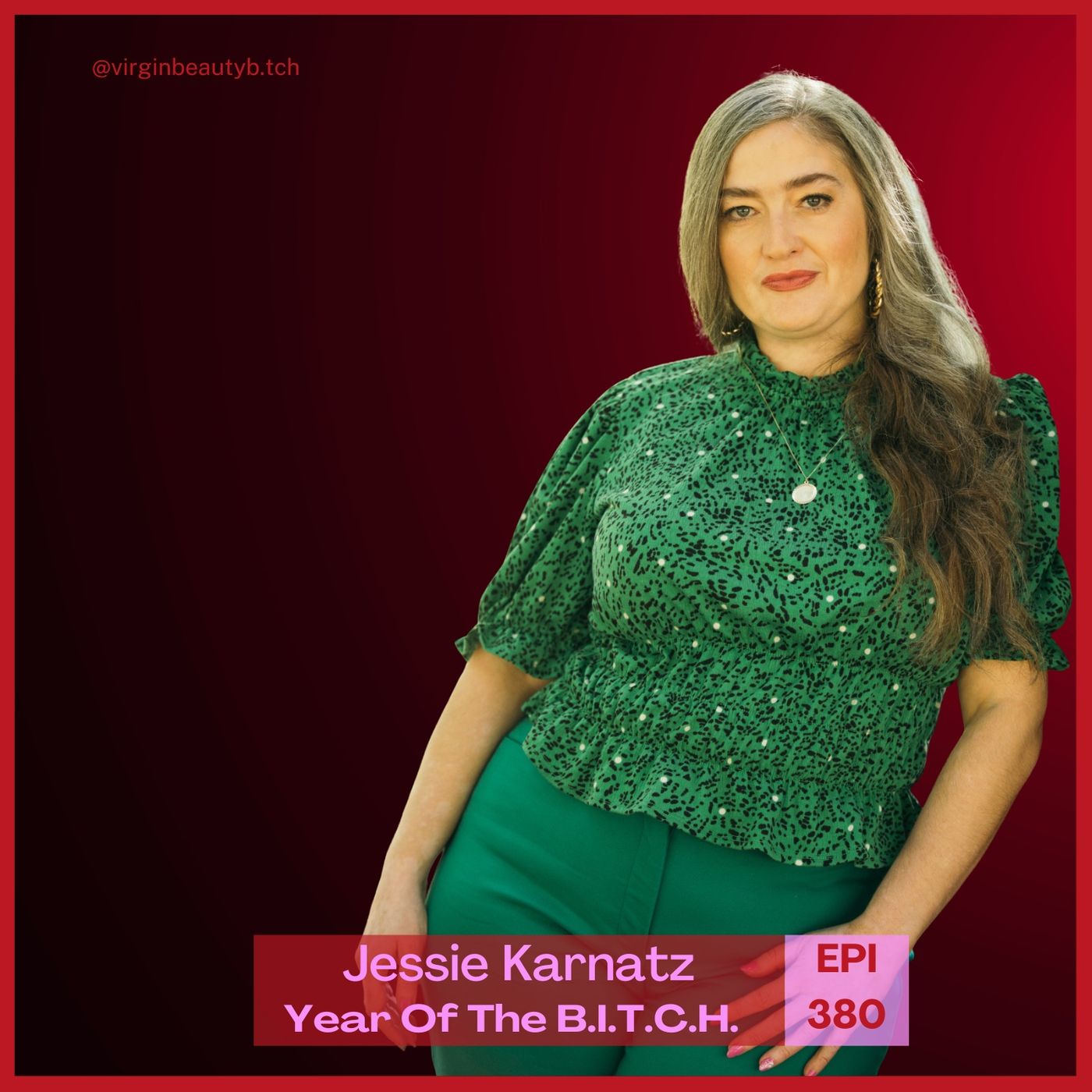
Jesse Susannah Karnatz, aka the Money Witch, specializes in transforming any shame or anxiety women may feel about money into financial literacy and sovereignty.


She is Jesse Susannah Karnatz, aka the Money Witch, a financial educator and coach who brings wisdom, realness, and a touch of magic to the conversation about women and wealth, and the deeply rooted systems that try to keep them mutually excluded.
From shame to savvy, Jessie reminds women of the historical and systemic forces that have shaped their collective money wounds and what it takes for women to stand at the very edge of their financial sovereignty.
Whether you’re just starting your journey toward financial independence or live in a reality of overwhelm when it comes to money, this episode will challenge your perspective, validate your experiences, and offer practical wisdom for healing, empowerment, and transformation in ways you might not anticipate. All of it, including a little money magic from the Money Witch herself, is yours for free.
QUOTE: "Standing behind every man is a great amount of women's labor."
Intro [00:00:01 - 00:00:08]
Virgin Beauty Podcast, inspiring women to overcome social stereotypes and share unique life experiences without fear of being defiantly different. Your hosts, Christopher and Heather. Let's talk, shall we?
Christopher [00:00:15 - 00:00:41]
Bitches are dangerous women. So too are women with money and wealth. So, can you imagine becoming both? How to handle it all is a conversation we've reserved for one of our favorite people, the Money Witch. Welcome back, Jessie Karnatz, to Virgin Beauty Bitch.
Jessie Karnatz [00:00:41 - 00:00:44]
Thank you for inviting me to return.
Christopher [00:00:44 - 00:01:30]
We love having conversations with you. Now, Jesse, we've all heard this term rich bitch. Often, it's used disparagingly to shame women. But the bitch we talk about isn't the stereotype, the heartless tyrant society has conditioned us to dismiss as anti-feminine. No, she's a woman who's come through the crisis of Betrayal, Identity, Trust, Change, and healing: B. I. T. C. H. And wealth is an outcome under her control. But Jesse, as a financial educator and coach, is bitch an identity or reputation that, in a patriarch, plays a negative role on women's psyche when it comes to the pursuit of financial riches?
Jessie Karnatz [00:01:30 - 00:02:20]
I think in a lot of traditional workplaces, and certainly in the sphere of negotiation, it is what comes to mind. Self-advocacy is often framed or weaponized as bitchy. You know, you're being pushy. You are. Yeah. Just like it's almost related to nagging or something. And then people don't take it as serious self-advocacy. And so I think a lot of women in negotiation in the workplace, certainly in larger spheres of venture capital and those kinds of things, often get denied or have an internalized experience of not like moving to the edge of their sovereignty because.
Jessie Karnatz [00:02:20 - 00:02:23]
Yeah. Of the psychological impact of that perception.
Christopher [00:02:24 - 00:02:32]
When women come to you, are they aware of that, the psychological? What's in the back of their mind that's keeping them from really going for it?
Jessie Karnatz [00:02:32 - 00:03:31]
Certainly a couple of layers. Yes. I think that I work with a lot of people who are themselves healers. Like I say, I work with healers, hustlers, and creatives. So these are people who have already done a fair amount of identity work of exploration, have experienced, you know, maybe a crisis in their life that put them on some sort of healing track. They're people who have done a lot of this work and certainly know that they have issues and are extremely aware, I think, often of the role that patriarchy, you know, white supremacists, rationalized capitalism is playing in the way that they feel about money or the experience that they're having or the access that they're being given. And then the work that I do is to take people a few more layers deep, you know, to just connect a few more dots of what the true psychological impact is.
Jessie Karnatz [00:03:32 - 00:04:30]
And my real goal is for people to be standing on the edge of their sovereignty, working out to the edge of their sovereignty. There's always going to be societal impacts that limit people's sovereignty, but a lot of us aren't standing on the edge because, number one, it can be painful, you know, and more vulnerable to be out there pushing as far as you can on the edge and hitting up against that societal impact. And two, just because, you know, the way that a lot of these systems work is the internalized aspect, the shame, and all these things that keep us doing oppressive work for others. To ourselves, it's like the external fascists have to work less hard if they've kind of taught us to impact it on ourselves already.
Heather [00:04:30 - 00:05:32]
Yeah, I am so glad with some of the things that you highlighted there, because this season for us, this 2026 Year of the Bitch. And that season is all about reclaiming parts of ourselves as women that we were taught to suppress. And so when I think about the bitch and how she connects with money, and I know that from our previous conversation, something that you work with your clients on is your relationship with money. So when you think about desire, when you think worthiness, when you think about shame, like what you just said, survival, power, control, even pleasure, and I guess I'm curious because women talk a lot of contradictory things about money pretty much from the get-go. So, you know, when you hear us talking about the bitch, and almost like an archetype that goes alongside that, what do you think she brings to the table in the conversation of women and their relationship with money?
Jessie Karnatz [00:05:33 - 00:07:03]
I mean, a savviness, really, you know, and that thought about when I was thinking about the words that you all use to describe bitch, and I'm like, you know, the number one is betrayal, right? Like somebody's had an experience of betrayal and worked through it. And it also brings this other B word that I think is often insinuated when we're talking about women, which is like bitterness. What is the bitterness that can come into your spirit through this experience of betrayal, which, you know, might be a direct relationship experience. It's also often systemic. I know there are a lot of people in my life who, yeah, feel betrayed on an existential level by essentially the body that they're born into, and what that means is that they have to use their energy on and how they see that as detracting from their real purpose, or their real gifts and what they could be offering. So I think the betrayal, and even bitterness, ideally, we as women find a way to work through that and transform that or move past it, mostly because it causes ourselves a lot of suffering, first. But I think it brings a level of intelligence and this savviness that if you have a more easy experience, you might not have that knowledge or that wisdom. It's a type of wisdom, really, to offer to the conversation.
Christopher [00:07:22 - 00:07:56]
Betrayal, yes, it's number one. It's the first hurdle of awareness before you can move forward. But speaking on betrayal, and this might be taboo to some, but how much wealth in the world is actually built off the bodies of women? The beauty industry, pornography, and of course, the oldest profession in the world, prostitution, all performed primarily by women for the wealth benefit, primarily of men. Is that not the oldest betrayal of womankind?
Jessie Karnatz [00:07:56 - 00:09:03]
I think, when I think about how much money is being made off of women, I think actually more of like domestic labor because, and this is not just like women, but we think about feminized bodies, or like devalued bodies, which, you know, shifts, like whose body is valuable and not valuable, shifts with a cultural lens throughout time. But the capitalist system is designed to have women working for free at home, doing all of the childcare, all of the elder care, all of the cooking, all of the cleaning, all, you know, like this is just an unbelievable amount of labor that is supposed to be, quote, unquote, like standing behind every man is like this amount of women's labor to support a family, and that does cultivate the capacity to, you know, for men to make more money. Like, that's just, I think the research even. It doesn't feel like an opinion. It just feels like that's what is happening.
Heather [00:09:11 - 00:10:42]
Yeah, I'm glad with what, like what you both highlighted there, because when you think of prostitution and sex work as one of the oldest industries to humankind, and also the unpaid labor that women have performed since money was exchanged for certain types of work and not others. I really think we're in such an interesting place in our society where we know that the sex industry is the biggest, if not the second biggest, or if not the biggest business industry in the world, like above arms and wars, et cetera, and we don't really, I think even know just how vast it is because every, it seems like every new CNN has a different story of more and more of this kind of world that we live in, and, then maybe we don't want to look at, but I'm interested in women's kind of taking, if women's bodies are a commodity in this world. I find it fascinating that more and more women are going to things like OnlyFans to make their own money rather than be peddled by a different person who takes a cut of their money. And like, I think that this is a wider conversation, but I'm glad that you mentioned it, Christopher, because it just seems like there's, it's been an industry for so long, and this world of online sex work is just completely going, you know, to whole new different heights.
Jessie Karnatz [00:10:42 - 00:11:56]
I would say a few things. Like, as someone who has worked in the sex industry, there are a few different points I want to make. Number one is that there is a very important distinction between sex work and human trafficking. So it's like what you're saying around, like, oh, you know, what is a large-scale economic interest, you know, what is a massive industry? What are we hearing about on the news, that is human trafficking, that is abuse, that is not sex work. So sex, you know, anyway, so that's an extremely important distinction to make for like many, many reasons, you know, and I don't know, like we're saying, right, like this is a, it's an entirely, like obviously human trafficking is an entirely illegal industry, and there's very little information about what kind of numbers we're looking at where that money is going. You know, those, the kind of journalists that does the traffic, you know, does like tracking of like, oh, who's making money off of arms or who's, you know, what corporations are connected to X, Y, and Z. Like we're not able to do that in the same way. Sex work, I think of as like, you know, it has often been, and the landscape of sex work is often a very disorganized endeavor. It's often a very anarchic endeavor where, you know, and that's part of the benefit of it, right?
Jessie Karnatz [00:11:57 - 00:13:41]
It’s something that individuals can engage in order to make money on their own terms under a myriad of different circumstances. That's everything from things that are like more above board, like working at a brothel in Nevada, to people who are in street-based sex work where they're like doing their own thing, and there is a broad spectrum of what kind of relationship sex workers have to do. I'm completely running my own show 100% and making all of the money by being engaged in some sort of organized way, whether that’s where somebody else gets a cut. I've spent eight years working in strip clubs. Like there's, I could, you know, speak for many hours about the way that people take cuts of money or, you know, those kinds of things.
Jessie Karnatz [00:13:42 - 00:14:37]
Honestly, as a small business, Internet small business person, outside of sex work, I don't experience a different dynamic of like. I just paid my city business license, and I'm like, someone's like, what is it? I'm like, what is a business license? Except the city is just like, I'd like a couple of hundred dollars, you know what I mean? Like, I'm like, they're not like doing anything, you know, and I'm like, okay, the city wants a little something, the state wants a little something, the county wants a little something, the federal government wants a little something. You know, the credit card processor wants a little something. Zoom wants a little something. Google, Apple, everybody wants a little cut of everything all the time. So I think there's a lot of ways that it's like that is true in lots of industries and not necessarily viewed as problematic in the same way. And the majority of people, like, I would just say anecdotally, as someone who spent a long time, a long time in the sex industry, like eight to 10 years, you know, a while, a chunk of time, like probably in the upper echelon of time that people spend in there, and who has a lot of sex workers in my life? Like, you know, I think the majority of people that I know who work in the sex industry work in ways that are self-initiated and self-organized.
Jessie Karnatz [00:14:37 - 00:15:24]
So I don't think. Yeah, so anyway, those are a few things that I definitely want to lay out. But you know, the Internet, like going to OnlyFans or something like that, the Internet has vastly changed the way that everybody, you know, it's like it's changed every industry. And something, OnlyFans is something that is sort of an extension from pieces of the industry, you know, like phone sex is old. You know, it’s as old as, you know, I won't say it's as old as phones, but you know what I mean, it’s been going on for a while. That's the, you know, or you know, video, obviously, and all of these things, like, were a part of the sex industry, you know, in the porn industry, like, ongoingly.
Jessie Karnatz [00:15:24 - 00:16:16]
They've just been, like, utilized in different ways. And, you know, OnlyFans is taking their cut. Everybody's taking their cut across industries. Everybody's taking their cut, you know, but it's like, where's the cut going? And that's where I think we get into this, like, gender divide, right? Like, what is the percentage of people who are paying a cut, and what's the percentage of those people that are women, like, across a lot of industries, like, worldwide, and then what's the percentage of people who are taking a cut that are men or women? Do you know what I mean? And I would say that that divide is, I don't have any statistics, but I would feel absolutely confident saying that, you know, historically, the people taking a cut are going to be, you know, in this moment of human history, male, white, etc, etc.
Christopher [00:16:16 - 00:16:20]
Yeah, I think that was my whole point of bringing up that can of worms.
Heather [00:16:22 - 00:16:31]
But I appreciate the very important distinction, and I think that that's very important to hear and to say on our show. So thank you for that.
Jessie Karnatz [00:16:31 - 00:16:32]
You're welcome.
Christopher [00:16:32 - 00:17:11]
You had mentioned capitalism a few times, which, correct me if I'm wrong, but that is a male construct. And younger generations of women may not be aware, and I’m sure you encounter this, but in the United States before 1974, a woman could not open a bank account, apply for a credit card, or get a home loan without the permission of her husband. That's 1974. So, Jesse, like, how does that late entry into the money game impact women's financial literacy today?
Jessie Karnatz [00:17:11 - 00:18:40]
I mean, you know, I still have clients who were raised in very, you know, patriarchal settings where their father didn't really want them to know anything about money because it's all people's unhealed lineage stuff. They want to feel important, they want to feel powerful, and providing for people, their children, their daughters, like, you know, makes them feel that way. And in the best of all worlds, we would have a situation where parents want to do all those things, provide and protect, and also inform. But it doesn't always play out like that. And I would say I end up with even more clients who got themselves in situations where, or gotten situations where they were in a marriage and the assets were all being managed, you know, a heterosexual marriage where the assets were all being managed by the male partner and ended up not being on the lease of the house or the, you know, not the title, right? Like, not knowing where all the money was, not knowing how much money a husband accumulating a lot of debt, and, you know, them being responsible for it later on in the divorce. So I think that even in 2026. Like, I think of this as spanning pretty much my lifetime. 74, I was born in 81. So it's like, I'm like, 74, was, I could have been born, was very close to being born when that was still true. And then I'm like, okay, my whole lifetime, even now, this many years later, people are living in the trickle down of that. That attitude and that impact.
Jessie Karnatz [00:18:40 - 00:19:45]
So, you know, literacy is something. I think, like the practitioners of capitalism, invest a lot in trying to make it seem like they know a lot of very complex things that no one else could understand. And that's why they have all the money, it’s because they're smarter than you, they've, like, worked harder than you, etc. And we fall into it because we feel sometimes, we feel a little dumb, or we're intimidated. Like, that intimidation factor, I think, goes a long way in people internalizing a shame around their level of literacy.
Jessie Karnatz [00:19:46 - 00:20:38]
One of the most important things around financial literacy, to me, there's a statement that I say, and it says, bad with money is not a personality trait. It's a statement of literacy. So literacy is not inborn. Nobody comes out of the womb knowing how to speak or read a language, right? Everything about your literacy, every literacy that you have, right? Every person has multiple literacies, and every person has an edge to every literacy that they have. Like, I have an edge to my commands of the English language. I have an edge that's way smaller than my command of the Spanish language. I have an edge in my command of financial language. All I have to do to push that edge is engage in education.
Jessie Karnatz [00:20:38 - 00:21:02]
But it is overwhelming and intimidating to even approach the education or the educational process, or it doesn't feel accessible when we're so full of shame from feeling like our literacy level is not adequate. So it stops us from, you know, from learning more, and it really does impact our relationship to literacy.
Heather [00:21:02 - 00:22:50]
I think you've, yeah, really nailed, hit the nail on the head in how some women avoid wanting to get more financially literate because of the shame of not understanding that language or not understanding their relationship to money based off of, you know, many things they may have heard growing up. About money, like too much being, making it their God, or not having enough. I think a lot of us carry a lot of historical, almost like cellular understanding of it, that can be good or bad. But I do want to talk about the word Money Witch, because I think that clearly it rhymes with our gear, but deeper than that, witches historically were feared women, but really the more that we look into that history, that very dark history, and that it was women of intuition, a of power, women connected to healing, and women who ultimately existed outside of the system, and the system's norms that were seen as a threat to those norms. And to me, when I think of our bitch in her year, there are so many parallels in this kind of dismantling of the typical sense of the word and reimagining what a woman who is fully authentically herself and able to be radically honest in who she is and what she wants. I think that there are some really important pieces in that piece of the bitch that we are drawing forward through this series. So, for you, help our guests to know a little bit more about how you landed on Money Witch, and what does that mean, a witch for you in today's world in financial literacy?
Jessie Karnatz [00:22:58 - 00:24:46]
Yeah, a witch, to me, is someone who essentially is centering what they want because witchcraft is largely about using your power in alliance with other powers. For example, the kinds of powers that witches call on, like the power of different spirits or deities or ancestors or plants or animals or elements, being in relationship, cultivating a relationship with other powerful energies, and then using and cultivating a relationship with your own power, and then using that to get what you want, the outcome that you demand, essentially. So there's a real parallel, I think, with certainly the way that the word bitch is used societally, which is like someone who is a woman who is singularly focused on herself and very determined to not sacrifice what she wants. And, yeah, I see a real parallel there. So the money, which, like, combining those two things, is about using everything that you have on hand to create the results that you want to see in the world.
Jessie Karnatz [00:24:46 - 00:25:46]
So I have a framework called the three Angles of Healing. So I think if you want to enact healing in an area of your life, and I define healing as movement of energy, if you want to move energy in your life, especially in an intentional way, in a specific direction, then I think you're going to see the best results if you work it from all three of these angles. So one of them is the practical or logistical angle. That's the education, the doing the investment, doing the budgeting, asking for the raise, putting your feet on the ground to do the things. There's the spiritual, emotional element, which is basically financial shadow work, which is a lot of what I facilitate for people. Like we discussed earlier in the session, digging a few layers deeper, like what is actually going on here for you in the under layers that are impacting the way that you're experiencing your finances, money, and the financial world. And then there's the magical and energetic angle. And I think that people really need to remember that we are all energetic beings, and again, this is, at this point, considered science. Like we have an energetic field, our energetic field impacts the world around us. And we are impacted by the energetic field of the things around us, and the people around us. So if I remember, even if I'm feeling, oh my, you know, my boss won't give me the raise, I can't really shake this money shame. Remember that there's this other point of access, which is like you have an energetic power.
Jessie Karnatz [00:26:39 - 00:27:49]
When you say a prayer, or you light a candle, or you make this tea, or set this intention, or do your intention settings at the new moon, or you do whatever other kinds of energetic and ritual work around your money, you're also impacting the tapestry of existence. And it's really important not to forget that that is available to us. The energetic sphere has been, and the magical sphere has been highly utilized by marginalized people throughout time because it is always available. No one, no external change in circumstance, can impact what you have access to in your own internal power or your own, you know, inner experience, and connecting from your own inner experience straight to spirit, straight to the energetic world is a place of unlimited power, essentially.
Christopher [00:27:49 - 00:27:55]
I hear that you are far more efficient than we are. You have three steps; we have five.
Jessie Karnatz [00:27:56 - 00:27:57]
Oh, yeah.
Christopher [00:27:57 - 00:28:14]
However, the parallels are eerily similar to what you speak. Even stretched out into five words, it's still the same, same steps to get to where you are, to that healing, to the energy, to that movement of that energy. That's remarkable to me.
Jessie Karnatz [00:28:14 - 00:28:16]
I love that we're brought together for a reason.
Heather [00:28:17 - 00:28:55]
I really like what you said in your definition of healing, because that is the H, of course, in our acronym. And you said healing is moving energy in a direction, hopefully with intention. And that just really hit me because it feels so, it feels so fluid. It feels that you can move things either through your body or with your intentions, with your planning, with your rituals about where you want that to head next. So, yeah, thank you for that. That's really a unique definition. I've not heard it said like that before.
Jessie Karnatz [00:28:57 - 00:29:00]
I'm glad to. Yeah. To bring it and that it lands at. Well.
Christopher [00:29:01 - 00:29:32]
And it's brave to bring all of that universal force into what we put as a taboo, which is money. That's a shameful part of it. So the work you do in unlocking and giving women permission to unlock that force within themselves towards that goal is remarkable. And we are absolutely overjoyed that you do that.
Jessie Karnatz [00:29:32 - 00:29:35]
Thank you. It's really, truly my honor.
Heather [00:29:35 - 00:29:39]
I've got one final question for you, just as a kind of fun final round.
Jessie Karnatz [00:29:39 - 00:29:40]
Yeah.
Heather [00:29:40 - 00:29:50]
In your work, what do you think is one belief about money that women need to let go,
burn out of their mind? Release.
Jessie Karnatz [00:29:51 - 00:30:32]
I mean, I'm gonna just go with the classic. A classic, classic trope, which is that someone's coming to save you. Yeah. Because they're probably not. They're probably not. And if they are, then, you know, when they arrive, if you already feel stable and grounded and in touch with your own relationship to resources, then you'll be able to join with them to really build something different.
Christopher [00:30:32 - 00:30:39]
I'm gonna ask Heather to ask that same question that she just asked, but substitute money for bitch.
Jessie Karnatz [00:30:39 - 00:30:42]
Okay. Wait. We have to say. Will you say it again?
Heather [00:30:42 - 00:30:57]
Sure. I'm hoping I'm capturing what Christopher's thinking here, but if there was one thing about the word bitch that women can let go, shed burn, what do you think that would be?
Jessie Karnatz [00:30:57 - 00:31:53]
I think just letting it stab so deeply, you know, or tiptoeing around, like, being afraid of being called that, you know, because if it's being used in a weaponized way, then, I mean, if somebody wants to throw a dagger at you, they’re gonna find one. You know what I mean? Whether it's that or something else. So, you know, trying to play small or tiptoe around so that you're avoiding a certain label doesn't make the other party have your best interest at heart. You know what I mean? It doesn't change the circumstances of the situation. It's just, you know, I mean, I guess increasing the tolerance for the discomfort of potentially being viewed that way.
Jessie Karnatz [00:31:53 - 00:32:10]
So much of our healing journey is often around increasing our tolerance for discomfort. So maybe, like, increasing our tolerance for the discomfort of being viewed through that lens of that word.
Christopher [00:32:10 - 00:32:30]
It's ironic to me that women historically have developed such tolerance for so much, yet that one small five-letter word still gets straight to their souls. That is power over!
Jessie Karnatz [00:32:31 - 00:32:33]
It is power over, right?
Christopher [00:32:33 - 00:33:01]
And our goal is to take that power to yourself. Be the bitch in that, you define how you define it, and let the world respond the way it responds. But you own that. That's our goal with these conversations. We absolutely are always overjoyed to have your smile on our show.
Jessie Karnatz [00:33:03 - 00:33:04]
Thank you so much.
Christopher [00:33:04 - 00:33:16]
Thank you for taking the time to indulge us again. I know we call on you over and over, and you always respond because these conversations are always magic, and we love them. Thank you so much.
Jessie Karnatz [00:33:16 - 00:33:17]
Thank you.
Heather [00:33:17 - 00:33:27]
It's always a pleasure. So thank you for the insights that you continue to bring, and for our listeners who maybe haven't heard you before, please tell them where they can find you.
Jessie Karnatz [00:33:28 - 00:34:36]
Well, everything lives in the hub of moneywitch.com. The ways you can find me on social media are on Instagram or on YouTube. So if you want some more listening, you know, you can find a lot more of me speaking in those places. But@moneywitch.com you can find a way to apply to my one-on-one work and also get on the wait list for my big endeavor that I spend most of my time on, which is called Money Coven, which I, well, I call it a cult, but it's a membership. Membership is just so boring. It’s where we're working through this; there's like a group of people working through this, these financial shadows regularly, and just having all kinds of revelations, all kinds of inner healing, all kinds of external winds, and really like healing and deepening that relationship with money. So there's a place to get on the wait list. The doors will reopen again in the fall.
Jessie Karnatz [00:34:36 - 00:35:00]
So, I have a book. You could go find my book out in the world. It's called Money Magic, and it has a very long subtitle; it's like healing rituals and empowering something to heal your finances. I didn't choose; it was the publisher. But it's really gorgeous. It's everything about the book I put my hands on deeply, except the title. So, it’s really a beautiful book. It's a fun book. A big part of my ethos is to make money accessible to people. And I know that part of that is aesthetic, you know, and tone and just taking the pressure off. So if that sounds appealing, then I think that's a great place to start. It's a fun place to start.
Christopher [00:35:29 - 00:35:36]
You are an amazing personality and just a joy to have a conversation with. Thank you so much.
Jessie Karnatz [00:35:37 - 00:35:37]
Thank you.
Christopher [00:35:37 - 00:35:39]
And you have been listening to
Heather [00:35:39 - 00:35:46]
The Virgin,
Christopher
The Beauty
Heather
And the Bitch in her year B I T C H 2026.
Christopher [00:35:46 - 00:36:14]
Find us. Like us. Share us. Bring yourself back. Come on back. To become a partner in the VBB community. We invite you to find us @virgin beauty.com. Like us on Facebook, Instagram, and LinkedIn, and share us with people who are Defiantly Different like you. Until next time. Thanks for listening.
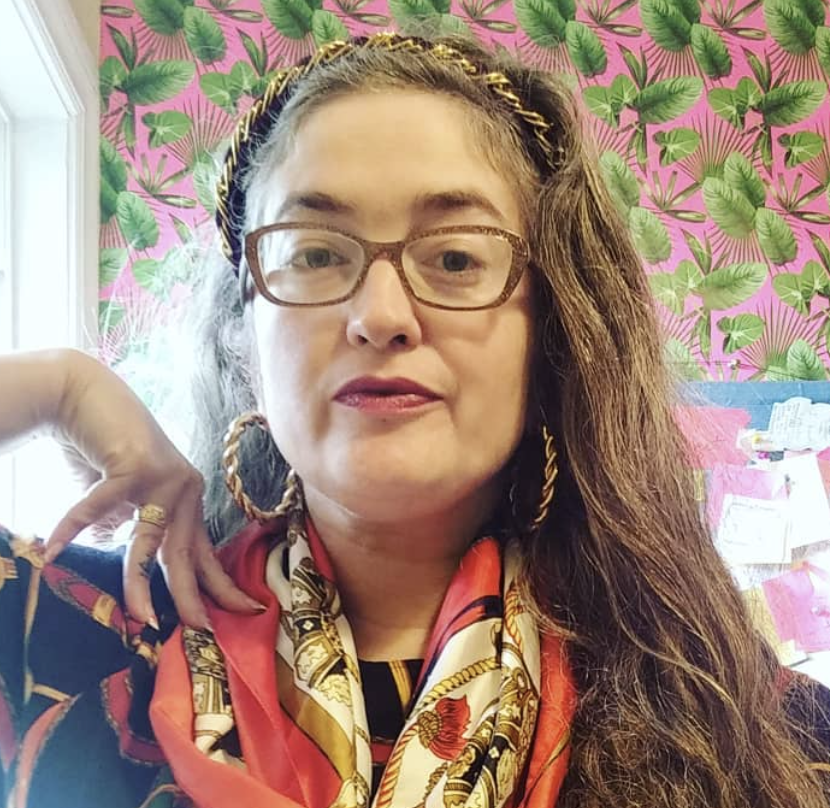
Money Witch | Financial Educator | Coach
I help people feel better about money. As the Money Witch, I bring capitalism-critical, shame-free education to healers, hustlers, and creatives to catalyze change in their financial lives. I believe healing our finances brings blessings to our lives, lineages, and communities. I draw on my intuition, my experience as a tax preparer and bookkeeper, and the collective wisdom of my financial coaching practice to help people live more peacefully with their money.
I’m also a priestess of the money egregore, which means I facilitate a relationship between our collective consciousness of money and individual members of the collective to support healing. You can learn more about who I am in this episode and in my book: Money Magic: Practical Wisdom and Empowering Rituals to Heal Your Finances.


