VBB 378 Lindsay Jacobi: Getting Your Glow On!
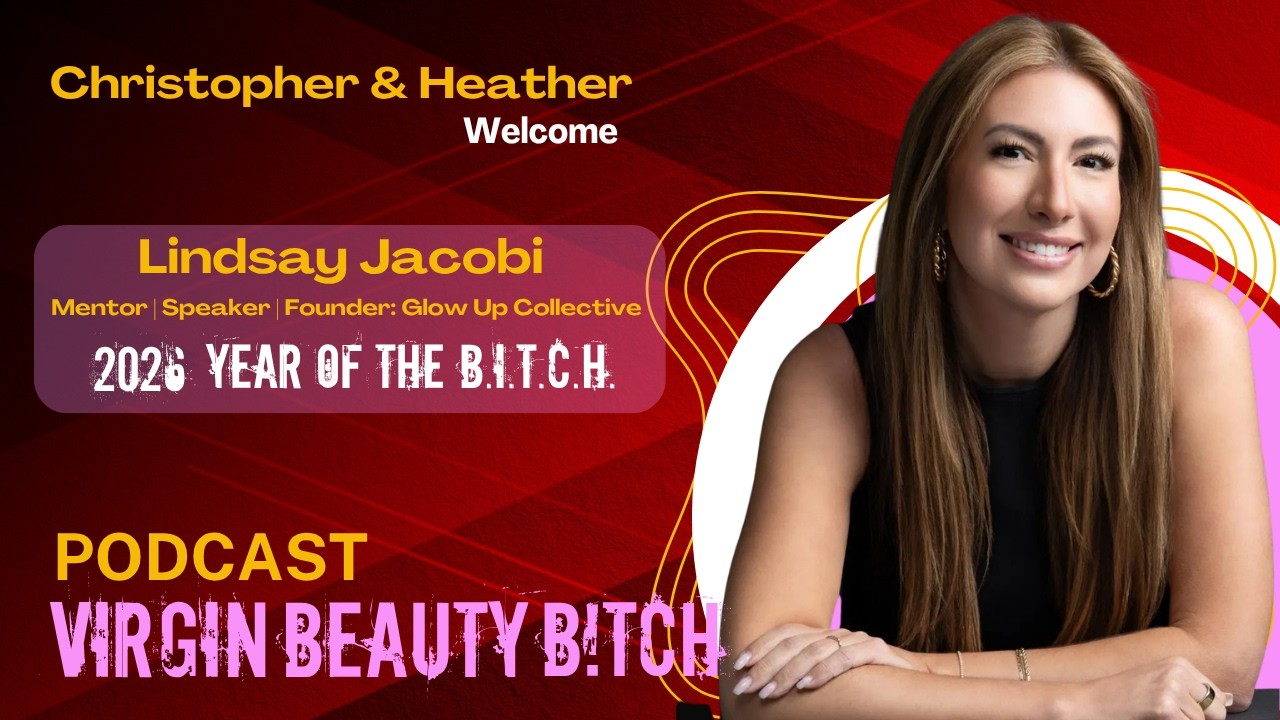
Lindsay Jacobi’s Glow Up Collective helps women navigate identity loss, burnout, body-image struggles, relationship disconnection, and a desire for greater alignment.


Lindsay Jacobi is a transformational mentor, speaker, and founder of Glow Up Collective, helping women who have lost themselves reconnect with their confidence, beauty, boundaries, pleasure, and power. Her work blends deep inner healing with real-life transformation, helping women become more sovereign, regulated, peaceful, and fully expressed in their lives and relationships.
With her signature 90-day Glow Up experience, Lindsay supports women in areas such as personal style, beauty, relationship reconnection, vision mapping, and anti-burnout lifestyle shifts, with a focus on real follow-through, not just inspiration. Her approach is rooted in the belief that the glow-up is not just about appearance. It’s about finally feeling like yourself again and creating a life that reflects the woman you know you are meant to be.
As an entry in our VBB Year Of The BITCH conversations, we talk openly about Bitch, a word most women, for understandable reasons, reject outright. For us, Bitches aren’t only venomous women but bold women who defy social stereotypes to reclaim narratives and embrace the full spectrum of their innate identity. It’s a conversation about self-empowerment and living authentically, regardless of how others want to shame or control you with a word. If you’re up for open dialogue with a woman who leads by example, jump in.
Christopher [00:00:01]:
Virgin Beauty Bitch Podcast, inspiring women to overcome social stereotypes and share unique life experiences without fear of being defiantly different. Your hosts, Christopher and Heather. Let's talk, shall we?
Christopher [00:00:12]:
Welcome into our Year of the It's a conversation, and it's the evolution of a word used routinely with prejudice and ignorance to dehumanize women, while the true power of the archetype is to promote women's self-empowerment and personal growth remains hidden in plain sight. It's all there in the letters B for Betrayal, I for Identity, T for Trust, C for Change, and H for Healing. B. I. T. C. H. How these words become steps on a path to you having a life of providence? That is at the heart of our conversation today with transformational mentor, speaker, and founder of Glow Up Collective, Lindsay Jacoby. Welcome, Lindsay, to Virgin Beauty Bitch.
Lindsay Jacoby [00:01:13]:
Thank you, thank you. Excited to be here.
Christopher [00:01:16]:
Thanks for doing this. Now, Lindsay, as I was digging into the amazing work you do, I couldn't help but see parallels within the context of B.I.T.C.H. For example, B as Betrayal includes, for us, self-betrayal. And on your website, I read this: “You've become the person everyone relies on. The one who says yes when every part of you wants to say no. The one who keeps showing up, no matter how exhausted you feel. You are the strong one, the dependable one, the one who never really says I can’t. And somewhere along the way, being available stopped being something you do and became who you are.” Now, Lindsay, that's an Identity I believe many women would raise their hands and say that's me. But it's an identity built on a foundation of self-betrayals, is it not?
Lindsay Jacoby [00:02:13]:
It 100% is. And that's a lot of the work that I talk to women about is this self-abandoning nature of who we become as women throughout our lives.
Christopher [00:02:26]:
What do you think? What have you discovered are the seeds that come into so many women?
Lindsay Jacoby [00:02:33]:
I honestly believe that it's somewhat of a role that we are programmed into by society. Some of it is programming within our familial upbringing. So we witness our mothers or other caregivers in that role, doing it all self-sacrificing, martyring themselves to their family, their husbands, sometimes their work. And then we learn that that is what is normal. So it becomes the standard of how we live. And I think that a lot of women find at some point in their life they look at around, and they are successful on so many levels, but they feel totally disconnected from themselves, from their true selves, because they've served for so long everyone else's needs and tried to people-please and make everyone happy, that they've chipped away at their true self.
Christopher [00:03:36]:
I'm going to give that a name. I'm going to call those soft betrayals because they're not meant to actually damage or hurt a person. They're just conditioning you to live in the world as it is so that you end up betraying yourself by following those paths. But it's a soft betrayal that becomes harder and harder to live with as you grow older and become more aware.
Lindsay Jacoby [00:04:01]:
Yeah. And I think that what we don't realize as women, we think we're doing everyone a favor by self-sacrificing constantly, but what really ends up happening is your resentment inside of you. Other people can feel it. So we end up in an unhappy marriage because we hate our husband, because we've been doing everything for everyone. Or our kids see us angry and snippy and short, and truly, by not honoring your own needs, you're actually doing a disservice to everyone around you, whether that's people at work, your family, your kids, your husbands, whoever the people involved in your life are.
Heather [00:04:41]:
Yeah, I think that self-abandonment piece is really so key to the conversations that Christopher and I have been having. Because, you know, when I think back to the origins of why women have been so self-sacrificing for so long, like there was an economic, social survival narrative that was very real. That if you wanted to continue to have a roof over your head and a meal on the table, men were truly the only way that you were going to get there. Of course, things have changed so much since then. So, you know, thank goodness for that for the women who live in this era. But I think that the values tied to that sort of self-sacrificing woman as the epitome of what a good woman is, those roots and those seeds remain very tied and very hard to, I guess, like dig into the soil and rip them out of the ground. And so, you know, in your work that you've done, what do you think has been one of the next steps for women to first recognize that I am self-sacrificing and I deserve to first of all know what I want and then be able to say what I want.
Lindsay Jacoby [00:05:54]:
Yeah, I think that listening to your body is a huge one. So a lot of my clients will say, like, I got so angry or I'm so sad, like they want to cry or they want to scream. And they can feel this visceral feeling in their body about something that's happening in their lives. And to me, those feelings, those really strong emotions, are there as a messenger to show you where you're letting a boundary be crossed or where you are self-sacrificing. So, typically a woman will say like, oh, I'm so sad, I'm so sad, I want to cry, and then we'll dig into it and realize that she's been being put last in her own life with her husband or her kids. And she hasn't said anything; she hasn't stood up for herself in many, many years. So it's looking at the emotion and the feeling and then figuring out what's underneath it, like what's really happening in your life that's bringing up this strong, what we deem as like negative emotion, which I don't believe any emotion is negative. I think it's just a messenger.
Christopher [00:07:08]:
Where is the tipping point? Because you say I definitely follow that path, but there's a blockade in the way where people feel guilty for not following their conditioning. So that becomes a big river they have to cross. Where does that tipping point come? Where you get over that hurdle?
Lindsay Jacoby [00:07:32]:
I think what happens to some women, and not all women hit it, it's the women who are coming to work with me who resonate with the message of I feel lost in my own life. Like, I feel disconnected, I don't even recognize me. Sometimes it's interesting, I find a lot of women notice it when in their bodies. So they let themselves go. You know, they let themselves become overweight, or they give into some addictive type of pattern, and they're like scrolling, they're having a lot like drinking wine every night. They're shopping beyond their means like there are some of these things that all of a sudden they're like, what am I doing? And then we realize that's a symptom of being disconnected from yourself, it’s like you're seeking to fill this void.
Lindsay Jacoby [00:08:27]:
And a lot of women will come to me, sort of at that place, like just before true destructive addictive stuff starts to happen. But like they're feeling unhappy with their bodies, they're feeling unhappy in their marriage. They're just feeling like they're seeking out stuff that's not really serving them. And they're looking for a different way to approach their lives, to pour into themselves differently than some of the quick fixes like shopping and wine.
Heather [00:08:57]:
I think that's a perfect way to introduce your work. You know, because I think when people hear Glow Up, sometimes we think of social media. We're working on a new body, or we got some new makeup, you know what I mean? And all of those things can be like a nice pick me up, don't get me wrong, but I love what you're doing with your work because your glow up goes so much deeper, so much more into the emotional, the nervous system level, the identity shifting level. So, you know, when Christopher talks about a moment where women come to you, and I love the examples that you provided. Can you walk us through what the premises behind Glow Up are for your work?
Lindsay Jacoby [00:09:38]:
Yeah. I mean, the term Glow Up, honestly, is funny when we were, I was sort of toying with the idea of this company and this podcast, my podcast, and all of it, I kept coming back to the word glow because really, it was my own journey of losing myself to my work, to my kids, to my marriage, and finding my way back to my authentic self that not only shifted how I physically looked, but people, my magnetism, people would constantly use the term, you are glowing. They would see me and just be like, you're glowing.
Lindsay Jacoby [00:10:24]:
And that was. And it really, yeah, there were things that I changed about my physical appearance throughout that time because that was a version of showing up for myself. I was, you know, caring about how I showed up in the world from my physical presence as well. Putting makeup on, doing my hair, putting on an outfit that made me feel really great. And truly, the glow, though, I could go out in sweatpants and a messy bun and no makeup, and people would still be like, oh, my gosh, you're glowing. Because I realized that it had nothing to do with the external. It was so much of I got my power back. I was standing firm in my power in my own life, and because of that, I could bring that energy out from the inside.
Christopher [00:11:15]:
I want to speak to that for a sec, of finding who you were. I'm thinking, like, since we were children, we were conditioned out of who we actually are. How do we find our way back to something that has been so diffused over time? How did you manage that? How did you manage to put yourself back together again?
Lindsay Jacoby [00:11:43]:
A lot of self-development work. It was digging into every part of myself that was not authentic. So as I started doing some of the work myself with my own coach and I've had a few life coaches throughout the last 10 years, and it was truly like every time I hit a place where I wasn't satisfied with something in my life, I could dig back and trace it back to somewhere where I was doing something because I thought I should, because I was programmed in some way to think that this was the way or that there was only one way. And so as I did the work and I kept kind of going back and digging back and digging back and saying, really, for me it was recognizing I've always been whole, I've always been worthy of, always had all of this inside of me. I've just had all these years and all these voices and people in my life that mean well, like people who love me, who genuinely wanted to protect me, telling me who I should be. And I listen because what young girl thinks that they know, you know, they don't even know to listen to their inner voice yet. So we listen to all the voices around us.
Lindsay Jacoby [00:13:13]:
And the more that I started to recognize where I had listened to other people's voices and other people's plans and didn't listen to my own inner voice, the truly like my intuition and the answers that have always been inside of me that I've pushed down because I've had other people's voices, the more that I was able to fully step back into the authentic version of myself.
Heather [00:13:41]:
But I think what you've said is so important because I, with so many women that I talk to, and I think you alluded to this as well, they come to you when they're unhappy with their body, or they're noticing a pattern that's, you know, rooted in something a lot deeper, and I think that often as women we think, you know, when I lose weight or when I get the relationship or when I make more money, like, then I'll feel satisfied. But we realize, I think, that the goal posts always change, and if you don't kind of get down into that, as you said, they're like that, filling that void. I think that we spend a lot of time not only self-abandonment, but also a lot of self-hatred.
Lindsay Jacoby [00:14:24]:
Yes, we shame ourselves for whatever the thing is. I mean, as women, we could probably name a list of a hundred ways to shame ourselves daily for how we live, what we think, what we have done in our past, like all of these different areas. And that does, that also disconnects us from self. And I was going to say that some of the things so the we, the shopping, the debt, the bank account, whenever there's a like, like a lack. So if it's a lack of health, a lack of satisfaction in your relationship, a lack of money in the bank, it's again, it's a symptom of some kind of self-betrayal.
Lindsay Jacoby [00:15:09]:
We live in an abundant, abundant universe that truly wants you to be fulfilled and happy and have abundance. So if there is a lack in an area, it's because you have something that's still holding you back from your authentic truth. And that authentic truth is the key. So, as you said, it's not about it, it's the money or the relationship or whatever. It doesn't come; the worthiness doesn't come after you get the thing. The worthiness comes first, and then the thing, then the stuff, the relationship, the money, and then the abundance comes.
Heather [00:15:49]:
When I think about, like, you know, the patriarchal world order, if you want to call it that, that's finally changing. You know, I think about all the ways that women have been self-betraying themselves because of the systems, like you've said, like parents leaving little seeds, family leaving seeds of what you should do and what you should be like. It's just it, you know, I think it's very clear to so many women now who are going through the work that you just spoke to us about, that you know, that these structures like to see women make themselves smaller. They like to see women who are controllable. They like to see women who are more comfortable staying quiet than speaking their truth or choosing approval over authenticity. So I think in a lot of ways women are rewarded for self-betrayal. And that's something like when you recognize that I think that it's like what am, what is the reward? Right? Like what is, what have I been rewarded with in even subcultures or in culture at large? But how much more, as you said, is to gain when I let go of these little droplets of approval and really go towards, you know, an authentic, true self and living in your full capacity. But do you see that in your work where women feel or have been, I guess, groomed to feel rewarded when they self-betray?
Lindsay Jacoby [00:17:11]:
Yeah, 100%. And what happens when they start showing up for themselves is that at first it's painful because they lose, they start to lose relationships. They start to see people unhappy with them, setting boundaries because the people who benefited from not having the boundaries suddenly are not happy when you show up for yourself and you advocate for yourself differently. So I do think that it can be a little bit hard at first and a little bit painful at first for women when they are rediscovering that authentic self. As friends will say, you've changed. You know, parents or, you know, people who, again, you really need to set some strong boundaries with to show up for yourself. Those are the ones that sometimes can really hurt the most. So because you are, again, like you said, you're rewarded.
Lindsay Jacoby [00:18:09]:
So I've seen it with women, especially with their mothers, where if they've shown up and done everything that their mother, like, wanted them to do, and suddenly they're going in this different direction, they can get a lot of this. Who are you? I don't, you know, I don't even recognize you because you were the version that they wanted you to be. So I do think it can be a little bit painful at first, but then the beauty on the other side is so worth it. And then you find your people, and life just becomes every day feels so much more fulfilling because you know that you're showing up for yourself differently, and it's okay that those relationships had to fall off to make space for the ones that were truly meant for you.
Christopher [00:19:00]:
I started off this conversation using words like prejudice and ignorance. When it comes to the transformation of yourself, you are, you'll be a bitch. You will be perceived as being a bitch. And I think it's so important to point out that that is not an easy path to walk. In your experience, is there anything you could share that was so unexpected, maybe, or so painful when you started making that transformation from what you were expected to be to actually who you are?
Lindsay Jacoby [00:19:43]:
That's a good one, I think. So one, and I spoke earlier about how I have the school that I started, and it was interesting because the clients that I had brought in when I first started, who stayed with us as I changed and how I showed up differently, that was really difficult for me because my business was definitely in flux when people started. I was people pleasing for so long that I would, the client was always right, and I was always letting them kind of, for lack of a better word, walk all over me, and trying to accommodate for everyone all the time and be everything for everyone. And when I stopped doing that, we did have a big amount of people leave who realized I wasn't just going to cater to them all the time. So that was really hard at first.
Lindsay Jacoby [00:20:40]:
And thankfully, again, I had. I had done so much work, and I was in the middle of still doing the work on myself to recognize that we live in an abundant universe, and the clearing of those people creates space for the right people who are supposed to be there. But definitely when I looked at the bank account, I was like, oh. And so that was. That was a little jarring at first.
Christopher [00:21:07]:
That's important. You have to be aware of that. This is not just wake up one morning and, wow, I'm a new person. This is great.
Lindsay Jacoby [00:21:19]:
Yeah, it's not. It's not that.
Christopher [00:21:22]:
Something I want to share, something about Heather and I. So we came together around a word, and the word was the Feminine. We have an absolute; we honor that word. And I noticed something in on your website, and it has to do with the third step in B.I.T.C.H. In Trust. True feminine power is in trust. I got this from your website, and that blew me away. True Feminine Power is in Trust. What does that mean to you?
Lindsay Jacoby [00:22:00]:
That is loaded for me because I think that it is a duality between self-trust. So as I spoke on before, listening to your inner voice and trusting that it is more true, even if it feels like the craziest thing. If it's the voice inside of you is saying it, and all evidence in the 3D is saying that's absolutely crazy, if your voice inside is saying, you need to go do this, you need to do this thing, trusting it, even when all other evidence shows that it is no way it's gonna work. And then the flip side of it is also trust in your higher power. So, you know, everyone has a different term for their God or Universe, and that's another piece of trust is like, I trust that the Universe has my back and that it is conspiring in my favor.
Lindsay Jacoby [00:23:05]:
And if I'm listening to my truth and my higher self, that I can't fail because it's the path that's laid out for me. And the universe wants me to be happy. It wants all of us to live abundantly and happy lives, joyous lives. So I think trust and that from the feminine perspective, I think that listening to yourself is the key to the castle in terms of going in the direction of your true soul's purpose.
Christopher [00:23:38]:
We love you.
Heather [00:23:43]:
That's beautiful. I wanted to go back to one of the other things that you said in your business, you know, where it was, the customer is always right, and not necessarily putting yourself in there, and I feel like that is exactly what the archetype is, why some of society is terrified by it because she says, No, I Matter too. Whether it's in business relationships, the relationship with your parents, with your friends, or with your partner. And I think, again, that's an aspect of business where, of course, you still be respectful, but that you deserve the same back. Right. That really needs to go two ways. And still stepping into the inner. To really deeply feel that I, that's just such a powerful, I don't know, just premise for me to go back to when I'm navigating decisions and relationships.
Lindsay Jacoby [00:24:40]:
Yeah. And I think we've been so trained to be scared of coming across as a bitch. Like, if I advocate for myself, this person's gonna think I'm a bitch. If I ask the waiter for what I actually ordered, they're going to think I'm a bitch. If I tell my client, I'm so sorry, I'm not, or I can't accommodate you because that's not in integrity with what we're doing here, they're going to think I'm a bitch. So we've been programmed to think that standing up for ourselves makes us difficult, makes us, and I love to use the word unlovable.
Lindsay Jacoby [00:25:14]:
I think that we go, women a lot of times will think, well, if I stand up for myself and we may not use that word unlovable, but that's the root of it is if I stand up for myself, people aren't going to love me, people aren't going to like me, and we've become so determined that we have to be lovable. And to be lovable, we must be complacent or compliant, and that it frames how we show up for our own lives.
Christopher [00:25:44]:
Yeah. Bitch is. Bitch becomes the. It's like a trigger of control, but self-control. It triggers you to control yourself, to do things against your own nature, against your own trust. That's why it works so well. That's why that word is so powerful. And that's why it's part of what we do and why we are focusing so deeply on that one word. I don't know that it's something cognizant to women as they're going through and living with this word, as to what it's doing to them
Heather [00:26:21]:
And has been for hundreds and hundreds of years, it's had that kind of power over women. And now we're working along with many, many other people who have talked about this, about what does that power mean when it's for you? Not power over, but power within. Because I think that when a woman stops needing validation, she becomes impossible to manipulate. And that is something that is very disruptive to the world order that we're in. So I am here for that.
Lindsay Jacoby [00:26:56]:
You and me both. Yeah. I love it. I think that there are ways. Something that has been really interesting as I've helped women navigate relationship issues or work, you know, difficult people if in there. A lot of the women I work with are entrepreneurs, so difficult employees or something like that. I think something that's really powerful, too, is that standing up for yourself does not have to be, it doesn't have to feel mean. It doesn't have to feel abrasive. Standing up for yourself with your truth in love and with so much love, the way that you are really. It's in the highest good for all. And coming from that place of, like, I see you, I see your need that you're maybe trying to get met by needing this or going after this thing. And this is what I believe is in the highest good.
Lindsay Jacoby [00:27:54]:
For it's my company, or our marriage, or our finances, or whatever, but coming from such a place of love and not a place of like you versus me, but really of the highest good for all, that's just a different, I think, it's an approach that we're not given the tools on how to have those conversations in a way that, like, everybody feels really seen and respected. And it's not about that, me versus you, it's really about the highest good.
Christopher [00:28:23]:
The word bitch takes away your buffer for that. That is a space in between being compliant and doing what it is that you actually feel is true to you. The buffer in between there. As soon as you express yourself, you become the bitch. So that word takes away that buffer for you. It takes away the grace that you deserve. That's what that word does, unfortunately. I mean, I'm sure you've run into the word yourself.
Lindsay Jacoby [00:28:57]:
Oh, for sure. For sure. Yeah. And when you had asked me that kind of words that word that, like, what does it bring up in you and I really do feel that this conversation is exactly where my mind was going with it was, Bitch is a woman who stands in her power. She can really come across as a bitch because people aren't used to it, or they’ve, the only women that they've seen show up for themselves in that way have maybe done it in a way that feels abrasive or, you know, there.
Lindsay Jacoby [00:29:33]:
I also don't want to say don’t excuse all women for all bad behavior either. You know, I believe that as women, we're responsible too for looking at our own stuff and saying, where am I? Where did I have a part to play in this situation, this bad relationship, this bad financial situation? And when you take radical accountability for your own life and your own situations and the relationships that you've built, I just think you can come again, like a very different stand in your power from a place of response. Like, I have responsibility for myself, and I can advocate for my own needs. I don't have to self-abandon to make you comfortable and me uncomfortable.
Christopher [00:30:18]:
Well said.
Heather [00:30:19]:
A very important distinction. And Christopher and I are in the process of going through different archetypes within the bitch. Like, because I think that for so many, the bitch has been the woman who's difficult for no reason. The one who is aggressive and perhaps even abusive to other people, and the reality is, just as you said, you know, that does exist. So it's not excusing when that is truly what's happening.
Heather [00:30:51]:
I think that the journey that Christopher and I are on, and we're so happy that you've joined us for this episode, is she's so much more as well.
Lindsay Jacoby [00:30:59]:
Yeah, yeah. And I think what you guys are doing is so incredible because it is dissecting a word that has held so much weight and showing that there are so many gradations of what it means to be a bitch. And I think it's really incredible that you're dismantling kind of that, that one version of that word that we know.
Christopher [00:31:25]:
So Glow Up. Right? Glow Up Collective. If I don't know, I've never heard of it. How would you explain it to me?
Lindsay Jacoby [00:31:34]:
So it has transformed over the last year or so, for sure. So the majority of what I do is one-on-one work with women. So on their body, their relationships, their finances. And then it's transformed into a community where we're also running luxury women's retreats where they get to go and have that really authentic connection with other women who are doing the work, who are showing up really fully in their own lives. Because something that I realized as I was doing the work one-on-one is that community is so important. And I know men and women, everyone needs community. And when you're surrounded by other people who can really pour into you and believe in you and hold you to that higher version of yourself because they see you authentically, they really see the version of you sometimes when you can't see it yourself, it can do so many shifts in life just having those people in your corner. So it is one-on-one mostly, and three retreats a year.
Christopher [00:32:52]:
So where do people find you? How do we connect to the collective?
Lindsay Jacoby [00:32:56]:
Yeah, so they can find me@glowupcollective.co. So that's co. Not com, it's confusing, but that's my website, and then I love to share just as I go through life and work with different people, as things come up that I think are really valuable for women to hear. I do share a lot on my Instagram, and my Instagram is @LindsayStewartJacobi, so they can find me there as well.
Christopher [00:33:25]:
Fabulous. It has been really a joy to talk to you, Heather, and I enter into this dark cave with these conversations. We're always so absolutely pleasantly surprised by the richness that others have to offer to this conversation from their experiences. And this is right in the heart of that. So thank you so much for being so authentic with us, and being so real with us, and so open with us. We really appreciate you.
Lindsay Jacoby [00:34:03]:
Thank you for having me, and really, thanks for doing the work that you're doing. It's really needed in the world right now.
Heather [00:34:09]:
Have so enjoyed getting to know you better, and definitely we'll check you out on Instagram because we’re just very aligned spirits, and it's just been a joy to have you join us. So thank you.
Christopher [00:34:21]:
And she wants to come to the retreat.
Lindsay Jacoby [00:34:25]:
Come on in.
Christopher [00:34:29]:
And you have been listening to the
Heather [00:34:31]:
The Virgin
Christopher
The Beauty
Heather
And the Bitch in her year. Year of the Bitch.
Find us, like us, share us, bring the collective. Come on back.
To become a partner in the VBB community, we invite you to find us@virginbeauty.com. Like us on Facebook, Instagram, and LinkedIn, and share us with people who are Defiantly Different like you. Until next time, thanks for listening.

Mentor | Speaker | Founder: Glow Up Collective
I'm Lindsay Jacobi — a coach for high-achieving spiritual women entrepreneurs who are done running their business from depletion. I know what it's like to be capable, spiritually aware, and deeply committed, and still feel like you're drowning. I built Glow Up Collective because I believed there had to be a way to grow a thriving, profitable business and feel radiant, grounded, and at home in yourself, without hustle, over-giving, or losing your sense of self along the way.
My clients don't need to work harder; they need permission to lead differently. They need someone to show them that setting non-negotiable boundaries isn't a betrayal of their values; it's the expression of them.
What if you’re holding on to things that are keeping you from everything you say you want?
What if the clutter in your closet is connected to the mental fog you can’t shake?
What if the people-pleasing, the “I’m fine,” the over-scheduled calendar are silently blocking the wealth, the intimacy, the peace, and the confidence you crave?
Sometimes, it’s not about adding more. It’s about releasing what’s quietly draining you: The Old stories. Unrealistic expectations. Expired routines. Stuff that doesn’t fit (physically or energetically).
I don’t believe you’re lazy. I don’t believe you’re too far gone. I believe you’re ready. For the body. The love. The joy. The freedom. And I believe it starts with letting go.
If this speaks to you, there’s one private Glow Up coaching spot open right now.
Let’s clear the …


