VBB 376 Elizabeth Flock: Justice or Murder, When Women Kill?

Elizabeth Flock is an Emmy Award-winning journalist who chronicles the lives of women who, when institutions, government, police, and courts failed to protect them, used deadly force as a last resort. So, in the fight for women’s safety, when is deadly force justifiable?


Elizabeth Flock is an Emmy award-winning journalist with bylines in the New Yorker, the New York Times, Foreign Policy, the Guardian, the Atlantic, and many other publications. She’s also an author who leads us through the dark, murky waters of women and vengeance.
Her book, "The Furies: Women, Vengeance, and Justice,” unravels what happens when women are betrayed by systems set up to protect them. When, on average, 50,000 women and girls are killed by intimate partners or family members annually, often because police, courts, and politicians failed to act on complaints and protect them, sometimes justice for women becomes an act of desperate vengeance.
It's said, Hell hath no fury as a woman scorned,” but when that fury isn’t just anger, and becomes deadly force, can it be justified, or forgiven? Elizabeth bravely explores the roots of systemic, societal, and familial betrayals that can erupt into deadly force.
QUOTE: "We want to watch women messing up men!"
Intro [00:00:01]:
Virgin Beauty Podcast, inspiring women to overcome social stereotypes and share unique life experiences without fear of being defiantly different. Your hosts, Christopher and Heather. Let's talk, shall we?
Christopher [00:00:20]:
Hell Hath No Fury As Woman scorned. That is not Shakespeare. That is not scripture. That's from a play written back in 1697. But even today, the message is very clear. Don't poke the Bitch. Bitch being the word projected onto women who show anger. But as a foundational word of our podcast, we see Bitch as something more than just a word used to blame or shame women. And to walk our talk, we're committed to hosting conversations around a unique premise that dismantles bitch into an acronym, with each letter becoming a puzzle piece to create an entirely new picture, starting with the letter “B,” which represents Betrayal. And for us, a woman scorned is a woman betrayed, and a woman betrayed can lead to hell, fury, and vengeance. Which leads into our conversation with an Emmy award-winning journalist and author of The Fury: Women, Vengeance and Justice. We welcome Elizabeth Flock to Virgin Beauty Bitch.
Elizabeth Flock [00:01:35]:
Thank you, thank you. I'm happy to be here with you guys.
Christopher [00:01:37]:
Thanks for doing this. Now, Elizabeth, I love your website intro about your writing, and I quote, it investigates what few dare to confront or even imagine, the role and necessity of female-led voice violence in response to systems built against women. Reading that to us screams of betrayal. In fact, it screams of historic betrayal of women. But that's just us. Maybe you can fill us in on your premise and your story behind the Furies.
Elizabeth Flock [00:02:09]:
Yeah, so I guess it's such a big topic. But I think that's why, as a journalist, I'm excited to dig deep on individual stories because I think that helps us make sense of these bigger issues. And of course, as any woman growing up, maybe when you're younger, things happen, and you don't question them. And then as you get older, you start to ask why things are the way they are, why most women have experienced some kind of sexual harassment, domestic abuse, or sexual assault. And for me, as someone who had had that experience myself, I wanted to understand it better. Like I almost wanted to intellectualize it for myself and for other women. But then I felt like, okay, the best way to do this, I'm a journalist, so the best way that I can know how to do this is to go and try to interview other people and understand what happens. And I think a big thing that kept coming up for me as I was asking those questions was about agency.
Elizabeth Flock [00:03:12]:
And so often when women experience this kind of gender based violence, they are entirely losing their agency. And so what happens when a woman takes that back? And that was kind of the guiding premise of my book. I didn't necessarily set out to find women that killed men, or were super violent, but that was actually just where my research led me. Like, the more I looked into this topic, the more I realized there's a lot more stories of women fighting back against gender based violence than we realize. But we see those stories on television and film, like these female vigilante films, but we don't often hear about the real-life versions. So as a journalist, I just wanted to start documenting that.
Christopher [00:03:53]:
That's really powerful. And we obviously don't even hear about the backstory and your story. And the title, Furies, is something that is an archetype that dates back to the ancient Greek mythology days. Can you fill us in on what that structure is and how it fits into what it is that you were trying to relay in your stories, how those two things mix?
Heather [00:04:22]:
Yeah.
Elizabeth Flock [00:04:22]:
So, I mean, I think an important piece of this is that this has always been happening. Like, women have always been fighting back since the beginning of time and the beginning of the story. And so I knew from the beginning that I wanted to tell these really current stories about women fighting back against violence with violence today, but to also connect it to those stories in our mythology and in our history. So that title, the Furies, came really late. My editor suggested it because she said, do you know, you're chronicling three women, do you know, like, you know the story of the Furies who kind of personify female vengeance and retribution and getting even. And would you be interested in calling it The Furies? And I had already titled it something like, Conversations with Athena, so I was already thinking about, like, these are all women who are kind of personifying Athena in mythology.
Elizabeth Flock [00:05:09]:
So I liked that because I felt like it was more active. Like, these are, they are the Furies, not just me talking with some version of Athena. So, yeah, and I think it's a very in-your-face title, but that's kind of how these stories are, unapologetically so. I mean, it just was shocking to me to realize that these stories have always been around and women have always been telling them, but they aren't necessarily at the forefront of our culture in terms of, like, real-life stories.
Elizabeth Flock [00:05:48]:
They're just in. It's almost like it's part of our psyche. Like, we want to watch female vigilantes. Like, we want to watch women messing up men. I don't know if I can swear, but like we know how to talk about this happening in real life, because that would be too much.
Heather [00:06:05]:
In this series, and what Christopher and I have been working on, we're looking at these different layers of betrayal. These are personal, systemic, societal, familial, etc., ways that women are betrayed in society. And I love that in the Furies, you talk about women's betrayal not only by the people they trusted, but some of the very systems that were meant to protect them. So, can you open up for us what institutional betrayal means to you?
Elizabeth Flock [00:06:40]:
So, I mean, when I was asking myself about, like, okay, I've always thought of myself as sort of a pacifist, but then, okay, being a pacifist relies on the fact that something will protect you. Like, okay, we can't use violence because there are systems set up for this. Like, you should complain if something happens to the police or to your local politician, or like, file a case through the legal system, like cops, courts, government. That's. Those are our major institutions to deal with these kinds of problems. But what happens if those three major institutions that we have set up as modern-day humans that deal with these problems are not working? Are you then allowed to use violence? And is that violence considered self-defense? And so I think, like, a lot of the book was about the profound failure of those. And I wanted one of the stories to be in the US because I didn't want people to just externalize that and be like, oh, God, her book's about India, where, of course, like, the cops and courts don't work.
Elizabeth Flock [00:07:41]:
It's like, no, this is happening everywhere at different levels. And in the US, it's actually just more unseen, the way that this is not functioning. So I wanted to show also that in all three of these cases, the women kind of pursued or tried to go through the institutional, like, accepted avenues of dealing with this problem, but they failed. And then they chose violence. Because then that's the provocative question, like, is it okay that they chose violence? What would you do if the institutions did not work for you?
Heather [00:08:12]:
I think that blends so nicely into the other piece of what you've written on. You reported on blind pleas in Alabama, and the phrase itself is a betrayal. So could you walk us through, like, your use of that word and how the courtroom often, you know, I love what you just said, that we often paint other countries in a certain way, but right here at home in North America, there's certainly a great deal of this happening.
Elizabeth Flock [00:08:40]:
Yeah, yeah, exactly. So, oh, man. When I was reporting on one of the stories in this book, it was about Britney Smith, a woman who killed her rapist in Alabama. And she wasn't able to use the Stand Your Ground law. And as I was reporting on Brittany's case and how she was trying to use the self-defense law, but it wasn't working for her. I also found another case that was even more under the radar of this woman named Devin Gray, who also killed, in this case, her domestic abuser. And she again tried to use Stand Your Ground, and it didn't work for her. And ultimately, she took a blind plea, which I had never heard of before. And I've been covering the criminal justice system for like 10 years.
Elizabeth Flock [00:09:18]:
And this is also called a straight or open plea sometimes. And it's basically like the defendant Devin in this case, who's charged with something, says that she's pleading guilty to something but doesn't know the sentence she's going to get. And it's like most cases end in guilty pleas. Like, I know everyone thinks that cases go to trial because that's how we see it in the movies, but in reality, most prosecutors try to get people to agree to guilty pleas, and they do it. And in this case, she agreed to that guilty plea, but she did not know what crime, what her sentence was going to be. And to me, that is like an extraordinarily Kafkaesque, messed-up part of the criminal legal system that someone would just plead guilty and not know. Like, there is a range that she knew it was going to be between five and 20 years, but she really didn't know where it was going to fall within that. And she got 15, I think she served five because she was on such good behavior.
Elizabeth Flock [00:10:15]:
But yeah, I think that like, for. That's one of the many ways that these kinds of ways that institutions are betraying us and betraying women is not seen in America. I don't think the vast majority of people have even heard of a blind plea. And it's happening in lots of states.
Christopher [00:10:31]:
It's just insidious that I don't know. As far as your morality goes, when you look at it from a moral perspective, your own moral standards, do you, or can you justify the action with the crime? How does that work for you?
Elizabeth Flock [00:10:46]:
Like, you mean the things that these women are doing? Yeah, I mean, I don’t. I don't think I came away from this with easy answers. I really hoped that I would, and I did. I went through this whole process. I went into it thinking Wow, I'm just gonna be open to all of this, and then see how I feel about it. Then I went through, wow, I actually think all these women were really justified. This woman, who killed a rapist in Alabama, had complained about domestic violence many times. Nothing had happened. The women who took on, you know, domestic abusers in India with bamboo canes, that problem had existed for decades, if not centuries, in her region, with nothing changing, and the police and legal system was not doing much.
Elizabeth Flock [00:11:32]:
And then, you know, in Syria, there was like a total failure of government. So these women were really on their own. But as I continued, then of course it got murkier because every individual is capable of failure and flaws. And these women were no different. They were super complicated. And there were things that they did that I really didn't like, or maybe personally approve of, but as a journalist, I felt like it was just important to document them in their complexity. And I mean, ultimately, I would say that I felt like the majority of what these women did should have been considered self-defense.
Elizabeth Flock [00:12:10]:
And we've agreed as a society that we can be violent in self-defense. But I do think there were some things they did that were not. And I thought that was important to show that and not just glorify them and try to pretend that they were two-dimensional creatures that were absolutely perfect.
Heather [00:12:25]:
I think that it touches on something that, you know, a lot of people struggle with because, like you've just said, we've agreed as a society that self-defense is justified. But then the parameters of what constitutes self-defense seem to get murkier and murkier, depending on ‘he said, she said,’ or ‘she said she said,’ depending on what their living situation is like. So I think, you know, what I love about your work is that you've shone a bright light that the system is already designed to betray them from the start. And then all of the pieces along the way, when they try to lean on those systems for some level of protection, I feel like we constantly get feedback of, oh well, the police tried this little thing, or some direction was being made, and that this was too far and extreme to kill someone. I guess, like my question for you is when betrayal is baked in, how can, like, I guess I'm struggling with what does justice really look like? Because sometimes, like you said, when we paint a two-dimensional picture, we want to elevate these women to a state of course she had the right to do it, but then there's so many more intricacies that you’ve uncovered.
Elizabeth Flock [00:13:42]:
Yeah, I mean, I think the number one thing that I came away with, at least for the US Context, is that we need to have trauma-informed police, prosecutors, lawyers, even politicians. I mean, people need to be educated about what these things look like. For example, domestic violence. I talk a lot about, in the book about how a woman who kills in self-defense often cannot do so at the exact moment of violence because if you take an average woman and man, usually that man might weigh more and be larger, and so a woman can't necessarily fight back, so women are more likely to use a gun or a knife, whereas men use their hands to strangle someone to death.
Elizabeth Flock [00:14:24]:
So we look at that in the courtroom, and we say, well, she's the one who used the gun. But if you were trauma-informed, you would say she has petechiae all over her neck that showed that she was on the verge of death in that moment, or in like two minutes before that. So that at least allows people to see things in the proper context. And if they're not trauma-informed, then they just say, oh, she has a couple of red dots on her neck, what's the big deal? You know, so you could apply that to hundreds of situations. And so I think it really is about education. And I mean, yeah, a lot of times the people that are doing these jobs just don't understand what they're looking at. They don't know what's right in front of them.
Elizabeth Flock [00:15:07]:
So, to me, that's a major piece of it, and it’s happening. More people are working on this issue. They are doing education around this, and you see the difference. And actually, like with the Blind Plea podcast, I heard later that the judge that I was talking about on that podcast started treating those cases a little bit differently. And I think he listened to the podcast. I mean, everything helps. Just like talking about, like sunlight is the best disinfectant. We just need to keep talking about this, like you guys are doing on this podcast.
Christopher [00:15:37]:
This word is interesting because the word bitch is like a trigger that once you get, once you do what you feel justified in doing, you also face this historic backlash of a word that puts you into a category that is like a dark hole somewhere that you cannot extract yourself from. You know, I think that's part of the issue why women endure so much. That they endure is not getting this public image or this word or this identity applied to them that they have now to live through for the rest of their Lives.
Elizabeth Flock [00:16:30]:
Yeah. I mean, what do you do with that? I think, like. But it's interesting. I'm glad you guys are focusing on that word because I think it's important to reclaim language. Like, even when you said, hell hath no fury like a woman scorned, like, I was like, what is the exact definition of scorn? Because to me, that conjures up the image of a woman being rejected and then being upset that her romantic interest was rejected, which is not what these stories are about. But I think scorn is, like, a more complicated word, and so language is important and also, like, reclaiming.
Elizabeth Flock [00:17:02]:
Like, you know, people have slut walks where they talk about sexual violence, and they're reclaiming the word slut. But there's a lot of weight to all these words, and I think men are suffering just as much in very different ways by this profound imbalance that we have around how our society is structured.
Heather [00:17:23]:
I feel like we've talked about in the institutional betrayal that you've seen and witnessed with these women that you've reported on. I want to try to take us a little more personal. So if we could go into the ways that the institutional betrayal perhaps became a personal betrayal or, like, the familial relationships or expectations, how that was layered into these women's experiences.
Elizabeth Flock [00:17:50]:
Yeah, I mean, I think, like, there's this phrase, internalized misogyny. And it's like, I kept coming back to it, even though I don't really like these phrases because they sound so intellectual that we kind of tend to tune them out, but basically, it's that it's not just men who are misogynists. It's like, all of us are, because we are living in the same soup. And so, like, I would see people in the book, like their mom or their friend or like, someone else, enacting the same harmful behaviors that the institutions were as well. Like, Britney's mom, for example, would kind of like, excuse the abuse that Britney faced later from her brother. And it's like, why would she do that? Like, because Brittany's mom herself experienced domestic abuse. But we all have these really complicated reasons for why we do the things we do.
Elizabeth Flock [00:18:47]:
And a huge part of it is just like living under a system in which women are experiencing violence, and that's normalized. So, yeah, I definitely think, like, familial structures, and yeah, I mean, like, in writing about the Kurdish female fighters that I wrote about in Syria, and this all-female militia that's fighting back against ISIS. And they're doing these incredible things, but a lot of women don't like them and really didn't like what they were trying to do, and really felt like they should be at home cooking in the kitchen. So it wasn't just men who were not liking what they were up to. So on a really individual level, they were also facing a lot of pushback, and I think we all experience this at some level in our own personal lives, too.
Christopher [00:19:29]:
Well, we're all socially conditioned under the same narrative, the same soup.
Heather [00:19:34]:
I love that.
Elizabeth Flock [00:19:35]:
Yeah, we're all in the same soup. And it's like, it's way more effort to push against that, to try to break free of that. And people kind of treat you as difficult when you do try to break free of that, you know, anytime you go outside of the norm.
Heather [00:19:50]:
So for us, that is the Bitch. She pushes against the norm, and she gets reprimanded for it. Hopefully, she gets to the point where she doesn't give a damn. Easier said than done when it could mean your family relationships, it could mean your safety, it could mean your career prospects, so it’s no easy feat, but one worth pursuing.
Elizabeth Flock [00:20:14]:
In my opinion, that's true. It's a lifelong struggle, and maybe you sacrifice some things, and maybe you push back on others, and like, also don't judge on that either. She is doing the best she can.
Christopher [00:20:29]:
But that's the awakening we are wanting to put out into the world for consideration. It’s that the Bitch is considered historically, and even today, as something that is wrong with women, when it is actually something that could be strong in women. And making that, you know, crossing that bridge is not easy. Living on the other side of the bank is not easy. However, we believe that ultimately to be who you are meant to be, to be as powerful, as influential, whatever that might be in your life, you have to cross that river. It's a raging river, but you have to cross to the other side. So that's what these conversations are about. And it all begins with recognizing this betrayal that we talk about. And in your case, it's women who have taken up arms because of that betrayal.
Elizabeth Flock [00:21:36]:
Yeah. It's interesting because now I'm a year out from publishing this book, and I now have a two-year-old, and I'm a mom.
Christopher [00:21:44]:
Congratulations.
Elizabeth Flock [00:21:46]:
Thank you. But it's like finding room for both fury and softness and nurture and rage. Like they're not in polarity, actually, but they coexist, and finding room for all of them. And I'm almost 40, and so people are all of a sudden talking about perimenopause, which I didn't even know was a thing, but apparently it can inspire intense feelings of rage, as well as postpartum can inspire intense feelings of rage. And I watched a documentary recently about how women who were considered witches back in the day, and, you know, a lot of them had postpartum depression and rage, and the only reason they chose to say they were witches and were okay with being burned at the stake was because they were experiencing such profound depression. But, I don't know, it feels like a really important piece of this that I didn't have when I wrote the book, which is, like, the motherhood piece of many women's lives and how that complicates the rage piece. But a lot of the women in my book were mothers, and I think that actually increased their feeling of rage because they were being protective of the children that they had. And a lot of the women who end up killing their abusers, ending up in prison, are mothers. And often they're fighting back for their children. And so it's not like these are just women who are scorned and want to defend themselves. It's like they are also defending someone else besides themselves. And so I think that, to me, that is a very powerful, almost nurturing, protective impulse. And if you look at all this mythology throughout history of all these goddesses, like, they are destroyers, but they're also protectors. And I think that keeping those together is a huge, crucial piece of this.
Christopher [00:23:34]:
I think the weak link in it is that it's unfortunate that women can get to that space for themselves, that they are elevated to that space because they want to protect someone else. Usually it's about how do we flip the switch to where the person, the individual, the woman, is as important as others she wants to protect. How about protecting you and yourself?
Elizabeth Flock [00:24:02]:
Yeah, absolutely. No, I know, and I think. I mean, rightly so. Our society is, like, you know, fixated on the protection of children, but there should also be a protection of mothers and their safety. And so, I think that is a huge, crucial piece of this.
Heather [00:24:20]:
I enjoy that you've brought together that it's not the polarities between fury and nurturing and that some of those feelings or pieces of ourselves are so intertwined and intimately affected by each other, because I love Greek mythology and the fact that often the goddesses that were, like you said, the goddess of war was also, you know, sometimes the goddess of love, that with war also came creation, nurturing, you know, or protecting something that you care so deeply about. It brought out a piece of the feminine that is about strength. And you're not going to mess around with this one. So one of the things we love to ask our guests is, " What does feminine mean to you?”
Elizabeth Flock [00:25:17]:
Feminine? I don't know. I think that word feels almost old-fashioned to me somehow. But I guess, I mean, my first inclination to say it can mean whatever you want it to mean. I mean, that word is difficult, I think, because it has a lot of connotations around it that are soft, softness, and like delicacy. And I think maybe we need to reclaim it a little bit.
Christopher [00:25:54]:
Why does it come across initially as a negative to you?
Elizabeth Flock [00:25:59]:
I think because it is mostly like much language around women has been wielded almost as a weapon. Like, if you aren't feminine, then X, like you should be feminine, please. Like, I wrote a whole book about marriage in India, and almost every time the bride was supposed to be demure, shy, feminine, gentle, all of these words. And it was like a requirement. And I think once a word is like used almost as a cudgel, then it ceases to be like a word that you can feel good about, but that doesn't mean it can't. I mean, I have ways that I feel feminine that I feel proud of, but I probably wouldn't call them feminine. I wouldn't use the word because it's been used against so many women.
Christopher [00:26:54]:
That's powerful for us because Heather and I, all the words that we use are words that could be construed as negative.
Elizabeth Flock [00:27:06]:
Right.
Christopher [00:27:07]:
However, our mission that we've taken on is to show the power behind these words that is often overlooked, missed, or not even considered. We just go straight to the negative, the harmful, and we live there. And the essence and the power of these words are lost on women because society has told you these words are weak, these words are not strong, and you need to be strong. But there's strength in those words. It's finding it. It's taking time to investigate and look for them. That's what we are all about.
Elizabeth Flock [00:27:51]:
I think feminine is strength. That's my best answer.
Christopher [00:27:55]:
The thing is, though, it took a while to come around.
Elizabeth Flock [00:27:59]:
Shows exactly why you guys are doing what you're doing.
Christopher [00:28:02]:
Exactly.
Heather [00:28:04]:
But it's nice to hear the process. Right. Because I think your experience of the word, when it first hits you, I think that is the commonality. Right. That, that. And I think especially in whatever wave of feminism, if we want to call it that, we're in right now, there's such a disdain for the word because it's meant so much for so many generations to be the box, the man-made box of woman, rather than what does that word mean to me when it isn't in the man-made box? To make it more than the word, but like Christopher said, the essence.
Elizabeth Flock [00:28:41]:
Yeah, absolutely.
Christopher [00:28:42]:
Thanks for going through that experience.
Elizabeth Flock [00:28:43]:
I love that you gotta make your guests uncomfortable. I think this is what's missing in mainstream media because I can guarantee I know what everyone's gonna ask me anytime I do an interview. So I appreciate what you guys are doing.
Christopher [00:28:57]:
Thank you.
Heather [00:28:58]:
It's really lovely to hear. Thank you.
Christopher [00:29:00]:
We can't thank you enough. I mean, the Furies, I mean, what we do and what you do, probably 99% of the people wouldn't see the connection there, but the moment I saw what you had written about, it was automatic to me. This is betrayal on an epic level, and this is women fighting back against that betrayal that they've felt and experienced. So I cannot thank you enough for taking the time to jump into this pool with us.
Elizabeth Flock [00:29:37]:
Good word.
Christopher [00:29:38]:
You know it, right? It is.
Heather [00:29:40]:
It's a great word.
Christopher [00:29:43]:
And sharing what you have, you know, explored on your own and what you've discovered. We really appreciate you giving that to us.
Elizabeth Flock [00:29:53]:
Thank you. I appreciate it. I look forward to hearing all the episodes.
Christopher [00:29:57]:
Thank you so much. Tell us about your book, or where people can reach you or reach your book.
Elizabeth Flock [00:30:05]:
Well, my website is lizflack.com, and you can find The Furies: Women, Vengeance, and Justice, pretty much anywhere that books are sold. And I'm working on another book about a female revolutionary biologist in Poland who learned to communicate with animals and her fighting back against the desecration of an ancient primeval forest, one of the last we have left. And everything that's happening in that forest to the present, including an immigration crisis much like our own. So, you know, still out here, still working.
Christopher [00:30:43]:
So something easy.
Elizabeth Flock [00:30:44]:
Yeah, just simple. Well, at least it's about trees this time, so it's a bit less human trauma, riveting as it might be, as Ani DiFranco says. But anyway, take care. Thank you, guys.
Heather [00:30:58]:
Hey, thank you for joining us.
Christopher [00:31:00]:
Her name is Elizabeth Flock, and we want to say thank you again. And you have been listening to t
Heather
The Virgin
Christopher
The Beauty,
Heather
And the B.I.T.C.H
Find us. Like us. Share us! Come on back. This conversation on the B.I.T.C.H continues.
To become a partner in the VBB community, we invite you to find us @ virgin beauty.com. Like us on Facebook, Instagram, and LinkedIn, and share us with people who are Defiantly Different like you.
Until next time, thanks for listening.
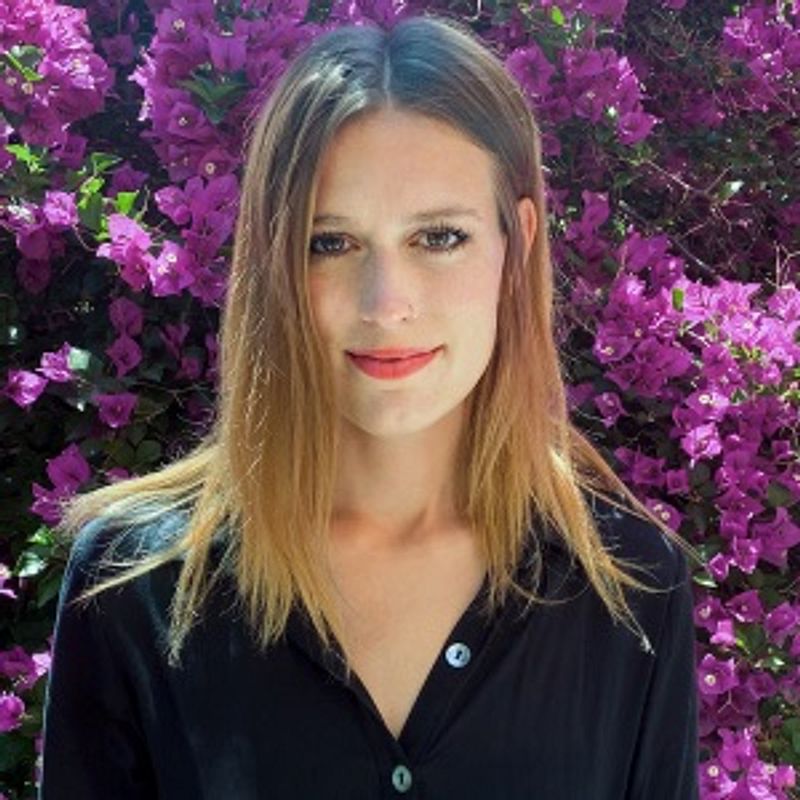
Journalist | Author
I am an Emmy Award–winning journalist and author focused on stories about women and the fight for justice. My work has been featured in the New Yorker, the New York Times, and The Atlantic, and on PBS NewsHour and Netflix, among other outlets. My book, THE FURIES: Women, Vengeance, and Justice, tells the stories of three women who used violence to protect themselves when institutions like government, police, and courts failed to do so.
Like most girls growing up, life happens, and I didn't question things until I got older, like why so many women experience some kind of sexual harassment, domestic abuse, or sexual assault. As a journalist, I learned best by interviewing other women. I didn't necessarily set out to find women who killed men or were super violent, but that’s just where my research led me. Like, the more I looked into this topic, the more I realized there's a lot more stories of women fighting back against gender based violence than we realize. We see those stories on television and film, like these female vigilante films, but we don't often hear about the real-life versions. So as a journalist, I just wanted to document and tell those real-life stories.
FYI: The Erinyes aka, The Furies, were three goddesses of vengeance and retribution who punished men for crimes against the natural order.


