VBB 373 Alisa Gracheva: The Hedgehog That Became A Holistic Healer!

Alisa Gracheva is a mental health counselor and holistic coach who’s faced life’s hardest challenges, including severe hormone-related PMS issues that prompted her ex-mother-in-law to call her a hedgehog, aka a prickly “bitch.” It’s a story to behold.


Alisa Gracheva is a licensed mental health counselor and holistic coach with a unique ability to blend ancient practices such as Reiki, meditation, and sacred sound healing with modern, cutting-edge trauma therapies. Informed by her own life trauma and a deep, compassionate perspective on what it truly means to heal, grow, and empower yourself — body, mind, and soul — this conversation is fueled by timeless knowledge and practical know-how.
Can painful experiences, like intimate partner betrayal, be used as a starting point for personal transformation and self-discovery? Alisa shares how betrayal can be a catalyst for growth, especially for women navigating a world full of double standards.
Whether you’re pushing through heartbreak, striving to set your boundaries, or reinventing who you are, you’ll find wisdom and real talk about what it takes to build a life and an identity that are truly you and truly trustworthy.
Be ready for soul-nourishing insight, practical tips, and a few laughs along the way with Alisa Gracheva.
QUOTE: ”Relationships grow through rapture and repair. We have to remember that it doesn't grow from us always having happy times.”
4 Valuable Lessons Learned in This Episode from Alisa Gracheva
1. Betrayal Can Be a Pathway to Growth
-
- Alisa emphasizes how betrayal, while deeply painful, is almost inevitably a catalyst for personal development and stronger relationships.
2. Boundaries Are Essential, But Individual
- Exploring the importance of setting and upholding personal boundaries, while also remaining open to giving second chances.
3. Evolving Through Hardships
- How women can use difficult experiences as opportunities for self-discovery and establishing stronger personal standards and boundaries.
4. Embracing All Parts of Yourself is Empowering
- How even the difficult or “Bitchy” parts of your personality are invaluable and need to be acknowledged, accepted, and even celebrated.
Christopher [00:00:01]:
Virgin Beauty Podcast, inspiring women to overcome social stereotypes and share unique life experiences without fear of being defiantly different. Your hosts, Christopher and Heather. Let's talk, shall we?
Christopher [00:00:21]:
When is Bitch not a curse but a cure? Well, it's whenever hate or fear of the word no longer guides your definition. And you choose to see the possibility that B.I.T.C.H can spell out a path to your growth and empowerment. How is that even possible? Well, that's the premise of our conversations with licensed mental health counselor and holistic coach for body, mind, and soul, Alisa Gracheva. Welcome back, Lisa, to Virgin Beauty.
Alisa Gracheva [00:00:59]:
Thank you so much. It's an honor again. I'm so thrilled to see both of you. It's been a pleasure the first time, and I'm looking forward to what we're going to go into this time around. So thank you.
Christopher [00:01:08]:
Thank you for jumping in with us. Now, Elisa, with all the traditional modalities you use, like Reiki and Meditation, alternative healing processes like sacred plant medicine, sound healing therapy, to cutting edge psychotherapies like psychotherapies including EMDR, CBT, and Logotherapy, the idea of taking a word used historically to dehumanize women as a tool for women's personal liberation must sound, I don't know, crazy? But even after explaining our premise of the five stages to bitch, Betrayal, Identity, Trust, Change, and Healing, you agreed to explore the concept with us. We're thrilled to have your perspective on the impact of these universal experiences, beginning with betrayal. And I'm curious, with all that you have experienced, what does that word betrayal bring up for you?
Alisa Gracheva [00:02:09]:
I would say it's disappointment. In certain ways, because I believe we all crave that connection and we crave to be free, finding a sense of belonging in people that we meet. Right. And when we experience something like betrayal, it can hurt us deeply and leave a lot of wounds, and how we see the world afterward. So I think disappointment in people, and the more we go through that, especially if it's a repeated story, it becomes a deeper and deeper wound. And unfortunately, oftentimes people stop themselves from even going further to explore that. And that's a deeply traumatic experience because they've learned you can't trust anybody. But yet this is so essential for our growth and development. So it becomes like a trap.
Alisa Gracheva [00:02:51]:
So I think betrayal ultimately leads to a lot of disappointment and possibly being trapped by our own conditioning and not being able to move forward with the growth, with the healing process, when it comes to us and the community and those people who are close to us.
Christopher [00:03:07]:
In a way, I'm glad you put it in that context. If I take that egg that you've given me and I expand it out to all of womanhood and betrayal, how would you, would you see it the same way, or how do you define that as a woman and your sisters around the world?
Alisa Gracheva [00:03:29]:
Yeah, I think people, women this time around, tolerate a lot of things, and often concepts that we see are that women have to go through a lot of those things. Even when we get into romantic relationships, we all know, yes, you can get to a stage where everyone will live like, kind of, with the same values, and get already shaped by the life together. But in a lot of couples and a lot of women, that I see, that I work with, even the relationships they have now that were deeply fulfilling, or beautiful, or long-standing, there's still betrayal involved in going through stages and developing that relationship further. So on one hand, I can say that, probably, betrayal is inevitable for a lot of us to experience, even with the relationships we already have. But at the same time, it can either heal us or kill us. We can go through, and if that betrayal serves as a lesson for another person, if they betrayed, let's say, a woman, a partner, if they've learned through that and they begin to change, that can really strengthen the bond.
Alisa Gracheva [00:04:33]:
And you may not 100% recover the trust that was there previously, but I think it can still make the relationship much stronger moving on. Especially if both people are now on the same side and trying to work on that very hard. But not a lot of people are willing to put up with the work right now.
Alisa Gracheva [00:04:49]:
This is the society where if you're not good for me, well, I'm moving to the next. And before, I think as you said about historically, I think before, we found more solace, and more fulfillment in relationships that we had because we couldn't choose a lot of times the professions we would have if we were born into a certain class. Let's say, if your parents were housekeepers or something, that's a blue-collar profession; it's going to be harder to get out there and to be a CEO of a company, or to achieve certain goals. And I think for both women and men, that was a sense of fulfillment. You could choose your partner in most cases. So the value of the family was, I'm going to nurture that. I'm going to grow through that. I'm going to be, you know, this is something that I've chosen, and I'm willing to do the work even if I make a mistake.
Alisa Gracheva [00:05:38]:
And now it's the, you know, fast-paced kind of thing. Manufacturers like, okay, I'm the good one. I'm the shit. Sorry for my language. If you don't serve me. It's okay. Bye. Bye. I have a new one.
Alisa Gracheva [00:05:48]:
On one hand, boundaries are healthy; on the other hand, we have to always see whether we can actually grow through the experiences we have. And yes, betrayal is naturally not good, but we can find a proper way of working post-trauma from this experience; we can actually become stronger in making that bond. Because relationships grow through rapture and repair. We have to remember that it doesn't grow from us always having happy times. So yeah, I think it's a very twisted concept and tricky concept, and I think it's very subjective in its nature, and depending on the two people involved, because betrayal will always include two people.
Heather [00:06:26]:
I'm so glad that you mentioned, you know, rapture and repair and the world that we live in. That's very, you know, you're worth it. So, you know, if it's not meeting your needs, then move on. And you also said something I find very interesting, which is that women have been socialized to tolerate betrayal, breaking of trust, et cetera. And so, you know, in your work that you do with women in particular, you know, I agree with you that a lot of society has said boundaries are very important, and they certainly are. Where are you kind of finding that maybe in your own life or with these women, they're not kind of like giving up on a relationship while also staying curious if it's kind of reaching a threshold of pressing on a boundary?
Alisa Gracheva [00:07:14]:
Again, I think it's going to be very subjective and individual, and how they will process that. I believe in second chances. I definitely believe in second chances, and I think it's worth giving it because we never know when we will need one as well. We're not perfect, and things can happen to us that we won't anticipate, and we will make a mistake. We are humans, and we have to remember that again, needing a second chance is probably going to be in our lives in the long run. But if the same boundaries are crossed, or coming close every single time, the person is not changing, and providing different explanations, trying to justify their behavior again, and again, and again. Again, the best predictor of future behavior is past behavior. So we have to make an informed decision.
Alisa Gracheva [00:07:59]:
And remaining curious is great. You can still give a chance to the person, but then kind of start to reshape how you view what's going on, how your role is changing within this unit, how do you want to see yourself moving forward, and understanding that this betrayal is possible again. So if this is something that you say, you know what, I'm never going to trust you again after certain things, let's say cheating, it can be a huge one, right? And yes, you can make it stronger afterward, but you don't have to. If this is something that you just know, I'm never going to believe this person again. And if this is how you feel, why, you know, start to force yourself, you can make a different decision. If this is not something you can tolerate, it's okay to move on, too. I think remaining curious, like you've said, is a good thing within the relationship, and always within yourself, because you will be changing after that, and how you change will also predict your future as well, even within this unit. So yeah, I think boundaries are important if they're crossed. You have to, but it's personal.
Alisa Gracheva [00:09:01]:
You can make the decision to move on, or you can make the decision to stay. But we have to also understand that you will have to accept the person with that mistake and not go over that and constantly keep reminding that person, especially if the person is doing the work right and trying to re-establish that trust, whether you want to give them a chance and say, okay, I'm really going to forgive that, and it's very hard, and certain things are almost impossible to forget sometimes, for some people. So it's going to be a deeply personal decision of what to do. And there's no right or wrong. It's just based on your values. Based on your predictions for yourself for the future. Based on how you view this person. Based on this person's actions. Then you take all of this, and you make, you decide, do I stay, do I go, do I give another chance? I think again, I'm a supporter of second chances, but if it's third, fourth, fifth, well, maybe something is not changing, and may not change. So we have to make that a different step forward.
Heather [00:09:58]:
I appreciate what you're saying because it's like, you know, when multiple occasions happen, it seems more like a pattern rather than just a one-off. And I think there's kind of a rhetoric that's been building lately that, you know, if someone is willing to, you know, betray you in a major way, once they're likely, they are at least capable of doing it again. And you need to keep that in consideration in the choices that you make on what you want to do, to stay or leave.
Christopher [00:10:26]:
I would add to that that a Lot of what we're talking about is outward-facing. But the thing that is universal, central to all of this is who are you? Do you know who you are? If you don't know who you are, you can't set boundaries. There’s no point on the map that you can go, okay, I'll draw a line around this because this is me, and these are the boundaries I set. So identity. I look at, I look at you, and what I see is just phenomenal. Is this who you were, say 20 years ago? Was that the same identity?
Alisa Gracheva [00:11:06]:
Oh my God. No. Absolutely not. And I think because of those moments of betrayal and hardships, not, I think, I know, we grow through this experience. We never look back to say, I've been so happy, my vacation was great, I grew so much! It never happens, right? But if I look back and say, " Wow, that was, that almost killed me. And that's how I've changed. And seeing that again, the steps forward. Again, you made a very important point that sometimes when we don't know who we are, and especially for women, a lot of times when we get so close to someone, and they do this thing, that can be actually a very spiritual intervention in its nature because we need to learn who we are, and then those boundaries, maybe we never had boundaries, or maybe I relied on that person for way too long. And maybe now it's the time to really reconsider where this step is taking me. But we have to, just like the other person, we have to make this lesson work for us as well, and say, you know what, maybe I didn't see this coming. Maybe I trust it way too quickly. Maybe I moved on with this person way too quickly. So maybe I have to now slow down in my decisions.
Alisa Gracheva [00:12:05]:
Maybe I have to evaluate the traits that I wanna see in a future partner, or how I need this partner to change in order for me to say, okay, I'm gonna give this a shot. But you're right, if we don't know who we are, we'll never be able to set those boundaries. And it's a learning process in every experience. Even if it repeats itself in the same way, there's a new aspect that we begin to become more of a master of within ourselves. Because, naturally, every experience, I believe, leads to self-mastery in many different ways. But we sometimes, if we're stuck in that, I'm gonna call it a victim state, 'cause again, I've been in that state, and there's nothing wrong with that, it's a very educational step in our life, but it's not a life sentence.
Alisa Gracheva [00:12:48]:
We have to remember that as well. And so when we come to a realization, okay, now it's time to continue to move on and discover who I am. Set a standard for yourself. What is your value? Maybe your value now is focusing on yourself. Because if we're honest, how can we ever predict that a person is going to be treating us well until the rest of our lives? We can't. What we can do is know how I'm going to react or act if that happens again. Because we can never have 100% trust in everybody, no matter what they say.
Alisa Gracheva [00:13:22]:
We all know love-bombing, and gaslighting, and things of that nature. All of that is very familiar, known concepts to a lot of women. But how do I? What am I? And how will I be able to reflect and go through it if it's going to happen again in my life? I can have absolute trust in myself. And I'll say, you know what? I've given that a try. That didn't work out. So if I ever have someone who will cross that boundary again, you're out. The exit is right there. I'm sorry, I'm not, I'm not playing. Because I have to care for myself, and I really like that.
Alisa Gracheva [00:13:50]:
When I was dealing with that, and before my marriage, and how I met my ex-husband, I was very critical of people, and it doesn't matter that I've had this desire to like, but come on, but there's something good about this person, or this person, but this is not a big issue. And I was like, " No, I cannot afford to make another mistake because I know what that cost me before in the abusive relationship I've been in. So for me, it's not just trying to negotiate whether I'm going to overlook this little, you know, minor shortcoming in that person. I cannot afford to do that because I've done it before.
Alisa Gracheva [00:14:34]:
But we have to learn that lesson through hardship. And if we learn it right, then you're going to make the right decision. And we're not this, you only live once, right, or fear of missing out, no, that's not it. And I think learning that boundary, not only with others, but with yourself. Am I going to be okay with this next step? And that's again, it's a very personal decision. We all make decisions for what's better for us. What I'm willing to tolerate, what's not. And that's the boundaries that will grow through hardships, through betrayal, through anything that we will experience with another person.
Christopher [00:15:07]:
It's fascinating to me because, as babies, as children, we are dependent on other people. So we have now this inborn reliance on other people. But at some point, life keeps throwing things at you to make you understand that what's important is you. What happened in. Do you. At what point did you come to your own self moment that you realize, no, my marriage, my husband, my friends, they're not where I should be focusing on. The actual focus is on me. Do you remember how that came about for you?
Alisa Gracheva [00:15:49]:
Yeah, but I think I'm not going to be the best example for that because I've always had struggles to connect with people deeper, even though I have very warm relationships with a lot of folks. But I think on a deeply personal level, it's very hard for me to open up. And when again I was getting this, that my ex-marriage, my mother-in-law, my ex-mother-in-law, she called me a hedgehog. She said Alisa had a lot of spikes. She was very thorny. And so yeah, it was a process. I left my country, Russia, at the age of 18. So already at that point, I was not focusing on; I didn't have relations with people.
Alisa Gracheva [00:16:24]:
And now for me, and I think there is, God has a sense of humor because we have these periods of life where we have to learn to be independent, and then we have to learn to be, you know, with people as well because we do, I do believe we grow through people and projects, and it's very important for us to have relations with others. Otherwise, we're going to be trapped by this hermit lifestyle, so to speak. Because I've been there, and unfortunately, some people get into that space, and they may learn to like it because not a lot of people can be alone. But we also have to have that, I think, it's always a balance.
Alisa Gracheva [00:17:00]:
And I really like the quote that goes, "You don't want to be free from the circumstances, you want to be free within the circumstances.” And I think finding that freedom, no matter where you are, it's knowing yourself and yet having that interdependence, not independence when we're highly hermit like and dependency when we're not able to do anything without another person but being self sufficient enough and yet relying on others when we're talking about, you know, family unit, when we're talking about a couple's work. So I think it's always kind of, it's never one side or another. I think we have to always learn to balance that and find our New version of self within this new circumstance, and how we operate here. And that's a very flowy concept. Unless we get so rigid and we're like, no, I'm never going to do that again. It's good to explore, but also make proper chances where, well, yeah, chances. What would work for me now in this new way that I live with the person that I'm becoming now? Because we're always becoming, and that's a beautiful thing. And that balance is very important.
Heather [00:18:05]:
Yeah. When I think about, you know, you saying previous versions of myself, and when you say, you know, when Christopher asked, is your core identity similar to where you were 20 years ago? And it was a, oh, my God, no. And I think that's true for so many of us. Right. Like, there are just so many versions of ourselves that have happened over the past 20 years. And it is uplifting to me to think, you know, if you feel stuck, if you feel trapped in a pattern or maybe you're starting to hermit and you weren't that way before that you're ever evolving new self has what we would call a virgin mind or a virgin opportunity to be forever curious, forever anew, forever being able to step into a different version of yourself. And so when I think about being able to trust that, to be able to trust like the ever evolving new you or the future versions of you that you're crafting and creating what worked, what helped you in learning self trust, like knowing that even if something isn't going the way that you planned or you feel stuck, that you believe that you can get yourself out of it.
Alisa Gracheva [00:19:19]:
Everything that we use in life or any state we want to come to, let's say I want to be at peace, or I want to find joy, or I want to have fulfillment. All of those are skills that have to be learned. So for me, my major tool is spirituality. It has always been because, and again, it's a concept not a lot of people can maybe relate to because some people are not as connected, let's say, or connected in the way I am for myself. But that served me well because I found my own practice and an extreme amount of self-discipline, because that will come from what I can control. I can't control if the person will betray me, but I can control what I'm going to do every day, even if that happens. And yes, grieving is important for dealing with emotions.
Alisa Gracheva [00:20:04]:
I'm not saying disregarding the emotions, we need to learn from that because those emotions have a lot of messages, or what happened, and how we can work on this aspect, so it doesn't repeat itself, but that self-discipline is having, setting goals am I want to continue growing, and I think having personal goals what I want to explore. Maybe it's a new language, maybe it's a new skill, maybe it's a new hobby. Maybe it's something that you want to add to this new version. I want to learn to play a guitar, or I want to learn Chinese, or I want whatever that is; this is your creating sacred space for your relationship with yourself first and foremost. And when you have that, and you have not cheated on yourself with anybody else. If you say, I'm going to have these three days where I'm studying this language, or I'm practicing the skill I'm working on, and then somebody says, " Let's go party. And you say, I have boundaries. I say, no, I have actually something to say. I can’t do it on this day. Because we're not trying to completely escape from people, and just very rigidly continue to work on ourselves. I think it's important to balance.
Alisa Gracheva [00:20:52]:
But having this commitment to who you want to be. Having those goals, and having a plan on how you will achieve it, and then staying very consistent. That's very hard for a lot of people because we forget why we started, and then we get someone else, and suddenly it's a distraction. And there is a really beautiful book I recommend every woman to read. It has so many nuggets, golden nuggets of information from Tom Walker: Loves Chessboard, and he talks about how when we fall in love and what's going on.
Alisa Gracheva [00:21:27]:
And he's saying, "Do you think it's fate?” And it's just a chemical lab. So in our brain, really, we have a lot of neurotransmitters that begin to show up. Dopamine goes really high on inconsistency. That's when we crave it most. When the person is not texting. When it's doing that, suddenly we feel compelled. We think there's something deeper, but in reality, we're being used by someone who's not even worthy. Serotonin goes down, and we're not able to find peace, and comfort, and grounding for ourselves. Oxytocin, even if we meet with that person, the touch, right, creates this right away, a bonding chemical to that specific thing. And actually, it's a very important manipulation tool for a lot of people. Because you see, people are like, oh, hey, how are you doing; hand on the shoulder, right? Yeah, you're being programmed right now. So on a physiological level. And vasopressin is the very primal, territorial type of hormone. I want this to be mine.
Alisa Gracheva [00:22:18]:
And a lot of times, men come back to a woman, right? When after they break up and they come back, hey, how you doing? Not because they want to be with you, but because they want to make sure you're still theirs, you still belong to them. And so understanding that even if we go into that, and that requires education and self-discipline, again with your own practices. We have to always have a plan for us. And it's for everybody, men and women, I think, having a plan of self-development. Only that way can we predict how we're changing because otherwise, experiences like relationships, other problems, we're always going to have many different problems in life, and they will continue to show up. But that self-discipline will become the skeleton, the center of my development. No matter what's going on.
Alisa Gracheva [00:23:09]:
And if I build it, I build it brick by brick; even if it collapses a little bit, it's not going to be completely annihilated. It's still going to have certain things standing, and I will know exactly what to do. I'll say, okay, well, guess what? Tomorrow, in the morning, I'm going to go to the gym. That I know. I don't know how I'm going to feel, but. But I'm going to go to the gym, you know, or I'm going to do the work, or I'm going to connect with this person, and I'm going to connect with my family, or whatever that situation is. But having that plan and staying true to it can again predict the development of our identity, no matter what's going to be appearing on our path.
Christopher [00:23:44]:
I think you just laid out our next step in this process, which is change. How do you change exactly as you say you, brick by brick, by brick? And sticking to putting brick upon brick upon brick over time is change. I see you like one of those workmen with their tool belts, and they've got like every tool imaginable. For you, it's healing. You have all these tools for healing. I'm flabbergasted at what that must feel like when someone comes to you, and you have a tool to help them heal from where they are. What, what does that feel like for you?
Alisa Gracheva [00:24:28]:
I see my work with others as it's a very collaborative space because, and I've had, I have, I love, I love my clients, and one client is saying, you know, I'm changing because of you, and you are the best. I was like, no, no. I'm like, you're changing because of you. And they say, well, you're always teaching me, look at yourself, you're always teaching me to accept compliments, and you're not accepting compliments.
Alisa Gracheva [00:24:47]:
I'm like, whoa, whoa, let's, let's stop right here. I'm like, okay, what if you fail? Am I the one who is responsible? They're like, well, no, we have to apply it the same way. Right? You are going to be responsible for your healing. I'm providing the space. The biggest reward for me is seeing what people are taking and doing with the tools I'm giving them. And I explain how to use it, but they can also drop it. And I say, okay, I'm meeting you where you are.
Alisa Gracheva [00:25:18]:
But I also do not want to waste time if you're not ready for that. That's okay with me. Absolutely. Because we all have different paths and different time frames for change. But I'm planting a seed at that point, not creating a space for transformation. That's okay too. And we can work on where they are now and explore a little more of the obstacles, but at the same time, it's still going to be their responsibility for change. And to me, to see when people grasp that, and they step into their power because the tools are universal. Yes, I'm going to give different ones for different people, obviously, but what they do with that, and then that's where the power shines through.
Alisa Gracheva [00:25:47]:
So for me, it's a change in how they view themselves and learning that self-mastery. But also, it's a change in lifestyle, because if you take this tool, and you use it a few times, like, yeah, that works, and then for three weeks, you forget about it. Guess what? It's not going to work for you again when you restart it. Just like with exercises. If we're going to the gym, you're not saying, " Okay, I want to get to this body, and I'm going to go, and I'm going to work out very hard for six months. And what do you do then? You drop it, go back on the couch, eat potato chips, and watch TV. No. Right. It's not going to work. But so is the mind muscle. So this is a lifestyle change.
Alisa Gracheva [00:26:24]:
And if we take our mind as a change in lifestyle, just like how we would address our body, then that will create this momentum, and those new ways, new strategies have to be maintained with consistency, and yes, you may fall out of it for a little bit, but it's not about how often you will fall out. It's how often you will bring yourself back to that, restart it, and continue to practice. Because all of that is a skill.
Alisa Gracheva [00:26:52]:
The more we practice that, the more neural pathways we create, and neuroplasticity. Just like muscle memory. And when we're driving. I always like this analogy. When we drive, let's say you guys probably drove a lot already in your lifetime, right? So you're pretty automatic. It's like second nature to driving when you're having an experience on the street where somebody is swerving, or something is going on, and you're able to get out of it very quickly. And you already scan the back mirrors, right? Back view mirrors. You're scanning everything so fast. It's not a conscious process.
Alisa Gracheva [00:27:24]:
You're not sitting there, okay, I have to look in this mirror, then in this mirror, and then this, and then I have to turn. You don't have time for that. So your nature works. It does the work for you in this critical situation. So the same thing happens with the skills we learn of grounding, of meditation, of centering, of, you know, self-regulation of the nervous system, mind, and everything. When we're living a life, we practice that daily. Then, when something big happens, it's not taking us out completely, that we're immobilized and we're in bed for three weeks, not able to do anything. Within a few days after that, you're like, okay, let me go back, and let me recalibrate, and let me use all of the ones that, the things that I know how to, and then that healing process is faster, and it helps us to get through this crisis situation.
Alisa Gracheva [00:28:10]:
So it's a lifestyle change. And that lifestyle change, the more you do that, the more you know yourself because then you have more control over your thoughts, over how you tolerate stress. How do you respond to it? What do you do when that happens? So that becomes the new identity. So it's built is that practice that reflects an identity, and then it's like a beautiful circle, not a vicious one, but a pretty one. It's pretty empowering.
Heather [00:28:34]:
I mean so much of what you said, I know you were talking about that book, but every, like what you just said had so many golden nuggets in there for me. So I appreciate the analogy. And I think one thing that you said is, is really sticking out for me that you said earlier that, you know, sometimes when we're building a new pattern or a new sense of like a piece of your identity that you're working on, you're mastering a new part of yourself or a new craft that often we, or sometimes we lose our way because we forgot why we started. And I think that, that, like, that there's something in that, like, let's say you're, you're trying to get your body into a place where you want to feel stronger, you want to be healthy, and sometimes you lose track of, of why you started. Do you have any, like, can you just expand on that a little bit in and perhaps how you help your clients in staying fresh with remembering why they got started?
Alisa Gracheva [00:29:26]:
Yeah, I would say setting an intention every morning, if that's something you want to do. And that's going to be also a practice, you're working on that one thing without overwhelming yourself. Because usually when we're like, okay, I want to be different, I want to change, I want to grow. I want to, whatever we want to do with ourselves, and we right away see so many things we need to change. Well, I need to do the diet. I need to learn to speak differently; I need to read this book.
Alisa Gracheva [00:29:49]:
Take one thing and implement it for a little bit of time. Take one thing at a time. That's number one. I think it's easier to practice and bring that to self-mastery if we do have that. When that becomes second nature. I need to go to the gym, I need to practice. Graduate, study, do affirmations, I need to do breathing so much.
Alisa Gracheva [00:30:07]:
Just like our teeth brushing, right? We're not sitting there, oh my God, can't wait to go brush my teeth. It's going to be so exciting. I love it. I feel so great. But we do have a sense that we like it right after that, and we feel good. And it's not euphoric good, but it’s, I've done it good.
Alisa Gracheva [00:30:23]:
We want to get other practices to the same level. And within about three weeks, four weeks, we already, if we don't do what we usually do, you'll be having a few glitches. You're like, " Wow, I really want to go and practice that because it makes me feel good. And if you don't do it, that feels weird. Just like if we don't brush our teeth, we go to bed. I can't do I have to go and do it right. Not because again, it's euphoric, but because it's such a natural thing for us to do as a part of our routine.
Alisa Gracheva [00:30:50]:
And, if we bring that for ourselves with that intention, saying, okay, I'm going to take one thing and every morning I will remind myself, why am I starting? What am I, what do I want? What do I want to achieve, and what is going to happen if I don't? Let's say if I'm starting something, that means maybe I look at myself in the mirror, I say, " Wow, I really don't like what's going on here. I have to change that. Well, snap a picture, put it next to your bed. Remember that. What can happen if you don't do it? Give yourself little reminders. It can be a motivational phrase. It can be again where you started, a picture or a feeling. Because it's very easy.
Alisa Gracheva [00:31:25]:
Feelings, they're very fleeting. But when we have them, it's good to journal about that, to really embody what that is, so that you don't get back to that state again. And then continue your work and giving yourself. Set, a four-week thing. Do it as an experiment, right? I think it's good to do it for a limited time frame so that after four weeks you'll say, okay, if you do it consistently, do you want to continue with that, or you want to drop it because it doesn't serve you, because you have the right. And if it's something that you know it's not, not really. I'm not sure I like it. Okay, great, take another one, do something else.
Alisa Gracheva [00:31:58]:
But you have to give yourself enough time to practice that, and it has to be, you're challenging yourself, right? And that's a very powerful thing, to challenge yourself, because if you learn to overcome the challenge you set for yourself, no other challenge would bother you or matter. You've got it. It's that self-mastery that you can always pull yourself out of anything or make it work, no matter what that is. But intention, reminders, the initial phase, and what's going on, and then giving yourself that time for okay, I'm in, let's go. And remembering. Okay, if I don't do it, what's going to happen? Ah, that picture. Okay, no, no, no, I can't do that again. Let me go ahead and do that. And I've heard a really cool thing. If you want to, if you want to lose weight, eat in front of the mirror naked.
Christopher [00:32:43]:
That's nasty.
Alisa Gracheva [00:32:47]:
Why? Come on, why not? But you will remember right away that, okay, maybe this bakery thing, maybe that pastry is not the best for me to eat right now, from what I see. Okay, maybe a carrot will be better this time around, right?
Christopher [00:33:02]:
There's something you said in the past in this conversation that I can't get out of my mind. And that's your ex-mother-in-law calling you a hedgehog and speaking to you now like you, the calmest, warmest, gentlest person I can imagine as a hedgehog. Now here's a trick question. Would you call yourself, ever, a Bitch?
Alisa Gracheva [00:33:29]:
And I'm gonna actually make it even more visual because I do have this item next to me. So, funny that you ask. I have PMDD. I have severe hormone fluctuations that I've had since I was a teen. And I've struggled with that because it actually makes me have suicidal ideations, things of that nature. Not because that's what I'm gonna deal with, but because it feels like it's such a disarray inside. It feels hopeless, and everything is just bad.
Alisa Gracheva [00:33:52]:
And I've learned again, now I'm 36, nothing is changing. But I've learned that, okay, I'm not just not listening to this mantra. I know it's hormones. But I also stopped tolerating things. So, my ex-mother-in-law would actually wait for me to be in that state. Like, at least, you know, we need to go talk to HOA, and can you help us with that? Because she knows it's going to be a mess. I'm going to go and destroy people. I have a short fuse, so I prefer to isolate rather than communicate with anybody.
Alisa Gracheva [00:34:11]:
So I have to always, it's harder for me to mention, and I found this thing that looks exactly. I'm like, oh my God, that's my literal PMS. Like this is how I look. This monster that comes to me, and now I'm putting that on the table if that happens. And I'm like, okay, guys, this is who you're talking to right now. Please be mindful because I'm gonna eat you alive.
Christopher [00:34:36]:
So, can you describe that for people who are just listening to the audio? Can you describe that? That is. That is. Wow.
Alisa Gracheva [00:34:43]:
It's a pink Labubu with hearts in their eyes. Very nice, and cute, and flowery with some outfit. And it has sharp teeth that will eat anything that moves. Pretty much. But it's cute, kind of, but not really. So just be mindful of crossing that path.
Christopher [00:35:02]:
I love it.
Alisa Gracheva [00:35:02]:
And that takes me for about two weeks of that.
Heather [00:35:06]:
I love it too. I've actually seen like so many of something similar. And one side is like when she's feeling good and Happy. And you can flip it when she's like, if you try to talk to me, I am literally gonna eat you alive. So just maybe just be cautious, you know?
Alisa Gracheva [00:35:21]:
Right, right, right. Yeah. And I think that became a kind of. Now I start to reconsider that. And I've actually tolerated and overextended myself a lot. I have. Sometimes I don't have proper boundaries when I'm in a normal space. Just because of what you see.
Alisa Gracheva [00:35:36]:
Right. When you see me. Normal. Actually, right now, it's my best week and a half. So actually, that's the time when people should talk to me. I'll be really welcoming. And then it goes into again the cycle of despair.
Alisa Gracheva [00:35:48]:
But I've learned, I think it's another way of my nature to set those boundaries too. Because this is the time when you're crossing my boundary. You're done. I'm not going to be tolerating anything. And I literally cannot. And I've tried. I can hold back, and I can. But if you continue to press or if something continues to happen or something really unfair, I will definitely be vocal. And yeah, I would say that's my Bitch type of space. That, yeah, it shows up for me. But again, it's usually well deserved.
Christopher [00:36:18]:
You know what? This is very important. It's important that women accept that part of themselves and acknowledge it, and they treat it with love because it is part of who they are. And just because someone else interprets it in a way that they use words to disparage you doesn't mean it's not a value of who you are that is so important. I'm so glad that you’ve, that you smile about it, you laugh about it, and you acknowledge it. Because that is very important, I believe, for women to do with that side of themselves. And that's what this, these conversations, and this whole process that we're going through Bitch. That's what it's all about. It's not putting that part of yourself in the closet and trying not to let it out. It is part of you. It is part of your identity. Celebrate it. Acknowledge it.
Alisa Gracheva [00:37:19]:
Yeah. I actually have a quote that I want to read real quick because you've said about something that resonated a lot. So give me one moment, I'll find it. The same people who benefited from your kindness will often complain about your boundaries. They won't miss your goodness. They will miss the convenience of it.
Christopher [00:37:37]:
Exactly.
Alisa Gracheva [00:37:38]:
So, remembering that, setting those boundaries, and sometimes kindness is taken for granted. And we have to remember kindness is a privilege. Even though it can be given to us for free, it's still something that is rare, and if we abuse it, we may get retribution for that, hopefully from the same person. But I think it's really good to respect others, and again, kindness, not to be taken for granted, when it's given to us. Find the gratitude in having people who are offering that kindness to you and that goodness to you, and not seeing that as a convenience to use it whenever they want. And again, that is balancing the protection of yourself while still providing and giving that kindness to others.
Christopher [00:38:18]:
Alisa, we've been looking forward to this conversation for quite a while because you bring so much depth to these conversations that, on a day-to-day basis, people may not think about. But it's so invaluable to know and understand and to hear from someone with your experience, and what it is that you do in your profession. It is absolutely invaluable. We are so in gratitude for having you share with us what you bring to the table. Thank you so much. Now, if someone wants to work with you, how do they get in touch with you?
Alisa Gracheva [00:38:56]:
Yeah. So social media @AlisaArtPainting or Psychology Today (https://www.psychologytoday.com/us/therapists/alisa-gracheva-coral-springs-fl/1109186). My profile is there. My website is https://since.life/ Yeah, like Since. “Since” my childhood, or “Since” that life.
Christopher [00:39:12]:
Fabulous.
Heather [00:39:13]:
Very cool. Thank you so much for joining us. It's been such a pleasure to see you again, and every time we do we just go, we go deeper. So to hear your thoughts on the Bitch. It's been a joy.
Alisa Gracheva [00:39:27]:
Thank you. It's such an honor. No, I love you guys. You're amazing, and it's always an amazing space. You're the best with providing, you know, this beautiful stage to share. So thank you. It's. It's an honor.
Christopher [00:39:39]:
Thank you so much. And you have been listening to the
Heather [00:39:43]:
The Virgin,
Christopher:
The Beauty
Heather:
And the Bitch Bitch in her year 2026.
Christopher [00:39:49]:
Find us. Like us. Share us. Bring yourself on back.
Christopher [00:39:52]:
To become a partner in the VBB community. We invite you to find us at virginbeautybitch.com. Like us on Facebook, Instagram, and LinkedIn, and share us with people who are Defiantly Different like you. Until next time, thanks for listening.
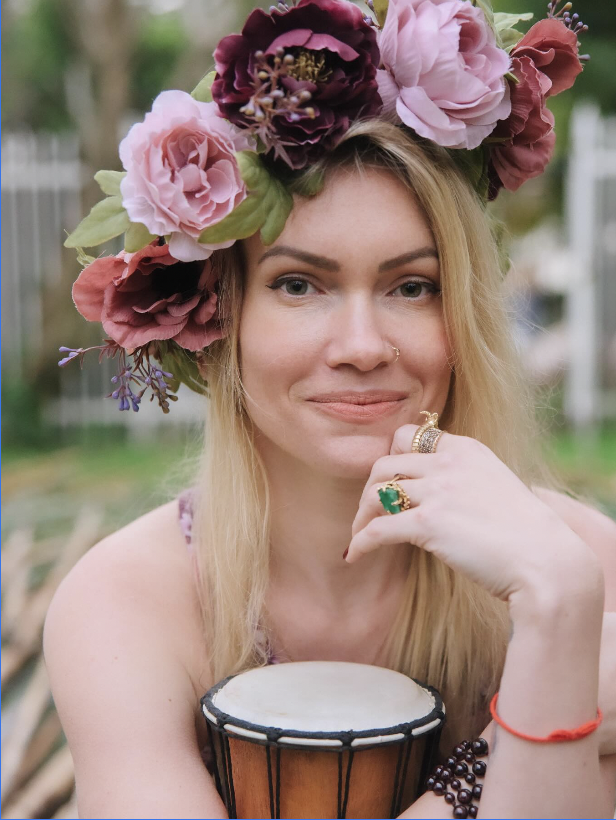
Licensed Psychotherapist | Trauma Specialist | Integrative Healing Practitioner
I’m a licensed psychotherapist, trauma specialist, and integrative healing practitioner dedicated to helping individuals reconnect with their inner wisdom, reclaim their emotional balance, and restore meaning in their lives.
My approach blends evidence-based psychotherapy with holistic modalities — including EMDR, CBT, Logotherapy, Ketamine-Assisted Psychotherapy (KAP), sound healing, Reiki, energy work, and spiritual counseling. I specialize in working with trauma, grief, anxiety, depression, and life transitions, with a deep commitment to both clinical integrity and soul-centered healing.
I believe that healing is not only a psychological process — it is also neurological, physiological, energetic, and spiritual. Trauma doesn’t just live in the mind; it lives in the body and the nervous system. Through integrative methods backed by neuroscience, somatic psychology, and ancient wisdom, I help clients release stored pain, build nervous system resilience, and align with their most authentic self.
Whether you’re seeking relief from emotional pain, navigating a spiritual awakening, or looking to deepen your therapeutic work through modalities like Ketamine-Assisted Psychotherapy or sound healing, I offer a safe and compassionate space for deep transformation.
Healing is not about becoming someone new — it’s about remembering who you are beneath the pain.


