VBB 372 Tori Jenae: Learn Why Your Identity Is Also Your Crisis!
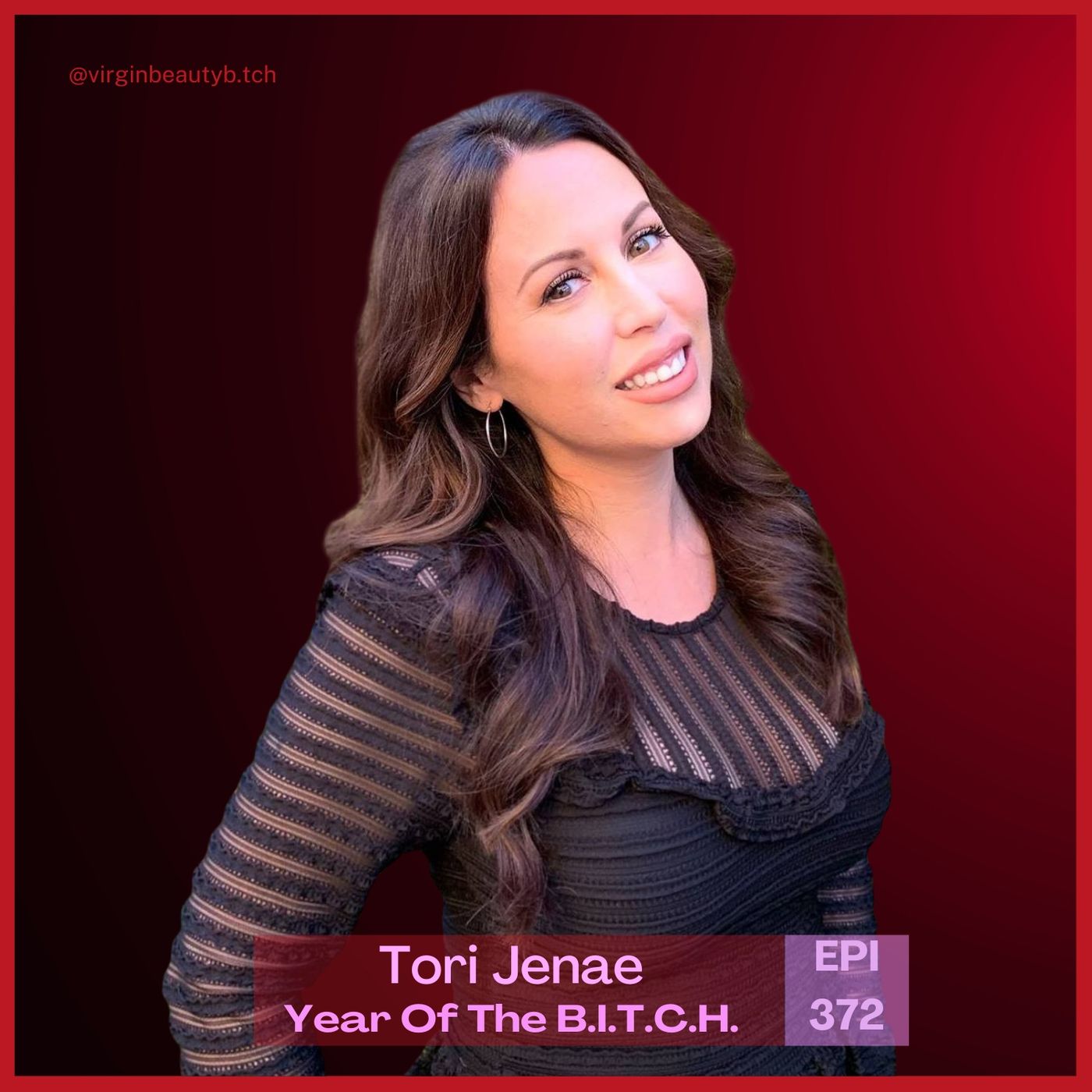
Tori Jenae is a Trauma-Informed Coach, Energy Psychology Expert, and a rare teacher who has experienced life’s harshest realities, including death, divorce, and abuse. Instead of bitterness, she transforms her pain into lessons that help others walk through their own hell.



Tori Jenae is a trauma-informed coach, energy psychology expert, and spiritual powerhouse who admits flat out, “I've been through hell and back, and I have the map to get you out.” Through her story, we dive into the transformative process of reclaiming identity beyond societal labels, letting go of limiting roles that no longer serve us, and confronting the silent demons of self-betrayal. We explore the importance of embodied healing, reconnecting with intuition and the body's wisdom, and making space for women's authentic power, including the reclamation of the connection between sexuality and creativity.
Prepare for a conversation that challenges the scripts written for you as a woman, reveals the hidden strengths within your struggles, and turns words that wound and stereotypes that sting into sources of radical self-love and empowerment.
On this journey, we continue our series of unpacking not only the obvious pain but also the overlooked power behind the word “B.I.T.C.H,” transforming it from a source of suffering into a pathway to women’s self-empowerment and personal growth. Join us as we explore five powerful stages of awareness: Betrayal, Identity, Trust, Change, and Healing, the very alchemy that turns life's hardships into your foundation for joy.
QUOTE: Life trauma can either break you down or break you open, but you choose how you alchemize it.
Themes Explored in VBB 372: Tori Jenae
1. Identity and Self-Discovery
- How can clinging to social labels (wife, mom, executive) lead to an identity crisis?
2. The Power of Self-Betrayal and Boundaries
- How sacrificing your health to meet the needs of others, although noble, can ultimately lead to women losing touch with themselves.
3. Trusting Inner Voice and Intuition
- How society has shamed women into prioritizing logic over heart and intuition, and how returning to the body—listening to gut feelings—can empower women to make better decisions.
7. Shadow and Strength: Owning the 'Bitch' Identity
- How the word bitch can be a way to reclaim power, especially in situations that require standing up for yourself or setting limits.
Intro [00:00:01]:
Virgin Beauty Podcast, inspiring women to overcome social stereotypes and share unique life experiences without fear of being defiantly different. Your hosts, Christopher and Heather. Let's talk, shall we?
Christopher [00:00:20]:
Do you see the forest, or only acknowledge the trees? Or put it this way: do you only suffer life's pain, or do you learn the lessons hidden in life's hardships? For most women, BITCH is a word filled with only pain. But what's lost in the word is the seeds for women's self-empowerment and personal growth. Transforming life's painful events into a foundation for your joy is an alchemy that must be learned. And one of the best teachers of this rare art is trauma-informed coach, energy and psychology expert, and spiritual powerhouse Tori Jenae. Welcome back, Tori, to Virgin Beauty Bitch!
Tori Jenae [00:01:08]:
Thanks so much for having me again. We had such a good conversation last time. I was like, oh, I've got to do this again.
Christopher [00:01:13]:
Here we go.
Tori Jenae [00:01:13]:
Got to get back on.
Christopher [00:01:14]:
Here we go. So since the new Year, Heather and I have been exploring bitch as a path to women's personal growth and self-empowerment through five sequential stages. Betrayal, identity, trust, change, and healing. B.I.T.C.H. Essentially, we are turning a painful word into a pathway to personal growth. I believe this mirrors your story in terms of betrayal coming from a dysfunctional home and suffering some devastating losses. But invariably, that helped shape an identity. A person with a passion for helping others heal. You shared some of your story in episode 335 with us, “From Pain to Power.” But acknowledging your life challenges is crucial to your message and purpose. So a refresher might be a good place to start.
Tori Jenae [00:02:08]:
Yeah, no, I love the work that you guys are doing and empowering women through this kind of, you know, darker side of the word, but it really is an empowering word because sometimes we need to be a bitch. Bitches set boundaries. I love to share my story because, where I am today, because I never should be where I am. So, you know, today I live in Beverly Hills, California. I hold three degrees in psychology. I've done a lot of personal work. I've learned. I'm trained in so many modalities. I've had my own practice for 14 years.
Tori Jenae [00:02:32]:
So I'm so, so blessed in so many ways. But that is not where I started. I was born to a mother who struggled with addiction. I was actually conceived in a heroin rehab facility. And so she struggled with addiction my entire life. I am the oldest living member of my family. Everyone else has died.
Tori Jenae [00:02:52]:
I've just been through hell and back. And I have the map to get you out of Hell, and so I love that you were, you used the word alchemy. Because I think what is in my DNA at this point is like, I have been through so much, so now I focus on psychology, and somatics, and health, and identity, and purpose. But really, how did I get that wisdom and that expertise? Like, yes, I hold all the fancy degrees, but like, I've been through betrayal when it comes to, like, being cheated on, or being lied to, or gaslit. I've been through divorce, childhood trauma, addiction in the family, health collapse, burnout, identity loss, and having and leaving my misaligned marriage in my 40s to completely rebuild my life. You know, I spent 20 years, like building this life, and it was all gone in two weeks. Like, I sold my house, we split everything up. And so that loss of self and identity, and like, who am I now in reinventing myself? I've done it a thousand times.
Tori Jenae [00:03:43]:
And it's like my passion to help people, like, whose life has collapsed or their self has collapsed and they don't feel like themselves anymore. And now you need to rebuild yourself. And so I think that the work that you guys are doing are helping people set the foundation for that. To reown who I am, what I want, and who I want to become. How to reclaim my health. You know, I always say, like, be happy, healthy, and hot. Like, go for it. And if you want to add wealthy? Go to that one too.
Heather [00:04:25]:
You know, to hear you talk about identity loss is really a big piece of what we're exploring in the eye of bitch. Because, you know, some of our identities we cling to so vehemently because it's, you know, what we want to protect, it's like it's its own life force. Like it is our life itself. Until, like, life just, you know, takes you on a turn and says, guess what? That's just one label I'm putting on and off of you, and there are many more coming your way. And so, for our listeners, you know, what does that journey look like for you? Like, when you think about identity, it's such a complex term. But what does, what has it meant to you over the years?
Tori Jenae [00:05:12]:
I think that's such a good question. I think there's so much, like, information around this, but I like to give people a felt sense of it. It's like who you think you are and how you label yourself. So a lot of women, when you ask them who they are, and I do this in sessions with people, they'll say, I'm a wife, I'm a mom, I'm a sister. You know, we identify with the self as like, I'm a helper, I'm kind, I'm all these particular things. We think that's who I am. And those are definitely attributes. But, but if I stripped away all those labels and you know, you are no longer a mother or you don't feel like one because your kids have moved out now, or you're no longer a wife because you get divorced or, you know, we get really attached to these roles that give us meaning and it's coming back to the self, to the deeper soul and saying, without all those things, who would I truly be? And there were two major points in my life where I went through a kind of mini identity crisis.
Tori Jenae [00:06:01]:
And the first was when I left corporate HR. I had had a very big corporate six-figure job. I was very identified with the success I had, and I didn't realize how bad that was until I left. And I was telling people that, you know, I was feeling very unsuccessful. I just started a business. It was fledgling. It was, you know, felt to me like I was failing. And when I was describing what I was doing, this was back in 2012, no one even knew what coaching was or what this industry was like.
Tori Jenae [00:06:28]:
I'd have to say, like, I was trained as a therapist, but I'm doing this other thing called coaching. And I'd have to explain myself, and people look at me confused, like, do you coach a football team? Like, what? And so I found like, like who am I? Like, what, am I making stuff up? And then obviously on television, you know, they kind of make fun of healers and helpers. And so I really was like, I had this deep attachment to like this successful corporate, like boss, babe type of thing. And I had to really write down all of her attributes and all the good things from her, what I was going to take from her, but recognized that she was just a part of me, not all of me, and that I was going to use my business acumen that I learned from her into, and I was going to bring her into my business, but I literally had to like sit with that new identity of like, okay, like, I'm not successful right now. I'm learning, and that's okay, and I have to own that.
Tori Jenae [00:07:37]:
And then the other one was when I went through my divorce, and I'd been married for 18 years, and I got married very young. You know, I think we got engaged when I was 22 or 23. And all of a sudden, I remember the first time I went out without my wedding rings, and it felt so weird. It was like, I'm not a wife anymore. I'm not part of a couple. I'm not a we. And that was another big transition. I had to go back to fully being a me. And who does that mean if I'm not doing all the things that I used to do, and I'm not part of, and I don't own a home anymore? You know, there were so many things that were tied up and being like that wife role as well that I really had to let go of. And so the identity work I have people do that's easy, is like write out the name, the identity that you're so identified with. Like, even if it's mom, write all of her attributes, like, what does that mean about you? And see, like what, what's still really part of me and what is just what I think I have to be doing and who I think I need to be and what's keeping me safe. Because a lot of times, the identity is actually survival strategies.
Tori Jenae [00:08:19]:
Like me hanging on to like the successful corporate boss bitch was really kind of pushing up my esteem and my self-worth on some level. I was leaning on that for feeling good, for confidence. And true confidence comes from knowing you're going to be okay no matter what, no matter what phase of life you're in.
Christopher [00:08:39]:
I get a sense that we need to be formed, we need to be given identities if we're going to be of value to the whole. I get the sense that we feel that if everyone assumed their own identity, the world would collapse in on itself. We're not encouraged to be that person inside of us. We're encouraged to take on those roles, as you mentioned, and be functional to the greater whole. But again, does that lead to your fulfillment?
Tori Jenae [00:09:16]:
Yeah, it's kind of how we do them, too, right? Because it's great. It's wonderful to be a wife and to be a mother and to be an executive and corporate, or all these things, but they are not who you are at your core. Because anything that can be taken from you is not you.
Christopher [00:09:31]:
Oh, I like that.
Tori Jenae [00:09:32]:
And that's kind of how I see it, it’s like anything that can be stripped away from me that I identify with, whether that's my looks or my success or the items that I own, then I know I'm identified, and I'm hanging on to something that can be taken from me. And then everything I've put into that, that props me up, that makes me feel good, that makes me feel worthy, can be taken from me. And so I have to really cultivate it in myself, like, I am worthy just because I'm alive, because I'm a soul on this planet, because I exist, not because I do anything for anyone else. All those things I do. Then I do it from a more whole, fulfilled, giving place. It's not filling some hole inside of me.
Heather [00:10:14]:
That's beautifully said, truly, I think, especially because, as you've highlighted, you know, so much of women's identity for centuries was primarily based on their, like, who they are in a relationship, or relational to someone else. And we are talking, you know, to be in an era where, you know, women are, I think, in a new zone in many ways. To be able to, you know, see a coach and question these things that are supposed to just kind of be how you function, to be in the greater world. I find that very exciting. And certainly, you know, we've got a ways to go. But I commend you on pushing through, you know, in a time that coaching wasn't as widely known, and now people really have seen so much of the benefit of what that can do for their personal life, and their professional life.
Tori Jenae [00:11:10]:
Yeah. It's funny, though, how many people still don't know about it. Like, I am part of this executive leadership program. It's for women in Orange County, and I used to work for the company, so they still use me as a coach, and I worked for them 14 years ago now. But all of my clients through there are amazing, and I love them, but they've never even heard of coaching before. And these are, a lot of them are doctors, dentists. You know, they're highly successful women.
Tori Jenae [00:11:32]:
They have no clue what coaching is. So it's still fascinating how few understand the difference between what's offered and, like, and, you know, how much support there is out there that's not. Not just in one vein, but, yeah, like, women, there's a woman out of Harvard that does research on this about, like, how women are raised to be so relational. Like, we actually put a lot of our success and worthiness through relations, being relational, and it's great. That's what makes us hold together families, and we actually run businesses better because of it. But on the flip, you know, everything has a dark and a light side. And so the dark. The dark side of that is then when I make those relationships my life and how I show up in them instead of, you know, like, another part of betrayal that I think is so important is, like, self-betrayal. And sometimes we betray ourselves in those roles of, like, you know, the mother has to sacrifice everything, including her own health, to, like, take care of her children. And we see that as noble, but it's like, we don't really raise healthy children that way.
Christopher [00:12:30]:
So the betrayal part, we can easily understand that we've all been betrayed. We know what that looks like and feels like. I think Heather and I, when we talk about betrayal, we talk about it from a womanhood level as well. Just as a woman, you're betrayed, born into a patriarch. That's just the way it goes. And obviously, identity. I love the way that you put that. Anything that can be taken from you is not your authentic identity. How did you come to trust that inner identity once you identified it? How did that transformation go?
Tori Jenae [00:13:08]:
Well, it's not easy. My other, like, you know, as Heather said eloquently, we cling to it like a life raft because it is who we think we are and what we think makes us worthy. And, you know, whether that's being productive or successful or even taking really good care of everyone. You know, I've even had that identity as, like, a helper and a healer. And I've had to be very careful, like, hanging on to that. Now, when my clients, like, compliment me and, like, say, like, oh, my God, I love you. You saved my life. I'm like, no, no, no, you did that. I just. I gave you the tools. You built the house. That's all it is. So I really put that back on people because I don't. I don't want to take that. It's hard to say. It's like a form of humility. It's like, I don't want to take that in. I don't want to become identified with that. I'm not Jesus. So I. I really stay very clear of that stuff.
Tori Jenae [00:13:52]:
And I think, honestly, doing a lot of the yogic work. So I studied the yogic Vedas for many years, and I had a guru, and they really break down. Like, Chris, you actually talked about this a little bit about building the identity, or, like, in psychology, we call it healthy ego development. We have to develop the ego or the identity in order to transcend it. Like, I have to know what it is. I have to be able to identify it in order to, like, move past it. So it's not a bad thing at all. It was like, in Meditation and sitting with myself and life, asking life's bigger questions and going through moments of identity crisis in myself.
Tori Jenae [00:14:26]:
I had to say, like, oh, my gosh, like, that isn't me. Then who am I? And that's kind of a scary question that I think a lot of us don't ask ourselves. And I still. I'm still, of course, have things that I identify with, like I said, like being a helper, being a healer, being a kind person, all these kinds of things. But it's like, at the core of who I am? If I was in a wheelchair, deaf and mute, like, who would I be? I would still be here. I would still exist. I would still be experiencing. I could still send out my positive thoughts to the universe, you know, so I'm still worthy and viable and living a life, and that's what. That's who I really am. It's just a soul on this planet having an experience.
Christopher [00:15:06]:
I'm thinking people are hearing you, they're taking that you sound like a rare commodity. Like, you know what I mean? It's like we identify so much with our pain. The things that come into our lives that make us struggle, and we become slaves to those things, right? And we don't believe we can transcend them. Then, hearing you, you have all these positives that you don't identify with. What's the matter with you?
Tori Jenae [00:15:45]:
Well, both sides can kind of be dark or light, right? I can attach to, even my positive things. And like I said, like being a mother, being a wife, being an executive, whatever it is, it's like those have great positives, but I can turn it into something dark quickly. Being kind, then that becomes my identity, and that's just as needy because now I need to do everything kind. And then maybe I don't set boundaries. Then I can become almost toxic in my empathy because now that's my identity. Oh, I have to be kind. I can't say no to this person. So I think that's the slippery slope that, like, with identity is like, we kind of, you know, the Buddhists have a beautiful word of equanimity. Like, we have to find that middle ground of, yes, I am a good person, but sometimes I need to be a little dark, or I need to be a little clear, or you know, I'm not perfect. I'm gonna mess up. As kind as I want to be or as helpful as I want to be, I'm going to say the wrong thing, or I'm going to hurt someone's feelings, or those kinds of things. I think that's what's hard.
Tori Jenae [00:16:34]:
Like, when we identify with, like, I'm a good whatever. It's like, then we have no grace for messing up, for learning, for being uncomfortable, for being imperfect. And that's life. And all of the difficult things you go through, if you really let them teach you, they show you how to be radically empathic, apathetic. They show you how to be strong.
Tori Jenae [00:17:04]:
I am who I am because of, like I said, being at the lowest points in life. Like, there aren't many traumas that I've not experienced. I have not sunk on a boat or gone down in a plane. But there's pretty much everything else I've experienced, whether that be neglect, abuse, molestation, like, you name it, I've had it. So. And I loved it. And I. I openly share that with so much care for myself because I want other women to know that, like, these things happen, and they are the things that either break you down or break you open. You choose. You choose how you alchemize it.
Heather [00:17:42]:
I'm really glad that you speak about it freely because I. I think one of the, a very powerful structure behind a lot of trauma that women face is this wild internalization that's been placed on us that there should be so much shame around these things that have happened to you. And I think it's almost like you get re-traumatized in just how ashamed we can be when some things are done to us that, you know, we didn't consent to or partake in that conversation. So seriously, it's really, and to me, you know, especially while we're talking about how words, as you're saying, have dark and light and, you know, if we feed too much into the attachment of one piece of things as a core to us, then we can almost overdo it or get it to a place where it's actually not serving us or anyone because it's not following boundaries. And it kind of reminds me of attachment. Right. Like, we, I think that attachment styles have been kind of a big conversation over the last several years. And it's almost like we've talked about attachment to different elements of your identity.
Heather [00:18:51]:
And you've also very, you know, I love how you've said, you know, I had to let that part of me go. I had to let that go. So, you know, I think that there is an art of letting go. What was that like for you? Some people like, there's so many different ways I feel to help get things out of your body. What are some of the things that have helped you?
Tori Jenae [00:19:11]:
I'm a big believer in like breath work, EFT tapping. I'm a big believer in getting into the body. The mind understands things cognitively. You have to understand it, you have to have the awareness, you have to see it. But the longest journey you're ever going to take is the 18 inches from your head to your heart. And so you've got to figure out how do, okay, I understand this is my identity. I'm gaining a lot of self-worth from it. I'm gaining a lot of my value from this. How do I drop that feeling? How do I, how do I let go in my physical body? How do I breathe through this feeling that if I'm, if I'm not this, then who am I? It's like connecting with my heart, connecting with other people, making them feel seen and heard. And all those kinds of things reminded me that I'm alive, I'm here, making an impact. Even if that is just talking to someone in the foods, in the food shops, you know, like you're still there.
Tori Jenae [00:19:39]:
So I think that process is finding something that grounds you in your physical body. And I think that's different for everyone. Some people hate breath work, some people hate exercise, some people hate yoga. You know, it's like it's all okay. There's no one path, but things like being able to breathe through it, feel your feelings, and take a walk. Allow yourself, allow yourself to like literally physically shake it off, let it go, let your nervous system calm down, integrated into your body.
Tori Jenae [00:20:38]:
What we know about chronic stress, trauma, all these things, we hold on to it through the physical body. And so I've got to drop down into that place, I've got to do like. I see healing as like in different dimensions. If we just use the universe, right, we have the fifth dimension, which is spiritual. So it's like somehow the universe has woken me up. Either I had that internal call, or you know, the universe has thrown a brick into my life. Like, you know, death, divorce, loss, job, something happened to me, bad, and I'm like, ah, I'm in a crisis. Then, mentally, if I start to do the work, I start to understand it cognitively.
Tori Jenae [00:21:09]:
Like, okay, this is my attachment issues, or this is my identity issues. So I start to see it then, and now my body, now my job is to drop it into the third dimension, into the physical body. So that I can actually feel it. I can embody it. I can walk my talk, and we feel it. Like when you, like you guys are talking to me now, you can feel when I talk about my trauma, that I processed it. Whenever you see someone speak who talks about their difficulty in their life, you can always tell the difference between someone who's worked through it and someone who has not. And it doesn't even matter if they're crying, if they're smiling. It's a felt sense.
Tori Jenae [00:21:42]:
And so I always invite people to come back to that sense within yourself. Like, if you're having a big moment and you're really struggling, like, how can I process that emotionally? Like breathe, journal, do EFT tapping, do anything you can to get it out of your physical body.
Christopher [00:21:56]:
This is an odd question. Have we shamed women out and away from their bodies about embodying? We seem to have put such importance and value on the mind, and what it is you can create with your mind, that it seems to follow that path, to be successful, women have been made to betray their own connection to their body.
Tori Jenae [00:22:24]:
Yeah. And their intuition.
Christopher [00:22:26]:
Yeah, yeah.
Tori Jenae [00:22:27]:
We’ve made Logic King. And why women are often more successful is that we are naturally, and studies have shown this, we're more intuitive. We actually make better decisions because of it. Because we can just kind of sense, like, what's going to happen or what's going on or whether I should really trust that, that person or not, you know, or like, I should get into business with this person, or I should take this job. Even like with my ex-husband. I remember this was like a big thing when he got a new job offer, and it was for way more money, and it was like this big opportunity. And I just kept saying, I don't, it's not right. Like, don't. Like, I literally was just like, you know me, like, I'm very intuitive. Like, don't, you know, I don't think it's a good move for you. And I don't care about the money. Stay where you're at. Like, I remember. And we got into an argument over it. And he's like, you're not being supportive and all these kinds of things.
Tori Jenae [00:23:11]:
He was really upset with me. And I said, “Okay”. And then a year later, he was so miserable in that job. He hated it. And he finally looked at one one day, and he goes, I should have listened to you. And then, actually, after we were divorced, and we're still like friends, he called me and said, I'm looking at taking this other job, but I wanted to talk to you first because I know you know me and you'll be able to feel into whether or not this is right for me. And so we have made logic king. We've gotten rid of what gives us some of our most powerful tools, which is our body.
Tori Jenae [00:23:43]:
Like even like Nietzsche said, like there's more wisdom in your body than in your greatest philosophy. Our felt sense. Our body will never lie to us, our intuition will never lie to us. But we do not listen to it. We logic it away. And I do think that, because we live in a more male-dominated logic world, intuition doesn't get respected the way that it should. A gut feeling does not get respected the way it should. But the gut and the brain are heavily connected, and that's why we say it's a gut feeling. And now we know most of our neurotransmitters are even made in the gut.
Tori Jenae [00:24:14]:
So why would we not listen to where we think the brain is king, but the thing that feeds it is our gut? So it's just I could make like 27 different arguments of different like biologically, physiologically, spiritually, why it's so wrong. But I really want women to come back to that place of self-trust, like there is no woman on the planet that could say, tell me about a time when your gut said like don't do that thing. And you did it, did it work out? She's never going to say, oh yeah, it worked out so great. My logic was 100% right. It was like,
Heather [00:24:48]:
I wonder also, as you're both saying, that it kind of just made me feel, and again, there's been so much work on this, but you know, just in this hyper sexualized world, you know, where so many women are so deeply, deeply, deeply unhappy with their own bodies. Like, I feel like it's another mechanism to distance women from their different power centers. Whether that's their sexuality for themselves on their own terms or their gut. You know, like it feels extremely purposeful that the erosion of the trust and, and beyond trust, like a deep, deep love for your own body. Right. Like that is just 100.
Tori Jenae [00:25:32]:
I'm so glad that to work on. Yeah. Because I was thinking about that, actually, when Chris was talking to us, thinking like how the pressure that is put on our physical body, like so, we're supposed to have this amazing body physically in a very specific realm. And it can't be too big, it can't be too small in any area. But we're not supposed to trust it. We're not supposed to feel from it. We're not supposed to live in it. We're not supposed to have pleasure from it. But it should look amazing at all times. Like what? Like the body. Yeah, the body's a living.
Heather [00:26:03]:
Sounds like a terrible deal.
Tori Jenae [00:26:04]:
It is a terrible deal. Yeah. So it's like. Yeah. I mean, I like, I love that. Like, even our sexuality is a power. Like in yoga, in the Vedic theories, the second chakra is creativity. It's orange, it's sacral. And it is also what powers. It is sexuality. So if you think about it, even just biologically, like the energy of creation is sexual energy. And so when women cut themselves off from that, they actually cut off their creativity, and they don't realize that that's what they're letting go of. So I've actually done work with a couple of clients, who are very powerful and, you know, just to reconnect them with that sexual energy, with that feeling beautiful or, you know, not feeling. Like they have to have this wall and this armor on all the time to, like, to remove that, to be able to feel flow again in their bodies to. Gosh. Like, there's such a power in being a woman in that sexuality. It literally, you know, it can collapse, you know, it's collapsed entire countries. Right.
Christopher [00:27:08]:
The Trojan War.
Tori Jenae [00:27:10]:
Yeah. We forget about the power of that, and it's gotten basically monetized and stolen from us. Like, our intimacy has been hijacked. What we should look like has been hijacked. And it's all been monetized. And we don't see that, like, the reason that only fans and things like that are so popular is because these are all, you know, like, we're all paying for a fantasy that doesn't even exist. It's not real.
Christopher [00:27:39]:
Tori. Tori. Tori. So this whole concept of, and the words that we have deciphered into the word, what you're talking about here is a betrayal of an entire gender, of what it is that makes you beautiful and powerful. We have turned into something that needs to be a certain way only.
Tori Jenae [00:28:05]:
Yeah. Even kind of a certain age. You know, it's like, okay, I'm only hot if I'm 20. I'm only attractive and beautiful. Really, from 25 to 35. So what about the rest of my life?
Christopher [00:28:13]:
Exactly. For us, it's a betrayal that a lot of women don't see as a betrayal. It's just the way things are, and you have to just deal with it. Right. You have to just adapt to it without realizing what it is that is underneath all of that, and what you are actually living your life as that someone else has designed for you, for you.
Tori Jenae [00:28:37]:
Yeah. And it's hard to see that. And it’s, you know, kind of almost a painful reckoning to see that so much of what I've expected of myself or how I've needed to be. You know, I think about this actually from my own body, since we're talking about this. I'm built much more like a J. Lo. I'm Latin, and I grew up in a kind of like, when I was smaller, I was in more, there was more of a, you know, more black people, more African American influence. So I didn't grow up thinking like, skinny bodies were the thing. But then, like, I moved to. My mom got married, and we moved to a white neighborhood where my body was not desirable. It was very, like heroin chic. Almost like very skinny flat.
Tori Jenae [00:29:16]:
Like, I'm curvy. I always have been. And I couldn't make it go away. I couldn't hide it. But I remember being, like, embarrassed of that, or always trying to lose weight. When I was younger, like 15 years old, I was always trying to lose 5, 10 pounds so that I could look that skinny. And no matter how skinny I would get, I didn't ever look like that, and it would drive me crazy. And then finally, like, things like Kim Kardashian and J Lo and all these things came on the scene. When I was in my 20s, that was the first time I actually felt like I had permission to have my body type because it wasn't super skinny, you know, it wasn't flat.
Tori Jenae [00:29:40]:
I was never gonna look the way that, like, the mod. I was never gonna be Kate Moss. Like, there was without, like, massive surgery. It was just never going to happen. But that's what the ideal was when I was growing up. And so I remember, like, actually having that felt sense of, like, oh, other women look like me. So I love, like, the representation of different bodies and different women now that are famous and different size models.
Tori Jenae [00:30:10]:
Because, like, you know, even Victoria's Secret, finally, has made this huge move to where, like, all their ads have every body you could possibly imagine, which I just, I love for us to, like, again, we should be able to own that. Like, we want to wear nice underwear and that people who look like us, we can look and see like, oh, they look nice in that too.
Christopher [00:30:28]:
Ads for women. What a concept, right? This word, Bitch. Of course, you now know how Heather and I envision that word and the power behind it. What has been your life experience through the lens of what that word was and is for so many women?
Tori Jenae [00:30:49]:
Yeah, I mean, I definitely had the negative connotation of it growing up. And I remember being called a Bitch in high school and being, like, hurt by that and thinking, like, oh, I don't want to be seen as a Bitch. And then, when I was in HR, I remember I heard a rumor that they called me the Ice Queen. And it's so far from, like, who I truly am that it really bothered me. But at the time, I was into Debbie Ford's work, and I was always doing a lot of shadow work, so I was looking at it and being like, okay, like, the. Yes, there's this dark side. But, like, how can I see what the positives are?
Tori Jenae [00:31:21]:
Like, where there are times in our lives that we need to own that word. Like I said, like, that's, you know, that anger or whatever gets perceived as a. Like, that is the part of you that will stand up when necessary. That's the part of you that will say, enough, or this is not okay, or speak your truth. And that's sometimes the healthiest thing you could possibly do for yourself. That's how we avoid self-betrayal, really.
Heather [00:31:46]:
I mean, that hits home for us. And to talk about the shadow side of a word, we really are trying to take it out of the darkness into the light, look at all the sides of it, look at a glimmer in different colors. And, you know, it's been a joy to do that with you today, Tori.
Tori Jenae [00:32:06]:
Oh, thank you for having me again. Always. Deep. Good conversation.
Christopher [00:32:09]:
Oh, we love these conversations. We really do. And the point is not just to, you know, sit around in navel gaze. It's to help others who are struggling with these things and don't have guidance, to hear what others are thinking. That opens the door for them to head in a new direction in their life, to take their things higher in their life. That's the point of these conversations. So we appreciate having someone like you add to the little stew we're brewing up here. We appreciate that very, very much.
Tori Jenae [00:32:45]:
Yeah, that's huge. All change begins with awareness. So people can even see these things exist in themselves or in society. That creates a ripple effect.
Christopher [00:32:54]:
Absolutely. So your work. If I'm just enthralled by you now, how do I connect with you, or what do you have to offer that I can connect with?
Tori Jenae [00:33:06]:
Yeah. So my website is the easiest place to go, which is www.torijene.com, which is: t o r i j-e-n-a e dot com. And I have some freebies on there, like the seven core psychological wounds that I see in Women, and kind of how to heal them. And that's like an e-book. And it's completely free. You can download it. And then Instagram, of course, at Tori Janae. That's another place you can DM me or ask me questions, and just see some other clips of podcasts. I've done things like that.
Christopher [00:33:36]:
Beautiful. All right.
Heather [00:33:37]:
That's where to check her out.
Christopher [00:33:39]:
Absolutely. Thank you again for doing this. And you're hearing this on
Heather [00:33:45]:
the Virgin
Christopher [00:33:51]:
the Beauty
Heather [00:33:53]:
and the B.I.T.C.H in her year, 2026.
Christopher [00:33:54]:
Yes. Find us. Like us. Share us! Come on back. Let's continue this conversation.
Christopher [00:33:54]:
To become a partner in the Village VBB community. We invite you to find us at virginbeautybitch.com. Like us on Facebook, Instagram, and LinkedIn, and share us with people who are Defiantly Different like you.
Until next time, thanks for listening.

Trauma-Informed Coach | Energy Psychology Expert
I love to share my story because I shouldn’t be where I am today. I live in Beverly Hills, California. I hold three degrees in psychology. I've done a lot of personal work, trained in multiple modalities, and have had my own practice for 14 years. But that is not where I started. I was born to a mother who struggled with addiction. I was conceived in a heroin rehab facility. My mother struggled with addiction my entire life. I am now the oldest living member of my family. Everyone else has died. I've been through hell and back, and I have the map to get you out.
My passion today is to help people whose lives or sense of self have collapsed. They don't feel like themselves anymore. And now they need to rebuild, to relearn who they are, what they want, who they want to become, and how to reclaim their health. You know, to be happy, healthy, and hot. And if you want to add wealth in there, go for that one too. I’m here for that.



