VBB 371 Judith A. Houck: Bitches Who Made Women-Centered Health Care Your Privilege!
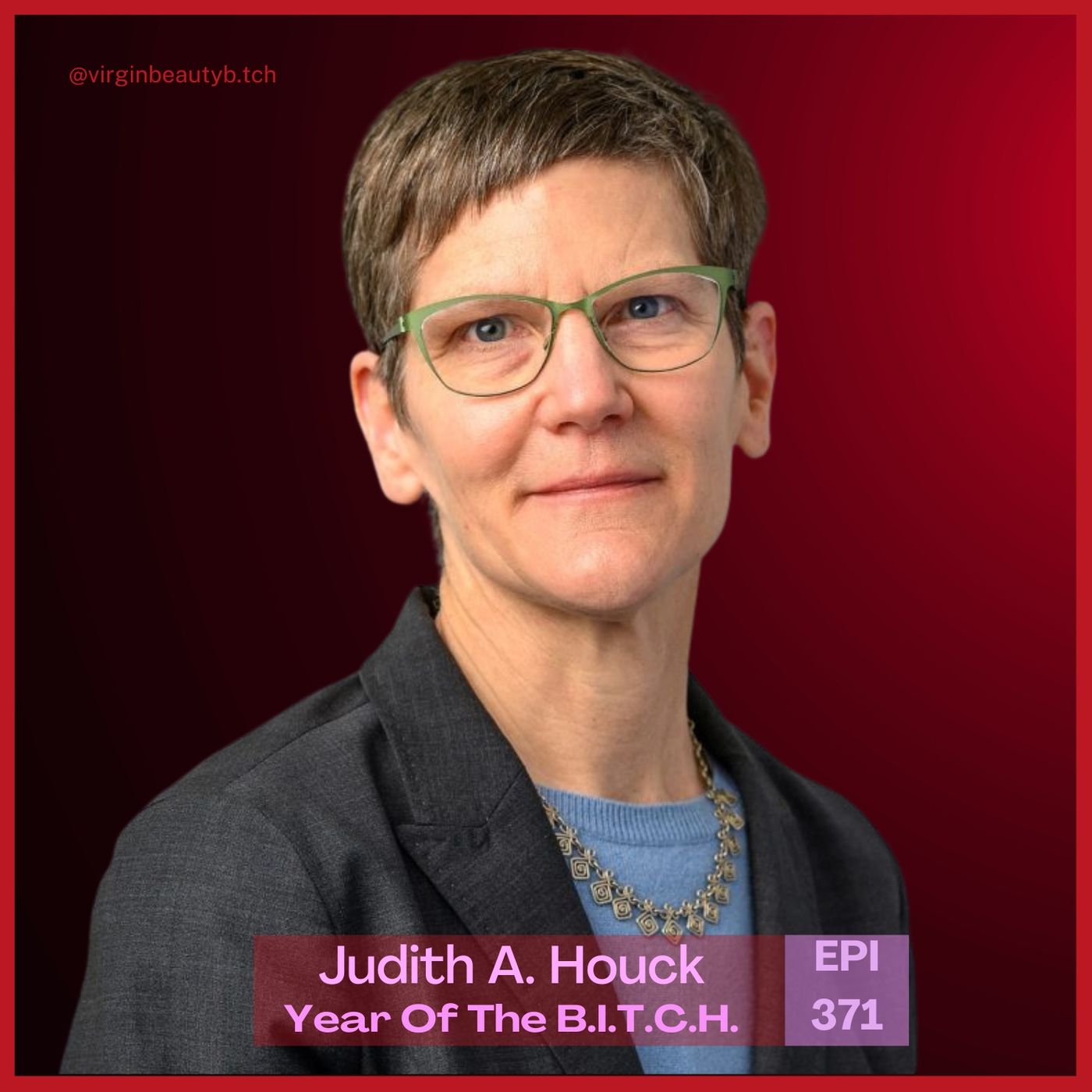
Judith A. Houck, a professor and author of "Speculum: Examining the Women’s Health Movement,” shares the balls it took from “bitches” for women today to have agency, bodily autonomy, and women-centered choices inside male-dominated medical systems.



Judith Houck is a professor of the history of science at the University of Wisconsin, Madison, and a prominent voice in the study of women’s health movements. As the author of Speculum: Examining the Women's Health Movement, Judith offers extensive insight into how feminist activists, often labeled “bitches” by reputation, from the 1960s through the 1980s, not only challenged patriarchal medical institutions but also created alternative health practices and facilities that spawned a revolution around women’s bodily autonomy, reproductive freedom, and women-centered healthcare.
Professor Houck explains how the women's health movement challenged medical paternalism, fought for access to information, and insisted on women’s bodily autonomy. This episode is for any woman who values access to and the choice of having female doctors and healthcare providers for her primary care. Prepare for a conversation that provides a historical perspective on women’s health and care, and highlights choices women today unknowingly take for granted.
QUOTE: "All my best teachers helped me see the world anew; I try, when I can, to bring that gift to my students."
Intro [00:00:01]:
Virgin Beauty Podcast, inspiring women to overcome social stereotypes and share unique life experiences without fear of being defiantly different. Your hosts, Christopher and Heather. Let's talk, shall we?
Christopher [00:00:22]:
Bitch! Just being born female, being a woman, you are automatically subject to having that word used to curse you. But in a patriarchal society, should you dare self-identify as a feminist, well, bitch may as well be your middle name. For that reason alone, not very many women will announce being a feminist as part of their primary identity. That is not the case with our guest, Professor of History of Science at the University of Wisconsin-Madison, Judith A. Hawk. Welcome, Judith, to Virgin Beauty Bitch.
Judith A. Houck [00:01:03]:
Thank you so much for having me.
Christopher [00:01:05]:
It is a joy to have you. We are really looking forward to this. Now, Judith, Heather and I, we are dismantling the stigma around the word Bitch, and breaking it down into five stages of growth for women's self-empowerment: Betrayal, Identity, Trust, Change, and Healing - B.I.T.C.H. We must also acknowledge the dark history and intent of bitch and how the word has been used historically in many social systems to betray women's right to agency, bodily autonomy, and liberation. What have, what has been your personal or professional experience involving this word or enigma?
Judith A. Houck [00:01:47]:
Certainly, I have most of my life seen the word as a pejorative, which, of course, it's meant as a pejorative. It's meant to keep women in their place. It's meant to shame them when they are outspoken. It's meant to make women smaller. And so I've never wanted to be a bitch, right? I mean, few women actually have, I would think. But since I've been thinking about your show and what you do here, I've been thinking a lot more about the word and what it has meant.
Judith A. Houck [00:02:27]:
So I've just written a book on the history of the women's health movement. So I study these health feminists from the 1970s, and when I think about who they were, certainly they were brushed with this insult? They were outspoken, they were pushy, they were aggressive, they were assertive. One physician said disparagingly, you know, they're just so macho, right? They are, they were not interested in compromise. They were not. They were not worried about what other people thought of them. They were not worried about ruffling sexist feathers. And so these women were clearly the kinds of women that were seen as bitches, and that gave them the daring to make brand new things happen. They were not cowed by the insults that came their way because they were outspoken and uncompromising. So I have a lot of admiration for the bitches in my history. Because they dared to make a difference, and they did.
Heather [00:03:50]:
I mean, I love this parallel between strong feminists and bitches that took the reins and accepted no nos for an answer. And for those who haven't had the pleasure to read your book but have it on their reading list, Judith's book explores how feminist activists began in the 1960s to challenge patriarchal structures of medicine and build alternative health practices and clinics. So we're talking about bodily autonomy, reproductive freedom, access to knowledge about their own health, and a radically different relationship between patients and medicine. Would you mind just opening up further than what I'm able to do in a nutshell, to explore with our guests what your book is all about?
Judith A. Houck [00:04:37]:
Yeah. So this is, it's set in the 1970s and the 1980s mostly. And it's about a group of women who believed that they were not being served by mainstream medicine, and not being served in a variety of ways. So one, they believed that medicine was widely paternalistic, right? So, making decisions for women rather than helping women come to their own decisions. They thought medicine was sometimes abusive. So consider the vulnerability of a pap smear, or a pelvic exam, and that sometimes that vulnerability was abused in ways that were not necessarily intentional. But when women said, stop, that hurts, physicians would sometimes dismiss that.
Judith A. Houck [00:05:41]:
So they thought it was sometimes abusive. They thought these women also believed that physicians, medicine, were gatekeepers to information about their bodies. So consider that this is before the Internet, of course, and before information about women's bodies was readily available to them. So many of us grew up with this book, Our Bodies, Ourselves, which was created by feminists for women in language that women could understand. And that book is part of the women's health movement. But the absence of it is one of the reasons for it, which was a response to medical gatekeeping.
Judith A. Houck [00:06:20]:
So, I would say women were also responding to how much control medicine had over their lives. So that childbirth was a medical event. That if they wanted birth control, they had to go to a physicians. That abortion was controlled by physicians. So really, these women thought that medicine, while certainly valuable in many, many ways, these women, if they had cancer, they're going to a physician, but in terms, they just thought medicine was too dominant a force in their everyday lives. Whether they could reproduce, how they would reproduce, and what they could know. And so they decided, they responded by trying to get women's health and women's bodies into women's hands.
Judith A. Houck [00:07:30]:
So demanding more bodily autonomy, the right to an abortion, the. The right for women to see inside their bodies for the very first time with the use of this sort of plastic speculum. Building their own feminist health clinics where women generally were lay women who called all the shots, rather than having to hire male physicians. Again, this is a time in 1970, something like 7%, maybe 9% of all women are physicians. So when this movement starts, medicine is really a bastion of male, of maleness. And male control over women's bodies.
Judith A. Houck [00:08:13]:
So this book looks at what the women's health movement wanted. Reproductive control, bodily autonomy, the ability to make decisions about their bodies, the ability to learn about their bodies, and the institutions that they built. And, you know, I'd look a little bit at how identity politics plays into this. How lesbians were both part of this larger movement and then created their own lesbian-centered institutions. How black women and other women of color were part of a larger women's health movement and also built organizations focused on black women's particular health concerns. So those are the things that I do in this book.
Christopher [00:09:04]:
I think when I first saw a write-up about you, and I contacted you, I related this to our acronym B.I.T.C.H, as the ultimate betrayal. If health is the most important element in a person's life and you are taking that power away from them, to me, that is the ultimate betrayal of an individual and of women in this case. Would you agree with that?
Judith A. Houck [00:09:35]:
Sure. Particularly wrapped up. Maybe it's not the ultimate betrayal, but certainly a big one. But this idea that, you know, medicine is supposed to be looking out for you. But it's never, it was never asking you, women, what they really wanted. It was always making it about assumptions, about what women wanted, and making, deciding, for women what they should want about things. So, absolutely, I think it's medicine. These women certainly felt betrayed by sort of the promise that medicine was held up as an opportunity for women. And that opportunity was often used against women. Instead, it was an opportunity to keep women under male control.
Heather [00:10:33]:
And I mean, I enjoy so much how you've highlighted that in a sphere where people's health in regards to a system meant to take care of you, betraying you based off of assumptions, or based off of men's body as the standard with medication, with how our bodies function, which is just not the truth. And I know that's something that the work of this movement continues to fight for, is what it means to have, you know, not have male bodies be the standard because our bodies function very differently. And that kind of moves us into Identity. And you've talked about identity politics and how it correlates with this work. And an example that really stands out for me is around, you know, some of the writing on self-examinations using speculums and where women were literally encouraged and learned for the first time to look at their own cervixes. And that was a very empowering experience on many, many levels.
Heather [00:11:36]:
But if we were to broaden that even more when it comes to identity and how women experience their identity, you know, really getting in touch with your body and knowing it in a whole new way, I think, is a beautiful piece of what these women and others fought for and what we continue to fight for today. So when it comes to identity, how do you see this work? Perhaps, what did you find in your book where identity to your body is so important to your overall sense of self?
Judith A. Houck [00:12:10]:
Yeah, I would. So this thing called cervical self-exam was an opportunity, was a technology for women to be able to, with a flashlight, a mirror, and a plastic cervix, no plastic speculum, women could look inside their bodies with another group of women. And for so many women, I mean, for plenty of women, this was not especially important, but for loads, it really was. It was revolutionary because one, it showed them, quite literally, how little they knew about their body. And how information about their body had been kept from them, and that things like stigma and shame had kept them from being curious. You're not supposed to want to touch your body and look at it. And so, the idea that it was okay to look, and it was okay to see. It really helped crystallize for many women what had been kept from them, and the beauty of what their bodies could do was really. It allowed them to claim that for so many women. And that made them curious to know more about these bodies.
Judith A. Houck [00:13:37]:
And so it really just was a revolutionary point of view for them, and that's this. So it was both. It helped bond them to other women in the room. So it helped bond. Helped them think about themselves as women who were joined together in this sort of universal sisterhood. There were all sorts of problems with it, but nevertheless, for people in that room, they did feel a sense, or many of them felt a sense of sisterhood for all the things, for all the stigma they shared, all the opportunities that they had lost, all the power that they had, they suddenly understood.
Judith A. Houck [00:14:38]:
So in all those ways, I think it helped crystallize identities as women and shared opportunities, shared oppression, and certainly, over time, differences between women also become important. But I think that shared vision and the shared stigma, that never went away. Even as groups of women, for example, black women, lesbians, want to be part of something that's explicitly fighting racism. Finding out what black women's needs are in racist America, or what lesbians need from medicine that's not homophobic and heterosexist. So identity comes in in various ways here, but that glimpse of the cervix, which they didn't even know they had, and here they could see it in the company of other women who were also curious and had also been told that their bodies were dirty, shouldn't touch them, should keep them covered, was a identity creating moment for many of these people.
Christopher [00:16:15]:
Sounds like liberation in some form.
Judith A. Houck [00:16:18]:
Indeed, indeed. Absolutely.
Christopher [00:16:22]:
Your book, I just wanted to give the name. It's Speculum, Examining the Women's Health Movement. Now, as a man, I had to look up Speculum.
Judith A. Houck [00:16:36]:
Sure, sure.
Christopher [00:16:37]:
So thank you for that education.
Heather [00:16:40]:
I love that education. From the front of the book.
Judith A. Houck [00:16:43]:
I love it. That's right, that's right.
Heather [00:16:46]:
And I think it dovetails so well with the book that you've already highlighted, Our Bodies, Ourselves. Because there's the element of how the health care system, you know, shamed women's bodies, made assumptions about what women want, what women want for their own bodies, for their sexual health. And I think this book really brought to life also that component of sexuality. So there's almost this double-edged, for me, betrayal of the betrayal of society around women's sexuality that, you know, in a completely different vein, but obviously still interacting, the betrayal of the medical system. And so do you feel like they're like, through this book we've talked about how revolutionary these times were, getting women together to have these sorts of experiences, to understand their bodies. But when it comes from the sexuality standpoint of reproductive health, like how do you think that these moments help contribute to that?
Judith A. Houck [00:17:49]:
Yeah, it's a great question. I think if I think about the goal of the women's health movement. I think one of them is certainly to create, and promote, and nurture demand for women-centered health care. So this is really easy to say, but it's really hard to figure out. What does it mean to be woman-centered? And that's about women figuring out what they want, what they need, what they desire, and then being able to make demands on medical systems, on legal systems, et cetera, to get their needs and their wants met. And certainly, and you know, one of the problems of women-centered care is that what one woman wants isn't what others want, right? So one woman is going to want estrogen replacement therapy for hot flashes, and one is going to say, I don't want that. I need that. A dry vagina is not a problem at my age anymore.
Judith A. Houck [00:18:59]:
So, you know, acknowledging that women have different needs from each other. And so when I think about how the women's health movement affected women's sexual health and sexuality, I think it's the same sort of thing that women, I mean, in some ways it's burdensome because it's asking women to really figure out what they want. What they wanted. And that's about sexuality as well as what they want, what kind of doctor do they want? What kinds of treatments do they want? Medical treatments that help them fit in with normative views of women, or do they want to challenge that? And so again with sexuality, one, it's helping women understand how their bodies work. So the group of women that I really studied, the women who promoted the use of the plastic speculum and cervical self-exam, they were very much invested in also helping women re-understand sexual anatomy. So they have a book that's not quite all about the clitoris, but there is, it's a lot about the clitoris, and understanding it's more than just a button. It’s about how it operates, but it's also about again, giving women autonomy over their bodies.
Judith A. Houck [00:20:45]:
To say, I like this, I don't like this, having experiences without shame for all kinds of sexual practices, sexual experimentation, so that women could figure out what they really like and what they don't like, rather than being told, well this is okay sexual behavior, and this is not okay. So I think very much these two things overlapped, ran in parallel, a little of both, I think, but certainly teaching women about their bodies included their sexual bodies.
Christopher [00:21:31]:
So I really want to go back and acknowledge the women who spearheaded all of this, to make all of this possible for all women, and the title of feminist that they took and marched forward with bravely, without shame. Now, for you personally, that is a title that you have taken on for yourself. How, how do you think you became brave as a young child to take that on as an identity?
Judith A. Houck [00:22:11]:
Yeah, I have no idea. Let me, I do remember being a kid, and I'm playing outside with a young, a girlfriend. So I'm seven, maybe eight, maybe five. I have no idea. And, you know, women's liberation is everywhere. It's ridiculed everywhere, but women's role in society was big news, and often. We saw it on television, and I remember saying to my friend, you know, I'm not a “liber”, but I really believe in women's rights or something. Or maybe I said, maybe I'm a feminist.
Judith A. Houck [00:22:56]:
But I knew this. This liber thing was reviled culturally. And I knew I wasn't that. Well, I didn't know what that meant, but anyway, so because, I mean, my parents always raised me without limits. And my dad, my dad was a scientist. And so one of the best days of my life was out with him, digging up fossils. So this idea that women could be scientists, women could be whatever they wanted, was always part of how I was raised. And that no limits. And it was only much later, when I was in junior high or things like that, where you start to see, really, the limits that were, are routinely, every day, placed on women, both in the 1960s and 70s when I grew up, and then in the 80s and into the 21st century. And so a life without limits. I mean, to the extent that any of us can have a life without limits, it's a fantasy for us all. But, limits by virtue of gender, I've always been, I've always chafed at that. And so I continue to do it. And trying to make, trying to make open doors for women who come after me has always been a priority.
Heather [00:24:34]:
So that is very beautiful. I think that, like, what you've spoken on in that moment and also when it came to women feeling their bodily autonomy and just more emboldened to say what they like and what they don't like, what they want and what they don't want. And to me, that is, you know, a concept behind T for us, which is Trust. It is when you build that exposure to women of that era and it continues on today, that how you think and feel about your life, about the world around you and the decisions you make based on that help to build your sense of trust in yourself and have that be part of your guiding light on how you move forward, rather than what the medical system may want to take you on for a ride or other people with other expectations. And just in your personal story, you know, what do you feel has helped you in, like, listening to that inner voice or really trusting that inner voice?
Judith A. Houck [00:25:39]:
So what. What a question.
Heather [00:25:41]:
I know it's a big one. Some days are easier than others, I think, for me.
Judith A. Houck [00:25:48]:
Oh, yeah, those inner voices can do many things, right? I think I'm all. I think I'm so interesting. How do I learn how to trust my inner voice? I have always been, I think, a team player. I think I am always interested in maximizing the good for the most people, and so when I'm making decisions. And so this question really comes. I used to be a department chair until very recently, and, sort of, always thinking about making decisions for a group of people. And a group of people who don't all agree. And I'm trying to sort of synthesize a lot of different perspectives.
Judith A. Houck [00:26:39]:
But I've always, always thought that when decisions come easily, it's always because I had a clear path to the greater good. And that this wasn't. It's trying to take out the sort of static of individual needs. And think about the good, the greater good, the good of an organization, the good of, I don't know how relationships continue, so whose needs get met, or how do we maximize everybody in our relationships? So I think I have to just. It's a struggle, right? I mean, trusting yourself, trusting yourself in a world where my own instincts are so at odds against what's going on around me. I mean, it can actually be quite difficult to remain centered and trust your own voice right now. But it’s what we're all called to do. I think.
Heather [00:28:07]:
I think that is the struggle that so many people, and especially women, face, even when you were young and being a liberal was so downtrodden, like, you know, at your core, what you mean by what you're saying, but the powers around you, it is. There are so many parallels to today. So I genuinely appreciate the honesty because I think we all are going through that.
Judith A. Houck [00:28:34]:
Yeah. And let me say one more thing. So, you know, that was one, building trust between women, among women, was one of the goals of this women's health movement. It was one of the goals of cervical self-exam. To sort of tear down boundaries, build up vulnerability, and have women learn you're okay right here at this moment, where you are afraid of being betrayed. Somebody's gonna laugh at your belly or something. And then we discover we're all in it together was so. And to see other women, not as competitors, but as being linked in this adventure, was so important. And I think, I mean, when I'm trying to figure out answers, I always turn to other people. Other women, mostly, but to talk things out.
Judith A. Houck [00:29:20]:
I always, when I think about leadership, when I think about decision making, I like to consult with other people and sort of let's talk this through. So that's another way that I've learned how to both trust my instincts, but also be willing to say so this is what I'm thinking. What do you think about this? Consultation!
Christopher [00:30:10]:
On the concept of change? I read this piece about your teaching and training students really well, and getting them to re-examine everything they know. To me, that is the core of change. If you're going to change, you need to re-examine everything you thought you knew, and discover, hopefully, even through consultation, something new. I think that's a critical piece. I love that, that thought of teaching and how to teach.
Judith A. Houck [00:30:46]:
Well, that's certainly when I was a student, and I'm always a student, but when I was more formally a student, I mean that’s, those are the best moments when you think you know something, and then suddenly somebody gives you new tools, and it just makes your mind explode. And it opens. We tend to think we know how the world works, and what's possible and what's impossible. But sometimes you just need a good teacher, whether that's a person or a text, it really can tell you everything you thought was possible or everything you thought was impossible. No, there are opportunities here. And so all my best teachers helped me see the world anew. And I try when I can to bring that gift to my students.
Christopher [00:31:44]:
And I think that is the concept around B.I.T.C.H, in the way that we've broken it up is, you know this word? You've known this word your whole life, but do you know this word? Have you examined it for yourself? Have you re-examined it? Have you talked to others who have lived it another way? That is the whole point of this in these conversations.
Judith A. Houck [00:32:08]:
Terrific. Yep. Well, just quickly on change. This is also something that the women's health movement had to deal with all the time. Was a sort of another generation of feminist health activists who, who saw things differently than the first generation did and figuring out so what, which of their beliefs were worth holding fast to till the bitter end and where was compromise within the movement beneficial for the goals of the movement as they needed to change over time because outside challenges changed, inside politics changed. So being open to re -examination is, I think, central to why the women's health movement, to the extent that it did survive so long and was able to achieve what it did.
Heather [00:33:16]:
And just, you know, to bring it all home is H, which is Healing. And, you know, it's clear that, you know, these women that are in your book and these, you know, I, I love how we started it off, these fierce, you know, women feminists and, and because they were not backing down, you know, I think there is the camaraderie that they felt together as you've, you know, articulated so eloquently, that that was part of their healing. Just feeling powerful and in power of their own bodies, that was healing connections to starting to eat away at the shame and stigma that, you know, we continue to face today. But, you know, massive leaps and gains have been made, that's. That's for sure. And so when it comes to healing and what you've read and what you've written on, or perhaps something that you've seen personally, is there anything else you'd like to share on that journey of women's health and healing?
Judith A. Houck [00:34:17]:
I love how you framed that question, because when you're thinking about health, I was sort of thinking about how the products of the women's health movement were healing for women outside. But what you've done there suggests that being part of a movement was also just so healing for the women in a variety of ways. They learned, they learned skills, they learned trust, they learned, they learned, they felt empowered, which is so many of these women were quite young when they were most earnestly in the movement, and they took all that, all that trust and assertiveness and bitchiness into other parts of their lives. And I think that's just, yeah, that's one way the movement helped heal those women who were activists, but then also bringing literal healing into the lives of other women, the clinics that these activists set up to really listen to women, and really helped women learn to trust their bodies. Learned what about their bodies they needed to question, figured out how the relationship between their bodies and their liberation, what about sexuality could help them be in the world in a better way.
Judith A. Houck [00:35:58]:
So I think in all sorts of ways, both being part of a movement for social change on the one hand, and then also building a movement that's legacy, is still with us in terms of, I think more certainly in some institutions, but also in medicine more generally. I think it's, you know, it's far from perfect, but I do think some of these are artifacts of the women's health movement in medical mainstream medicine at this time. So I think it's been healing in a lot of ways.
Christopher [00:36:49]:
For anyone who wants to read your work, because it is important work. Where do we find you? Where do you find your books?
Judith A. Houck [00:37:02]:
I didn't know what to make of the fact that you can order it from Walmart, right? So you can order it from your local brick-and-mortar bookstores. Usually, it's not on the shelves, but you can order it. It's sold through the University of Chicago Press website and then all those big booksellers, like Amazon, Walmart, and all these other places. You can also get it. So, Looking Through the Speculum is the first part of the title. So anyway, thank you for. Thank you for plugging it for me.
Christopher [00:37:44]:
Thank you for plugging it for us. Judith, this was a conversation Heather and I have been looking forward to because of the stigma around certain words that we, in society, don't investigate and cherish enough. And we appreciate that you live that as your front-facing identity of who you are. That means a lot to us that we can discuss such topics with someone who lives that as their identity. We appreciate, we cannot tell you how much we appreciate this conversation with you. Thank you so much.
Judith A. Houck [00:38:33]:
Well, thank you so much. It's been, it's been, it's been so fun, and I really appreciate that you're willing to spend so much time with these women that I write about and help me amplify their accomplishments.
Heather [00:38:50]:
Beautiful. Yeah, I mean, I hope normally our shows are shorter than this, and I feel like I could just talk to you all day. So I loved every single second of this. Thank you for, for your time.
Judith A. Houck [00:39:03]:
Thank you so much.
Christopher [00:39:05]:
And you have been listening to the
Heather [00:39:06]:
The Virgin,
Christopher
The Beauty
Heather
And the B.I.T.C.H, in her year of the Bitch.
Christopher [00:39:14]:
2026. Bring yourself on back. Let's talk some more.
Christopher [00:39:17]:
To become a partner in the VBB community. We invite you to find us@virginbeautybitch.com. Like us on Facebook, Instagram, and LinkedIn, and share us with people who are Defiantly Different like you. Until next time, thanks for listening.
Author | Professor of the History of Science at University of Wisconsin, Madison
I recently published "Looking through the Speculum: Examining the Women’s Health Movement". It’s a historical exploration that uses local stories to tell a larger story about the evolution of the women’s health movement, shedding light on the struggles and achievements of turning feminist ideals into real-world healthcare practices.
The women’s health movement was a wide-reaching effort aimed at increasing women’s understanding of their bodies, reproductive rights, and overall wellness. It was a political movement that believed bodily autonomy was essential to women’s liberation. It was also about building institutions focused on changing how women experienced medicine; it aimed to expand access to affordable healthcare free of barriers like homophobia, racism, and sexism. But the movement was not only about women’s bodies. It also encouraged activists to rethink their relationships with one another, to develop those connections for personal and political growth, and, ultimately, to identify and challenge the limits around womanhood.
As a historian of science and medicine at the University of Wisconsin–Madison, I conducted interviews with more than 75 health activists, including clinic founders and directors.
Growing up in Northern California with a Marine Biologist father who took me on field trips, and amid a feminist movement that challenged male dominance, I was raised to believe women could do anything they set their minds to. A life without limits. At least as much as any of us can have a life without limits, it's a fantasy, …Read More



