VBB 370 Rissa Miller: Why Owning Your Inner ‘Bitch’ Is Self-Love!
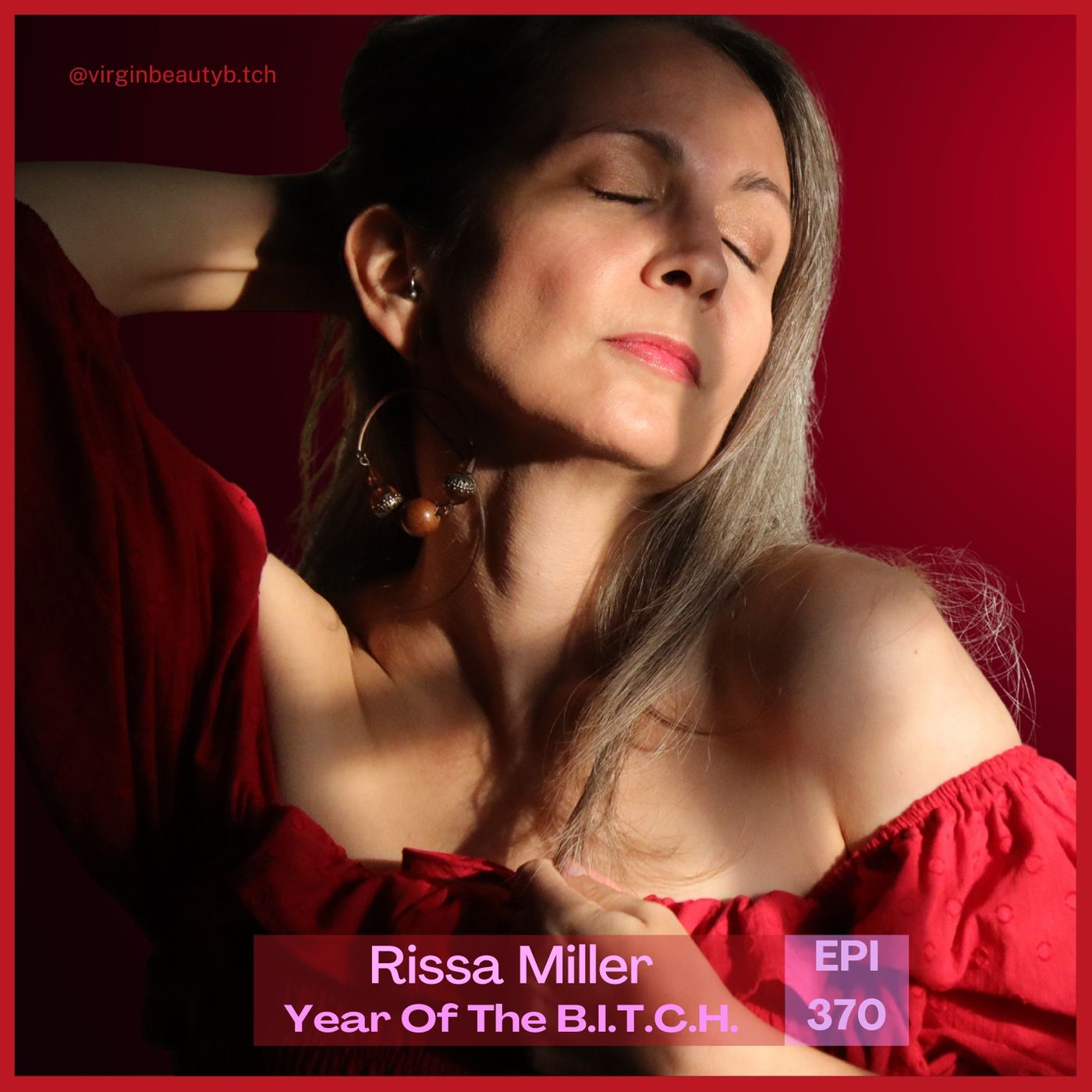
Rissa Miller, a Folklorist and Historian, contributes to our redefinition of B.I.T.C.H. as a pathway to women's empowerment by sharing powerful stories that promote a bold awareness for every woman.


Rissa Miller is a folklorist, speaker, herbalist, public historian, diviner, and, as we learn in this episode, a passionate poet who brings wisdom, warmth, and a rebellious spirit that a Bitch will love. This raw, honest talk evolves from self-betrayal — the shrinking of ourselves to make others comfortable, the struggle between kindness toward others and loyalty to yourself, or wondering how to find sovereignty when your priorities are focused on others’ needs — to healing in your journey by tapping into an identity you possess but shamed or cursed, if you show it.
We dive deep into the powerful, and often polarizing, word “BITCH,” exploring how it can be reclaimed as a source of women’s empowerment. Rissa takes the lead in helping us unpack our five principles behind B.I.T.C.H: Betrayal, Identity, Trust, Change, and Healing.
Rissa is a master storyteller who shares examples of how women can reclaim their innate strength, sensuality, and unapologetic presence. This conversation will remind and inspire you to fill your own cup, trust your gut, and live your most authentic self, sequins and all.
Intro [00:00:01]:
Virgin Beauty Bitch Podcast. Inspiring women to overcome social stereotypes and share unique life experiences without fear of being defiantly different. Your hosts, Christopher and Heather. Let's talk, shall we?
Christopher [00:00:20]:
Women who react with emotion to the word Bitch are often quick to share why they feel so hurt or enraged by the word. But few are able to see how needing to avoid being called a bitch keeps them from living their potential, or allows them to appreciate their own value and worth as a woman. This isn't about laying blame. It's about awareness—learning how the very word that enrages or frightens women is also the key to their empowerment. If you're skeptical, that's good, but I would also suggest being curious as we welcome into our conversation folklorist, speaker, public historian, herbalist, and diviner, Rissa Miller. Welcome back, Rissa, to Virgin Beauty Bitch.
Rissa Miller [00:01:09]:
Thank you so much, Christopher. Heather, it's a pleasure to be back. I love the show.
Christopher [00:01:18]:
Rissa, we are always in get ready to learn mode whenever we talk with you, and once Heather and I realized that our shared gut belief from day one of this podcast, that BITCH holds the potential for women's empowerment, and now years later discovering that our belief is conveniently spelled out in the very word BITCH as Betrayal, Identity, Trust, Change, and Healing— B.I.T.C.H., our first thought was to reach out to women we know who have lived through these 5 principles and understand the potential they hold for women's empowerment. But the scary part is that the first word is Betrayal, which is always the beginning. What's your— what do you have to say around that word for you?
Rissa Miller [00:02:07]:
Well, you know, I put a lot of thought into preparing for this podcast, and I think that you can separate betrayal into two categories. There are internal and external betrayals. And the external betrayals are absolutely going to happen in life. I mean, if you are interacting with any other living being, they're going to happen. And external betrayals make us not trust others. But I think the thing that I would really like to focus on are those internal betrayals, self-betrayal, because my biggest personal betrayals in my life are not what others have done to me, but they are all the moments when I stayed small and basically shrunk myself to play it safe. And probably my biggest victory as an adult has been the reclaiming of myself from those small internal betrayals.
Christopher [00:03:04]:
This betrayal, what triggers that internal betrayal for you? It’s, I mean, you're not, you were not born to betray yourself?
Rissa Miller [00:03:15]:
Of course, nobody was. Nobody is born to betray themselves. We are, it is taught. It is taught to us to betray ourselves. And I think it can apply to anyone, and it absolutely does, but it applies to women in a very specific way. We are always taught to shrink to make other people comfortable. I'm not saying just to make men comfortable. I mean others in general. I mean, I've seen people shrink to make a cat comfortable.
Rissa Miller [00:03:41]:
So it's like this need to constantly please others to ignore red flags, to ignore our own needs, to put everything in front of us and not ourselves. It's the filling of everybody's cup before our own. And some of this is kindness and generosity. And then there's a spot where you have gone over the line into self-betrayal. And I think a lot of people don't like the word bitch, because they're like, oh no, I identify with that kindness and generosity. Great, but also what about for yourself? What about your kindness and generosity to you so that you can continue to actually be kind and generous to other people? It's sort of like, you know, I think that it can be applied to almost every situation in life. It can be applied to relationships for sure. It can be applied to family. It can be applied to work. It can be applied to friends. Friends and community. There's so many moments throughout a day's course when so many people do these acts of self-betrayal. I have definitely done it, and it is a huge learning curve to identify it and stop. But I think it is probably one of the greatest acts of self-care and self-love that you can do when you stop self-betraying.
Heather [00:05:01]:
Thank you for outlining that, because it's something that I've been thinking about a lot too in this process of going through the BITCH principles and these different elements, or almost like different, as you've said, types of betrayal. I love the external and internal that you said. And I think that, you know, part of what kind of hits home for me about what you shared there is that we've been taught to override our own instincts. So, kind of, to push through exhaustion, to show up for your kids, for your partner, just as you said, put everyone else ahead of you or your needs because, you know, in many ways, the way that these structures have shaped us is that this is the only way that you can survive. You have to show up for this, that, and the next thing before, you know, so that your kids are cared for, things that people who depend on you, which is, of course, counterintuitive to what you really need, which is like you've said, filling up your own cup. And to me, to like tap back into the body in a world that has taught us that you should reward disconnection from feeling your limits, from feeling your internal betrayal. Your work in ritual, and tea, and smoke, and presence, I think, is such a beautiful way to bring back, you know, that like how we've disconnected from even knowing that a self-betrayal is happening. So would you walk us through how your practices may have helped your own journey in that or the journey that you've helped other people with?
Rissa Miller [00:06:34]:
I would. So it's interesting to say that I didn't identify this immediately in my life. It probably took me into my 40s to start recognizing it. And it wasn't that I had never heard of it at all. I mean, I remember being a recent college grad in my 20s and listening to Oprah talk about, you know, filling your cup first or, you know, whose oxygen mask do you put on first in an airplane? And I remember listening to that episode of Oprah and thinking like, oh, whatever, and going about my day. But I was already deeply entrenched in the process of self-betrayal. You know, I could tell you for sure I was already doing that in my 20s. And it is absolutely a learned behavior, especially in any kind of feminine-identifying person.
Rissa Miller [00:07:19]:
And it's sort of almost like we are expected to do it as part of our feminine identity. And like what you were saying in the beginning, like to be called a bitch, is to be called selfish, is to be called evil, is to be called not loving. And I think that you hit a certain point in your life where you have been a doormat for enough people in enough situations, personal and professional, that you're kind of like, I am so done. I am so done with being a doormat. And finally, I think it was in my 40s when I'm like, I finally understand what Oprah was talking about all those years ago. I got it. It didn't click for me for a long, long time. And, you know, I think for me personally, it wasn't any of my rituals that it started with.
Rissa Miller [00:08:03]:
It was like a truth I found in my body. And that is, of course, where intuition lives. Intuition, actually, scientists tell us, at least the most recent data, that intuition lives in the microbiome of our gut. Right. And that is where you have to learn to listen, not with your head, because your head is where, like, anxiety and overthinking live. But what do you feel in your body? What is the truth that your body is sharing with you? And in those moments of actually listening to your body, you kind of know when you don't want to do something, or you know when somebody is lying, or you know when something's literally about to go down the drain. Like, you know it. And sometimes you go through with it anyway because there's that self-betrayal, there's that learned behavior that we continue to engage in.
Rissa Miller [00:08:48]:
As a society. And I think, women especially, are taught like, oh, feminine intuition is silly. It's woo-woo. Is it? I don't think so. Because science has now proven that intuition is a real thing. Intuition is how our species made it, you know, out of running from bears into being a society. All of us have intuition, no matter how you identify with gender. We're just taught not to listen to it.
Rissa Miller [00:09:13]:
And I think that my intuitive practices brought me back into my body more. As I got older, it was easier and easier to get into that place. And then it's interesting that you brought it up, Heather, because doing readings for other people, I could so easily identify when the person across from me was self-abandoning. It was clear as day to me what was happening to them over and over. I have had particular clients who've come to me over the years, and I'm here thinking, like, they're still doing it. They're still doing the thing that they said they were going to stop doing in the abusive relationship or the abusive job, and they just can’t walk away. They can't reach a place of sovereignty that makes them feel safe enough to get out of survival mode. And I think that there are a lot of cases to be made for surviving, of course, especially since the economy is crazy and the world feels really uncertain.
Rissa Miller [00:10:09]:
But that's just it. The world is uncertain. No matter how safe you try to feel, your world can collapse in a minute. You can change on a dime. I mean, that happened to me recently when I fell down the stairs. I didn't know that was going to happen. I perceived that I was safe, but I was not. So safety is always an illusion.
Rissa Miller [00:10:30]:
And the closer you get to sovereignty, the more you're able to accept that. But that said, allowing yourself to feel things in your body is not super easy, and it's not super comfortable. So allowing your feelings to truly like sink down into your core, into your gut. It can be a very uncomfortable process to get there, and nobody really wants to be uncomfortable. And I think that that's the biggest first hurdle for most people, becoming aware of their own self-betrayal.
Christopher [00:11:04]:
I think we spend an entire life learning how to be safe, “perceived safe,” and we channel that into being comfortable. So for women, especially, when all of the survival is tied to your being loved, that is exceptionally difficult to turn your back on.
Rissa Miller [00:11:31]:
It is. And I think a lot of women, especially, stay in incredibly destructive relationships and incredibly destructive dynamics in families and even jobs because they seek this validation that really needs to come from them first. And until they're able to let go of that need, they will never identify their self-betrayal. They'll never see it, no matter how clearly a therapist sees it, or their friends see it, or their mom sees it, or their tarot reader sees it. They won't see it until they're ready to. And I mean, for me, it took going through a period of incredible loss to sort of step back and be like, none of those things were real. Like, I couldn't hold on to any of them. And some of them, I went through a really difficult period a few years ago. I went through a divorce. I dealt with the death of several people I was close to all at once. I lost my dog, like I lost a job. All of these things happened, bang, bang, bang, in a row. And there was no comfort. There was no easy way out. And I had to step back and catch my breath. And I realized how impermanent they were to begin with, and how I mean, we could flip this and be like, you know, every time something's good, be grateful, but also understand that it's not forever. Nothing is. None of us are.
Rissa Miller [00:12:54]:
So finding your power is a moment of clarity that I wish for all women, and finding your sovereignty and your voice to take authorship of your own life. And, you know, I know I wrote when we were emailing, I told you a story about my Pilates coach. And I want to share that story because it's so telling of exactly what I mean. So even recently, even though I have already learned these lessons, it's important to keep learning them. A few months ago, I was in a Pilates session and my coach, Jillian, who's an awesome lady, said to me, you are stronger and more flexible than you allow yourself to be. And she's like, did you know that? And I said, No, what do you mean? And I was intimidated to start Pilates anyway because it's on this reformer that looks sort of like a medieval torture device, right? It has all these, like ropes and pulleys and things that slide. And I was completely out of my comfort zone.
Rissa Miller [00:13:57]:
But we were several sessions in, and the equipment wasn't what was holding me back. I was holding myself back. And she's like, you know, Rissa, just allow yourself to drop into the stretch and use gravity. And when I did, I found that I could go like a foot deeper into the stretch than I was letting myself. And I was actually, like she said, way stronger. I could handle way more resistance than I was allowing. And I sat there, and I thought about it, and it sort of unlocked the question, where else am I limiting myself in my life? Where else am I limiting my strength and my flexibility? And the next time I went back, I was like, I have to thank you because you gave me a really acute awareness that my body was reflecting what I was doing professionally to myself.
Rissa Miller [00:14:43]:
And it, the body, will always tell you, it will always tell you what's going on. You just have to listen. And sometimes it's somebody with that outside awareness, like Jillian, in that moment, that will really show you where you are giving away your power.
Heather [00:14:57]:
That ties so well into, you know, the concept of identity because, you know, I think that a piece of our identity is the limitations that we either self-inflict because they're internalized or, you know, real limitations that society has placed on us. Often, that's internalized and then becomes a self-fulfilling prophecy. And I think that, you know, when I have those things in mind, it seems that, you know, we've identified in some of the episodes on here that for so long, a woman's identity was relational because they were a mother, because they were a partner, that that was their core identity. So when something happens, like you just outlined, where maybe one of those relationships is severed, you have to look yourself square in the face to say, who am I without these relations? Who am I before I got attached to the concept of that these people or this job or this piece actually is who I am when all of those things can fade away. The one thing that doesn't, as long as we, you know, have the consciousness and, you know, mental capacity to sense it, right? You will always have yourself in this lifetime. You know, that's, we just had a show talking about what it would mean to get closer with yourself. So I think that when, whether it's your job or saying that, I have to achieve something in order to own my sovereignty, or I have to have this, that, and the next thing in order to know that I'm secure and safe and stable. And often life shakes it up and says that, haha, guess what, we're going to put a wrench in that.
Heather [00:16:39]:
I think that presence is, and sovereignty is not something that you earn, but something that you already inhabit. And so you've already chatted quite a bit about how that process happened for you, and a big bunch of sequences happening at a very close timeframe that helps you to really see that moment. In your work with other people, are there aspects of the work that you do now that you feel help people to pause, maybe perhaps before something really big kind of smacks you in the face and says, You know, there's more to it than what we're doing. Yes.
Rissa Miller [00:17:18]:
And there's actually something else you said I want to address as well. I think that one of the reasons historically that so much was tied to a partnership, or a job, is because, looking back over time, whoever you married determined your ability to go forward in the world. Now, if a woman didn't marry, historically, and I don't mean like a few years ago, I mean hundreds of 100 years ago, her ability, she couldn't get a house, she couldn't have property, she couldn't get credit, she couldn't open a bank account when banks were real. None of those things was possible for women without a father or a husband. And it is something that is still lingering in our society today, even though we have come past that, we haven't let go of it mentally yet. And it is a mental construct; it is not a thing that's real anymore, thankfully, in most societies. Not everyone, not everyone in the world has that privilege, but where we are, we do. We have that privilege.
Rissa Miller [00:18:20]:
We no longer need a husband or a father to get a house. We no longer need a husband or father to open a bank account. And how wonderful, because some of that happened within my lifetime. And I think that it's time for women to be okay with signing their own name. And being their own, you know, how do I want to say this, their own leader in their life, the author of their own life, the person who determines what their dreams are going to be.
Rissa Miller [00:19:04]:
And your other question, when I see it in other people, you can, it's kind of like the old expression about leading a horse to water. You can only lead the person to the idea of self-sovereignty. You can't make them embrace it. You can show it, you can say, here's the mirror, but that's it. That's all you can offer to someone. Kind of like when I saw it on Oprah, I wasn't ready to hear it. I had to get into the place in my life where I was ready to hear it. And some of that means slowing down, because when I went through all those big losses in my life at the same time, everything came to a stop. Everything. Like, it was a big deal for me at that point in time to shower and make food, because I was so deeply immersed in grief. But it did cost me all of those different identities at the same time.
Rissa Miller [00:19:41]:
And it cost me the identity of a granddaughter, because I lost both of my grandparents within a year. It cost me the identity of the job I had, where I worked at a museum, and I loved being at that museum, but that job was gone. They eliminated the position. So I no longer had that identity. And I know when I left the jobs where I had titles like senior editor or things like that, it's really difficult to let go of that identity because you feel like it's an achievement, and it does no less of an achievement if you leave it. It's still your achievement, and you still have all the same skills that you've had before. And it did take me a while to understand that when I let go of those names in those places. But when you're dealing with anybody besides yourself, you have to let them find it on their own.
Rissa Miller [00:20:30]:
You can, you know, you can drop, you can drop hints, but that's, that's about it in my experience.
Christopher [00:20:36]:
Having an alter identity is sexy, right?
Rissa Miller [00:20:45]:
Like a spy? That is sexy. Yeah.
Christopher [00:20:47]:
Yeah. Having an identity of someone that you have struggled with your whole life, which is yourself, is not sexy.
Rissa Miller [00:21:00]:
You know, one of the other hats I wear, and I sometimes talk about it a lot, and sometimes I don't, is poet. And one of the hardest poetry classes I took, we had to write a love poem to ourselves. And I don't have the poem in front of me. I wish I had pulled it. I wrote a poem where I used my name as the catalyst for writing a love poem to myself. And I remember the first time I read it in front of people. Now I'm not shy. I speak in front of 100 people like it's nothing, but reading a poem about myself and saying my name in like a slow, sexy purr felt incredibly uncomfortable. I definitely had a moment where I was like, I am having imposter syndrome, and I don't usually get that because I would definitely say that I'm confident, and I love talking to groups. But standing in front of a group and, you know, making yourself out to be fabulous is a scary thing to do.
Christopher [00:22:04]:
That's the essence of bitch, right? That's the essence of it. And not just keeping it to yourself, but that's difficult. Okay, so we've talked about identity. I think the next obvious step is when did you finally, and I'm sure this fades in and out, it's not constant, but when did you reach a plateau of trust in yourself?
Rissa Miller [00:22:32]:
Self-trust. Yeah, because it is that internal betrayal that erodes self-trust. And I think that everybody is familiar with that, whether or not they want to admit it, because we all allow that erosion to occur. I've learned to listen to it in my body, honestly. When I feel that funny nudge in my gut, or just that feeling that something's not quite right, I pull back and examine, and I allow myself into self-awareness that I didn't use to do. I used to just blow it off and be like, oh, I'm overthinking it, because that's, that's a real thing too. People can overthink situations, and then, you know, I was just talking to a friend this morning who, things are going right for her, and she was like, I keep waiting for something bad to happen.
Rissa Miller [00:23:23]:
And it's like, maybe it's okay for everything to go right as well, you know? Because we're also taught like, oh, there's going to be bad stuff. And yeah, there is, but also what if everything goes right? Can you accept that, too? And I think that's another spot where people begin to erode themselves, whether or not they are aware of it. Like, we're taught to create an atmosphere where we self-sabotage our own happiness and our own awareness in order to keep being small. And I think that's kind of the essence the bitch. She refuses to stay small. She's like, I am here to take up space, and it is my— how about I say it is your privilege to be in the space with me.
Heather [00:24:04]:
Oh yes, quote of the bitch. Woo, that's like a quote of the day, maybe of the year. I love it. I just want to hone back in on something that you said because it really hit me. Writing a love poem to yourself and speaking in front of a crowd of people, speaking highly of yourself, speaking as if you are a fabulous being, and just how challenging that is for so many women. And when I think about the roots of that feeling, at least for me, it comes to the exaltation of being humble, wanting to, um, you know, uh, it's very much tied to a virtue in being humble. And it is so much so that instead of it being about that, it's the roots have taken such a deeper, deeper, uh, I don't know, plow into the core of the earth that, you know, it's eroded our ability to even think highly of ourselves. And maybe we do on the inside, but to be able to articulate that to other people, you know, when I picture doing that, I completely agree.
Heather [00:25:18]:
It would be so uncomfortable because then you're seen as self-serving, you know, that you're seen as, oh wow, she must think she's, you know, shit hot. And who does she think she is? And how much of that has been conditioned into women? There it is.
Rissa Miller [00:25:34]:
I was, which I was, as you were talking, I was picturing these 3 boys in middle school talking about another girl, and I was standing behind them, I could hear the whole thing, saying, "She's a big feeling bitch." And at the time, I had to take it in context because it was the first time I remember hearing that phrase. And I remember thinking, like, what do those things have to do with themselves? What does having big feelings do with being a bitch? And over the years, of course, I've heard that expression many, many more times. And I have to step back and be like, hey, I don't actually, I've been called a bitch many times. It'll happen again. And I'm totally fine with it. There are times that I've actually said thank you. And what is wrong with having big feelings? You know, we're taught to keep our feelings suppressed and small and to choke them back. Why? And I don't think it's appropriate, and obviously, there are ways we interact to remain, you know, civil in society, but also, there's nothing wrong with having big feelings, especially about yourself.
Rissa Miller [00:26:40]:
And to reflect again on having to read that poem, I have come to love that poem. It's never been in any of my published work, but I often begin my poetry sets now with that poem. Because I feel like it's the best way for people in a crowd who don't know me to get to know who I am. It's a little sexier than most of my other writing, but that was the whole idea, you know? It was like embracing the things about you that you think are worthy and beautiful. And it surprised me when I wrote it because I talk about how I'm no longer hiding, how I am okay with being seen, and I am okay with being who I am and what I look like. And if you don't like it, there's the door. So yeah, sorry, I got, I kind of got rambling there. There is another thing of self-abandoning, that whole apology for talking.
Rissa Miller [00:27:35]:
There you go.
Heather [00:27:37]:
That ramble was not, you know, not— got so much out of that.
Christopher [00:27:42]:
You spoke about emotions and why men are so abhorred with women's emotions is because men are conditioned not to express emotions. It's like a fountain effect, right? It starts at the top and just dribbles down. So it impacts everyone in society. When you tell a boy not to show any emotions, because that's how he shows strength, is not to show any emotion, that just trickles down. Now, as a boy, I'm not going to take that from a girl. I just transferred what it is I've been told is right to you, so you're not allowed to do it either. Unfortunately, that's the cycle.
Rissa Miller [00:28:25]:
Yeah. And, you know, history shows us this again. It holds up this mirror of the time when women had hysteria or were hysterical and were literally put into asylums because they couldn't contain their emotions. And/or they were also put in if they learned how to read, or were too educated as well, because that's not safe either. You know, a woman with an opinion who's willing to express it? Ultimately, a bitch. She isn't safe, and of course, we don't want her circulating in society. Big feelings, big brain? Tuck her away. But, yeah, history has shown us over and over again that women who are sovereign are dangerous.
Rissa Miller [00:29:05]:
Women who have the ability to articulate their feelings, who are intelligent, who are able to communicate and learn are dangerous, ultimately bitches that can't be trusted. Other women, unfortunately, reflect this too. It is a sad thing to me that I remember being told when I was a child, “Stay in your place,” as in, don't overexpress, don't have too many opinions, and of course, I have long since abandoned those ideas, but it was definitely from my grandparents' generation because that's how they were raised. They were raised that it is not acceptable for a woman to express themselves and take up space and to have big opinions.
Christopher [00:29:54]:
Be seen, not heard.
Rissa Miller [00:29:57]:
Exactly, right? And be pretty.
Heather [00:29:57]:
I think, you know, when I think about change as the “C” in B.I.T.C.H., in our conversation that we're having, the biggest thing that's ringing true for me is that that change is really all about these moments. And I'm not saying it has to be one big moment, although it could be the catalyst, when she no longer tolerates abandoning herself.
Rissa Miller [00:30:18]:
Yes, yes, absolutely. Uh, when I was preparing for this, I actually wrote that down. There is a moment where most women will identify whether they're using the word self-betrayal, or not, self-abandonment, or not, they understand the feeling. They know that it's been happening, and there's a part of them that's like, I am fed up, I am done, I will not tolerate one more thing of crap from my boss, from my partner, from my child, from my neighbour, whoever it might be. They're just like, enough. And in that moment, she might feel like a bitch, but it was always in her, and it's kind of always been part of her. And finally, she's expressing herself fully.
Christopher [00:31:00]:
Thank you for that. That is the essence of what Heather and I believe. The bitch, you are the bitch. It's part of you. It is a big part of you. That you have been told you need to put it in like a genie in a bottle and cork it, keep it away, because that power is too much. You've got to put that thing away.
Rissa Miller [00:31:25]:
Absolutely. Okay, absolutely. Yeah, well, it's like I said, history shows us this over and over. I mean, how many ways have women been suppressed? Whether you want to talk about corsets, or you want to talk about asylums, or you want to talk about how women should not be heard, only seen in their beauty. There are a million ways we could talk about that.
Heather [00:31:46]:
And I think it's a place for us to land now in Healing, you know, when you have had that moment or moments of, I've had enough, I'm fed up, I'm not going to abandon myself anymore, and there's got to be a better way, and I can feel it in me. And I think, you know, in our chat today, you know, we've talked about different elements of healing and sometimes that sensuality and feeling sexy, like you talked about that beautiful poem as more sexy than some of your other poetry work, which I think is such a strong power source for women. But if you could share with us elements, or modalities, or things that you've found helpful in your healing, that would be very illuminating.
Rissa Miller [00:32:34]:
So there are, there are many paths that I've taken to healing over the years. Therapy is definitely one of them. And I will be honest, I've only ever talked to female therapists in my life because I feel like they will identify with me in a way that a man might not be able to. And journaling has been a big source of healing for me, especially when I can look back over journals and see who I was and who I've become. Looking at old pictures of myself, realizing that when I was a 95-pound 18-year-old, and somebody convinced me I was still overweight, was ridiculous, simply crazy. And looking back at old pictures of myself in different parts of my life, I have learned to love who I was in so many different phases, from the funny little girl who liked to play in laundry baskets, to the person I've become. That I actually really like being photographed now. I'm super comfortable in front of the camera, and I never thought I would be in this place, especially in my 50s. And, you know, I think that overall embracing the wholeness of yourself, the bitch, is about becoming everything you already were. You were afraid of; that you were afraid was too much, was too big, was, you know, too emotional, was too smart, was, you know, any of those things, was too flamboyant, do it anyway.
Rissa Miller [00:33:51]:
You know, my last story I'll share with you, I was in a thrift shop. A friend of mine owned a thrift shop, and she had the best clothes. And a woman came in who, she was a widow, and she found out that she had terminal cancer. And she was buying every sparkly top in the place. And I talk to people all the time in the world, and so I asked her, I was like, oh, do you have an occasion? She's like, yeah, I'm still alive, and I've always wanted to wear sparkly sequin tops, and I never did it because everybody told me they were tacky and too loud and too flashy. And she's like, I found out I have cancer, that I have less than a year to live. She's like, I got rid of my sensible convertible, and she's like, "And now I'm buying every sparkly top I can find, and it's all I plan to wear for the rest of my days." And so I immediately stopped what I was doing and helped her find tops in her size that were sparkly or glittery or had sequins, and I felt like we were friends till she left.
Rissa Miller [00:35:00]:
And I thought how incredibly, and brave, that she was finally doing it, but sad that she listened to people about what it was okay to drive or wear for her whole life. She told me she was 67, and that now she was going to finally end her life complete. But all 67 of those years, she could have been wearing her sparkly tops and loving them and being who she was. So don't wait. Don't wait to wear the sparkly tops. Don't wait to drive the red convertible. Just go do it. Just go be your wild, crazy bitchy self and enjoy it. I love that.
Heather [00:35:41]:
Thank you for that. It is perfect.
Christopher [00:35:44]:
That is absolutely perfect.
Christopher [00:35:45]:
This is not— this is not advice. I would say, as far as therapy goes. I think what works with this podcast is that we talk about feminine; we talk about women's lives and what they go through. However, I think what really brings it to life is having two perspectives. Having a male perspective and a female perspective. So even though I'm sure you feel more comfortable in the presence of a woman when it comes to your personal sharing, that personal life, you might be surprised that a man might bring some sort of thing that you may not have ever experienced or thought of. From the perspective of his experiences, right? So you're right, I'll just introduce that softly.
Rissa Miller [00:36:41]:
Oh, you don't have to do that softly for me, but I'm sure you're completely correct. And, at some point, maybe I'll be ready to explore that,
Christopher [00:35:43]:
But it has to be the right gentleman.
Rissa Miller [00:36:44]:
It always has to be the right therapist in general.
Heather [00:36:56]:
I appreciate the shout-out, though, Christopher, because I think, you know, I resonate with what you shared, Rissa, that I've also only had women-identified persons as my therapist. But, you know, shout out for the guys, Christopher, because, you know, it's such a treat, honestly, what Christopher brings to each and every one of these conversations. And to have the masculine here in these conversations, for me, is It's the yin and yang, right? It's the yin and yang of what we do, the yin and yang of life. So thank you for raising it, Christopher.
Christopher [00:37:30]:
We possess both. We're just conditioned to only use one side of our body because the other side fell down the stairs, right?
Heather [00:37:40]:
And then society, like, kicked her when she was down. Thankfully, that didn't happen physically to you, right? But right. Metaphorically, to the feminine. We have kicked her while she was down.
Christopher [00:37:53]:
Oh, Rissa, it is always such — we always so look forward to speaking with you. It is such a pleasure to have you in our little family that we have. It really is. We, we totally love talking to you,
Rissa Miller [00:38:06]:
And I love talking to both of you. I'm glad to be part of your family.
Heather [00:38:14]:
Oh, that's so nice. It's so true how Christopher started it off, that we're always ready to learn every time we have you on the show. And, you know, today was no exception. Thank you for everything you invested into everything you prepared for this episode, because it was, it was a very special one. Thank you.
Christopher [00:38:31]:
And I want other people to know that you are available. So let us know how that works.
Rissa Miller [00:38:37]:
Sure. You can find me at my website, teaandsmoke.com. I'm also on both Facebook and Instagram as Rissa Miller.
Christopher [00:38:45]:
Fantastic. Simple, sweet, love it. And you have been listening to
Heather
The Virgin
Christopher
The Beauty
Heather [00:38:58]:
And the Bitch in the B.I.T.C.H. Year of the Bitch. Yes.
Christopher [00:39:00]:
Find us, like us, share us. Please come on back, bring lots of people with you.
Christopher [00:39:05]:
To become a partner in the VBB community, we invite you to find us at virginbeautybitch.com. Like us on Facebook, Instagram, and LinkedIn, and share us with people who are defiantly different like you. Until next time, thanks for listening.
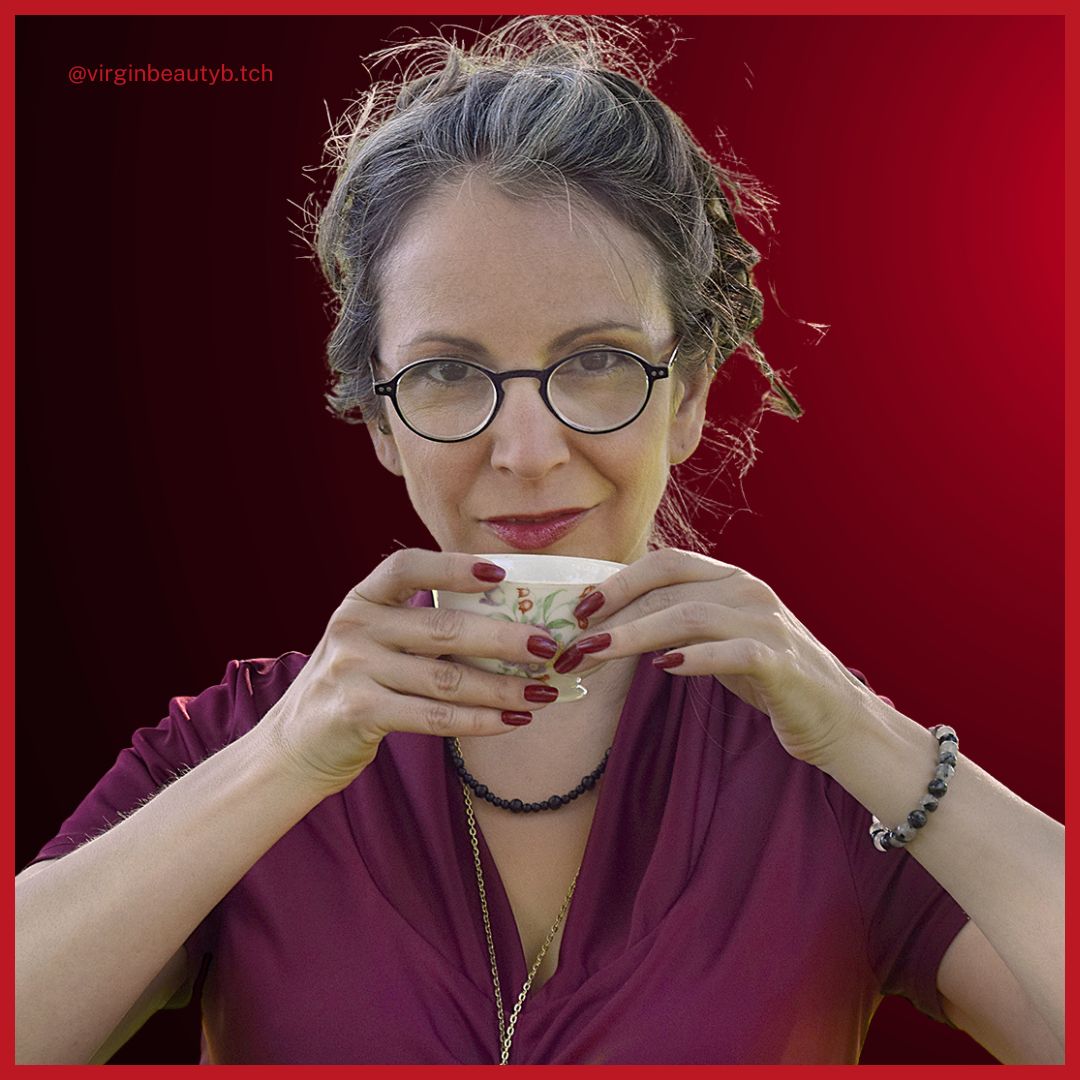
Folklorist | Speaker | Public Historian | Herbalist | Diviner | Author
Who is Rissa Miller?
I am a folklorist, author, herbalist, and public speaker specializing in esoteric history—the things people either fear or are fascinated by, like the paranormal and regional legends. I conduct research and give presentation-based talks on monsters, ghosts, witchcraft, divination, death culture, superstition, and lore for libraries, museums, conferences, and media audiences.
My work provides clarity and cultural context to subjects that are often misunderstood or sensationalized. My approach is practical and accessible to both skeptical and spiritually curious audiences. I explore why these traditions have lasted for centuries and what they reveal about our beliefs, fears, identity, and the human quest for meaning.
And on the topic at hand, the B.I.T.C.H, I won’t deny, I’ve been called a bitch many times. It'll happen again. And I'm totally fine with it. In fact, there are times that I've actually said thank you.


