VBB 366 Dianne Harris: Setting Boundaries vs. Building Walls: Lessons on Love, Loss, and Healing!
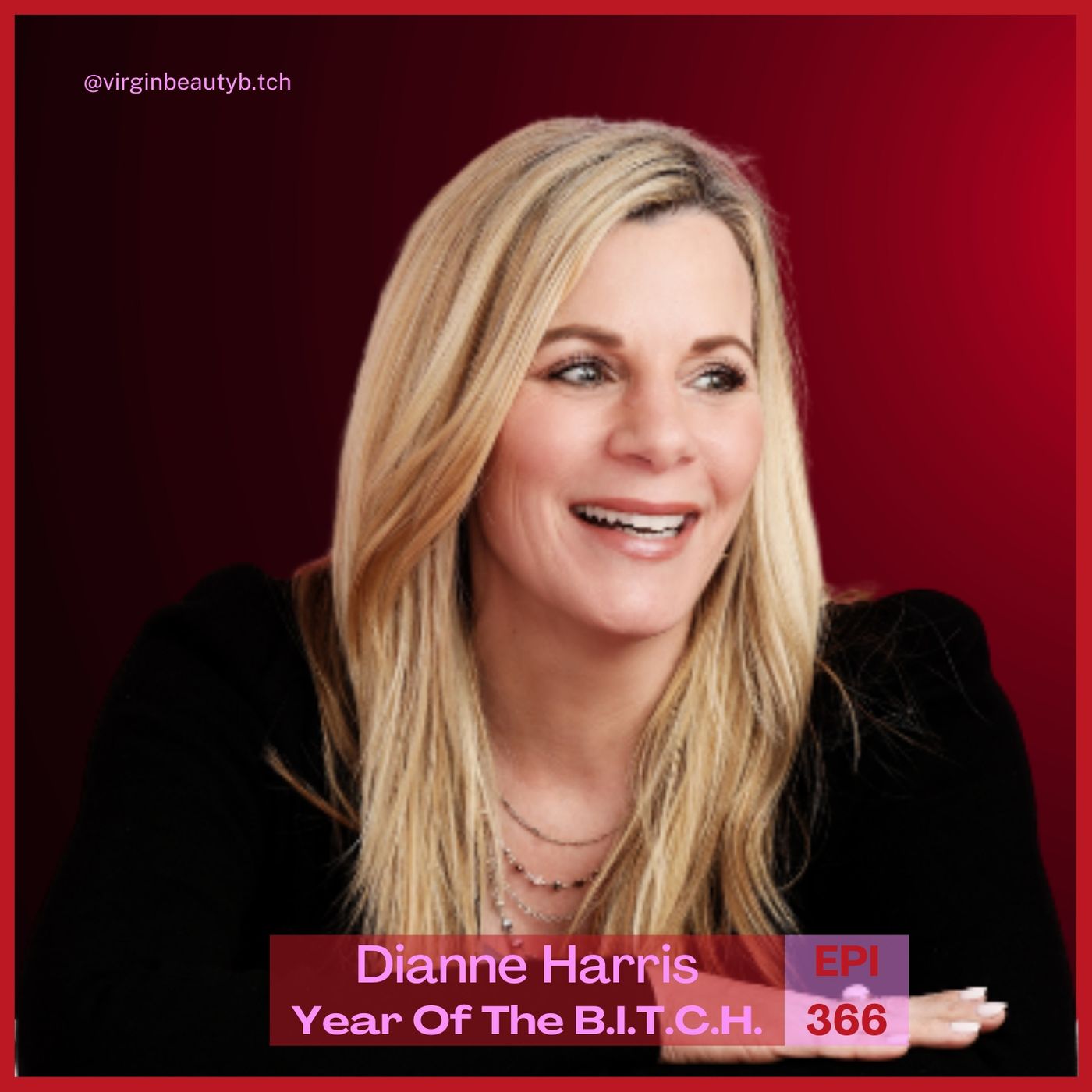
Dianne Harris, Certified Life Coach, Author, and Entrepreneur, shares her powerful and personal journey through Betrayal, Identity, Trust, Change, and Healing: B.I.T.C.H, and how these steps have shaped her mission to empower other women.



Dianne Harris, certified life coach, author, and entrepreneur, adds to our conversation, exploring the powerful five-step path of B.I.T.C.H.: Betrayal, Identity, Trust, Change, and Healing. Dianne opens up a window into her personal journey through betrayal and transformation, the lasting wounds and growth that followed. The conversation gets real around heartbreak, owning your story, letting go of people-pleasing, and how “bitch” can be reclaimed as a badge of strength and self-love.
QUOTE: Boundaries are a gift that you give to yourself so you can be your best self to somebody else.
What's Here To Learn
- The Deep Impact of Betrayal and the Journey to Healing:
Dianne shares how intimate relationship betrayal can feel like a "soul break," creating long-lasting trauma. - Identity and Accountability After Toxic Relationships:
The importance of reclaiming your own identity and understanding that true change and growth come from taking responsibility for oneself rather than trying to fix others. - Boundaries vs. Emotional Walls:
Distinguishing between healthy boundaries and emotional walls: boundaries are self-honouring, whereas walls can often shut out joy. - The Ongoing, Non-Linear Process of Healing and Reinvention:
How healing is not a quick or linear process. It’s ongoing and sometimes messy, but it enables continual self-reinvention and growth at any stage in life.
Intro [00:00:01]:
Virgin Beauty Bitch Podcast, inspiring women to overcome social stereotypes and share unique life experiences without fear of being defiantly different. Your hosts, Christopher and Heather. Let's talk, shall we?
Christopher [00:00:20]:
Since Heather and I began defining the word bitch as an acronym and as a path to women's self-empowerment and growth, realized through 5 powerful words: Betrayal, Identity, Trust, Change, and Healing. B.I.T.C.H. We've been inviting conversations with women who've lived these 5 steps of transformation and are committed to helping others experience the same. Which brings us to our guest today, Certified Life Coach, Author, and Entrepreneur, Diane Harris. Welcome back to Virgin Beauty Bitch.
Dianne Harris [00:00:59]:
Thank you so much. It's an honour to be here for a second time. Woo-hoo! So happy to see both of your faces again.
Christopher [00:01:05]:
Now, Diane, the intent of these conversations, as we've just been talking about just off camera there, is that we want to flesh out the, this, the flesh and the blood, and the emotions and the lived experiences around these words that women hear and they know, but may not know how these words can lead to them creating and living a self-empowered life. Your own life story incorporates all of these elements in B.I.T.C.H: Betrayal, Identity, Trust, Change, and Healing. But I want to give you the opportunity to share which of these 5 stages of growth, Betrayal, Identity, Trust, Change, and Healing, may have challenged you the most. And maybe still does?
Dianne Harris [00:01:46]:
That's a great question. As I was listening to one of your podcasts this morning at the gym, there was a woman on there talking about betrayal trauma. And just those two words together hit me. And you can be very traumatized by betrayal. And I think some people may think of betrayal as infidelity. I think a lot of people might think that. But for me, it was being dishonest. Not myself, but in the relationship that I was in.
Dianne Harris [00:02:25]:
And I had formed this narrative around this relationship for 8 years, and at the end of it, I realized that the person that I was with was not being their authentic self. They were being their potential, apparently, and up until the end, I believed everything that came out of that person's mouth the whole entire time. So, a very good actor, I guess. But that kind of betrayal, when you've learned that your partner, soulmate, the person you planned to grow old with, wasn't the person that you thought they were. It is like a betrayal that is really, really, really hard to explain. I call it a soul break because when you know, you can have a heartbreak when you break up, and that hurts, and you can heal from it, but when part of your soul breaks, that's just a different type of betrayal. So I've, to this day, I still am healing from that betrayal.
Dianne Harris [00:03:36]:
I have trauma inside my body from that betrayal. Much better than I was 5 years ago, but it's still in there. It's definitely still in there. And as you know, I have written the book. The book is done. So I was kind of reliving it throughout the writing of the book, which took me, like, about 2 years. So I would say betrayal hit me the most.
Heather [00:03:58]:
In your book and how you've been trying to unpack the things that happened in that betrayal, especially when it feels like, you know, it's that deep bond on a soul level where you've become intertwined. Can you help walk us through what the book helped do for you? Because you're reliving it, but you're also healing at the same time.
Dianne Harris [00:04:19]:
Yes, Heather. There was a time where I started the book, and I had to stop, probably for a good year, because I couldn't write it. I was in on my own healing journey, and I couldn’t. I wasn't at the point where I could be strong enough to write it, to go through everything that I had gone through again. So I really had to just kind of get over a few hurdles before I could really tell my truth from the scar versus the wound. Yeah.
Christopher [00:04:56]:
I think the word that trips up betrayal. I think we will all experience betrayal in some form or another. Heather and I, when we looked at the word betrayal, we saw it on a more global scale of womanhood. Being betrayed by a patriarchal matrix, so to speak.
Christopher [00:05:20]:
I think we all experience personal betrayal, but there's a global betrayal as well behind all of that. But I believe the word that trips people up the most is identity. And you're just speaking about being in a relationship with someone for 8 years, not knowing their true identity.
Dianne Harris [00:05:47]:
Yeah.
Christopher [00:05:48]:
How do you decipher that? How do you navigate through that?
Dianne Harris [00:05:57]:
Oh wow, it was really not easy. It's almost like it was like a one, it was like a one-minute thing where I was like, oh my God, the whole entire time he was lying to me, or I had to kind of reconcile that that was the case because I couldn't pick, I couldn't cherry-pick like what was real and what wasn't. So I had to just say, okay, well, I'm not going to try to figure that out. I'm just going to, you know, learn from this. And it was very, very difficult, Christopher. I think, like, as I sit here today, it's still difficult. I don't know that there'll be a day when it's not, but I've had to change my identity because I'm only in control of my identity and nobody else's.
Christopher [00:06:46]:
Can you walk us through that? When you say my identity, it seems like something you discovered; it wasn't always there, or that you knew what that was.
Dianne Harris [00:06:55]:
Something that I discovered during my healing process was that I wasn’t a victim. I had a role in this relationship as well, and I allowed it to continue. And that was my role in it. My role in it was trying to change someone else's identity with my heart, right? I was doing it out of the kindness of my own heart, but at the same time, I was abandoning myself. So where I should have been working on my identity, I was trying to work on someone else's identity, which I had no business doing. So that was a big takeaway from this relationship, is owning my part and not being the victim. 'Cause I never considered myself a victim, even though I, you know, was on the other side of an emotionally abusive relationship.
Dianne Harris [00:07:57]:
I chose it. I mean, I'm a woman, right? I stayed. So I can say that now. I can even say it proudly because I've learned from it. I've learned from it, and I've grown from it. And, yeah, that’s, I wouldn't be sitting here today on your podcast if I didn't go through that, or have written a book, or have, you know, coached many women to their changed lives.
Heather [00:08:28]:
identity. I think that, you know, from our last conversation, and what I know of your work, which I so admire, you know, and to speak openly about enduring a toxic relationship, how it really changed the complete course of your life. You know, I feel that for women who have walked through that, have owned that the hurt that they've gone through, maybe even continue to experience by writing a book, or helping others. It's almost like you kind of hone your talents as a guide for other women, or people who have gone through it, because you've become at peace, almost with that being a part of your identity, not your whole identity, but a piece of your story. And so, you know, I think that what we've explored so far while we've been doing this Year of the Bitch, Christopher and I, is just how much, especially for women, our identity has become how we are in relation to other people rather than stripping back the roles or expectation or the people that we've been with to see really who we are and what we want. And so since we're talking about identity, and kind of you kind of splitting from that, not being the whole piece of you, could you just kind of talk us through what that was, that was like? Or do you see that as a piece of your identity? Or maybe it's completely evolved; it's not necessarily a piece, but I don't know, a springboard into another chapter.
Dianne Harris [00:10:05]:
I mean, I like that you just said springboard because 39-year-old Diane coming out of a 16-year relationship, you know, got married and had 3 kids in 10 years, and then got divorced, was a different woman than I was just in this last relationship. It actually forced me to take a lot of accountability as far as who I was when I was a little girl, what happened, you know, it doesn't have to be big, crazy trauma for you to learn, you know, the skill, the coping skills, or coping mechanisms that you use in relationships. You know, and I really went down that rabbit hole of figuring out, you know, why I was the way I am. And, you know, what about little Diane? You know, went back into the inner child. What about little Diane? That identity made me stay in an abusive relationship because there are many women out there who would have gone on the first time or the first date or whatever it was, but I didn't. So why? What about me thought I could help fix or save another person? Because if you think about that, it's kind of selfish. It's a little bit selfish to think that I had the power to do that. I don't.
Christopher [00:11:27]:
But we, we disguise that in the language of love, right?
Dianne Harris [00:11:33]:
Yeah, and it was all out of my kind heart. It wasn't doing, I didn't do it with malice or anything, but, at the same time, you know, that’s, you know, it's maybe not selfish, the right word, but like, you know, I learned that you, no matter how hard you try to save someone else, you can't. You can't. And that was really hard for me to really accept. Really hard.
Heather [00:12:05]:
I think there's also an element of because women have been taught for so long that so much of our value is tied to how we are in relationships, that I feel that there's a, there's something in us when it comes to trying to help or fix or be that person that can change someone for the better, that it can, it lends into this, I'm more valuable when I can bring that out of someone, because that's what I bring to the table, and I think that people really extort that out of women.
Christopher [00:12:40]:
Isn’t that an extension of nature and motherhood? So why, why would you think it would be separate in your intimate relationship?
Dianne Harris [00:12:51]:
I know, in that intimate relationship, he didn't have a nurturing childhood. I'll just say that without going into too much detail. So I felt like, you know, oh, well, I have 3 young boys. Like, what’s one more? Like, I can mother you too.
Heather [00:13:16]:
Like, I'll even do it for you.
Dianne Harris [00:13:16]:
If I could take away your pain. Yeah. That— yeah. It's kind of silly just saying it out loud. I'm like, oh gosh. But you know, I've learned a lot from it. And, I'm happy about it. Like, you can't change who I am in the past.
Dianne Harris [00:13:34]:
I can only change who I am in the future.
Christopher [00:13:37]:
So you said a word that I think is very relevant to this, and that word was, at one point, you came to accountability. You had to take ownership of what was, what had led you to be the way you were. You had to stop and look back, right, and take account for the way that you've been. But then, now you have the opportunity to change.
Dianne Harris [00:14:10]:
Absolutely. Yeah. And I certainly didn't want to go into another relationship like that because it didn't work well for me. So, you know, and to be honest, I did the same thing with my first husband. It was a little different scale, but, you know, I tried to kind of mold him into someone that was more like me, meaning, like, more emotional. Like, he just wasn't. Like, logic, he was logic, and I'm emotion. Like, IQ and EQ, like, just, you can't change that.
Dianne Harris [00:14:42]:
So, um, my kids got the best of both worlds.
Heather [00:14:48]:
I feel like there, when I have conversations with women, so many of them say something similar to what you're saying, that they're met with a partner that doesn't show emotional availability, is very logical, you know, a go and do rather than a sit and reflect or be present with you in the emotions that are real. But what I actually want to honour about that is that I feel that collectively, because so many women have done this work, and I'm not saying that women should be responsible for it or that we should do it because it's a tremendous amount of emotional labor, but I think slowly things have started to change. Like, I do see younger generations of men taking on more of the emotional labor in a relationship because more and more women are demanding it. If you're not going to show up with that and that you've worked on it, not me pushing it on you, then you're not meeting me halfway, and you're definitely not me when I'm feeling at 25% or, you know, when I need someone to fill up my cup, so to speak. So I think it’s, I don't know, I just want to give out a shout out to women who have been doing this work for so long because it has been, you know, eras and eras and eras of change to get to hopefully a little bit of a better spot. You know, we do have some of the like toxic masculinity taking on a new face and a new form, but I'm heartened by other generations where I do see a genuine change, that women are no longer accepting the traditional relationship.
Christopher [00:16:30]:
When Heather and I started this podcast many, many years ago, I had a radical philosophy that it's something I just believe: That where women lead, men will follow, inevitably. The women have that power. It's just convincing them that they have that power.
Dianne Harris [00:16:48]:
Yeah, we do.
Christopher [00:16:49]:
Is it something you've learned?
Dianne Harris [00:16:50]:
I feel powerful now. I didn’t, I've never felt powerful in my life ever, and I do now. And then I use the word empowered a lot in my work. My coaching programs are Empowered Healing and Empowered Dating. And, yeah, I feel like I empowered myself, and I feel powerful now.
Christopher [00:17:11]:
For someone who is lost in where you were, is there anything you can say to give them hope, to open up a window in this locked room, a dark room that they feel they're in? Is there anything from your experience you can share to say there is a world outside of that for you?
Dianne Harris [00:17:34]:
Yes, a lot of things. But the scariest thing, even for me, was to take that first step. And to choose yourself without feeling selfish, because it's not. It's not selfish. It's selfless. It's, you know, and taking that first step and following through, it's just a compound effect. And whether you decide to stay in a marriage or not, you can still choose yourself. You can still choose yourself and dramatically change your life.
Dianne Harris [00:18:05]:
You don't have to look at the big picture. Just do, like, one step at a time. And that's probably the best advice I can give is, like, day by day by day. 'Cause sometimes those days just blend into each other, and you don't feel like you're moving, and you don't feel like you're healing. But all of a sudden, like, you know, 6 months goes by, and you can turn back and say, "Wow, look at what I've done. Look where I am now." And just to choose yourself every single day. Every day.
Heather [00:18:34]:
It's really beautiful, and I think that speaks to, you know, how to put the building blocks of rebuilding self-worth, right? When you're choosing yourself every single day in the ways that you're listening to what your needs are. I think that for a lot of women, especially, you know, we've walked through betrayal and, and identity, and you know, when you have a huge change in your life, like you're leaving a relationship or you're looking at your life and you wanna make a change 'cause you're not happy with where you're at, or you know, something worse is happening, what were some of the building blocks for you to help trust your own instincts again?
Dianne Harris [00:19:15]:
That's a really, really good question. The repetition, the repetition every single day of, you know, the work that I've done, the reading, the coaches that I've hired, the therapists, the breathing, the meditation, like all of the work, whatever you choose to do has just a, like a large compound effect. And one day, you know, with your nervous system being so shot, like mine was, you don't feel any different for a while. And then all of a sudden, you're just like, you can just take a deep breath and exhale and feel, start to feel better. The phenomenon is really, for me anyway. It didn't seem like anything was working for a long time until one day I just woke up and I'm like, wow, I'm a different person. So it's slow. It was very slow. And just putting keeping, keep putting in the reps every single day.
Dianne Harris [00:20:13]:
And I still do. Like I was saying to Christopher, you before we, you know, started recording. It's like, I still work on that. I will be working on that for the rest of my life, every day, every day.
Christopher [00:20:25]:
I love it. I think, unfortunately, we have created a world where everything you want can be, you know, owned in an instant of clicking a button on a computer screen, right? And it's there for you now. But the universe and life does not follow that expedience that we have created for material things.
Dianne Harris [00:20:57]:
You're, you can't buy peace. Exactly. You can't buy peace. And one more thing to add to what I was just saying is that it's not linear. Like, at all. Like, it's like this. It's like, it's just, and if you go into it knowing it's not, I mean, I didn't know that it wasn't going to be that way. But I do now, so I can, you know, at least coach people on that. Like, it may not be linear. I mean, I haven't really seen it be linear. You're on an emotional roller coaster. Yes. So, you know, you're going to have highs, and you're going to have lows. It takes a lot to rebuild the nervous system. It really does.
Heather [00:21:31]:
I think that's really good advice to be patient and kind with yourself because it's not just like I hit this goalpost, and then I've achieved that goalpost, and now I'm gonna have a new goalpost. You can go back 10 yards, or 20, or 30. Yeah, have to regain the ground again. With your work in healthy relationships, which I just adore because I'm super passionate about that and something that, you know, I've struggled with and I know a lot of other people have struggled with, is, you know, seeing and feeling and experiencing the benefits of boundaries and, you know, how they truly are like a total game changer, but then also feeling that, you know, I've put up emotional walls in many ways for, for good reason, right? Good coping mechanism for a certain time in my life. And I feel that sometimes I blur the line between those two things, like the emotional walls that I feel kept me safe and maybe did and maybe continue to, and actual, like, healthy boundaries. So, do you have any insights on that work? Or just your thoughts?
Dianne Harris [00:22:42]:
Absolutely. I’d like to clarify that those are, to me, they are two different things. So there are healthy boundaries, and then there are emotional walls. And the emotional walls, they can protect you, but you’re, you can't pinpoint which emotions go in and out. So, like, you have a wall up against all emotion, right? So even the joy and the happiness and the, you know, everything else, boundaries, because I had emotional walls for most of my life, so I wouldn't get hurt. When I let those down, I didn't have the proper boundaries in place, and I just like opened up. The wall was down, and there were no boundaries, right? So the boundaries, in the way that I look at it is that the boundaries are for me, right? To protect myself, to not let anybody else, you know, come in to hurt my healing because I think everybody should have boundaries. I think I confused the two for a while, like boundaries and emotional walls were the same. So I said, well, I don't want to have an emotional wall up because that is mean, right? That boundaries are mean.
Dianne Harris [00:23:50]:
No, boundaries are a gift that you give to yourself so you can be your best self to somebody else, you know. And if everybody had their proper boundaries in place, their healthy boundaries in place, this would be a better world.
Christopher [00:24:01]:
Do we build boundaries? Do we build emotional walls, or are they from different origins?
Dianne Harris [00:24:11]:
That's a great question. I think the emotional walls are from, you know, previous experiences, whether you remember them or not. They can be in your subconscious brain, you know. Boundaries, I think, are more objective. You choose them, and then you establish the boundaries, and then you honour them. Like, I almost said enforce, but you don't really want to enforce boundaries. You want to honour them because you're honouring yourself. Like, you're saying yes to yourself when you honour a boundary.
Dianne Harris [00:24:45]:
You might be saying no to somebody else, but it doesn't mean it's mean. It's just like, you know, you know, not today, or maybe next week, or whatever it is, and when you start to honour your boundaries, you're like, wow, they weren't mad at me. Like, that doesn't bother them. You're like, it's, it's amazing. Like, I honour my boundaries throughout the day, and I'm like, I catch myself all the time like, that was beautiful because I didn't hurt. I didn't have to hurt somebody else in order to honour myself, you know.
Dianne Harris [00:25:27]:
I don't know if it's my generation that like, to the word Bitch, like, I just didn't want to look like a Bitch. Because when I was growing up, if you were called a Bitch, like, that was probably the worst word you could be called. We didn't have any of those other words yet, right? So look at the transformation now. Like, bitch is actually a good thing. It's like, so I'm proud to be a Bitch now.
Christopher [00:25:40]:
Did that word, did that word alter your behavior, trying to avoid it? How so, do you think?
Dianne Harris [00:25:47]:
Yes. I didn't want to be called a bitch growing up, or, you know, in a relation, in any of my relationships, I never wanted to risk being a Bitch or to be called a Bitch. So I think I just overcompensated. I overcompensated, and I was the people pleaser, and I was, you know, very acquiescent. Like, I just acquiesced. All the time, but had no boundaries.
Heather [00:26:23]:
I feel it's so raw and real for so many women. Like, we've talked with so many women who say, I avoided this word like the plague. It was the worst thing I could have possibly been called, and I pulled out every single stop to make sure that I would not be perceived that way. And, you know, it's a moment's time for someone to say that about you. If it's one time that you say no to someone, like, that's how quickly it can be charged at you, right? Not to say that it can change your perception of your identity with just one go, um, but the power, the power of that word, it's just, it's meant so many different things, I think, to different eras, and it still packs a punch today. But it's obviously evolved in many ways, and I think a lot of women, just like what you said, are no longer scared of the word, but there's still many underpinnings that we wrestle with, whether or not it's the comfortability with the word or the things that have been ingrained.
Dianne Harris [00:27:29]:
Oh, you're so right about that. For so long, women in, you know, I'm 52 and, you know, probably women in their 40s and 50s, maybe 60s, it's just like, you just did not want that in anywhere near your own name, you know. And where now it's like people use it as a term of endearment. Like, it's a good thing to be that way, you know. My teenagers, like, they change the vocabulary and everything anyways.
Heather [00:27:58]:
I know this year it's like, you're a bad bitch, you know, you know. Yes, bitch! Yes, you got this, bitch! It has been reclaimed, and we love that. We love that on this show. And we just want to take it from, you know, everything great that's happened and go beneath the surface, because some of it I feel is surface level, and some of it I feel really women have taken it and made it their own.
Dianne Harris [00:28:25]:
It's almost like, I don't know if, I haven't been in a relationship in a while, but like, you were called a bitch when you had, you know, your period. Like, you were, oh, you're being bitchy, and you're, you know, because you're hurting. You're hurt. Like, women are hurting when they're on their period. Like, and yeah, and it's like, instead of ridiculing, how about having some, some sympathy? You know, maybe not sympathy, but empathy. Definitely, some empathy would be nice. Compassion, you know.
Christopher [00:28:51]:
I think for us, we want to regrow the word, evolve the word, because I believe women are still wrestling with it. They may have used it as a fashion piece. However, I still believe the essence of what the word has meant for a long time, that the damage is still alive. However, the way that we are approaching the word as something that you grow from within yourself. It is not something anyone else controls. And the way that you define it for yourself incorporates all of these 5 principles we talk about that lead to your power, your empowerment, your growth. It doesn't matter what the outside world is, or how the outside world uses it against you, or to make it something you know, adoring out of it.
Christopher [00:30:02]:
It's a driving force within each individual woman. That's how we are reimagining or re-establishing the word and trying to explain it in that, in that context. That's where we're going.
Dianne Harris [00:30:16]:
I love that. I love it. I love how you're redefining it.
Heather [00:30:21]:
There was one way— one thing that Christopher said to me when we were talking at one point, he said, " You know, whether or not you think you have a relationship with this word, it has a relationship with you.
Dianne Harris [00:30:38]:
Yeah.
Heather [00:30:38]:
And I so appreciate that because it really does. And just to hear what you, you know, what you just walked us through, it's so, it brings it all to life for, for me. And just why we're doing this year, right, is, you know, as Christopher said, a total almost restructuring for it to come within, rather than a fashion piece or something that you want to wear.
Dianne Harris [00:31:03]:
I like that you're redefining the word or, you know, bringing light to it.
Christopher [00:31:08]:
We call it evolution.
Dianne Harris [00:31:12]:
Yeah. I love it.
Christopher [00:31:12]:
Reading your page on your website, it's your about page, and I love the way it starts. My journey of healing. Take us home with healing.
Dianne Harris [00:31:29]:
Well, the healing is the byproduct of learning and becoming this new identity, and it's all happening simultaneously. The healing is the work that is also the reward because I get to become someone new and anybody I want. And I think when I turned 50, I really allowed myself to do that. In my 40s, I did not. So I tell people who are in their 40s, look forward to the 50s because it's like a new empowered decade. And I've heard, I hear the 60s are even better. Like, I'm just like, this is great.
Dianne Harris [00:32:15]:
Like, so instead of you know, not wanting to grow older. It's a gift. And we're in charge. We are in charge of our healing every single day. And we can choose to heal, or we can choose to stay complacent, or in denial, or I don't know. I love reinventing myself. I love it. And, for me, in my personal opinion, I don't believe that healing ever stops.
Dianne Harris [00:32:39]:
You don't get to a point where you're healed. I mean, maybe like enlightened people do, but I don't think — I'm not enlightened, and I enjoy the process of healing because I learned so much about myself. I mean, 10 years ago I would not be sitting here saying this, you know, and now I have this power that, you know, if I can, if I can affect, you know, just a few women, and they can hear this, and they can make new choices for their story, like I want what she's having. Like, you know, then, then I've done my job.
Heather [00:33:14]:
I appreciate that you've talked about the different eras of decades for women, because for far too long, youth was like the only decade for women, and it's just such a robbery. It’s such a robbery.
Christopher [00:33:20]
It’s a betrayal.
Heather [00:33:25]:
It's one of the biggest betrayals for women. And I saw this image: I got the magazine because it was Kate Winslet on the front, and it's like an entrepreneur magazine, and it's her in her 50s, and it says ‘Kate Winslet in her prime.’ And she's producing and directing, and there's a whole article about all of the things that she's working on now, and that, you know, this version of herself is the one that she loves the most because she's walked through so many different eras and healing and really understanding herself and honing in on the things that she's experienced and her creativity activity. So I just, the more that, you know, I can sing that from the hilltops, and I love to hear it from you too, there's so much more to gain, you know, as women age. And I think that we've been instructed something differently almost from birth.
Dianne Harris [00:34:27]:
Yeah, I agree, I agree with that. This is a beautiful, beautiful time in your life to make changes and to claim your healing. I mean, I don't know, I think you arrive in your middle age without something to heal, you know, whether it's small or big, you know. So I like that new, the kind of reinvention, you know. It's exciting to reinvent yourself.
Christopher [00:34:58]:
I would only add this: if we can give the younger you all the information that you have now accumulated and taken the value from, if we could give you all of that earlier in your life, where would you be now? I think that's what we want with these conversations. We want to distill all that experience and share it with women, young women who haven't faced what it is you've faced, gone through what you've gone through, but now they have some sort of experience they've taken from your experience, and now they can grow even faster, right? I think that, to me, that's the, the one element I would add to the age, if we could make that younger.
Dianne Harris [00:35:53]:
Yeah, absolutely, and if there was a magic wand and someone said we could change your past, you could change your past, and you know, you could have skipped all of that heartbreak and betrayal, and I would say no, this is who I am now. And that is the reason why I am the way I am now, because of everything I’ve experienced. I wouldn't change it.
Christopher [00:36:14]:
It is such a joy to have you back. What a wonderful conversation.
Dianne Harris [00:35:20]:
It's been wonderful. I love talking. I really do.
Heather [00:36:28]:
Us too. I, you know, the moments where you just light up, it's so vibrant. So thank you. It's really, really nice to see you again.
Dianne Harris [00:36:38]:
Thank you for allowing me to light up on your podcast.
Christopher [00:36:42]:
And I want you to make us a promise. When your book drops, you're gonna let us know, yes?
Dianne Harris [00:36:49]:
I will, absolutely. I'm going to put you on my mailing list.
Christopher [00:36:52]:
Fabulous. And we'll have you back, and we'll talk about your journey.
Dianne Harris [00:36:56]:
I would love to.
Christopher [00:36:57]:
Okay, thank you. Fabulous. Thank you so much.
Dianne Harris [00:37:00]:
Thank you both.
Christopher [00:37:01]:
And you have been listening to
Heather [00:37:05]:
The Virgin
Christopher
The Beauty
Heather
and the Bitch in Her Year.
Christopher [00:37:09]:
Yes, B.I.T.C.H. Find us, Like us, Share us. Come on back, let's do this again.
Speaker A [00:37:15]:
To become a partner in the VBB community, we invite you to find us at virginbeautybitch.com. Like us on Facebook, Instagram, and LinkedIn, and share us with people who are Defiantly Different, like you. Until next time, thanks for listening.
Life Coach | Author | Entrepreneur
I know what it’s like to want a healthy, loving relationship but feel unsure where to start. My own journey taught me the power of self-worth, boundaries, and intentional connection—and now I help others create the same. Through my healthy relationship coaching, I’ll guide you step-by-step in attracting, building, and sustaining the relationship you deserve—while becoming the happiest, most confident version of yourself. I provide a safe space for transformation, helping clients break free from limiting beliefs, establish healthy boundaries, and step confidently into fulfilling relationships and purpose-driven lives.



