VBB 365 Kristin Duncombe: The Paradox of Loving Your Life And Hating Yourself!
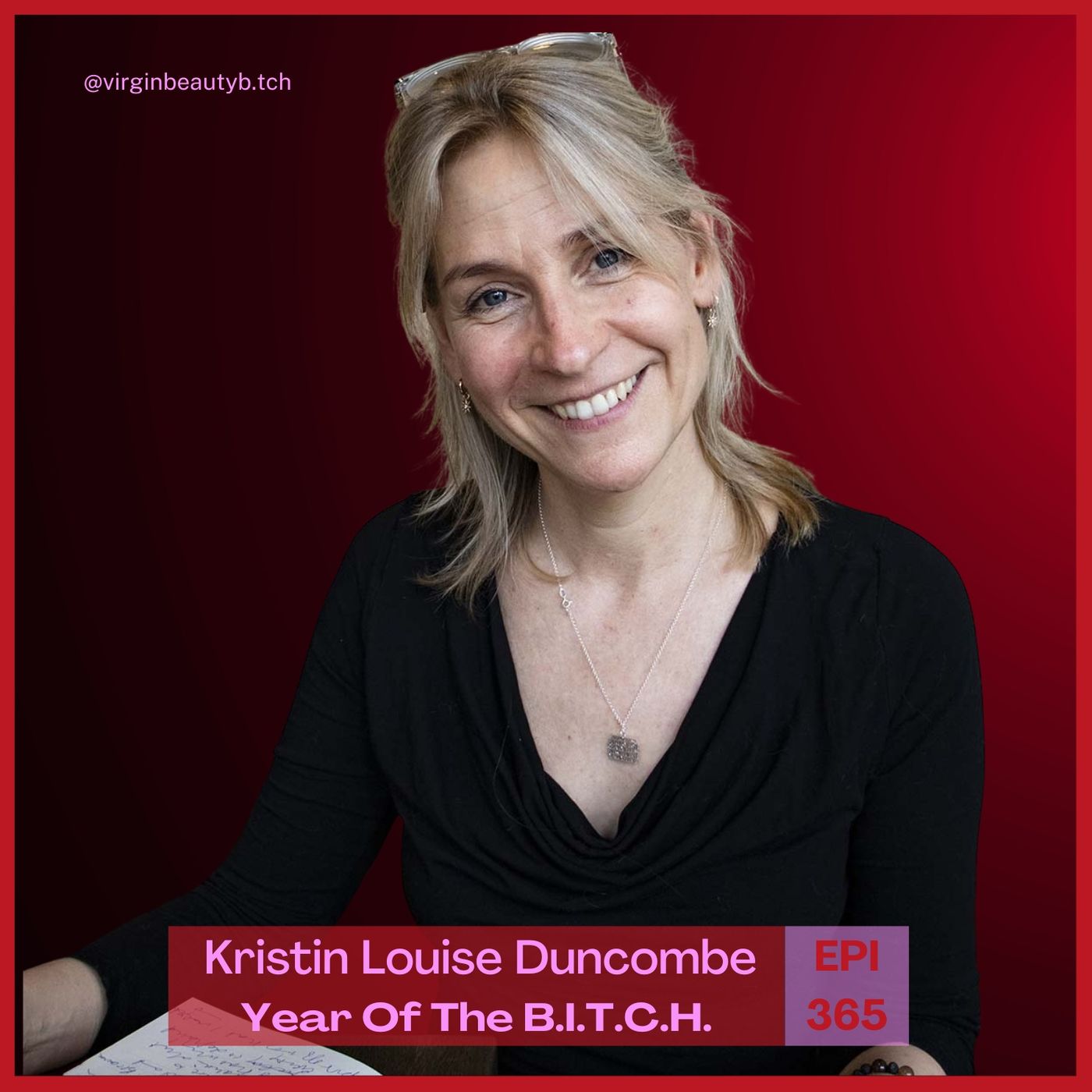
Therapist, author Kristin Louise Duncombe shares her journey navigating a world of childhood sexual abuse to becoming a woman seeking self-worth and love in all the wrong faces and too many bodies to count.



Kristen Louise Duncombe is a Paris-based therapist, coach, and author who joins VBB for a candid and deeply personal conversation exploring the complex journey of women’s self-empowerment through the lens of identity, boundaries, and the impact of societal expectations.
Kristin shares her story of growing up as the child of a U.S. diplomat, constantly reinventing herself with each move, and navigating the lifelong effects of betrayal and trauma. She discusses how her struggle with boundaries led to self-objectification and how, with time and experience, she learned to claim her space and voice, even if it meant being labeled a “bitch.” The conversation dives into themes of objectification, the lingering pressure of female sexuality, the myth of sexual liberation, and the invisible power women discover with age.
Honest, raw, and inspiring, this episode will resonate with anyone questioning the rules imposed on women and searching for the courage to reclaim their narrative. Whether you’re looking for insight, validation, or simply a sense of community, you’ll find something meaningful in this conversation.
Quote: The thing that's been sorely lacking in my life is that I haven't been enough of a bitch.
What’s Here To Learn From:
- The Power and Complexity of Identity:
Identity is a recurring theme. The most profound shifts in life are tied to reclaiming and redefining identity. Learning to embrace and vocalize your truth is central to healing and growth. - Self-Objectification Doesn’t Lead to True Power:
Self-objectification and believing that sexualization or performative sexuality will bring power or fulfillment is a trap. Sex can provide fleeting affirmation from others, but it rarely leads to authentic satisfaction or empowerment, since the “power” is really owned by those placing their gaze, not by a woman herself. - Vulnerability Connects and Heals:
The power of vulnerability, sharing real and sometimes painful experiences, can reduce shame and foster connection. It can also inspire and empower others to reclaim their hard-earned stories.
Intro [00:00:01]:
Virgin Beauty Bitch Podcast, inspiring women to overcome social stereotypes and share unique life experiences without fear of being defiantly different. Your hosts, Christopher and Heather. Let's talk, shall we?
Christopher [00:00:21]:
This podcast exists because Heather and I believe women deserve the space to question words used to enforce expectations they didn't ask for. Virgin and Beauty are expectations specific to gender. Bitch is the weapon used for enforcement. What's ironic is that in conversations we've had on this show with women over the past 8 years, we've noticed that Bitch summarizes and encapsulates a path to women's self-empowerment and growth. Yes, both things, good and bad, can simultaneously be true, which is a line I stole straight from a Facebook post from our guest, Therapist, Coach, and Author Kristen Louise Duncombe. Welcome, Kristen, to Virgin Beauty Bitch.
Kristin Louise Duncombe [00:01:13]:
Thank you so much for having me, and thanks for stealing a line. I can't remember when I wrote that, but I'm pleased to know.
Christopher [00:01:22]:
I'm sure I'll have to pay for it at some point. But Kristen, I believe I shared with you our dismantling of BITCH into its important 5 principles for women's self-empowerment: Betrayal, Identity, Trust, Change, and Healing. B.I.T.C.H.
Kristin Louise Duncombe [00:01:40]:
Yes, I love that.
Christopher [00:01:42]:
And after reading fragments of your life story, I see one of those words coming up over and over again, but I'm curious to hear which of the 5 resonates deepest with you and why?
Kristin Louise Duncombe [00:01:53]:
Okay, wait, so say them again, and I'm gonna tell you which one.
Christopher [00:01:56]:
Okay, so it's Betrayal, Identity, Trust, Change, Healing.
Kristin Louise Duncombe [00:02:06]:
Oh my gosh, which one? Betrayal, definitely, but that's not the one that resonates the most, just because I've dealt with so much betrayal in my life, you know, being betrayed by the adult man that abused me when I was a child, being betrayed by the U.S. government that protected him because he was a U.S. diplomat. I've also dealt with betrayal in, you know, my personal relationships with men, being cheated on, etc. But that— but, but so I'm dwelling on that one. That's not the one that is the most resonant for me. I think probably the most important one is identity. Because I have, you know, we were talking about how you immigrated to Canada when you were 10 years old.
Kristin Louise Duncombe [00:02:56]:
I can't say that I have immigrated someplace, but I have spent my whole life moving because my father was a diplomat, so we changed countries every couple of years. And as an adult, I've also been changing countries. And, you know, every time you do that, you have to go through some sort of reinvention and identity shift. But I think the biggest identity shift for me has nothing to do with country. It has to do with this story that I've just alluded to, you know, being sexually abused as a child, the institutional collusion of the U.S. government protecting my abuser, and the fact that I lived with that story for many, many years until finally I decided to tell it. And that has been the major identity shift for me as someone that has gone from feeling silenced to saying, you know, fuck this, I'm not going to be silent about this, I'm going to be a little bit of a bitch. We were laughing before you came on, Heather, because I was saying, yeah, Virgin and Beauty, two subjects that have dominated my life as a girl and then as a woman, you know, getting harped at about what's your body count and, and how many people have you slept with, to, you know, what you look like being more important than what you do.
Kristin Louise Duncombe [00:04:21]:
But what I said to Christopher is that the thing that's been sorely lacking in my life is that I haven't been enough of a bitch. And I think that's the identity shift, is that I found not the bitch in me, because I don't think that that's— I don't think I come off in a bitchy way, but I have learned to be very boundaryful. So that's my B.
Heather [00:04:43]:
When you say boundaryful and connected to the bitch, I think that that's really so key to what Christopher and I are exploring. So, for you, when you think of boundaries as associated with an important piece of yourself and maybe even edging in on a piece of what the bitch could be, can you unpack that a little bit for us?
Kristin Louise Duncombe [00:05:05]:
Well, yeah, I mean, I just, I use the word boundaries because I think that one of the major problems that I have had in my life when I was younger at least was not having a personal boundary, which doesn't mean, I don't think that I was someone who was necessarily invasive of others, but when people would invade me, I had no capacity to say no. Hence, I had quite a few friendships, platonic friendships, but where I would be kind of bullied and controlled. But more so than that, I found myself, you know, from the time I was a preteen up until, you know, ultimately getting divorced, getting into relationships with men that I hadn't chosen. It's rather that they chose me, and I didn't know how to say no, and just didn't have a concept that it mattered what I thought of them. I was too mired in, well, what do you think of me? Am I good enough? Am I appealing enough? Do you, you know, am I pleasing enough? And I, I've, I had to go through a serious identity shift to, to learn to put what I think 'First in line.' What do I think of you as opposed to what do you think of me? And to shift from being, uh, concerned with being chosen to being concerned with who do I choose.
Christopher [00:06:46]:
Would you identify if I said a good girl kind of identity, trying to be pleasing, trying not to ruffle feathers, trying to be accommodating
Kristin Louise Duncombe [00:07:03]:
Yes, I would. Although good girl is not entirely resonant because I think that the way I tried to be accommodating and pleasing to men was by being kind of like the naughty girl, but at your service. So, you know, being the good girl isn't something that I necessarily identify with. But being the accommodating vixen is something that I do, I did identify with.
Christopher [00:07:35]:
You know what I find interesting is that you spoke in one of your pieces about when, prior to your sexual assault, you used to be more of a tomboy.
Kristin Louise Duncombe [00:07:47]:
Yes.
Christopher [00:07:47]:
Right. And that was an identity where you probably had more control over things that were going on in your life. Yeah, right.
Kristin Louise Duncombe [00:07:57]:
Yeah.
Christopher [00:07:58]:
But someone, someone else broke that down.
Kristin Louise Duncombe [00:08:01]:
Yes, absolutely. Absolutely. Yeah. And at a very young age, because, you know, the abuse started when I was 10. And it was ongoing and regular on a regular basis until I was 12. So, you know, speaking of identity, the self-image problems that come from having a middle-aged man molest you are significant, especially— and I feel like this is an important thing to talk about— a middle-aged man that I was attached to. It wasn't, you know, the horrible monster in the closet. It was my best friend's father, and a colleague of my dad at the U.S. Embassy in this small West African country we lived in, the Ivory Coast.
Kristin Louise Duncombe [00:08:43]:
And, I wanted his approval. I wanted his affection. I didn't want that type of attention. But, you know, when you're, when you're young, you don’t, I mean, I wonder what a 10-year-old in this day and age, how they would handle it, because I think now parents are more educated to coach their children about what's right and wrong. But for me, that was the, the late '70s, early 1980s, and there was no talk at all in my family or the larger culture about what it means to be sexually abused. And so I would just, I think this is really where the fawning and the accommodation started, is I didn't know how to handle that. So I would just freeze and accept, and then jump back into the role of trying to be, that's where I would use the term the good girl.
Kristin Louise Duncombe [00:09:49]:
Yeah, the one who doesn't complain, the one who doesn't protest, the one who doesn't fight back.
Heather [00:09:56]:
I think you've really nailed something on the head with the good girl not necessarily being the good girl, right? That sometimes being the good girl is the naughty vixen that's available to the needs of their partner or the needs of, you know, insert a person that you are looking for their admiration. So I really love that you've brought that to light because I think that in today's world, where women continue to be so hypersexualized, the good girl has morphed into an available girl.
Kristin Louise Duncombe [00:10:36]:
Absolutely. And, the self-objectification that happens. I mean, I know that I spent the majority— and not the, I spent all of my preteen, adolescent, and young adult years playing the role of the sexy vixen. And it was very successful in terms of attracting men, but it was not successful in attracting the type of men that I took any pleasure in spending time with. And it didn't— it never led to a sustainable relationship. So I was in this revolving door of relationships. And that's why I was joking about, you know, the concept of virgin, because, you know, as an adult woman, from being in my 20s up until now, because I'm single now, I'm not really dating any longer, but I was.
Kristin Louise Duncombe [00:11:34]:
I'm 50— I'm almost 57, and when I would say, between 48 and 53, I dated a lot and found that even in middle age, men would want to know, how many people have you slept with? And if you provided a number— well, the number I started providing in middle age was, I can't remember, it's too many to count. And how that would, oh my God, you know, Slut, you're not a Virgin? Like, I have two kids, of course, I'm not a virgin. But I literally would have these conversations with men my age about how I could have possibly lost count of how many people I slept with. And I'm like, well, it's been a long life. And I’m, and that's the thing that I think that's the thing about reclaiming, you know, a boundary. It's like if you don't like it, then let's not go out with each other. I don't care how many people you've slept with, and stop comparing how many people I've slept with.
Heather [00:12:39]:
Yeah, I feel that sentence in and of itself, if you know what, is empowering for a person's story. You know what I mean? Not only do I not need to tell you, but if I do want to tell you, too many to keep count. And it's been a lot of fun.
Kristin Louise Duncombe [00:12:57]:
Yeah, but to circle back to what you were saying, it's that thing, it's all part of objectification. It's like we women are taught from a very early age that men want that thing that is between our legs and that should come in a certain type of package. But we also learn that the thing they want is considered gross and disgusting and is the butt of jokes. And, you know, periods are disgusting, and, and if you're pregnant, it's just, you know, there's, there's so much rampant, uh, yeah, just misogyny about the female body at the same time that it's highly coveted. And so then, you know, we buy into it because we are taught that the most important thing is what we look like, and we need to be the sexy, appealing vixen. And yeah, so then so many of us play into that. I know that I did. So much of my identity was about, am I sexy enough? And, it just never leads to anything fulfilling. And, you know, the other things, I feel like I'm kind of rambling, but just to throw a few things out there about, you know, being boundaryful now or being a bitch.
Kristin Louise Duncombe [00:14:20]:
It's so much easier when you're older because it really is true what happens when you get older. You become invisible. And it's a strange. It's a strange experience if you've spent your life feeling like a moving target to suddenly be able to just walk and realize no one is paying any attention to you. It gives you a certain capacity to, it's like, oh, you don't give a shit about me? Well, guess what? I don't give a shit either. Like, what? I'm not afraid any longer to stand up for myself, because I don't feel like I have to be appealing; anyway, it's not going to work, because now I'm too old to be appealing. So yeah.
Christopher [00:15:03]:
So is it a natural kind of happening that age takes away that responsibility, or that needing to be available, or needing to be available in a certain way?
Kristin Louise Duncombe [00:15:19]:
You know, I think we could say it's age, but more specifically, what I would actually say, but this, of course, comes with age, is I think it's menopause. I think that when you stop having estrogen in your body, and you become invisible because of age, you just, at least, this is how I've experienced it, but I know so many women my age who say something similar. It's like you just don't care anymore. You know, there's this whole movement now that we don't care, or did you know, have you heard of that? That it's an Instagram thing that, you know, took off and now there are millions of followers. It's a menopausal woman who has driven the We Don't Care movement, but it is that. It's like, you know what, I just don't care. I don't care what you think about my appearance. I don't care what you think about what I'm doing with my time.
Kristin Louise Duncombe [00:16:20]:
I don't care if you're upset with how many people I've slept with and can't even remember. There are so many. I just don't care about any of it.
Christopher [00:16:30]:
The only, the only issue I see is that this learning cannot be necessarily passed on to a younger generation. Because it's based on reaching a point in life where you don't necessarily make the change. The change happens to you, you know what I mean? So as a younger person, I don't know that I can look at that and say, oh, okay, I can make that choice too.
Kristin Louise Duncombe [00:16:54]:
Yeah, no, I think you're right. That's a super good point. And I think that that sort of speaks to a chasm that exists between younger women and older women, because the things that us older women are trying to insist upon, like get away from the objectification game, do not self-objectify, is, you know, in this day and age, like fashion and the way women are— I don't even know what the word is— trained, or the things that are sold to women to make themselves appealing, and everyone buys into it, you know, the, the nude dressing and the— and that is sold as another version of we don't care, like body positivity. I should be able to wear whatever I want. And I do think it's true. I think people should be able to wear whatever they damn well please. But I also think that it's important to consider who is selling the clothes sold to young women. I think it's that type of revealing fashion is driven by the misogynistic patriarchy.
Kristin Louise Duncombe [00:18:10]:
That's what I think. But, you know, I was referring to, I think, the divide between older and younger women. If you say something like that in this day and age, you will get shouted at and even canceled very, very quickly. Did you see that? This upset me so much. It was this horrible Kanye West who showed up with his wife Bianca Sensore, and she was wearing, he came fully dressed in black, and she came in a big fur coat. And then it was like a whole production on the red carpet. Like on the count of 3, the coat dropped off, and she was wearing like a body stocking. She was totally naked underneath it.
Kristin Louise Duncombe [00:18:56]:
Then did the little, you know, turn for the camera to show every— and I just, I don't see that as liberation. I see that as why, why isn't he naked also? Why is it always the woman who's naked? And yeah, I think it’s, I think objectification gets sold to us as something that brings us power, and in the, in the instant you do get power from being the sexy vixen, because then everyone approves of you, but it's a power that doesn't actually lead to anything fulfilling.
Christopher
Because it doesn't belong to you.
Kristin Louise Duncombe
Exactly. It belongs to the gaze. Exactly. The gaze of the other. So it keeps you in that thing of what do you think of me versus what do I think of you. Yeah, but you know, I wrote a piece about that, um, and oh my God, I had people that I didn't even know writing me.
Kristin Louise Duncombe [00:20:00]:
And, and I'm not like some famous person either, but still they found me on the internet and Substack, telling me that I was, uh, transphobic. And, and I'm like, transphobic? I didn't even say anything about it. I'm not talking, I'm just talking about how I think that women are objectified, and they buy into self-objectification. And I feel like I can say that because I'm the queen of having done that for many, many, many years.
Heather [00:20:27]:
And I just wanted to add how much I love what you said, because, you know, I think that it, the divide that gets created between women during and after menopause and before menopause, it creates such dissonance between our shared experience. And when so much is in the power of how we're perceived because of sexual appeal or estrogen or impregnatable, whatever it is, like, you know, we've said this on our show before, and I'm so glad that you said it too, is that it is a power, but it isn't really your power. It is forever fleeting. It is forever changing. And it is based off of what others are getting out of.
Kristin Louise Duncombe [00:21:12]:
Exactly.
Heather [00:21:13]:
I love how you said it because I think the more women, when they're younger, that can hone in on understanding their sexuality for themselves and finding a joy and a power in that, like, that is something special, no matter what age you are. And I really believe that that is powerful for how you experience your body and how you experience your life. Especially with so many women who have gone through sexual assault, molestation, etc., that there's a huge bridge to cross between the things that happen to women's bodies and what we choose for our own bodies.
Kristin Louise Duncombe [00:21:51]:
Oh yeah, totally. And I mean, I think it's exactly that. It's like, do you have sex for pleasure or for performance? And I think that, I think there isn't a chasm. I think young and older women will agree, like, yes, so much of the sex that I have is performative, and especially now in the age of porn, I think it's made it all worse, where women feel like they have to show up and do it in a certain way in order to be appealing. And, you know, I was just going to say that I've had so many conversations with men, not all men, but enough that have said things like, no one's ever faked orgasm with me. And I'm like, oh my God, you, because you, I mean, you know, walk into an auditorium of women and say, who in here has not faked orgasm? There isn't going to be a single hand because that's what us women do. I know us women can also have great, fabulous, real orgasms. But there is not a woman who has had sex that has not faked an orgasm to get it over with or hurry it along.
Kristin Louise Duncombe [00:23:15]:
Because I'm performing, and this is not even enjoyable, because I'm doing it for the, because I wanted to be accommodating, and pleasing to the other, not because I really felt like doing it myself.
Heather [00:23:30]:
Yeah, and sometimes it's like it's taking a long time, or I feel ashamed that it's taking me so long. Like, there's so many ways that women are stuck in their head on the performance rather than what they actually want, that it's sometimes an easier out. Not that I want to condone it, it just is the reality.
Kristin Louise Duncombe [00:23:49]:
Totally. And I'm not, I'm not saying don't do it either. I think if that's, you know, if that's what you need to do, do it. I mean, I'm sure I will continue to rely on that in my life. If I ever go out with anyone ever again. But it's just to say that I think it's all part of what happens to us, that we get objectified, and then we understand that as our fast track to having some sort of power. So then we start self-objectifying, and part of self-objectification is being the sexy vixen. And part of being the sexy vixen is having screaming orgasms when it wasn’t, when you're not even enjoying it, because that then makes the person you're doing it with believe that you are the, the sexy vixen.
Kristin Louise Duncombe [00:24:43]:
And it's all part of the objectification cycle. And I know not everyone falls into that trap, but I think many, many, many people do. I think it's important to clarify that because there's always someone who'll be like, " Don't speak on my behalf. But I think, you know, when we're going to speak in generalizations, sometimes generalizations are relevant when it's, you know, a common phenomenon.
Christopher [00:25:17]:
Yeah, I think Heather and I do our best to be broad about who and how we represent, because there, there are, there are women who have gone through traditional steps of one man, one partner for life, and they haven't experienced what it is you may have experienced in the way that you have, right? So we do try to leave the door open a little so they can be included in that as well.
Kristin Louise Duncombe [00:25:52]:
Yes. Yeah. But I think even those women who have been in a more traditional setup probably also have to do some performance art.
Heather [00:26:05]:
It knows no bounds. I would imagine that's how we leave the door a bit open.
Heather [00:26:14]:
Yes. But I think that, like you're saying, for so long now, sexual liberation has been guised in the same misogynistic clothing, right? And now it's been completely packaged as, if you want your own sexual liberation, this is how you access it. And so I think fundamentally it comes down to a woman asking herself what she really wants, you know, that's how much of what I'm doing and saying and acting is because I actually want to be this way. You know, like that there's a, there's a deeper reflection that needs to happen so that we're not throwing the baby out with the bathwater around what she wants to wear and her own autonomy and agency, but to really think about.
Kristin Louise Duncombe [00:26:58]:
Where it's coming from. Yes, exactly. Because I really do think that people should be able to wear whatever they want and certainly behave how they want, you know, within reason. I'm not condoning murder and attacking people, but I think we have to look at how those norms, and that permission to do as you wish, are not evenly divided between men and women. Why aren't we seeing men doing naked dressing? Why aren't we seeing men being marketed clothing that exposes so much of their body, because men don't have to do the same, they don't have to play the same game.
Christopher [00:27:50]:
No, no, there are different rules for men, and to go down that road introduces you to being feminized. So no, yeah, you don't have the freedom to do that, right? So I want you to tell us about your books so people can know where to find and read some of your fantastic work.
Kristin Louise Duncombe [00:28:12]:
Well, I've written 3 books, and they all have to do ultimately with identity and reinvention. The first book is called "Trailing," which is a reference to being a trailing spouse. Some people don't like that term. I use it tongue-in-cheek. I think it's very descriptive. I was raised in a trailing family. It means, you know, that one person is the— has the career that determines what's going to happen to the rest of the family. So my, like I said, my dad was a diplomat in the Foreign Service.
Kristin Louise Duncombe [00:28:46]:
We moved around the world throughout my childhood, and he had the job, and the family trailed along behind him. I'm not complaining about it, I'm just describing that that is the setup. And then I grew up and, um, ended up Meeting and marrying someone very, very quickly, meaning I'm making a reflection on how I was very lost in my own self-objectification and looking for some— looking for affirmation in a relationship. So I met someone who had a career that required him to travel around the world, and I became the trailing spouse. It was a very difficult role to be in. And so that book is about Following my husband, he was a doctor with Doctors Without Borders, following him to Kenya and then to Uganda, and just what it was like for me to be sort of an appendage on, you know, we lived with the team of emergency humanitarian workers and I didn't have a role and had a major identity crisis. And anyway, other things happened to us as well, like violent crime, getting carjacked. So the book is all about trauma, identity, and our marriage falling apart. But then the second book is about our marriage, rebuilding our marriage in spite of, I was referring earlier to betrayal.
Kristin Louise Duncombe [00:30:12]:
So the trailing, my first book, ends when I discover that my husband is having an affair, and I take my daughter, and I leave, and I move to Paris. This is all true. It kind of reads like a novel, but it is what happened. I left Uganda. Moved to Paris with my little 2-year-old, set up my life here, and eventually did get back together with my husband. And then he wanted me to become the trailing spouse again, and I refused because of what happened. But then, ultimately, I was convinced, so I left Paris, I became the trailing spouse again, and moved down to, uh, southern central France. I moved to Lyon because of his job.
Kristin Louise Duncombe [00:30:57]:
And so that book is again about reinvention. It's about forgiveness. It's about trusting again after betrayal. And it's also about raising bicultural kids because my kids, I have two kids, I'm obviously American, but very rootless. My ex is Argentinian. So the kids have, you know, an Argentinian dad and an American mom, but they were, well, my daughter was born in Kenya, but we came here when she was 2. And my son was born here in France.
Kristin Louise Duncombe [00:31:27]:
And so there's a lot to be said about what it's like to be, and you would certainly find this relatable, to be from one place and growing up in another place. And then my third book, that book is called Five Flights Up, by the way. And my third book is called Object, and it's the story of, yeah, as I was mentioning earlier, it's about complex trauma. It's about the fact that this abuse took place in my life when I was a kid. It's about how the State Department protected my abuser and how that entire situation influenced the course of my life. And it's about sleeping with too many men to even keep track of, and how I learned to stop using objectification and self-objectification to find power, and how I actually found power in clearing all that away and getting centered with myself.
Christopher [00:32:38]:
And you're also a therapist, a therapist and a coach. Yeah. So a very, very full life as far as the things that you are able to now regurgitate as life experience to others and have them learn from and help them through.
Kristin Louise Duncombe [00:32:52]:
Well, and I will just add one thing because I think it's really interesting to be a therapist and also a memoirist. And people often say to me, not my clients, but other people will be like, oh my God, well, you wrote about that, and you exposed that, and you said all of that. And then you've got your social media, where you share a lot of pictures and stories about everything that happened to you. How does that affect your therapy practice? And I always say, you know what, I don't feel ashamed of that. The therapy sessions I have with clients are not to talk about myself, but it doesn't bother me at all if my clients know that I have a similar history to what they have gone through. Because, as you can imagine, I mean, I work with so many women, so many women have their own abuse stories. And so I just feel like it's not the point. I don't think a therapist should try to efface the fact that there's a human story behind it.
Kristin Louise Duncombe [00:34:02]:
And again, I would never spend the time that my clients are paying for blabbing on about myself. But if they know things about me, or if they've read my books, I feel like it's okay. It's part of not being ashamed. It's like, why should I act like, why should, why should I not tell those stories publicly? Some people will learn about those things. Other clients might never know. Maybe they don't pay attention to that. But I think it's okay. I want to reveal those things about myself.
Christopher [00:34:36]:
I think one of the things that Heather and I have discovered doing the show is that the greatest magnet on earth is vulnerability.
Kristin Louise Duncombe [00:34:44]:
Yes, yes, exactly. I agree with you.
Christopher [00:34:49]:
So thank you for— I mean, we've courted and danced with each other now for a few months before we finally met face to face, but we certainly appreciate that you've taken the time all the way from Paris to connect with us and have this conversation. It's been really eye-opening for, for both of us. So thank you for doing that.
Kristin Louise Duncombe [00:35:09]:
Well, thank you so much for having me. I really, really appreciate it, and it was great to meet both of you.
Heather [00:35:14]:
So nice to meet you, too.
Christopher [00:35:15]:
And you have been listening to.
Heather [00:35:16]:
The Virgin,
Christopher
The Beauty,
Heather
and The Bitch.
Christopher [00:35:19]:
Find us, like us, share us.
Christopher
Come on back. To become a partner in the VBB community, we invite you to find us at virginbeautybitch.com. Like us on Facebook, Instagram, and LinkedIn, and share us with people who are defiantly different like you. Until next time, thanks for listening.

Therapist | Coach | Author
I am an American therapist, couples counselor, life coach, and author who grew up moving across Africa and Asia as the child of a US diplomat. I’ve spent the majority of my adult life raising my family in France. Drawing on my unique experience, I have based my career on working with international and expatriate individuals and families.
I am also the author of 3 books that address the specific challenges and idiosyncrasies of the expat existence. My most recent book, OBJECT, is a memoir that exposes what happens when an American diplomat is exposed as a sexual abuser, a true-to-life experience leading to my struggles as a traumatized teen navigating my sexuality against a backdrop of abuse, and growing into life as an older-but-none-the-wiser adult seeking self-worth in unfulfilling relationships. It’s my journey from silence to self-empowerment. It’s about confronting betrayal, reclaiming identity, and breaking free from objectification.
My practice as a therapist and coach with individuals, couples, and families includes clients in the United States, East Africa, and Europe, and although I am based in Paris, Zoom allows me to work with people all over the world.



