VBB 362 Dr. Xenia Barnes: Tough Love And A Brave Woman!

In this episode, social behavioural scientist, Dr. Xenia Barnes, dares anyone to call her a Bitch, and invites all women to feel as powerful in their own skin. It’s a conversation every woman needs to hear.


We dive into an inspiring and thoughtful conversation with Reverend Dr. Xenia Barnes, a social behavioural scientist and organizational healing expert.
We get right into our acronym, B.I.T.C.H., which stands for Betrayal, Identity, Trust, Change, and Healing. This episode explores how women have been challenged by stereotypes, societal expectations, and the burdens of roles imposed by others. Dr. Xenia Barnes brings a deep, global perspective to these themes, discussing the layers of betrayal women face and the importance of redefining identity beyond relational or professional titles.
The episode highlights the transformative journey of self-trust, the necessity of embracing change, and the healing that comes from reclaiming your life and purpose, even in the face of serious personal adversity. In this exchange, you will hear actionable advice about self-inventory, breaking free from people-pleasing habits, finding strength in solitude, and the importance of daily growth. At its core, the discussion reclaims and redefines the word “Bitch,” supporting women to embrace it as a badge of confidence, boundaries, and personal empowerment.
This episode is truly about challenging the status quo, encouraging women’s self-discovery, and building resilience.
QUOTE: It's eye-opening once you realize that everything is not sent to destroy you.
Intro [00:00:01]:
Virgin Beauty Podcast, inspiring women to overcome social stereotypes and share unique life experiences without fear of being defiantly different. Your hosts, Christopher and Heather. Let's talk, shall we?
Christopher [00:00:20]:
It is not easy to confront your antagonist, even when it's only a word. That word for women is bitch, which has been used to bully and keep women domesticated for centuries. So we understand the resistance to this word, but realize also that silence makes change impossible. And change is one of the key lessons in B I T C H, our acronym for Betrayal, Identity, Trust, Change, and Healing. To help us unravel this paradox, we welcome back Social Behavioural Scientist and Organizational Healing and Community Resilience Expert, Reverend Dr. Xenia Barnes. Welcome back to Virgin Beauty, Bitch.
Dr. Xenia Barnes [00:01:15]:
Thank you. Thank you for having me. What a way to kick off the new year. And this topic is always exciting. You know, I'm always ready to dive in and just get the ball going because there's so much you can say about this topic.
Christopher [00:01:29]:
We love it. We love it. Having a voice like yours, it means a lot to us. Now, the first time Heather and I spoke with you, it was like being in the presence of, like, pure wisdom. It was amazing. In that conversation, we actually covered a lot of the aspects of bitch. But in our Year of the Bitch, which is 2026, we are delighted to walk through this and these principles with you again, starting with betrayal. And as a woman, what does that word bring up for you? Betrayal.
Dr. Xenia Barnes [00:02:04]:
That is such a great question. I feel betrayal is so heavy because it's multifaceted. Right. And so you, as a woman, especially a woman of colour, we. Betrayal is almost at the forefront of everything we do, whether it is betrayal within the workforce, whether it's betrayal in relationships, or betrayal at home, family, or community. And so when I think about a betrayal, I have to think about the tears and the levels of my confinement of what I work at. And so I just think about, as society right now, the betrayal of how women are being treated, being treated. Within the Last year, over 300,000 women of colour have lost their jobs based off of the betrayal of what this administration has put forth.
Dr. Xenia Barnes [00:02:56]:
And so I would be remiss if I didn't mention that because we are constantly having to fight and argue and claw our way into things that we are deserving of for our expertise and our knowledge that we spent years building for what we bring to the table, for having built the table in so many different instances. So when I think about betrayal, I think about the challenges that we are constantly facing when we are having to reinvent ourselves, redefine ourselves, and even defend ourselves in a way that we have to make other people comfortable about our existence and taking up space.
Heather [00:03:36]:
I mean, the way that you frame that just, you know, what you bring to the table and that you built the damn table in many circumstances, it's like, all right, and I love that you've broken down the different layers of betrayal, because I think that, you know, let's say political, societal, familial, and then even, like, gender expectations or what. What all of those other layers have done to the internalization, like the betrayal, we. We give to ourselves because of these systems that have told us, you know, you got to do this, that, and the next thing to try to get ahead. And it's all just a facade anyways. So, you know, that's exactly what Christopher and I are doing. Once we get into more of the nitty-gritty of our program, is to really help individual women think about which layers of betrayal have affected their life and in which ways it's held them back, and perhaps how have they broken through some of those barriers?
Dr. Xenia Barnes [00:04:34]:
Exactly.
Christopher [00:04:35]:
I think that betrayal, for a lot of people, if you ask them that word, as we just asked you, they will think of a personal betrayal, someone who has harmed them in some way. However, we all have that in our lives. We all have someone disappoint us. This is on a larger scale. This is your gender. This is your sex. This is how it has been taken away from the power that is available to you. And that's where you touch on.
Christopher [00:05:07]:
How did you? Why is it you didn't personalize that word? How were you able to? Why are you able to see the bigger picture of that word and how it affects your gender?
Dr. Xenia Barnes [00:05:22]:
I would say my reasoning for not making it personal is because often that's the expectation. As a woman, the expectation is we take everything so personal, and so our voices are often muted because people often expect us to leave from emotion rather than being able to separate the two and see the bigger picture. So for me, it's always important to start with the bigger picture and then scale down to feelings, emotions, and thoughts and all. And all of those things later. Because I never want my message to be distorted in between the midst of my feelings. Now, if I was to make it personal, there's a lot of things that I can talk about as far as personal betrayal, but I feel like there's. With my platform and my. And my usage of a platform such as this, I would be remiss if I didn't speak to the larger audience.
Dr. Xenia Barnes [00:06:19]:
This, this, this talk is not about trauma-bonding. It's about healing-bonding. It's about breaking. It's about breaking and rearranging, dismantling the system and ableism and ageism and sexism and all those things that are happening. And so when I'm very intentional about it, answering questions, because I want to make sure that I'm always answering it from a larger scale, so that I'm helping more people.
Christopher [00:06:47]:
You know, what's really fascinating about this is that you're looking at that word from a global scope. But in order to understand that global scope, you have to understand first yourself. Your identity. What is that for you? Your identity.
Dr. Xenia Barnes [00:07:13]:
Now you talk about love language, right? So I believe the last time we spoke, I talked all about the book that I wrote and all about, you know, the reconditioning of self. And I did. And a self-inventory. Right. And so for me, I spent a lot of time stepping back and getting to know who I am as an individual, as a person, separate from the hat that I wear as a mom, separate from the hat that I wear as a leader, separate from the. All the different titles. But just who am I? What are the things that I like? What are the things that make me happy? What are the things that make me sad? What are the things that make me thrive? And it wasn't until I did those things and I fell in love with me again was I was able to really understand who I am, what my identity is detaching from anything else. So whatever anyone has to say about, I can let it roll off my back.
Dr. Xenia Barnes [00:08:06]:
Because I know from the root who I am. I know from my core who I am. I know what I represent, I know what my values are, and I know what I bring when I step into any room. And so that's what identity is. Identity is your ability to be able to name who you are for yourself. Your identity is whatever you make it. And your identity is your comfortability of saying, hey, this is me. So I can walk into any room and say, hey, I am Reverend Doctor Xenia Barnes, and I know what knowledge I bring, whether you agree to it or not, whether you accept it or not, I know what I bring to the table.
Dr. Xenia Barnes [00:08:46]:
So your view or your expectations of me doesn't make, doesn't diminish who I am, and it doesn't diminish what I bring. And that's what the importance of the I within bitch is. When you are comfortable with who you are. Anything anybody else tried to bring to you or say about you is just extra.
Heather [00:09:06]:
I think you, I mean, wow. I mean truly, that is where, you know, when I think about people's confidence, you know, really kind of standing on your own, too, being able to move through the world in, in the ways that you've just eloquently articulated, you know, I think it comes with a lot of deep diving. Right. Like you said, and we've chatted a little bit on this, on the show already, that so much of women's identity, if you want to call it that, for you know, centuries previous, was who we were in relation to someone else, whose mother we were, whose wife we were, etc. etc, like that who we were to someone else was so defining of our place in the world. And so, you know, to be in an era where there's so much happening in many, many ways, but you know, for people to have, especially women, not all over the world, but in some areas of the world, access that your relational titles are no longer the sole determinant of your identity. And so, you know, for you to say taking away like the title of mother, the title of friend, or the title of leader, which you said, which I appreciate, that's a title you use that isn't about, you know, relation, you know, like a family member, but certainly where.
Heather [00:10:28]:
Who you are in society. What, what would your advice be to women who have leaned into perhaps what they mean to other people but are really wanting to figure out who they are for themselves? Like, where did you start to kind of tap into to get a better understanding of this is what I like, this is what I don't like. You know, just for the people who may be feeling lost.
Dr. Xenia Barnes [00:10:50]:
That's a great question. And so what I did for me, and hopefully this will work for others, was I started to date myself. I started to go to the movies by myself. Go, no go for coffee, for dinner, for whatever it was. I started doing my life, and I started taking notes, journaling, and I was journaling how I felt in doing those things, and recognizing from what used to make me happy, to what happened. What makes me happy now? And then looking back and going between the two like so, I could say, like, hey, these are things I still enjoy.
Dr. Xenia Barnes [00:11:25]:
Well, these are things that I feel like I was keeping tabs on and notes of my connections to other people and my distinction of for me. What made me, what made me happy. When should I lose? What did I think will make me happy should I lose my job? Who I think will make me happy. Should I not be in this relationship? And those are the key things that most women, I would say, if not all should do. Because you can easily lose a job, you can easily get divorced, you can EAS like things happen in family, death happens, and you can lose a child, you can lose a loved one.
Dr. Xenia Barnes [00:12:07]:
But if your complete identity is connected to being in those relationships, when those things go away, you often find yourself lost. So it's important for you to do that self-inventory of you, of what makes you happy. If all those things are being taken away, so that you would know how to navigate the world without having those. And that's the best part of identity when you are able to navigate through different channels in your life without it being connected to a title or to another person.
Christopher [00:12:43]:
So I want to speak up for the people pleasers of the world.
Dr. Xenia Barnes [00:12:51]:
Can’t forget about them, because I was one before.
Christopher [00:12:54]:
But their reality, and their happiness, is based on exactly that, what they do for others and how they make others feel. How do you disassociate? How do you disassemble that?
Dr. Xenia Barnes [00:13:08]:
And so it's not really about disassembling it, right? You can be two things at once, right? You can still be a person who enjoys bringing happiness to others, but you have to do that in correlation and simultaneously or in parallel with making sure you're happy as well. You cannot pour from an empty cup. And if you are completely broken, if you are distorted and all with last being that you have, you're giving to someone else, then there's, there's no real fulfillment in that because you don't know if you're really helping that person or you're projecting something onto them. And then you also have to think about when that person disappoints you. Because people disappoint us, we're all human. Everyone has been disappointed in some way, shape, or form when they disappoint you. You often find yourself being so upset and in such a depressive state because you're.
Dr. Xenia Barnes [00:14:09]:
You connected your everything to that person or that relationship. And then it's like, how could they do this to me? I do everything from how can they, how could they treat me this way? But you're not recognizing that they're going through their own life, own challenges, and they're just doing what they can do for the best of them. So it's important for you to do the best of you as well. And that's why you have to ensure that you're not trauma-bonding your identity with someone else or with those around you, because you're too afraid of the silence and understanding who you are.
Christopher [00:14:47]:
I love that you bring that up. The silence. People will do anything to avoid that silence. And that's where you live, is in the silence.
Dr. Xenia Barnes [00:14:58]:
And the silence. And the silence is when you find solitude. Because at that point, you get to understand, like, you get to understand what it is that you're going through. It's not easy. I don't want, like, I could definitely say it's not easy, but. But it's worth it. It's worth it because without the noise, you can identify your triggers. Without the noise, you can come up with crystal clear boundaries that you're able to hold.
Dr. Xenia Barnes [00:15:33]:
That you're able to hold. You can come up with realistic expectations for yourself and others. Right? And that's the most important part, the realistic expectations. Because we put these unrealistic expectations onto ourselves and onto others, and then we're consistently disappointed when people don't match that, or they don't live up to that. And let's say if you put this expectation of what you expect of yourself, and God forbid you don't reach that level, then you feel like I'm worthless, or I didn't make it, or I'm a failure. But that's because you weren’t, you didn't really think about how this expectation or what goals you needed to take to get to reach that expectation.
Dr. Xenia Barnes [00:16:20]:
And so there are a lot of things that play into that that we don't have time within these 20 minutes to get into. But there are a lot of things that play into that that go along with identity, but it is also tethered to betrayal as well. And it goes into our. It goes into our ability to unlearn previous behaviours that do not move us in the direction that we need to be going.
Christopher [00:16:48]:
I see identity as the concrete being poured. The next step is making it hard. And that comes with trust. How does one develop self-trust? I think identity, once it is established, needs trust to flourish. What would you say to that?
Dr. Xenia Barnes [00:17:11]:
Definitely. It's definitely true. Trust is the foundation of everything. Right? So if you don't have trust, then it's easy to be betrayed. If you don't have trust, it's difficult for you to even begin to do the work of being vulnerable enough to strip down to the rawness of identity because you have this. You wear this facade, or you wear this mask. If I let them see who I am, then I don't know if they're going to accept me, or I don't know how they're going to treat me. So that is, that is connected to trust.
Dr. Xenia Barnes [00:17:49]:
And then you also have to recognize how you don't respect people you don't trust. So I've never met a person who said in my whole being, I've never met a person who said, oh, I completely respect that person, but I don't trust them. The two don’t mix, the two don’t go together, right? So it's important for you to first be able to trust yourself. Because when you're able to trust yourself, then you can see things about others, and you can read people better. Enough to know if this is someone that you can let within your circle.
Dr. Xenia Barnes [00:18:32]:
So there are two tiers to trust. You have your intimate trust, and then you have your working level of trust. It's like I trust you enough professionally so that we can get this job done, but you have not earned my personal trust, where I'm sharing my personal information with you, or i'm sharing personal things, or accounts of my life with you. That has to be deeply earned. And the only way that's deeply earned is through time.
Heather [00:19:05]:
Yeah, I think trust, it is such a huge word and foundation. And really, you know, in the, in the, in going from understanding the betrayal and all of the different forms that we chatted on, and then stripping down, you know, like you said, to the vulnerability of our essence or truest self or authentic self, and then understanding that inner self, it really is about building up that trust of. Okay, once all of these other barriers are down, once all of these other masks are off, and what's really, truly me, I need to learn how to trust that, that self that, you know, she's got everything she needs in order to take steps forward to live her full capacity.
Dr. Xenia Barnes [00:19:53]:
Correct. And you also want to think about the fact that when you're engaging or when you're engaging or building these relationships of trust, right. You want to make sure that you're the royal. You're bringing the raw you, and they're bringing the raw them. It cannot be a 60/40 type of level of trust. It's like we're all in so that both of us feel vulnerable enough to be our worst and truest self, and know that you're not judging me. Because judgment goes along with trust.
Dr. Xenia Barnes [00:20:32]:
People find it difficult to trust others because of the fear of judgment. So until we can remove that fear of judgment is difficult to build trust up.
Christopher [00:20:43]:
Do people bargain with trust, as in, I will give you, or I will show you I trust you, but in exchange for love, in exchange for your attention?
Dr. Xenia Barnes [00:20:57]:
Yes. People typically do that. And that is, but that is a behavior trait based off of past trauma. It's based off of past betrayal. And because, and, and it's often because this has happened to me in my past, now this is the way I operate. This is the way I lead.
Dr. Xenia Barnes [00:21:19]:
So if I'm gonna trust you to do X, Y, and Z in order for me to share my trust with you. How do I know you, how do I know you love me, unless you do these things? And so in that, you see, relationships tend to fall when times get difficult because it's more of, it's not a reciprocal, or true-rooted gang of trust, it's more of a transactional, if you do this for me, then I'm gonna give you a little bit of trust. But the moment you do something that I don't like, I'm gonna take my love away. And so that ties you, that brings you back, that knocks you back down to betrayal, right? Because now I feel like I've given you this, and I've done all, I’ve checked all the boxes you told me that I needed to check, and now you're upset with me, and now you're taking your trust away. So that's transactional. That's like you buy a shirt and you like the shirt, but then you know what? You got home, and you didn't like the way it fit when you put the pants on. Now you're going to take it back to the store. Can't do that. Like that. That's not how, trust me, trust works. That's not how trust works.
Christopher [00:22:26]:
In our last conversation, you had this phenomenal quote. “What's the reality of your behavior changing if you're not doing anything to change your behavior?” Change is the next step in our process, and obviously, it has deep meaning for you, that word.
Dr. Xenia Barnes [00:22:49]:
And I would say, for me, change is about having been in the trenches and understanding you don't want to be here anymore. And the only way you're going to get out of these trenches is if you start to do something different. And so I always say, if you want to see something different, then you’ve got to do something different. And so that's what change is. Change is being vulnerable enough to know, I might not know what's gonna happen, but it has to be better than what's happening right now. So I'm gonna step out on faith, and I'm gonna do this, you know, I'm gonna do whatever this is because I want to change for the better, you know, but you also want to make sure you're doing something that makes sense. Like I'm jumping off, no, jumping off the cliff and just saying, you know what, I'm going to jump over the cliff and I'm gonna see if I land on my two feet. That's not what I'm saying.
Dr. Xenia Barnes [00:23:44]:
But what I am saying is do something that's gonna get you to where you need to be in the next level. If you're unhappy in your job, polish up your resume. Start applying for jobs that fit within the skill set that you have, or start in the meantime, while you're doing that, why don't you start brushing up? Take some leadership development classes, take some training, some skill-building classes, whatever it is that's going to make you feel better about yourself, but also build you up to be able to put you in the next position in a way that you want to go. Then that's what you need to be doing. If you're unhappy in a relationship, it's okay to be by yourself for a little while. Get to know who you are, and what love means to you. How do you feel? How do you best receive love? How do you best want to give love off do that self-inventory? So the next time you're in a relationship, you know what to expect and you know what you're bringing, you know, your own self-worth.
Dr. Xenia Barnes [00:24:46]:
So there are so many different levels to understanding what changes, but it's all rooted in, you're not gonna change if you don't start doing something different.
Christopher [00:24:55]:
Love it.
Heather [00:24:56]:
Yeah, I'm definitely gonna include that just in my own personal reflections. As far as a self-inventory, I just think it's a great way to think about, you know, just checking on my shelves, you know, on the inside, what's in here. And you know, I'm probably changing books out here and there, and you know, switching it up because you know, some patterns call for a new approach with a new mindset or a new set of tools. So I think that's a very helpful terminology to just to, to take stock, shall we say?
Dr. Xenia Barnes [00:25:26]:
There we go, take stock because you ever notice how people, they go into these trends, and it's like, all right, right now the trend, the mindset is a trend right now. Everybody's like, oh, you gotta elevate your mindset. Your mindset, your mindset. So everybody's buying all these mindset books, and then the books are just collecting dust. They're buying the books. They're not opening them. They're not trying any of the tools and the strategies that are in there.
Dr. Xenia Barnes [00:25:49]:
And then they go, I don't understand why things are not happening. I don't understand why I still feel stuck here. But you haven't done anything different. You haven't even attempted to begin reading the book to begin to try one of the strategies. You're just already. You're just comfortable with the first step. Like, you use, like, all right, the first step was get the book. I got the book.
Dr. Xenia Barnes [00:26:11]:
Okay. I'll wait three or four months, and then I'm going to say, nothing happened. Or they connect themselves to people is like they surround themselves with. Yes people. So you get this group of friends who are just gonna say, like, girl, I get it. Or, bro, I feel it. I understand. And they're not pushing you to do anything different because they don't want to do anything different themselves. So as long as all of us are doing the same thing, we're all okay. And it's like, that's not that. That's not the circle. That's not how this is gonna work.
Dr. Xenia Barnes [00:26:42]:
Everybody has to challenge the next person so that you can all elevate to be the. Be the better version of yourself. And so that's what change is about. Change is always about forever learning and being the best version of yourself, competing with yourself. Every day, I compete with myself every day. Every day I wake up, and I look in the mirror, I say, you're gonna be better today than I was yesterday. Yesterday was all right. It was all right yesterday. But today, today you're gonna be better. And tomorrow you're gonna be even better than what you were today. But today, we're gonna start with today. Today, our focus is on being better than what we were yesterday. And that's what I do for myself, and I encourage other people to do it as well. It's like, let go of whatever happened yesterday.
Dr. Xenia Barnes [00:27:24]:
Today is your first time starting the day new, fresh, and being able to say, this is what I'm in control of, and these are the changes that I'm going to work on today.
Heather [00:27:37]:
That mindset right there is what we have really started to elevate as the Virgin of our show. It's the ability each day to have the chance at doing it completely fresh. And there's a piece of you that is forever anew. So, you know, when you're on this show and some of the things that you say, it's just so bang on. It’s very aligned with some of the learnings that we've had over many years on, on this show.
Christopher [00:28:07]:
And also, I would add to that that everything you just shared with us can be encompassed in healing. Every single day can be a healing day for you. Back to mindset and action. What actions are you taking? Those actions are healing if they're positive. How do you see healing in that sense?
Dr. Xenia Barnes [00:28:32]:
For me, healing is not allowing myself to be stuck for, for some time. When I first got diagnosed in 2021 with my illness, pulmonary fibrosis, for a while, I was stuck. I was stuck because I couldn't understand why it was happening to me. And again, this is before I dug deeper into the self-inventory. It was, I was so focused on all the things that I had done for everyone else. And I was so married to my title, I was so married to my role and my job that I was like, I can't believe this is happening to me, like all that I do for other people. But in doing that journey of healing, that journey of navigating what it feels like to identify who I was becoming, it allowed me to heal in the sense of, one: I had to fall in love with who I was becoming. Two, I had to recognize that the work that I was doing was a mission that was given to me.
Dr. Xenia Barnes [00:29:42]:
It wasn't about me. It was a purpose that I was assigned. And then three, it was just knowing that I'm going to be okay. I just have to, I just have to take it one day at a time. And so, although my way of life had rapidly changed, I just had to make the adjustment to what my life was becoming. And so that's what healing is. To me, healing is making that adjustment of what your life is becoming and not taking everything so personal. It's a big step, but it's also eye-opening once you realize that everything is not sent to destroy you.
Dr. Xenia Barnes [00:30:29]:
And so for me, it was like this storm, this season of the storm that I am in. It wasn't sent to destroy me, to destroy me. It was sent to, to, to shake me loose of some things so that I could be free enough and open enough to receive the blessings that were going to be coming towards me because my hands were too full of carrying all the things that I was trying to do for everyone else that I wasn't I couldn't. I couldn't catch anything that was coming for me. And so that's what healing is. To me, healing is putting down the things that weren't meant for you to carry and opening yourself up to allowing great things to come your way and being receptive to them.
Christopher [00:31:09]:
When we spoke about healing, as we were explaining what it is these acronyms mean, and healing is this. It's like the love of the universe. It is comes to you and it smacks you across the forehead to tell you, hello, hello, something's not right with you. You can be more than this, and we ignore it. So it comes with the two by four to the back of the head and over and over and over again until we understand that this message, this discomfort, this pain, this disappointment of life is our lesson for us to heal ourselves, to move forward, to be better, brighter, greater, stronger, and amazing. Right? So to hear, because, your illness, you were near death's door with your illness.
Dr. Xenia Barnes [00:32:18]:
Yes.
Christopher [00:32:18]:
But you have not taken that as a slight from the universe towards you personally. It encouraged you to be more of who you are. That is healing for us.
Dr. Xenia Barnes [00:32:30]:
Correct? Absolutely. Absolutely. And so it's important to. It's important to speak up, it's important to speak out, and it's even more necessary to choose life. Choose to live your life to the fullest. Choose to live every moment like it's your last because you never know what's gonna happen. And. And life can shift and change in a second, a millisecond.
Dr. Xenia Barnes [00:32:58]:
So one thing I can say is I live. I. I live. And I'm choosing to continue for my time that's here. I'm choosing to continue to live. I'm choosing to continue to thrive. There are so many things that I can harbour on. There are so many things I could be down about, but what good is that going to do me? What good is that going to do me? So I'm.
Dr. Xenia Barnes [00:33:21]:
I'm choosing life.
Heather [00:33:22]:
Beautiful like that is such a healed statement. You know, like it really is to be able to say, I walk through the valley of doubt, and I'm here today, and I'm going to live the last time.
Christopher [00:33:37]:
We spoke to you. I love this quote. “I know often people look at the term bitch and see it as an insult or a bad thing or a nasty thing, but in this sense, it's about you. It's about you deciding and setting your expectations and boundaries for yourself and holding yourself accountable.” We can't say that any better.
Heather [00:34:05]:
I saw you.
Dr. Xenia Barnes [00:34:08]:
Well, listen That's. You can just sign my name under it and put it on your website.
Heather [00:34:13]:
There we go. Quoted here.
Christopher [00:34:17]:
But the reason it is so powerful to us is that. Is. That is the vision that Heather and I have: is that every woman can take this word and have it evolve into something that is not just a parachute to save yourself, but something to propel yourself forward in life. That's what this word, for us, can become. With that shift of mindset to exactly what you just said. Thank you for bringing that to the surface as a woman. Thank you for bringing that. That to the surface for other women. We appreciate that.
Dr. Xenia Barnes [00:34:57]:
Thank you.
Heather [00:34:59]:
We love to ask our guests also. I mean, clearly, we've already spoken to you on this, but perhaps if there's anything else that you'd like to share around either, you know, from today's version or previous versions: What does Bitch mean to you?
Christopher [00:35:16]:
Yeah. What did you. What did you, as a young girl, what did that word mean to you then?
Dr. Xenia Barnes [00:35:21]:
So as a young girl. As a young girl, it was so much of an insult because it's what society made it. Society made it an insult. And so, as a young girl, that's what it was. But as I became older and developed into myself, I recognized, and I decided that words are just words until you give them power.
Dr. Xenia Barnes [00:35:45]:
So it depends on whatever power I assign to that word is how I can react to it. So you can. Someone can call me a bitch, and it's like, you know what? You're right. You’re absolutely right, because I'm confident in who I am, so I can break down to them what bitch means to me. So I appreciate you telling me I'm beautiful, and I'm intellectual, and I have teachable moments, and that I'm consistent and I'm forever healing. You are absolutely right. That's what Bitch means to me. It may not mean the same to you, but this is what it means to me.
Dr. Xenia Barnes [00:36:18]:
But it also allows me to sometimes tap into my inner success when I'm walking into a room, and I'm saying, I own this room, and you can have the seat, and you can sit at the table because I'm bringing the stage. So it's all to your level of confidence. It's your level of feeling and the assignment that you assigned to the word. So I say to all the women that's out there, choose your own assignment, or definition to that word. When that word is put before you, you dictate, and you decide what that word means. It is only derogatory if you let it be derogatory.
Christopher [00:37:11]:
Xenia, Heather, and I, we have a vision. We're trying to make that into a movement. But it's words like yours that give credibility to the distance between those two things. We love hearing your words because they are. They can be so impactful. They can make such a difference, and we cannot share enough how. We appreciate that.
Dr. Xenia Barnes [00:37:42]:
Thank you. I appreciate you having me again, and I appreciate you sharing your platform with me. Let's just keep doing this work. Let's keep uplifting women. And let’s reinvent what the word bitch means.
Christopher [00:38:00]:
We're doing it.
Heather [00:38:01]:
We're here for it.
Christopher [00:38:02]:
Thank you so much. And this, this conversation continues, will continue as we investigate and explore and hopefully reveal things that you may not have thought of with this one word and what it has meant to you in your life and what it can mean for you moving forward. So thank you.
You've been listening to the Virgin,
Heather [00:38:27]:
The Beauty,
And the Bitch in her year.
Christopher [00:38:32]:
Find us. Yes, find us. Like us. Share us. Please come on back. Bring your friends. Let's have a party.
Christopher [00:38:39]:
To become a partner in the VBB community. We invite you to find us at VirginBeautyBitch.com. Like us on Facebook, Instagram, and LinkedIn, and share us with people who are defiantly different like you.
Until next time, thanks for listening.
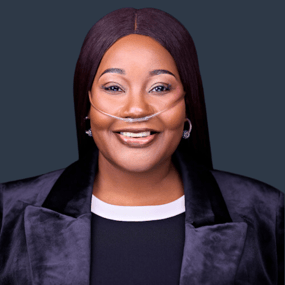
Social & Behavioral Scientist | Leading Expert in Trauma-Informed Organizational Excellence
Rev. Dr. Xenia Barnes is a Brooklyn-based Social & Behavioral Scientist whose groundbreaking "Trauma-to-Triumph Framework" is revolutionizing how institutions approach leadership development, employee well-being, and community engagement. With over two decades of experience working with survivors of domestic abuse, gun violence, and chronic illness, Dr. Barnes brings both academic rigor and authentic lived experience to her transformational work.
Dr. Barnes' journey toward becoming a leading trauma expert was forged through profound personal challenges. The 2017 murder of her nephew, Melquain Jatelle Anderson—a sociology student at John Jay College—catalyzed her mission to transform trauma into systemic change. Her 2021 diagnosis with pulmonary fibrosis and lupus, terminal illnesses requiring a double lung transplant, deepened her understanding of resilience and inspired her most powerful frameworks for institutional healing.
As founder and CEO of Gold Mind Thoughts LLC since 2008, and co-founder of the Melquain Jatelle Anderson Foundation, Dr. Barnes has developed evidence-based methodologies that bridge academic research with practical community intervention, making scientific insights accessible and applicable to real-world institutional challenges.


