VBB 357 Peggy Sharr: A Mother's Cult Vs. A Daughter's Courage!

Peggy Shaw turned a childhood with a loveless, cult-leading mother who denied her children even basic education into a life as a licensed clinical psychotherapist, best-selling author, and fearless mother-bear.


Peggy Sharr is a licensed clinical psychotherapist, author, and survivor whose remarkable life story forms the heart of her book, "Surviving the Family Kingdom." Raised in her mother's cult, a chaotic and abusive environment, Peggy endured years of trauma, spiritual manipulation, and family dysfunction. Despite facing immense adversity, including being denied a basic education, Peggy found the courage and strength to rebuild her life, pursue higher learning, raise a functional family, and ultimately become a therapist dedicated to helping others heal.
QUOTE: "My wounds don't have to determine my future, because wounds can heal. They take a long time to heal, but they heal."
Lessons Learned:
- Maternal Betrayal and Power Dynamics – Delving into the complex layers of maternal betrayal, spiritual control, and the collapse of personal identity due to parental influence.
- The Grieving and Healing Process – Exploring the long-term emotional work of grieving, healing, and confronting the reality of complex parental relationships.
- Sharing Story to Inspire Others – Peggy Sharr discusses her motivation for writing her book, “Surviving the Family Kingdom,” and aims to offer hope and inspire other women to reclaim their lives from controlling or traumatic backgrounds.
Christopher [00:00:01]:
Virgin Beauty Bitch Podcast, inspiring women to overcome social stereotypes and share unique life experiences without fear of being defiantly different. Your hosts, Christopher and Heather. Let's talk, shall we?
Christopher [00:00:20]:
Do you know what the real magic of Christmas is? Well, for a parent, it might be the initiation of a child into traditions that spark imagination, magic, and joy. As adults, it might even be that time travel portal back to your own childhood memories. But let's also acknowledge that not all childhoods are worth remembering, as is the case with our guest, licensed clinical psychotherapist and author, Peggy Shaw. Welcome, Peggy, to Virgin Beauty.
Peggy Sharr [00:00:52]:
Rich, thank you.
Christopher [00:00:54]:
So, Peggy, as we speak, you're putting the final touches on your second book about growing up in your mother's womb cult. Now, I want to get that out straight. I'm saying this again, your mother's cult. Please share.
Peggy Sharr [00:01:09]:
So the first thing that I think that I want to have your listeners understand is I'll just briefly talk about what my mother's childhood experience was like, because this book really emphasizes the generational, intergenerational trauma that goes on in families. She grew up in a loveless home. There was neglect. It was post depression. Her parents were still together, but they had a loveless marriage.
Peggy Sharr [00:01:44]:
She was very fragile emotionally, and her needs were not met. And so as a psychotherapist, I am able to understand that. I think a lot of people who went through what I did would not understand that and be able to put that together. But I appreciate the fact that I have this knowledge, and I can, you know, look at it through that lens and understand that what led her to do the horrific things that she did that I write about in the book was coming from a very wounded place. She is still a very wounded person and was a very wounded person. And she was also a teen bride and a teen mom. So she never really had the opportunity to mature, live on her loan, on her own, establish herself, that sort of thing. So I wanted to lay that groundwork before I summarize my experience and what this book is about and why I wrote it.
Peggy Sharr [00:02:51]:
So my childhood was very chaotic, lots of moving.
Peggy Sharr [00:02:56]:
My father left when I was a baby and never looked back. So he was never in my life. I have a sister, she's a year older. And there was, there's a brother also. My mother had had him a few years, I think I was 4 years old, and she gave him up for adoption. My grandparents were not helpful or involved. So my mother was really on her own, floundering in life with these two girls, trying to raise these two girls. A lot of times, while working two jobs. She called herself a professional waitress.
Peggy Sharr [00:03:32]:
That was her trade. And so, like I said, many, many moves, many relationships, one of which was a very traumatic relationship for two years, domestic violence. He slept with a gun under his pillow, threatened to kill us if we left, that sort of thing. We escaped that. And then we. I'm originally from Pennsylvania. We moved to California when I was 6. And my mom thought, this is, you know, get away from the family, fresh start.
Peggy Sharr [00:04:03]:
Everything is going to be great. But it wasn't. It was the opposite. It was. That was when she got into that domestic violence relationship. Then she got out of that relationship. We escaped and moved to Sacramento. It was literally, my mother took us to the airport, went to the counter, and said, here's how much money I have.
Peggy Sharr [00:04:24]:
How far can I get from here? We were in Los Angeles, and Sacramento was where we could go. So it was. There wasn't even a job there, anything like that. So that sort of gives you a sense of what things were like before the cult started. It wasn't like she woke up one day and said, hey, I'm gonna. I'm gonna start this movement, and I'm gonna, you know, go out and try to, you know, get people involved in my movement, and I'm going to be this leader. It wasn't like that. It was a progression of circumstances that happened.
Peggy Sharr [00:04:53]:
A man came into her life. His name was Buddy. That was his nickname. And he convinced her that she was chosen and he was chosen as well. So it started with street, street preaching. Then, you know, there was a lot of going to churches and trying to take over and things like that. And my sister and I were just drug along for all of this.
Peggy Sharr [00:05:17]:
Eventually, that relationship was a romantic relationship too, the two of them involved. Eventually, that imploded, and my mother thought that he was crazy, and he used drugs. And there were just a lot of complicated things involved in that. And so they went. Parted and went their separate ways. And so that's when things really started to unfold with my mother. What I call, I think, was psychosis. She believed that she was Jesus Christ and that the end of the world was going to come in three and a half years, like it says in Revelation in the Bible.
Peggy Sharr [00:05:56]:
And so she was sort of in a panic. I have to find as many. Save as many souls as I possibly can, because the end of the world is coming in three and a half years. So from my perspective, you know, I believed what my mom told me. She was my mother, and I believed that she had this calling, and the end of the world was coming. And I was terrified that I was not going to be, not going to go to heaven, that I was going to go to the Lake of Fire. She talked a lot about the Lake of Fire.
Peggy Sharr [00:06:27]:
And so there was a period where I was kind of battling with it. You know, do I believe it? Don't I believe it? Kind of thing. But I sort of did this bargaining in my head. I said, well, maybe it's not true, but what if it is true? So I'm just going to live like it's true because it's too much of a risk if it's true, and I don't believe it. So, because she believed that the end of the world was coming in three and a half years, there was no need for school. So she took my sister and me out of school. And I believe that she just told people we were 16 and 17.
Peggy Sharr [00:07:08]:
So I was 16 years old for, like, four years. And so instead of going to school, we didn't homeschool. There was no. No schooling at all. We worked. My mom scrounged up jobs for us, painting, cleaning, mowing lawns, you know, whatever she could find for us. And so that's how we spent our days, working, and our evenings were spent sitting in the circle with converts that she would bring in, and she would preach to them and try to convert them. And so this went on for about four years.
Peggy Sharr [00:07:43]:
And we traveled around to different places, moved around quite a bit. People came in and out. Converts wouldn't stay very long. She would either kick them out or, because they didn't comply, or they would leave on their own because they thought the thing was crazy. My mother made a lot of claims. She told people that she could raise people from the dead, that she could heal the sick. That. And in my mind, I knew those things were not true, but I had to battle and convince myself that they were because I was so afraid that she would find out that I didn't believe that I would be one of the people in the hot seat and I would be interrogated and tore down, which is what she would do to people when she would bring them in.
Peggy Sharr [00:08:29]:
She explained it kind of like what they do in the army. You know, they bring people in, tear them down, and then build them back up. That was sort of her process with people when they came in. Another thing that she told people was that she could read minds. So I was constantly auditing my thoughts because I was so afraid if I had a questioning thought or A doubtful thought about her that she would pick up on that she would read that thought and then I would be in trouble. But during those four years when we were traveling all around, there were all kinds of things that happened. I mean, she even had an attempt on her life. We were held at gunpoint at certain times by people who were trying to prevent their family members from going with her.
Peggy Sharr [00:09:16]:
So there were a lot of just very crazy things that happened that are in the book. So after about four years, we settled in Iowa. So I was just about 16. And she told us at that point, it was just the immediate family that was left. We didn't have any more converts. They had either been kicked out or had left on their own. It never really grew to the point that my mother wanted it. She envisioned having this large group that followed her, and you know, the end of the world was going to come, and we were all going to be, you know, go, go to heaven.
Peggy Sharr [00:09:54]:
I don't know exactly how that was all going to come down, but she did tell us that that was all going to be triggered by her being killed by non-believers. So that was the other thing that I had to accept as a child, was that my mother was going to be killed in the next three, three and a half years. And so I didn't really know how to.
Peggy Sharr [00:10:17]:
Process that because it was like, okay, my mother's going to be killed, so who's going to take care of me? Where am I going to be? Is it immediately that everybody is going to go to heaven? You know, I didn't know how to process any of that. But after we settled in Iowa, she said that the Lord had told her that there were no more souls to save and that we were just supposed to wait until the end of the world. And during that time, I met my kid, my children's father, got married, and had three kids. The end didn't come in three and a half years. There was never any explanation of why that didn't come to fruition. But we still had to live the life that my mother laid out, and that was to be perfect, to be pure, to, you know, believe everything that she said. Because the Lord spoke through her, because she believed she was the manifestation of Jesus Christ. So all of that was still going on while I was having babies, you know, trying to live life.
Peggy Sharr [00:11:27]:
And she traveled back and forth. Sometimes she'd go back to Pennsylvania, and then she'd come back to Iowa. And that happened several times. But she still had control over us. At that point, it was just my sister and me. And then my uncle, my mother's youngest brother, who came with us, and then our spouses and our children. So that was what the group was at that point. And so even when she was out of state, we still lived under her control.
Peggy Sharr [00:11:56]:
And when I was going to have my second baby, I wanted her to be with me for the birth. She wasn't with me for the birth of the first one. It was really rough labor and delivery, the first one. And so we flew her back for Christmas because I was due on December 7th. And I thought, oh, by that time, I'll have the baby. She can be here and help me with the baby. I was very overdue. So by the time she got there, and I think she got there on the 19th or 20th, something like that, and I asked her if she would stay a little bit longer until I had the baby.
Peggy Sharr [00:12:30]:
And she said no. She wanted to get back to Pennsylvania because she missed her friends. And I know that that sounds like a really minuscule, innocuous kind of thing, but that was the trigger that opened my eyes. I thought, wait a minute, you miss your friends? What friends? I thought you were Jesus Christ. I thought the end of the world was coming. What's happening here? And that was. That was the event that woke me up. And that night I went to bed, and I just decided, I'm just going to let myself think whatever.
Peggy Sharr [00:13:07]:
I think I'm going to question everything. I lay awake all night long, questioning all the things that I'd been taught, all the things that had happened. I allowed myself to face the reality that there was child abuse, that she, you know, broke up families because that was one of her rules. If you came with us, you had to. You had to abandon your family, your parents, your siblings. You had to give up your life. Kind of like what she says, Jesus expected the disciples to do, just leave your life and come with me. And so I faced the reality that none of that was okay.
Peggy Sharr [00:13:47]:
That was all wrong. It was wrong to tear up families. It was wrong to abuse children. And it was wrong to control people's lives. And I didn't know if anybody else would feel the same as I did. So that morning when I woke up, I told my husband, and I said, I don't care if you come with me or not. I'm getting out. I'm escaping.
Peggy Sharr [00:14:14]:
And he said he felt the same way, and we were going to do it together. And then we announced it to the rest of the group, and the rest of the group said they felt the same way. So we all. I was a little bit of a coup that I started. So we all at the same time decided, we're getting out of this. And everybody kind of handled it in a different way. But I did it through a letter because I was so afraid that my mother would manipulate me and control me if I did it over the phone. She was out in Pennsylvania at that point because she had gone back.
Peggy Sharr [00:14:50]:
And I write this in the book that, you know, when she was there, I wanted to be near her so desperately and for her to be with me for the birth of my child. And now looking through a therapist lens, I see that that was my last effort to see, does she love me? Does she see me as her daughter? Can she be a mother to me? And when she wasn't present for me, that's what woke me up. And my feelings went from desperately needing to be close to her to I could not wait until she left.
Peggy Sharr [00:15:32]:
So I think it was either that next morning or the morning after when she flew back to Pennsylvania. And I didn't tell her face-to-face what I had decided. I held that to myself. And then after she left, I wrote her the letter and just poured, I mean, it was a long letter, poured out all these things that I had been feeling for all these years. Then I go into the book, the unraveling and the rebuilding of my life, because I was starting from scratch. I was with this man, who was a stranger. My mother infiltrated our marriage and took over, so we weren't even allowed to have a door on our bedroom.
Peggy Sharr [00:16:15]:
That's how controlling it was. And my mother was. So the rest of the book, after I have that epiphany, is the rebuilding and unraveling of the. The brainwashing that I had endured.
Christopher [00:16:33]:
So, you’re growing up under these conditions as a child, growing into a young woman. That is all you've ever known. Where do you think the questions came from to contradict your basic foundation of beliefs? Where do you think that came from?
Peggy Sharr [00:16:56]:
That is a great question. They were always there. The questions were always there. I knew, even as a child, in the core of myself, what the truth was. But I quashed that because I was so afraid. I was so afraid to face what the truth really was because I had this woman who was my mother, who I was completely dependent on, who convinced me otherwise. So I was dissociated from the truth. And so once I had that awakening, the questions just came because they were already there.
Heather [00:17:41]:
I think what I find so compelling and so fascinating about your story is all of the interwoven systems at play. You know, you've got family power, spiritual control, maternal betrayal, and a sort of identity collapse because it was so controlling, but all towards a fairly radical self-reclamation to, you know, a very, you know, impressive woman that, you know, knows, sits with us here today.
Peggy Sharr [00:18:11]:
Oh, thank you.
Heather [00:18:14]:
Absolutely. You know, I. I feel that from the stories that I've heard. From certain women and something that we've explored a little bit on this podcast that you've already touched on is, is the challenges around this maternal betrayal, and that it's almost one of the first forms of betrayal that we face is these systems that are either based off of our mother's identity or what society wants and expects of women, and that they're one of the largest carriers of those societal prescriptions. So, you know, when I think about the amazing title to your book, Surviving the Family Kingdom, you know, I know that you've touched on how you, you know, used that inner sense of self that was always there to have the questions and not just be kind of consuming what you're given. But can you unpack it a little bit further for us? Just kind of how you built up the confidence to write that letter? Or did you hit a breaking point? Could you just kind of open it up a little further?
Peggy Sharr [00:19:21]:
Sure, sure. You know, writing the letter was freeing, was liberating for me. It was, I think, just like the question I answered prior about where did the questions come from? They were already there. So what I poured into that letter and the steps that I took to start to rebuild my life, or build it, should I say, not even rebuild, but build my life, was all based on what was already there, a knowingness that I had. Fortunately, I did not get the mental health, genetics, and addiction. That's the other thing I should mention that I didn't mention when I was telling the story is that my mother's an alcoholic. And so there was a lot of drinking that went on on her part.
Peggy Sharr [00:20:13]:
She would be drinking as she would be giving these sermons, you know, with the gatherings and things like that. Not in the very beginning, but later that came. And so that really was confusing for me as well, because I would see, you know, the things that she would do and say when she was inebriate, you know, drunk, inebriated, yes, I'm trying to think of that word. So, yeah, to answer your question, I think there was already some hard wiring in me that, because I have a very strong sense of justice, Injustice is, my husband always says that, that's your Achilles heel. So I have a very strong sense of justice.
Peggy Sharr [00:20:51]:
I also am an extremely empathic person. And so witnessing, you know, the child abuse, trying to get demons out of children by beating them, witnessing, you know, exiling people to sleep outside, you know, different things like that that she did just tore me up inside. So when that moment happened, when I had that awakening, that tiny little thing, she said, I miss my friends. I need to get back. You know, that was the tipping point. You know, the way I describe it in my book is like I had this shelf full of, of, of lies and of trauma that was just steady and, and, and any, anytime I would doubt something, I would steady the shelf, you know, oh, I gotta keep the steady the shelf. But that moment, it was like the last little thing put on the shelf; it came crashing down.
Peggy Sharr [00:21:49]:
And at that point, when it all came crashing down, there was no turning back. All of the truth. I wasn't dissociated from it anymore. All of the truth just surfaced, and I faced the reality that my mother is mentally ill, an alcoholic, has been controlling people, has been abusing people for years and years and years. And I myself was a victim of that and faced the reality that she didn't really love me. She told me she loved me every day. And she always said, you know, my mother never told me I loved, she loved me. So I'm going to make sure that I say that to my children. And she did.
Peggy Sharr [00:22:29]:
But children need to be shown and told, not just told. And I used to say that to myself as a child. Well, I know my mom loves me because she tells me. But when that reality, when that shelf came crashing down, I realized she doesn't, she doesn't love me. There was immense grief. Immense grief came from the years that followed that.
Heather [00:23:00]:
I'm glad that you said that just because I wanted to zone in on that, because when I talk about grief and for our listeners, and you mentioned healing, that healing is not about becoming soft, in my opinion, it's healing is about becoming whole. Soft where you choose, but hard where you must. And I think for so many years, women have been told love and light and just forgive. But what you're diving into here is about actual nervous system grief, sleep-soaked, slow as hell healing that feels like it could topple you over like those shelves. So for you to speak of it in that way, that grief soaked in the entirety of your being, to look back at the reality of what is true rather than the dissociation. I appreciate that so much because it's so true to how we, I think, reframe what our parents are based off of what we needed as a child to survive.
Peggy Sharr [00:24:05]:
Yeah, absolutely. Yeah, it was. And, and years of therapy, I should mention it wasn't right away. That came later for quite a while because I was building my life. I ended up having three children. My ex-husband and I had another child later, so and my ex-husband, who's now deceased, he died of complications of alcoholism. So I was married to him for seven years and battled with his addiction and trying to figure out what I'm going to do with my life there. And then that came crashing down, and I had to once again rebuild as a single mom with three kids.
Peggy Sharr [00:24:47]:
And you know, their father, who wasn't present. He was not a co-parent in any sense of the word. I mean, he saw the kids maybe three or four times a year. So it wasn't, we didn't, you know, nowadays it's like people get divorced. 50, 50. No, there was none of that. So I was very, very busy trying to, you know, make ends meet. There was poverty, and I crawled my way out of that by working very hard, and got out of poverty, and I got my GED when I was 23. I knew I wanted to go to college, but I knew I couldn't do it while I was raising my kids.
Peggy Sharr [00:25:26]:
So that came later. So I actually didn't go to college until I was 39 years old. And people would say to me, oh, you're going back to school to get a degree. I'm like, I'm going to school for the first time. I mean, I was a freshman sitting next to 19 and 20-year-olds at 39 years old. But I got my bachelor's, then I ended up going to grad school, and then graduating and becoming a psychotherapist. And so I look at the things I went through, the trauma, the survival mode that I was in, and what that did was make me stronger. It didn't beat me down; it made me stronger.
Christopher [00:26:05]:
Why did it not break you? You had every reason to be broken. Why you? Why did you not break?
Peggy Sharr [00:26:13]:
I think the biggest reason was because I had three little children relying on me. And I knew I didn't want them to experience what I experienced. I wanted them to have a chance in life. And to me, it felt like there was no choice. I had these three children. I had to not break. I had to build. I had, I had to become stronger.
Peggy Sharr [00:26:39]:
I had to be that model for them, I had, you know, didn't have the father to fall back on. I didn't have a spouse to lean on. I had to do it all myself. And breaking just wasn't a choice. It didn't feel like it was a choice. And so that's why the therapy came later, because I put all that aside. All the, you know, the wounds that I had experienced through the cult, even before that, you know, with. With the chaos of my childhood, I put that all aside and focused on raising my kids.
Peggy Sharr [00:27:17]:
And once they became teenagers and I started to have more bandwidth, I started thinking a lot more about what I had gone through. And I also should mention that I struggled spiritually. I didn't know what to believe. I didn't know, is there a God? Isn't there a God? You know, is there some kind of rapture coming? Isn't there? I didn't know what to believe, so I had to even build that. So I did a ton of reading, lots of. Lots of spiritual books, lots of New Age kind of things, and ultimately settled on where I feel comfortable spiritually. But that. That was a road in and of itself.
Christopher [00:27:59]:
I'm curious, after all that you've gone through, all you've grown from. How would you describe how you feel about your mother today? Is she this evil person? What. What is she to you today?
Peggy Sharr [00:28:13]:
That is a great question. I feel immense compassion for her today. She is 83 years old. She has severe COPD. She has severe arthritis. She is a broken woman. The thing she feared the most came upon her, which is abandonment. And I, again, looking at this through a therapist lens, I understand that she had such a fear of abandonment that she created this kingdom. She called, that's what she called her, by the way, that's why it's called surviving the family kingdom. She called her organization the kingdom. So she created that to surround herself with people who wouldn't leave her.
Peggy Sharr [00:29:10]:
I understand that now. I didn't understand that back then, but I see it through that lens now. So I feel compassion for her. She's not in my life by her choice. I wanted to have an open, honest relationship with her. I wanted to be able to discuss things that happened, and she wasn't having that. She couldn't handle that. I think that she has buried and pushed down the past and has rewritten it so that she can live with it. And for me, that's not an authentic relationship. And so I know that there are a lot of people, and there are two camps. One is, you know, you never, ever, ever cut off family. Blood is blood. It doesn't matter, you know, and then there's the other camp, which is, you know, they’re people, and just because you're related by blood doesn't obligate you to have them in your life. And especially if having them in your life doesn't meet needs and actually hurts you. And that's where it is.
Peggy Sharr [00:30:19]:
Now I realize that my life is much better without her in it. But that does not mean that I don't still feel compassion and sadness and grief about her, about the lack of a mother in my life. I didn't have a father in my life, so I call myself an orphan with living parents because both my parents are still alive, but neither one of them is in my life. My father never had any interest in being in my life. So it's a, my feelings are very complicated. There's even some indifference in there.
Peggy Sharr [00:31:00]:
And I think about what’s it going to be like when she passes? Because it's probably not going to be that far into the future. What is it going to be like for me? I can't answer that question right now. That's kind of on a shelf. Something I need to take off the shelf and really, really face. And I think, you know, anybody who has elderly parents is faced with that reality at some point. But for me, I believe it's much more complicated than the average person because of all the things that, you know, I experienced with my mother, and I didn't go into the post Kingdom years because there's a lot that went on with my mom in the post Kingdom years.
Christopher [00:31:45]:
You'll have to read the book.
Peggy Sharr [00:31:47]:
You have to read the book. Yeah, yeah.
Heather [00:31:49]:
And in the book, just, you know, I think we've got, or garnered a lot of this already, but, you know, what made you decide to want to tell this story publicly, which I think is tremendous. And what gives you hope for the women who may still be trapped inside something that's similar?
Peggy Sharr [00:32:10]:
Yeah, yeah, good questions. So deciding to write the book really came after I read the book, The Glass Castle, by Jeanette Walls. Oh my gosh, such a good book. And they made a movie of it as well. Woody Harrelson played her dad. I can't remember who played her, but I read that book. She was not involved in her occult, but her father was very controlling. And it was a very chaotic childhood.
Peggy Sharr [00:32:38]:
It just reminded me so much. I identified with her in that book so much. And as I was reading the book, all these memories started flooding back of all these different Things that happened to me, and I started writing them down, just, you know, just started jotting down these little memories. I started remembering. And when I was done with the book, I said to my husband, I think I'm gonna write my story. And he was extremely supportive. And so I started writing, and
the first draft was 300,000 words. So, yeah, it was a lot. So then there was a lot of cutting that had to happen. So it's 105,000 words now, but it was originally 300,000. That's how the breadth of, you know, storytelling that was going on. There was just so much that happened in those years. So to address your question about the hope part, my hope is that people that read this book feel the way I did when I read Jeannette Wall's story, because her story also was a rebuilding of herself, finding her identity, you know, figuring out, who am I, who are my people, what do I believe, where am I going in life, what are my goals? Because I grew up being told, you're a woman, you need to find a man and have babies, maybe a waitress a little bit, but that's the extent of it. There was never any talk of college. There was never any talk of doing anything to better myself. So my hope is that people, women specifically, who are trapped in this, my path is laid out for me already because of my childhood, because of what I've been taught, either whether it's, you know, being in a controlling family that's not religious or a controlling religious family, or religious church, or any kind of, you know, and I'm not against religion, i'm not against people who go to church. My best friend goes to church. It's not like that. It's about the control. The brainwashing, the manipulation, the forcing people to do things they don't feel right about doing.
Peggy Sharr [00:35:01]:
And so my hope is that when people read the book, men or women, but I think most women will be, more women will be drawn to my book than men. I could be wrong about that, but if they read it and they feel kind of like I did after I read Jeannette Walls’ Glass Castle. That, wow, you know what, I can decide the direction I want to go. It doesn't have to be decided for me. And my wounds don't have to determine my future, because wounds can heal. They take a long time, but they heal. And I would say that healing the wounds is a lifelong process. I'm still healing.
Christopher [00:35:48]:
I'm so glad you clarified that, because I think people might hear your story and think, oh, great, another victim book. However, it's not. It's a book about reclaiming yourself.
Peggy Sharr [00:36:01]:
That's right.
Christopher [00:36:02]:
So I'm glad you clarified.
Peggy Sharr [00:36:03]:
Yeah, it really is. And you know, I'm gonna say it's not an easy read. It's not a cozy, oh, I'm gonna snuggle up and read this book. It. But it's, I think that it will be cathartic for a lot of people. And I think that a lot of people will be able to identify with a lot of parts of it. And when they see the book through, and they get to the end, they're going to feel that hope. They're going to feel that rebirth is really what it is. It's a rebirth.
Heather [00:36:36]:
I adore that. So, you know, to our listeners who have been touched or maybe something cracked open in this story, or recognizing a piece of your story and what Peggy has shared with us, check out her book as the rebirth for so many scenarios where women are taught to disappear rather than to rise up and face the reality of the circumstance. And have you ever done that with such bravery and completely transformed your life? So I can't wait to get my copy of Surviving the Family Kingdom, but let our listeners know where they can get it.
Peggy Sharr [00:37:15]:
Well, right now, as Christopher said, it's in the final stages, but I am offering the first four chapters for free. So they just have to send me an email at contactpeggy@peggysharr.com, and they can just put in the subject line “free chapters.” And I'll send them the first four chapters. They'll also go on my mailing list so that they'll be notified when it is published. And it will be published on Amazon and then also be in bookstores. So I'm publishing on Ingram Sparks as well, which then allows for publication in places like Barnes and Noble and that sort of thing. And then eventually, hopefully, libraries. So the first place, though, would be Amazon.
Peggy Sharr [00:38:02]:
And if they send me that email, I’ll put them on my email list, and they get those four chapters free. And then they'll be notified when the book is live. And it's going to come right around the beginning of the year.
Christopher [00:38:16]:
I have a smile on my face because in my mind I'm seeing you. I'm seeing Peggy as this little girl, and she is so vulnerable, she's so fragile. And then I'm speaking to Peggy the adult, and she is so forceful and sure of herself and directional about what is important to her. The contrast is profound. And you've created that to happen, that transformation to happen. It puts a smile on my face.
Peggy Sharr [00:38:50]:
I'm glad. I'm glad it puts a smile on your face. And that is the intent with the book. Yes. There's going to be parts. I mean, all my beta readers told me they cried at parts of the book. So it's, it's, like I said, it's not gonna, it's not a cozy, fun read. It's going to be, you know, some parts will be difficult because there's a lot of trauma in there.
Peggy Sharr [00:39:11]:
But once they get through the rebuilding, they'll see just what you described, that I was this fragile, wounded little girl who was vulnerable and subjected to unthinkable things. But I worked very hard and transformed myself. And swinging back to the question I answered earlier about, you know, what it was, you know, my, my kids were my guiding light. You know, I knew I had to be strong. I had to teach them. I had to break the intergenerational cycle. And I just had a conversation with my daughter the other day, and she has a daughter, she's going to be four. And we were just talking about how we broke, I broke the intergenerational trauma.
Peggy Sharr [00:40:04]:
And she has continued with that. And she just, as a side thing, she just got her German citizenship because her father was from Germany. And she had to research and get all this paperwork to be able to prove that, because he's passed now, because she didn't have a passport or any of the paperwork that showed that he was German. And so she learned all this information about her grandmother and the trauma that her grandmother experienced. And so we talked about how things were so different for my daughter and how much better it's going to be for her daughter, my granddaughter. All of that's going to be disintegrated by the time she becomes a mother. And so, the same thing with my son. So I feel very proud about that because I look back on my mother's childhood, which was awful.
Peggy Sharr [00:41:01]:
And from what my mother describes, my grandparents’ childhood was awful. And it probably just keeps going back. And so I'm not going to say that my children had a perfect childhood. You know, there was some poverty in there, there was divorce in there. You know, they experienced some things, but they had me as their anchor the whole time.
Christopher [00:41:20]:
Beautiful.
Peggy Sharr [00:41:21]:
And I don't think they ever doubted how much I love them and how much I would sacrifice for them. I would throw myself in front of a bus for them. I would do anything to protect them.
Christopher [00:41:32]:
Mother bear, mother bear.
Peggy Sharr [00:41:35]:
Exactly.
Christopher [00:41:36]:
Becky, thank you again. Thank you again for having the trust and faith to share this story with us, the first time you're sharing this on an open forum. We are honoured that you trust us enough with such a delicate and powerful story. We appreciate you.
Peggy Sharr [00:41:58]:
Well, thank you for being such good listeners. And also, I trust you because I feel the trust from you, I feel the caring, I feel the empathy from you. And that's what it takes, I think, for a person to be vulnerable and open up, is to have the other person be able to receive it. And you've received it really well. I appreciate that and thank you for having me.
Heather [00:42:22]:
That means a lot to us.
Christopher [00:42:23]:
Thank you, and this moment and others to follow brought to you by,
Heather
The Virgin,
Christopher
The beauty,
Heather
And the bitch. That doesn't take no. You know what?
Christopher [00:42:36]:
Find us. Like us. Share Us. Bring your bad self.
Christopher [00:42:39]:
To become a partner in the VBB community. We invite you to find us at VirginBeautyBitch.com.
Christopher [00:42:49]:
Like us on Facebook, Instagram, and LinkedIn, and share us with people who are defiantly different like you. Until next time, thanks for listening.
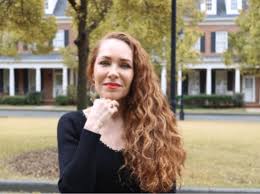
Licensed Clinical Psychotherapist | Author
I am a licensed clinical psychotherapist with over twenty years of experience specializing in trauma, chronic pain, and the mind-body connection. I have also authored a book called The Burning Mouth Syndrome Survival Guide, which blends memoir, mental health advice, and my lived experience with Burning Mouth Syndrome. My second book is a memoir about growing up in my mother’s religious cult, enduring years of trauma, spiritual manipulation, and family dysfunction, but it’s really a journey of awakening, resilience, healing, and purpose. The title is Surviving the Family Kingdom, with a 2026 release date, but today I’m offering the first four chapters for free. Email me at contactpeggy@peggysharr.com with the subject line “free chapters,” and you'll also be notified upon publication.


