368 Walker Kimberly Brandt: Pretty Girls Don’t Ugly Cry!
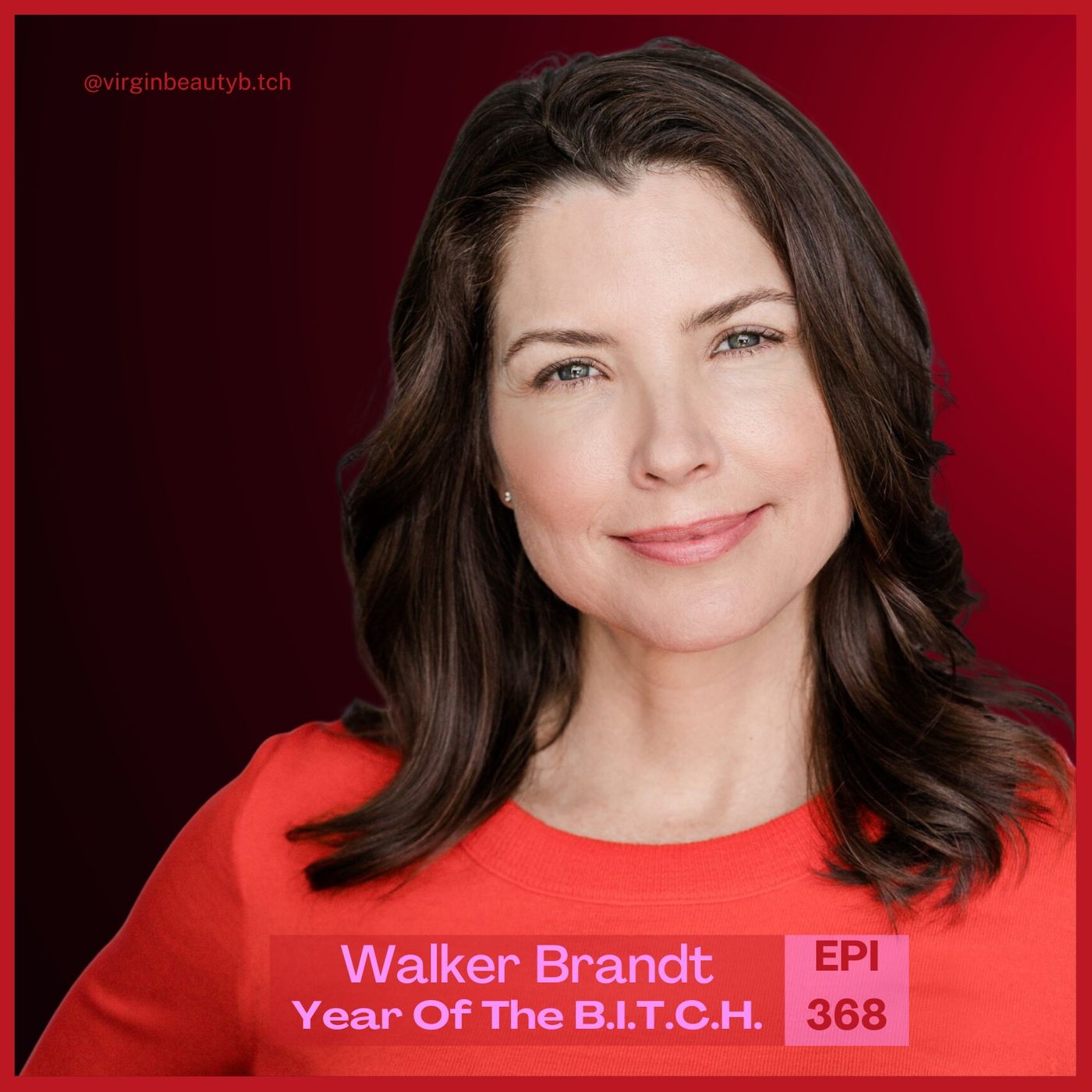
Walker Kimberly Brandt, a Hollywood actress, model, and bestselling author, shares her deeply personal story of healing and self-empowerment. Walker’s insights shed light on how embracing vulnerability and women adopting their “Bitch” identity can inspire a more fulfilling life path.


Walker Kimberly Brandt is a Hollywood actress, model, bestselling author, and passionate advocate who shares her powerful journey through Betrayal, Identity, Trust, Change, and Healing, words that form the B.I.T.C.H acronym and are at the heart of VBB podcast’s 2026 mission. With vulnerability and authenticity, Walker explores deep generational wounds, the importance of facing inherited trauma, and the revolutionary act of choosing your own identity as a woman.
It's a conversation that ranges from betrayal to the liberation of embodying new roles in life and exploring identities beyond gender roles and others' expectations. Walker invites women to celebrate their evolution by leaning into the unknown and embracing every facet of their “Bitch” identity. Whether you’ve struggled to step fully into your power or you're curious about how self-discovery can shatter stereotypes, this episode is a celebration of courage, resilience, and unapologetic transformation.
This candid, heart-opening discussion will leave you inspired to explore the richness of your own story and explore your inner “Bitch” without shame.
QUOTE: "Could you imagine if every woman on planet Earth in one moment resounded that word? Bitch!"
What We Learned
1. Generational Betrayal and Healing
- Walker shares how the trauma of deeply rooted personal and generational betrayal is experienced by women. It’s a journey that shows the importance of acknowledging, facing, and actively healing inherited wounds.
2. The Importance of Identity and Conscious Choice
- Identity is presented as an ongoing process of discovery and conscious choice. How our early identity is shaped by external influences, but through self-reflection, we can learn to choose who we are going to be.
3. Pretty Girls Don’t Ugly Cry
- How the pressure on women to maintain a “pretty” exterior comes at the cost of emotional honesty and robs them of being authentic. Allowing yourself to feel your dark side and even “ugly cry” can be a radical act of reclaiming your voice, your story, and your freedom.
4. The Power of Playing With Identity and Reclaiming "Bitch"
- Reclaiming "bitch" as a source of power, rather than an insult; stepping into roles and emotions once avoided, including the villainous or fierce sides. Walker encourages women to play with, own, and redefine stereotyped identities for self-empowerment.
TRANSCRIPT
Intro [00:00:01]:
Virgin Beauty Bitch Podcast, inspiring women to overcome social stereotypes and share unique life experiences without fear of being defiantly different. Your hosts, Christopher and Heather. Let's talk, shall we?
Christopher [00:00:20]:
In this, the year of the bitch, 2026, Heather and I are doing what most women are conditioned through fear to never do. That is, to look bitch straight in the face and ask, "Who are you?" After 8 years of asking women that question, as in, what is their relationship with the word bitch, an answer began to take shape in the form of 5 powerful words: betrayal, identity, trust, change, and healing. Which not only comes out in the form of an acronym, B.I.T.C.H., but also as words that summarize and encapsulate a clear path to women's self-empowerment and growth. Proof? Well, that's in the source material, the lived experience of our guests. And today it's a repeat performance from Hollywood actress, model, and bestselling author Walker Kimberly Brandt. Welcome back. To Virgin Beauty Bitch.
Walker Kimberly Brandt [00:01:23]:
I just love that name. Gosh, every time I hear it, I just feel empowered. I love that. Wonderful.
Christopher [00:01:32]:
I was mentioning to you, it's almost eerie, you can say woo-woo, that the last time we spoke, you literally, literally took us on a life journey that touched on all 5 B-I-T-C-H principles, beginning with Betrayal. And betrayal not only on a personal level, but also on a generational level, considering the tragic abuse and death of your grandmother and the silent obedience of women in your family since. Of course, that level of betrayal is not isolated to any one family. It's a societal phenomenon. If I may ask you this, is it important for individual women to understand and face that depth and that scale of betrayal?
Walker Kimberly Brandt [00:02:18]:
This is so incredibly synchronistic and wonderful to have this conversation right now. Absolutely, it is. I don't think there is a woman walking this planet who doesn't have to confront betrayal. Because even if you haven't experienced it in your life, in your immediate consciousness, somebody in your lineage has. And as women, we pass that on throughout our eggs, throughout our genes. We, we carry that with us. And the studies that are coming out now are showing— I mean, we've known for quite some time that, you know, the eggs that I had in me were in my body and finite when I was inside my mother's womb. That is, that's, that's a a scientific fact.
Walker Kimberly Brandt [00:03:12]:
So if my mom lived through any kind of betrayal, which she did, any kind of war trauma, which she did, that was passed on into me while I was in gestation. So there’s, it's very rare to find anyone, maybe in the rainforests deep in the Amazon, undiscovered peoples who have not been through war. Humanity has been through so many wars, and war, the primary emotion, the primary suffering is betrayal, especially for women. And the reason is that women become collateral damage. They become, if you're the conquered land, often they suffer rape, which is betrayal. They suffer from being unsafe in their home, which is betrayal. This is our sanctuary. So, under the umbrella of betrayal, there are so many important identifiers to understand why we respond the way we do, why we even breathe the way we do.
Walker Kimberly Brandt [00:04:22]:
Like, I didn't realize that I had a tendency to hold my breath, especially when I felt or sensed a threat. And I didn't know it was like a subconscious thing. And a friend of mine noticed it, and she said, you know, you're holding your breath right now. And I know I didn't realize it was only my breath. She said, breathe, take a deep breath. And I tuned into that part of me that just became a habit. And my mother does it. So I would not be surprised if my grandmother also did it because there are so many things that my mother has suffered through that my grandmother suffered through.
Walker Kimberly Brandt [00:05:01]:
My mother tried to heal some of it, but not like I have. She is from a different generation where you're supposed to carry the load, as we discussed in the previous discussion about women being stoic, holding it, you know, that was their job. And I just said no. I just said no. Exactly. This is not happening. I am not carrying this. I don't want this.
Walker Kimberly Brandt [00:05:33]:
And the interesting thing about it is that I didn't realize until my 40s and early 50s that I was carrying betrayal on such a deep level, even though I had stopped blaming. I had done that work. I wasn't angry at my grandfather anymore. I wasn't terrified when I thought about my grandmother. I wasn't angry at my mother or any of what I went through years in my 20s of just being, why? Why did this happen? Why is nobody healing this? In the midst of my resounding no. But there was another level that I didn't connect because it was so subconscious. It was so deep inside my body and my cellular experience that I didn't realize it until I started working with a company called Mirsonics, and they're in New York, and a man named Geoff DePaula. And this is like amazing healing audio frequencies because betrayal has a frequency.
Walker Kimberly Brandt [00:06:55]:
Do we ever think about, you know, it's, it's sometimes it's so important to remember we're energy and there's frequencies to energy, right? Like you meet somebody and you're like, I don't know, there's something I just can't put my finger on it, but I'm just going to keep my distance. Or gosh, I just really love that person. I don't know, it's, you know, the frequencies are compatible or they're not compatible. There's something in it that, you know, maybe is familiar or even just not ready for, whatever it may be. But we're like these, you know, signals walking around, right? And so I knew that I wasn't healing past something so deep inside of me, but I couldn't put my finger on it. I couldn't articulate it. I couldn't consciously express it, that it was really impacting my life.
Walker Kimberly Brandt [00:07:48]:
And it was triggered when my husband had a life-threatening diagnosis. And he is the first person that I really let in completely to the deepest part of my soul in my life since my grandmother; that I had that love and trust on such a deep level. So I didn't even know that his diagnosis would trigger what was unresolved with her. From that original betrayal. The original, not that I felt betrayed by her, but my grandfather's betrayal, all the women in the family. And so it just rocked my world, and I couldn't shake it. I couldn't. I wake up in the middle of the night, what's going on? You know, I just couldn’t, like, what is this? God, God, 'Take this from me. Help me breathe. Help me let this go.
Walker Kimberly Brandt [00:08:41]:
I don't know what it is, but I want to sleep.' Reaching over, touching my husband. 'Is he breathing?' You know, just all these things, you know. And then a friend of mine touched base with Geoff DePaula, and just randomly, and this is how my life has been, things come to me when I need them, is like, 'I'm not getting over this, please send the person.' Send the healing. And Geoff DePaula made an audio for me around betrayal, and I started listening to it. And within about a month and a half, what's really interesting about these audios is they're only about 10 minutes, but you have to ease into them when you first start listening to them.
Walker Kimberly Brandt [00:09:27]:
If it's something that's deep like this, you can only take maybe 30 seconds or 10 seconds. Sometimes, because it really touches it. It touches the frequency so deeply, and it's waking it up and letting your body, you know, let it flow, unclogging that, you know, that channel. And it took me about 3 months to get to the point where I could actually listen to the whole thing. I started sleeping again. I felt this weight that I had on my chest, and I felt it open. I felt my, I just felt freer. I didn't have any more of the panic at night.
Walker Kimberly Brandt [00:10:01]:
I didn’t, I'm not fearing like I was. It was just, it would just kick in, and when it kicks in, and there's no definition. This is what I just so want women to know: they're not alone. I want them to know that it's really scary. I understand, especially when you're a mom, because you're supposed to be, you know, together and know what's happening and be the leader and have the answers. You're a wife, you've got your job, you're an executive, whatever it may be. But in those moments when betrayal comes up, it literally rocks you to your core. And there's very little understanding and compassion around it because it’s, nobody wants to go there, you know. It has anger around it. It has frustration around it. It has death around it. It has all these things that are scary.
Walker Kimberly Brandt [00:10:56]:
But it's so, so important for women to tap into this and to heal it for their children and for themselves, so they can live freely and release men in their lives from it. Because I didn't really wholly and completely trust my husband, and I didn't know it until I healed this, even though I trust him more than anyone on the planet. When this started healing, I was like, wow, I was reserving, I was reserving a little safety net. It was about this, and it just opened me up to trust on such a deep level. It's impacted my work, my creativity, my capacity to love, um, all of it. To be a wife, to be a mother, to be, you know, a leader. It has just changed so much, um, allowing myself to heal this. And I really think it is an allowing because it's a, it can be scary.
Heather [00:12:02]:
I mean, you've already bridged so many of the different elements of B.I.T.C.H that we're diving into, but just to kind of go from the betrayal through we, you know, you took us to trust, but I really want to land back into identity because I think that that's something that you speak on, and something that you've, you know, you play with as an actress, as an actor, something that all of us in the different roles we either decide to take on or not take on, or expectations. But when it comes to that deep, new trusting that you allowed yourself to go through with these different experiences that you opened yourself to, like, when you're thinking of the identity shifts that you've gone through in order to perhaps reach that trust or have a better understanding of your identity? Can you walk us through that?
Walker Kimberly Brandt [00:13:01]:
Absolutely. So when I woke up, I remember this was a huge moment of an identity reckoning. In 1997, I was on a production, and I remembered there was, all right, I remembered something, but it was subconscious. What happened was I recognized something that was undeniable, and it became intolerable in that moment. And before that moment, I was tolerating it. And I didn't realize I was. And it was this, it was a blatant disrespect and devaluing of women from directors and producers and positions of power. And from that moment on, I felt I couldn't be vulnerable. I felt my vulnerability slipping away, my trust slipping away.
Walker Kimberly Brandt [00:14:07]:
Jobs started feeling like I was in a trance, going through the motions. I started losing the love for what I had built over, you know, at that point, 10 years and many, many hours and lots of, you know, lots of projects. And I, I really thought I found my thing that I was, you know, good at. And it, it just, it was like, where's this, where's this going? And that's when I connected to the frequency thing, and when the awareness of it was, oh my gosh, I am carrying this frequency around, and I'm drawing it to me. So my identity, what I've been identifying with as a woman, was being disrespected, being devalued, being told what to do. Being criticized for the way I looked because I was too pretty, and I should not cry that much in a scene that made it natural to me. It felt, don't ugly cry, don't ugly cry. Directors hated me ugly crying is what they called it.
Walker Kimberly Brandt [00:15:19]:
It used to upset me so much, make me so mad, because it was my truth and I couldn't just be like, what, pretty girls don't ugly cry? But this was, this was very Hollywood. I mean, you just go back to the ‘90s, and you see how women were just, it was such an ugly time. And there's been, you know, many of them throughout the history of Hollywood, unfortunately. But this was my reckoning that my identity was not fully conscious to me. My identity was wrapped up in the influences. It was wrapped up into what I, the story that I was raised in, that I thought was normal. And I was awake, awakening to the fact that it wasn't my normal. So when I felt that experience of I am bringing this to me, what wait, I was still in blame at this point, you know. I was still blaming. I was still, wait, these guys are doing this. These ladies are doing this. They're doing it with them. It wasn't just men. It was men and women in positions of power, but primarily men. And I couldn't, I couldn't understand how I, how come I didn't see this sooner? How come I didn't understand that I was building an identity that accepted this? I was promoting it and allowing it. Like one of my dear friends used to say, she said, don't promote it, don't allow it. And I didn't know I was doing that. And I think that was the first crack in the foundation that I thought was solid.
Walker Kimberly Brandt [00:16:54]:
That was the beginning of me waking up to my own responsibility as a woman to choose my identity, to not just accept my identity but to choose my identity, to go into the deepest part of me and find out what my story is, not just accept a story that had been handed down throughout generations, not the story that goes with my physiology, not the story that goes with my family generationally, not the story that I intellectually think might be the best story, but the story that's my story. What is my story? What is my, what, what, what is my voice? What is that? I had no idea at that time. That's why it was so comfortable for me to be an actor, because I felt safe to be vulnerable within roles. I didn't start feeling safe outside of roles until I met Lisa, and she told me I need to write a book and tell my story. So I was hiding behind roles most of my life, and then in 2020, when I started writing my book, I felt like, I felt I was, you know, outing myself. And now my work has changed so much because I'm totally comfortable being vulnerable outside of a role.
Walker Kimberly Brandt [00:18:25]:
It's like I'm okay with it. I'm not apologizing for it. I'm not ashamed because my family's been through. There's no shame in the fact that I had this, I have this history that's, you know, it’s, I wish it were different, but you know, at the same time, I don't know if I'd be me without it. So, you know, nobody said life is going to be, you know, an easy thing. You know, I know I sound like every elder generation from as far back as you can remember. We get up to a certain age, and it's like, nobody said life was going to be easy. Well, it's not even about it being easy; it's about it being responsible. It's like I felt for the first time that I had, and I keep embracing this responsibility to choose my identity, to choose it not just from a story, but to allow myself to evolve into it sometimes on a daily basis.
Walker Kimberly Brandt [00:19:26]:
It doesn't have to be locked into. I'm discovering every single day more about myself, what makes me comfortable. I don't have as much judgment, for instance. Recently, I played a villain, and I had so much judgment about playing a villain. The whole beginning of my career, I would run from playing a villain because I was afraid to go there because of the villains in my own family. I had so much fun playing this villain. I had so much fun because you know what, as much capacity you have to love is as much capacity you have to be angry and vicious. You know, it's a human binary nature of who we are.
Walker Kimberly Brandt [00:20:09]:
I can't judge this person based on what my, you know, how I feel is what this is. This person is this way for a reason, and there's a story there. And I had to, you know, vulnerably and without judgment, discover who and what motivated this person to be this way. And it felt so good not to, just not fear it and know that I wasn't going to get lost in there. It wasn't going to terrorize me. I wasn't going to lose sleep and think I was never going to come out of it because it was in my genealogy, you know, this cruelty and this abuse and all that. Those are the kind of stories that the mind likes to play, you know, which keeps us, I think, in a little cage of our own making, not realizing that we're here as explorers. We're adventurers in this world. To discover who we are, you know. And if we don't allow all those things that human beings have a capacity to feel— doesn't mean we have to go act on them, but it's all of, we're all of it, you know. We're all of it. And I just don't practice that. And it took me so long to get to the point where I could just let myself play it, be it, live it in this other person, but I don't practice it in my life. And it's free. It was so freeing. Gosh, it was so freeing.
Walker Kimberly Brandt [00:21:31]:
So, yeah, where I'm at with my identity is I'm a woman discovering. And I think that my identity has been, and is a sacred thing. And I'm not going to, like, limit myself to, you know, this is what I am and who I am right now. I am discovering what and who I am.
Christopher [00:21:52]:
That is so profound to Heather and I. Identity, we have, it's like, it's like a turtle with a shell that we live inside, right? We cannot venture outside of it. This is what and where we feel safe. But you say it so succinctly. You discover that identity every single day if you're outside that shell, right? You're not just one thing; you're everything and all things. That's the magic of it.
Walker Kimberly Brandt [00:22:31]:
Exactly. I love, I love your visual of a turtle because it's so, the way, you know, the tortoise, you know, that lives 100 or more years, and how they're just quietly moving across Earth, and they peek their head out. I don't know. They go back into retreat and peek their head out. I just love turtles. And I think it's such a great analogy because if we don't peek our heads out, how are we going to know? Because we are in a different place. And that's kind of what I did is, I'm in a different place, and I allowed myself to be in the different place. And then it was expanding so much. So expanding to realize, oh, okay, things have changed. I am evolving, and I can acknowledge myself here, and I can give myself a little bit of celebration. Wow. So I'm, I'm part of this. It's kind of crazy funny, but yeah.
Heather [00:23:38]:
Yeah, I think that's what we're encouraging people to do in this Year of the Bitch, of the B.I.T.C.H, is to play with a character who's been framed as the villain, and so much so that you're repelled from even wanting to tiptoe into the full gamut of emotion that comes with that caricature, or what you've built it up to be. So to hear you so illuminated about the experience to step into something that originally you avoided like the plague because of, you know, an ancestry or people that you didn't want to emulate or people that you didn't want to be like or to have that be your prime identity if we want to go there. But there was something really moving in that experience that created an even more fulfilling next day for you, since each day is a new one. And I think the bitch offers that to the journey that we're taking our listeners on.
Walker Kimberly Brandt [00:24:42]:
I cannot agree more. I cannot agree more. Could you imagine if every woman on planet Earth in one moment resounded that word? Bitch.
Christopher [00:24:55]:
Yeah.
Walker Kimberly Brandt [00:24:55]:
You know? Yeah.
Heather [00:25:00]:
Like a collective cry.
Christopher [00:25:05]:
It was.
Walker Kimberly Brandt [00:25:05]:
Oh, so you know, with such joy accepted, you know, a little bit of, you know, Viking warrior, warrioress going on, or whatever your culture is, you know, just that warrior, you know, the queen, just, yeah, a little growl, a little laughter, all of it. It's all there. It's just so rich in it, and women are so rich in it. So I love that you're embracing and encouraging the play, because that's how we discover, you know, we discover the depth of value that nobody can put, or quantify. It comes inside out, and it is untouchable.
Christopher [00:25:50]:
Yes, that to us is the definition of the bitch we speak about. It's not something someone throws in your face. It's something living within you that, once you let it out, you become more of who you are and your potential to be. It's all in there, but the world has put a cap on it, and it has soiled it and degraded it, and you're fearful of even looking at it. But it is powerful.
Walker Kimberly Brandt [00:26:22]:
So powerful. So powerful.
Christopher [00:26:25]:
Yeah.
Walker Kimberly Brandt [00:26:26]:
Oh gosh. I just feel like, you know, I just feel it in my chest right now. I'm seeing young girls, you know, walking in that kind of, you know, confidence and assurance. Yeah, I'm a bitch, and I feel it. And I don't know, did you see an 11-year-old, you know, a 9-year-old just having that kind of confidence? I, it comes from us. We have to, we have to set the path. We have to, you know, show the steps. We have to be the example.
Walker Kimberly Brandt [00:26:56]:
And that's what you're doing. You're encouraging that expression so that we walk out in the world. And again, back to frequency, we send that out there. And as Marianne Williamson said years ago, you give people permission just by virtue of giving yourself that permission to do it. Just by being around you, they feel the permission to do it. And as women, I think that's kind of our responsibility. And then have beautiful men around just like you that are like, yeah, yeah, that's right.
Heather [00:27:33]:
That's what's up.
Walker Kimberly Brandt [00:27:36]:
Let's support this because it really is world-changing, life-changing, soul-echoing, and reckoning. And it's all those things. So excited, really am.
Christopher [00:27:56]:
Oh man, I, I'm in my mind, I'm thinking how this, how that attitude, how that action would change an industry that you're in, in Hollywood. What a dramatic difference that would make in that world.
Walker Kimberly Brandt [00:28:12]:
Yeah, and you know, I'm just, I'm just kind of re-entering it, so it's going to be interesting because I've been away from the film and TV side for gosh, a long time. And, yeah, I'm just a different person in many ways. I'm the elder on sets a lot now, which is like, really, yeah, it's just different. And I’m, I will not tolerate that nonsense. It's in my energy, and it’s, I don't have to say a word. That's what's so remarkable: when you embrace this, you know, identity and give yourself that respect that you deserve, that you came here to inhabit, to embrace, to express, and to give you, it clears the path. It just clears the path. And that, I think, is such a joy too. I don't even come across people who are in that mindset anymore.
Walker Kimberly Brandt [00:29:23]:
It's like, this is so wonderful. Okay, this is great. And that's, I think, and you know, that's our job. That's our job here. Be an adventurer, be an explorer, get in there with your, you know, your excavation tool. Get in there. If it's a pickaxe, you gotta use the pickaxe for a minute. Then get the little brush out. Find that, you know. Get in there and enjoy it and find that, you know, whatever's that fossilized thing and hang it on the wall and go find something else. You know what I mean? Yeah, I was there.
Heather [00:29:58]:
I love that. Especially for, as you've said, when you come in with that energy, that frequency, that healing, that knowing, what it does for the other younger generations or perhaps older generations that haven't done that work necessarily, it creates a path. It creates a space and energy where you are, where they can feel that you're not going to put up with that shit.
Walker Kimberly Brandt [00:30:25]:
Absolutely. And you know what's interesting? I've come across a couple of men who, from the look on their face, and I could tell it was, well, they were perplexed. They were perplexed. It was kind of funny. You're different. Kind of, that's what I got. And I said, what do you mean? Well, I just didn't expect you to, like, you know, I just didn't expect you to sound the way you do or to talk to me the way you do. And I just didn't expect it.
Walker Kimberly Brandt [00:30:53]:
And I was like, what did you— what do you mean by expect? I don't know. I just, um, I just didn't expect it. And it was like a vulnerability in saying that, that it was one of those moments where I was like, I walked away, and I remember thinking, well, his view of women just expanded. And I had no idea that that was going to happen. His whole life, he thought, and this is a 70-something gentleman, and he, his whole life, didn't realize he had an idea and an identity for a woman who looked like me. You know what I'm saying? Tried to lock me in there, and I just went in and went Nope. And it wasn't even intentional; it was just me being me. And I could tell him, he looked like a, it was interesting, he looked so young suddenly.
Walker Kimberly Brandt [00:31:46]:
It was like, it was just like he was going back to a point when that happened, because he just looked so vulnerable. And it was kind, the way he said it; there was kind energy. And it was like something new was happening, you know, a different idea of what a woman that, you know, sounded or looked like me could, could be in his world. And that felt really good. Because I, as I said, had no idea that was going to happen. I had no idea that he was going to ask that question or say that statement. It was more about him than me. It was just that he needed to say, I didn't expect you to sound that way. I didn't expect you to expect it.
Christopher [00:32:28]:
I would add this: I believe that deep down within every man walking the planet Earth, they know that. That's why he recognized it in you. We know that. But you have, women aren't living up to that because of the places men have put them, right? They're afraid to be what you are. You're not, but we know you're capable of that. He saw it.
Walker Kimberly Brandt [00:32:57]:
Yeah, and in the same way that we paved the path, men like you paved the path for men, too. When they meet you, they see a man who sees a perspective that's broader than what he's been living inside of. And, yeah, just, yeah, this year is like about breaking stereotypes, expanding, creating paths, letting go of beliefs and structures that don't serve ourselves and/or humanity.
Christopher [00:33:42]:
We have a word for that. We have a word for that. Yeah, it's called evolution.
Walker Kimberly Brandt [00:33:48]:
Exactly, exactly, exactly. Yeah, you know, what is that? What is that, right? What is evolution? Is it a physical thing? Is it a spiritual thing? Is it a consciousness thing? It's all of it, right? It's all of it. It's your physical being. It's your consciousness. It's all of it. Every bit of you is evolving every day. And creating that, you know, that identified position with it. It's ever-changing, and that it's in discovery. And I give myself permission to be in that space.
Walker Kimberly Brandt [00:34:22]:
I'm not going to apologize for it, and I'm not going to quantify it. I'm just going to be it. That allows us to, I think, evolve in a way that our, as the, you know, the Scientists say most animals don't have the same consciousness that we, the same consciousness as human beings, but they evolve, they evolve, and it's their nature. And we sometimes intellectualize ourselves out of the very nature that we are, too. How about we let our evolution, let ourselves evolve, and let ourselves feel that uncertainty and unknown and embrace it instead of being afraid of it, because it might just be, you know, the star that you're going to land on. Just don't know.
Christopher [00:35:12]:
That's what these conversations are about. It's about bringing that to the conscious level. Your book. You need to tell people about your book and what else you're doing that is needed to be known.
Walker Kimberly Brandt [00:35:27]:
My book is Awaken: Discovering Yourself Through the Light of Your Innocence. I am currently working on book 2.
Christopher [00:35:32]:
Congrats.
Walker Kimberly Brandt [00:35:35]:
Um, thank you, I'm excited. Um, yeah, it's available on Amazon. I can be found on my website walkerwalkerbrandt.com or just Walker Brandt. Social media Walker Kimberly. Linktree Walker Kimberly. I am working with Lisa Nichols, and you can find me on that campus because I absolutely adore that woman and everything she does.
Walker Kimberly Brandt [00:36:02]:
She has a ministry. She really does. She is just what she does is a ministry. It's a healing. It's such a healing what she is out there doing in the world. I know she's a speaker, but I think it's a ministry. I really do. Yeah, so I coach in her community and love spending time with her and the energy that she creates.
Walker Kimberly Brandt [00:36:26]:
In that community is pretty beautiful. She's built a beautiful place for people to heal. And yeah, I'm working again. And, you know, I have to sign NDAs. I can't talk about anything, whatever, you know, whatever it is, the way the industry is. But I have some things that I'm working on. And I'm excited to see what this year brings.
Christopher [00:36:44]:
Fabulous. Fabulous.
Walker Kimberly Brandt [00:36:45]:
Oh, and I'm going to be at Trek. I'm going to go to Vegas. And I'm going to be at the, what is it called? The Trekkie?
Christopher [00:36:55]:
Something con, something con?
Walker Kimberly Brandt [00:36:58]:
Yes, exactly. It's the Trekkie Con, but it's Star Trek. But that's not the name. My rep is going to be like, Walker, really? You don't even know what it's called. Yeah, I've been invited to go there, in Vegas, which is really going to be fun because there are no fans like the Trekkies. They are amazing. And I've always wanted to go. Everybody that's ever done the show, pretty much everyone has gone.
Walker Kimberly Brandt [00:37:26]:
William Shatner goes every now and again, and not every year, he's getting up there. But yeah, I'm excited to go be a part of the Star Trek Las, I think it's Star Trek Las Vegas. That's what it is. It's every year.
Christopher [00:37:39]:
And very nice.
Heather [00:37:41]:
Yeah, very cool. That'll be so fun.
Walker Kimberly Brandt [00:37:47]:
Yeah, so fun. Yeah, I love Trek fans. So it'll be there for a couple of days, and I'll be meeting people and talking about the show.
Christopher [00:37:54]:
Good for you. Good for you. Well, thank you again for dropping everything and jumping on with us, because these conversations take us to a different level, and we absolutely adore having them with you. Thank you so much.
Walker Kimberly Brandt [00:38:11]:
Me too. Gosh, it's good to to see your faces. I feel like I'm just looking at two brights, and I'm so grateful. I'm starting this year having, it's the first podcast I've done, and I feel so joyous. Thank you. Thank you so much for the invitation. You two are beautiful. Thank you.
Heather [00:38:29]:
Such a pleasure, and the feeling is so mutual.
Christopher [00:38:33]:
Yeah. In case you're wondering where this kumbaya comes from, it's— we call it
Heather:
the Virgin,
Christopher
the Beauty,
Heather [00:38:42]:
And the Year of the B.I.T.C.H. Say it with me, The BITCH.
Christopher [00:38:46]:
Yes. Find us, Like us, Share us. Come on back. We're going to continue this conversation, and you'll be there. Yes? Yes! To become a partner in the VBB community, we invite you to find us at virginbeautybitch.com. Like us, on Facebook, Instagram, and LinkedIn, and share us with people who are Defiantly Different like you. Until next time, thanks for listening.

Hollywood Actor | Author | Coach
I’m Walker Kimberly Brandt, a career Actress, Model, Spokesperson, and Voiceover artist in the entertainment and advertising industries, with over 25 years of experience. I’ve appeared in blockbuster films, including Dante's Peak, and on primetime television shows, including Star Trek: The Next Generation, in dozens of commercials, and in thousands of advertising campaigns for global brands.
In recent years, another dream came true: writing and publishing my first book, Awaken: Discovering Yourself Through the Light of Your Innocence. Awaken is an intimate and vulnerable memoir where I share my journey as a young girl who, after a failed attempt at suicide, left a toxic household at age 15 and, at 16, became an emancipated minor. My story is about releasing self-imposed limitations, leaning into inherent innocence as a source of strength, and creating a fulfilling life regardless of circumstances. As a Speaker Advocate Coach, I support women in leaning into their inherent innocence as a source of strength and in creating a fulfilling life regardless of circumstances, while also not being afraid to bring the Bitch to the surface without shame or apologies.


